What is the Lyon self-guided walking tour?
The Lyon self-guided walking tour is a walk you take at your own pace, with audio narration on your phone where a guide would normally be. Allow around 3 hours: 52 minutes of that is walking, the route measures 4.1 km, and 10 stops are where you stand still and listen. There is no meeting time and no group to keep up with.
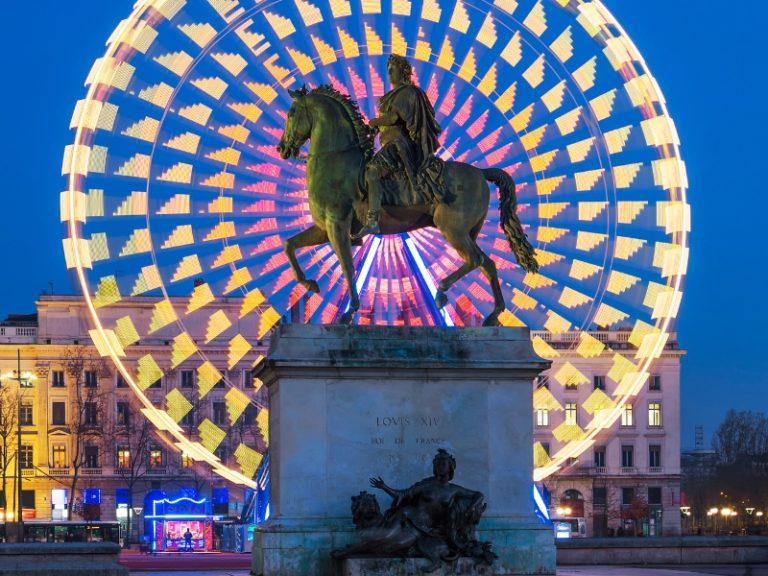
On Place Bellecour the narration explains the Louis XIV on horseback that François-Frédéric Lemot delivered in 1825, after the Revolution destroyed the first statue. On the Pont Bonaparte you hear why almost every bridge in Lyon had to be rebuilt after 1944. Further on, the Fresque des Lyonnais introduces some thirty painted faces, from the Lumière brothers to the cook Paul Bocuse.
- Durationabout 3 hours
- Walkingabout 52 min · 4.1 km
- Stops10
- LanguagesEnglish, German, French, Italian, Spanish, Dutch
What you do on the walking tour
Listen
Each stop comes with the history of the place, the legends around it and the details nobody points out. The same text is on screen if you would rather read than listen.
Stroll
Google Maps takes you from stop to stop: 52 minutes of walking over 4.1 km, as briskly or as slowly as you like.
Break off
Sit down for a coffee or go into a museum for an hour, then carry on where you left the route, today or another day.
Eat and browse
Food and shop suggestions near the route come with the stops. Which stop you start from, and in what order you take the rest, you set in the app.
See the route and attractions →
How it works
- Book online Choose the number of people. Your booking reference arrives by email straight away.
- Get the app Download the World City Trail app from the App Store or Google Play and enter your booking reference.
- Walk when you like Start whenever you are ready, walk at your own pace and pause any time. No guide, no fixed schedule.
Who the walking tour is for
A first visit
One walk ties the Presqu'île and Vieux Lyon together and explains the silk money behind both of them.
Anyone who avoids groups
No raised umbrella to follow and no roll call: you stay as long as a place deserves and leave when you are ready.
One day in the city
3 hours covers both banks of the Saône, so the evening is free for a bouchon or for the funicular up to Fourvière.
Good to know
- Bring a charged smartphone with mobile data; a power bank helps.
- No entry tickets needed: everything happens outside the buildings. Going inside is optional and paid separately.
- Family friendly; children must be accompanied by an adult.
- Not suitable for wheelchair users and difficult with strollers.
- Groups of up to 5 work best; larger groups split up, one ticket per person.
- Every purchase helps support stray cats and dogs in Greece.
The walk stop by stop: Musée des Tissus, Place Bellecour, Vieux Lyon, Place des Terreaux
10 stops · about 52 min walking · start: Musée des Tissus · finish: Saint-Nizier Church
Stop one is the Musée des Tissus, a silk collection in an 18th-century mansion, and the red gravel of Place Bellecour comes right after it. The Pont Bonaparte takes you over the Saône into Vieux Lyon, past Saint-Georges Church to Saint-Jean Cathedral and the Temple du Change. Back on the right bank the Fresque des Lyonnais covers a whole wall by the river, and the Hôtel de Ville and Place des Terreaux open up the north of the Presqu'île. Saint-Nizier Church ends the route. The app accepts another opening stop or another order, and no stop asks for a ticket.
Open the route map ↗
1Musée des TissusStart
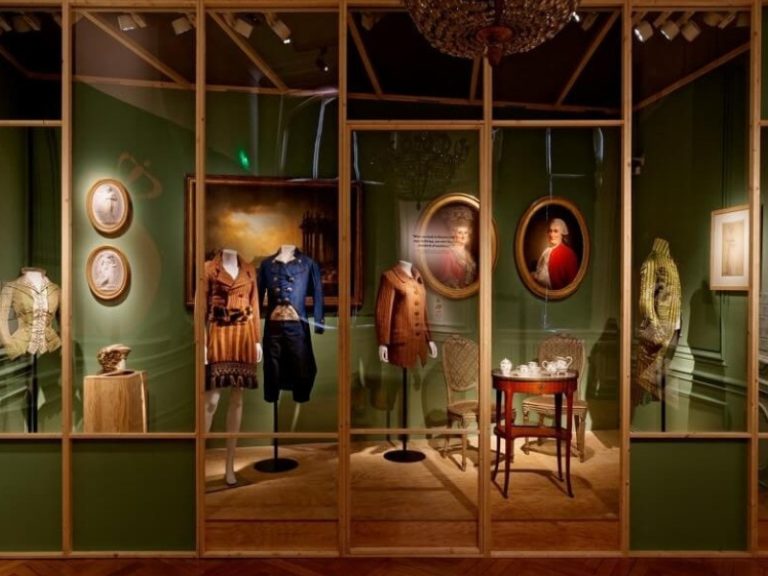
Lyon's textile museum occupies the Hôtel de Villeroy, an 18th-century mansion in the Ainay district. It was founded in the 19th century by the city's Chamber of Commerce to showcase the silk industry that made Lyon famous across Europe. Its collections span centuries of woven fabrics, from ancient Egypt to French silks.
2Place Bellecour
Place Bellecour is one of the largest open squares in Europe, covered in reddish gravel. In the middle rides Louis XIV, an equestrian statue by François-Frédéric Lemot unveiled in 1825 to replace one destroyed during the Revolution. Nearby, a column carries Antoine de Saint-Exupéry, born in Lyon in 1900, with the Little Prince.
Read the full story →
3Pont Bonaparte
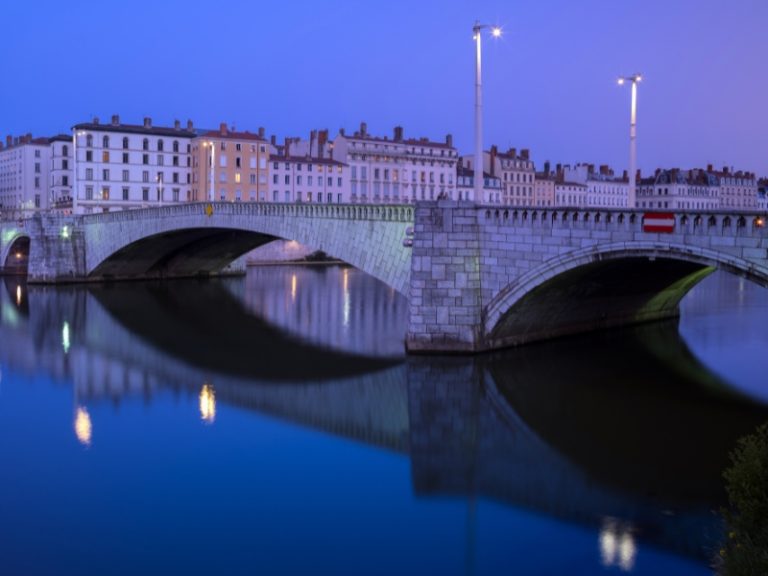
This bridge crosses the Saône between Place Bellecour and Vieux Lyon and bears Napoleon's family name. The present bridge was built after the Second World War, when retreating German troops blew up most of Lyon's bridges in 1944. Stop midway for a view of Fourvière hill and its white basilica above the old town.
Read the full story →
4Saint-Georges Church
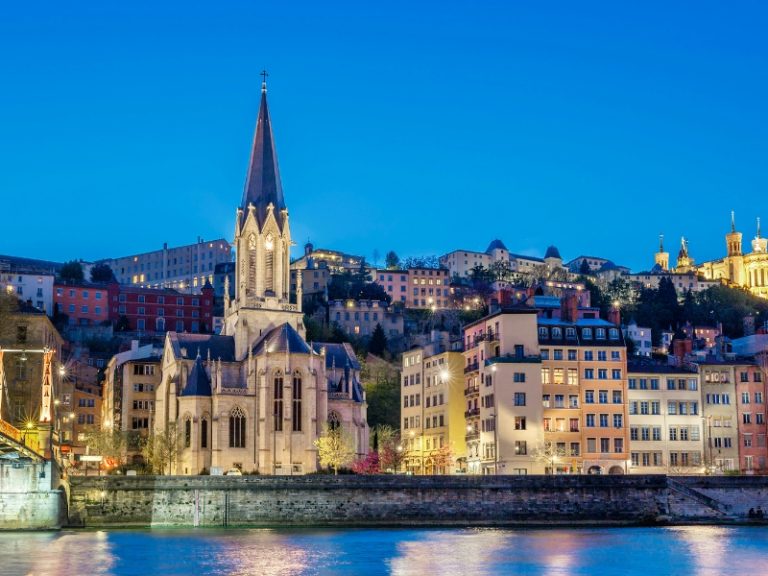
The Église Saint-Georges stands on the Saône quay at the southern end of Vieux Lyon. It was rebuilt in neo-Gothic style in the 1840s by Pierre Bossan, the architect who later designed the Basilica of Notre-Dame de Fourvière. Look up at its slender stone spire, a landmark when seen from the river.
5Saint-Jean Cathedral
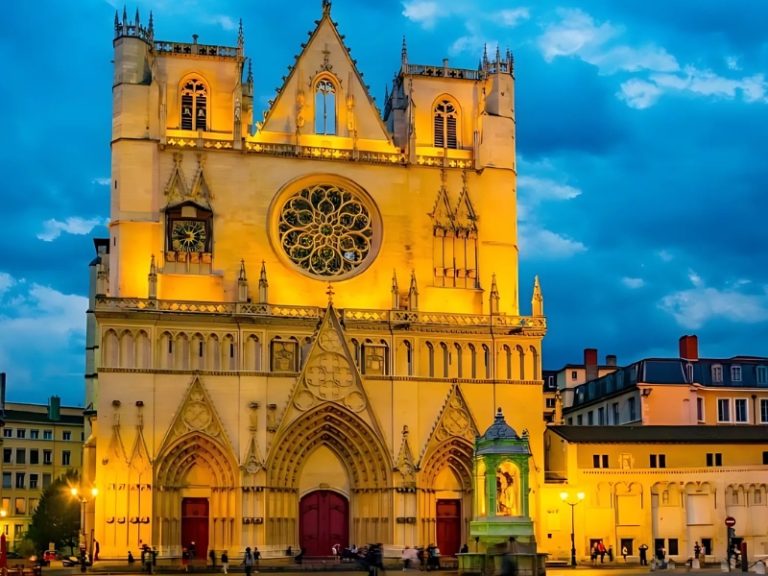
Lyon's Cathedral of St John the Baptist was built between the late 12th and the late 15th century, so its Romanesque choir and Gothic façade show the change of styles. Its archbishop holds the title Primate of the Gauls. Look closely at the portals, framed by hundreds of small carved stone medallions.
Read the full story →
6Temple du Change
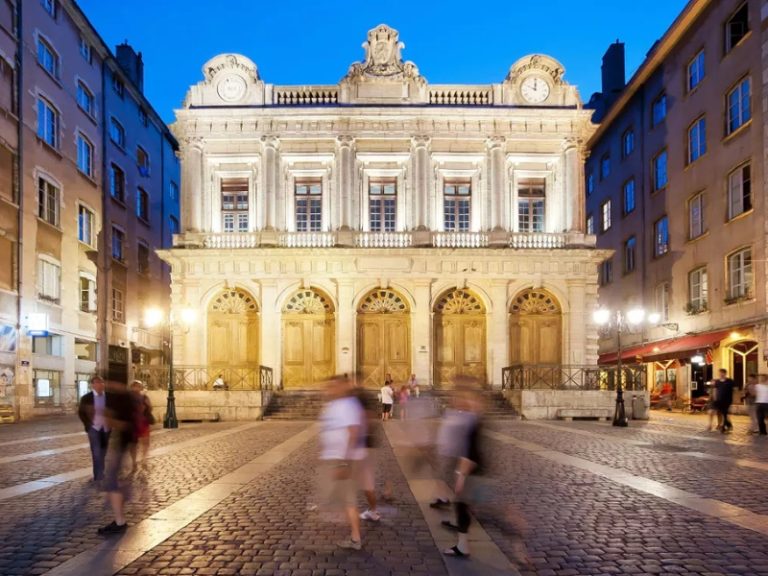
This building on Place du Change was the exchange where merchants and bankers settled their accounts during Lyon's great Renaissance fairs. Jacques-Germain Soufflot, later the architect of the Panthéon in Paris, rebuilt it in the mid-18th century. Since the early 19th century it has served as a Protestant church, which is why it is called a temple.
7Fresque des Lyonnais
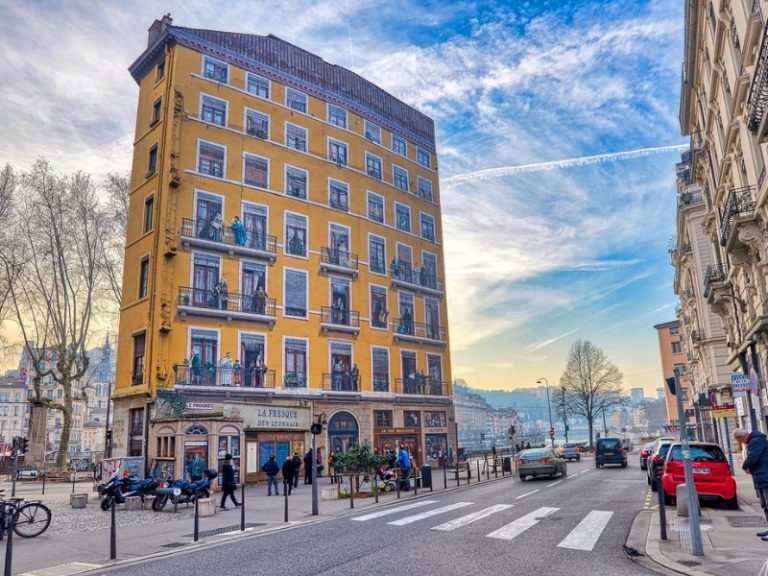
This trompe-l'œil mural covers a whole building on the corner of Quai Saint-Vincent and was painted in the mid-1990s by the CitéCréation collective. Around thirty famous people from Lyon look out from its painted windows and balconies, from the Lumière brothers to the chef Paul Bocuse. Look for Antoine de Saint-Exupéry with the Little Prince.
Read the full story →
8Hôtel de Ville de Lyon
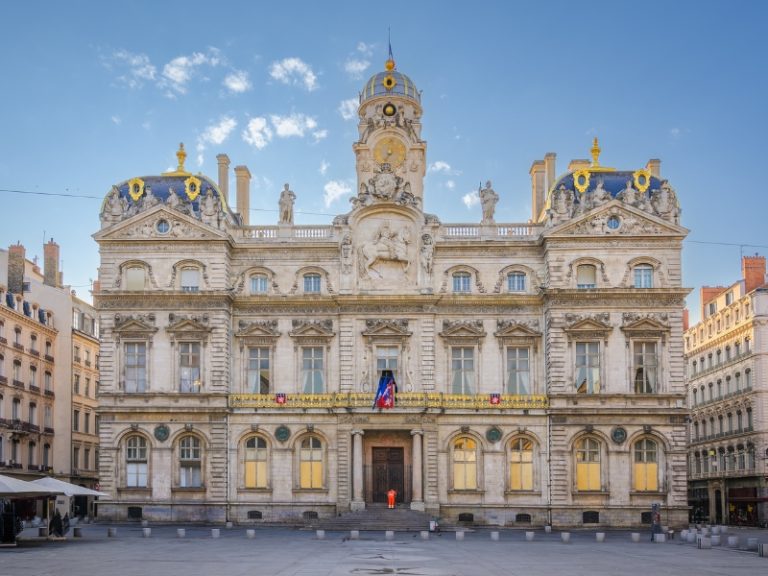
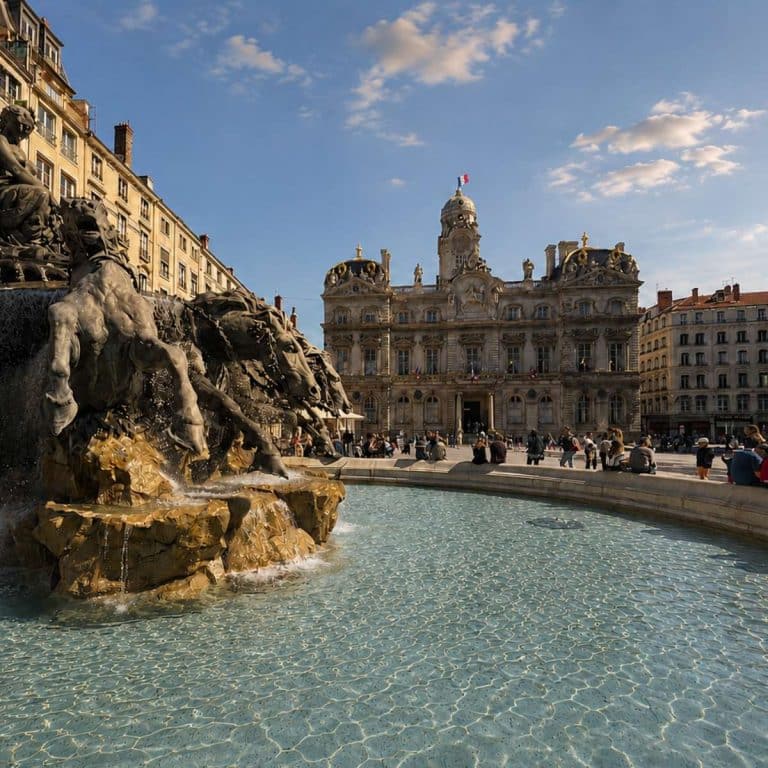
Lyon's town hall closes the east side of Place des Terreaux and was built in the mid-17th century to designs by Simon Maupin. After a fire its façade was remodelled by Jules Hardouin-Mansart and Robert de Cotte, and a relief of King Henri IV on horseback crowns the entrance. On the square stands the Bartholdi Fountain, by the sculptor of the Statue of Liberty.
9Place des Terreaux
Place des Terreaux takes its name from the earth used to fill in an old moat that once ran here between the Rhône and the Saône. The town hall closes its east side and the Musée des Beaux-Arts, in a former abbey, its south side. The Bartholdi Fountain shows a woman driving a chariot pulled by four rearing horses.
Read the full story →
10Saint-Nizier ChurchFinish
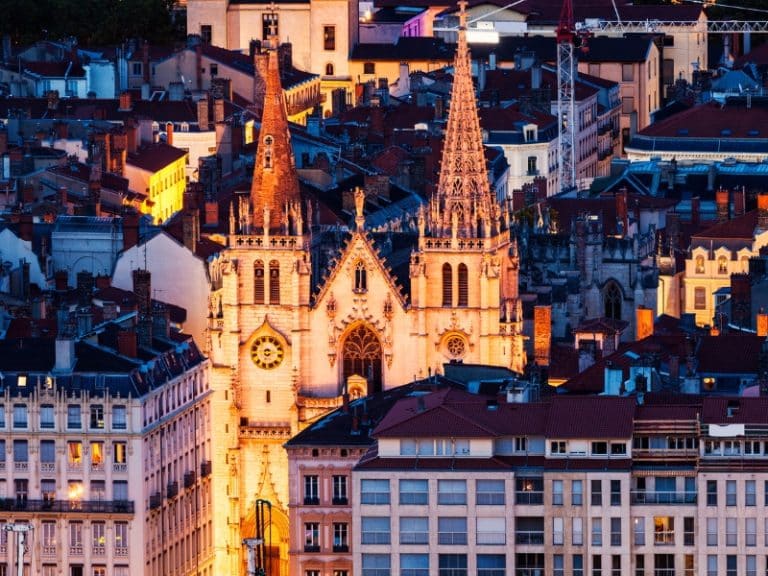
The Church of Saint-Nizier, in the middle of the Presqu'île, is named after Nizier, a 6th-century bishop of Lyon. The Gothic building was raised from the 14th century onwards and completed much later. Compare its two spires: they were built centuries apart, the northern one in the Middle Ages and the southern one only in the 19th century.
Read the full story →
Only logged in customers who have purchased this product may leave a review.



Reviews
There are no reviews yet.