
Aix-en-Provence, a city synonymous with elegant architecture, tree-lined boulevards, and a rich artistic heritage, is home to numerous hôtels particuliers – grand private mansions that speak volumes about its aristocratic past. Among these, the Hôtel de Caumont in Aix-en-Provence stands out as a jewel of 18th-century design, now magnificently restored as a vibrant arts center. Its story is one of opulence, changing fortunes, and a remarkable transformation into a cultural hub.
A Grand Vision: Construction in the Mazarin Quarter
The Hôtel de Caumont is strategically located in the prestigious Quartier Mazarin, a district designed in the 17th century as a luxury housing complex for Aix’s parliamentarians and the burgeoning grande bourgeoisie. This carefully planned neighborhood, with its grid-like streets and grand residences, was a testament to the city’s growing wealth and influence.
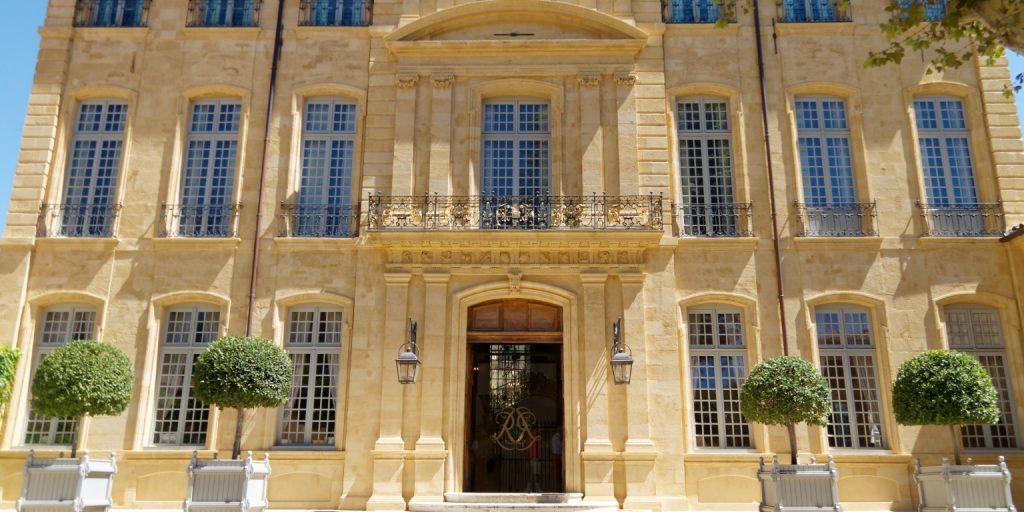
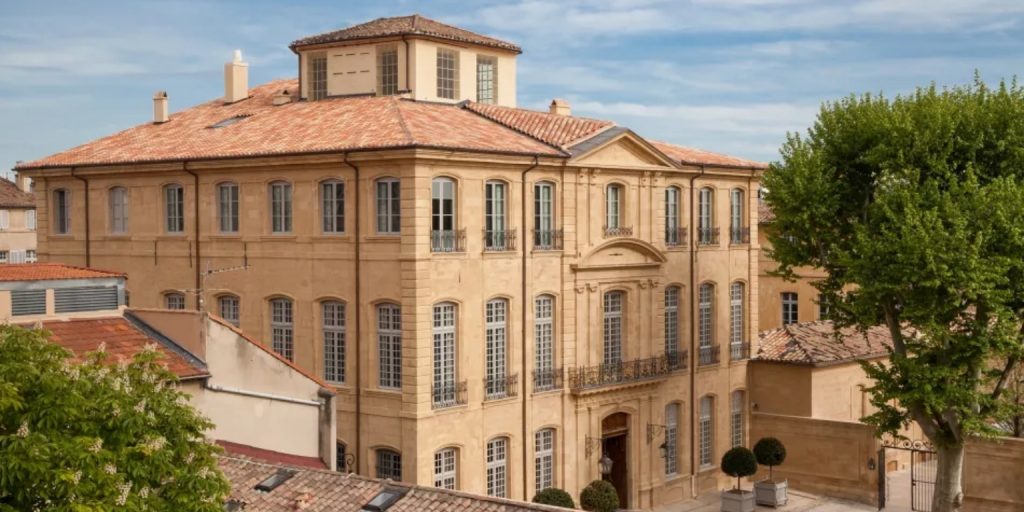
The construction of the Hôtel de Caumont itself began in 1715 and was completed in 1742. It was commissioned by François Rolland de Réauville de Tertulle, the Marquess of Cabannes, who was the second president of the Court of Auditors in Aix-en-Provence. To achieve his vision of a residence worthy of his status, he enlisted the talents of renowned architects. The initial design was conceived by Robert de Cotte (1656–1735), a prominent Parisian architect and director of the Bâtiments du Roi (Royal Residences). The actual construction and supervision on site were carried out by the Aixois architect Georges Vallon (1688-1767), known for many of Aix’s distinguished buildings. This collaboration ensured a blend of sophisticated Parisian style with local Provençal craftsmanship.
The mansion was built on a grand scale, distinguishing itself from other urban residences of its time by featuring both a paved Cour d’Honneur (courtyard of honor) at the front and extensive private gardens at the rear. This “between courtyard and garden” layout, reminiscent of country châteaux, allowed its owners to flaunt their aristocratic standing and enjoy a serene private oasis within the city. Sculptors Jean-Baptiste Rambot and Bernard Toro contributed to the intricate details of the facade, including the atlantes (male figures serving as supporting columns).
From Aristocratic Residence to Cultural Gem
Over the centuries, the Hôtel de Caumont passed through several prominent families. After the death of François Rolland de Réauville de Tertulle, it was sold to François de Bruny de la Tour d’Aigues, a wealthy Marseilles shipowner, merchant, and banker, and subsequently inherited by his son, Jean-Baptiste de Bruny de la Tour d’Aigues. It was his sister, Pauline de Bruny de la Tour d’Aigues, who married the Marquis de Caumont in 1796, giving the mansion the name by which it is known today.
As the 20th century dawned, the mansion faced a period of decline. It was divided into apartments and gradually lost its former grandeur. In 1964, General Isenbart, its last private owner, sold it to the city of Aix-en-Provence. For over four decades, from 1970 to 2013, the Hôtel de Caumont served as the Conservatoire Darius Milhaud, Aix’s music and dance conservatory. While this period saw a different kind of cultural life within its walls, the building itself was in need of a new chapter. The Hôtel de Caumont was listed as a monument historique in 1990, recognizing its immense historical and architectural value.
A Meticulous Restoration and Reopening
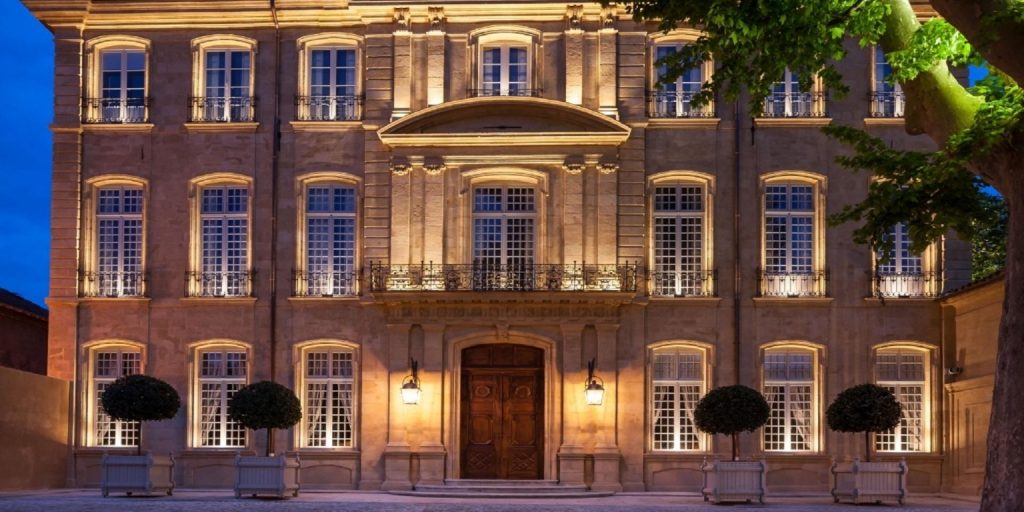
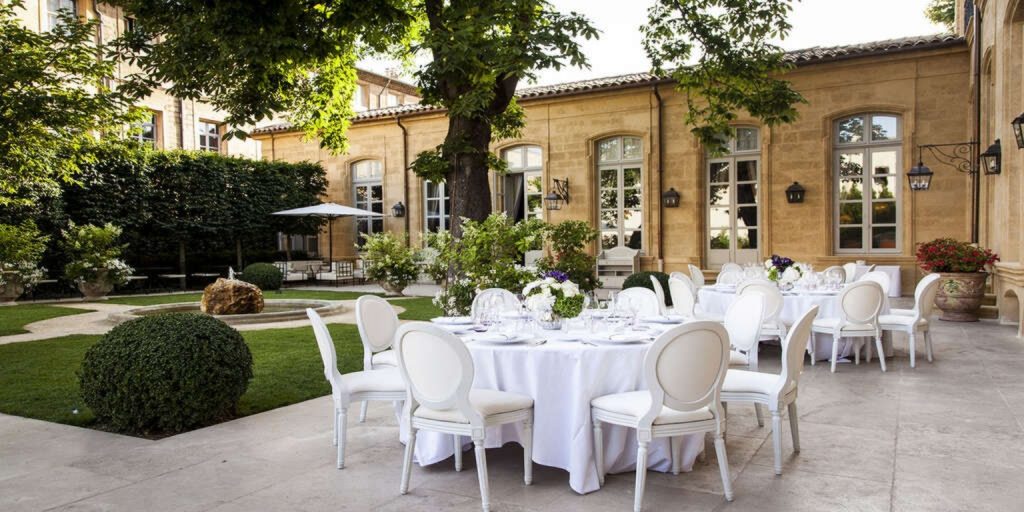
In 2010, Culturespaces, a private organization dedicated to preserving and promoting heritage sites, acquired the Hôtel de Caumont from the city. They embarked on an ambitious and comprehensive restoration project, investing significantly to return the mansion to its 18th-century splendor. This extensive refurbishing campaign, which took approximately two years, focused on meticulously restoring the opulent interiors, including the gilded plasterwork, period furnishings, and the famous Salon de Musique. The formal French gardens were also painstakingly recreated to reflect their original 18th-century design, complete with topiaries and fragrant plants of the era.
On May 6, 2015, the Hôtel de Caumont reopened its doors to the public as the Caumont Centre d’Art. This transformation marked a new era for the historic mansion, establishing it as a major cultural center in Aix-en-Provence.
The Caumont Centre d’Art Today
Today, the Hôtel de Caumont in Aix-en-Provence is a vibrant hub for art and culture, offering a rich program that appeals to both art connoisseurs and casual visitors. It hosts two major temporary exhibitions annually, dedicated to renowned masters of art history and contemporary artists. The exhibition spaces are beautifully integrated within the mansion’s historical rooms, allowing visitors to appreciate the art within an authentic period setting.
Beyond the exhibitions, the Caumont Centre d’Art provides a multi-faceted cultural experience. Visitors can explore the exquisitely restored historical rooms, such as Pauline’s bedroom and the music room, gaining insight into the aristocratic lifestyle of the 18th century. A daily screening of a film about Paul Cézanne, a native of Aix, in the auditorium, offers a deeper understanding of the artist’s connection to the region. The peaceful French gardens provide a tranquil escape, perfect for a leisurely stroll or enjoying a coffee at the charming Café Caumont, which overlooks the gardens.
The Hôtel de Caumont in Aix-en-Provence has firmly established itself as a must-visit attraction.. It seamlessly blends historical preservation with dynamic cultural programming, offering a unique opportunity to step back in time and immerse oneself in the grandeur of the French 18th century while engaging with world-class art. Its journey from a private residence, built from 1715 to 1742, to a cherished public art space is a testament to Aix-en-Provence’s enduring commitment to its heritage and its future as a center for art and culture.