What is the Aix-en-Provence outdoor escape game?
The Aix-en-Provence outdoor escape game is an escape room taken out into the old town: you play on your smartphone, and each of the 10 stops hides a puzzle that you solve by looking around and thinking logically. Allow about 2 hours, with 23 minutes on foot over 3.6 km, and begin on a day that suits you.
Puzzles are tied to fountains, squares and the cathedral: the dolphin fountain of Place des Quatre-Dauphins, the carved Gothic portal of Saint-Sauveur and King René at the end of the Cours Mirabeau. Aix is made for this format, since its fountains and squares sit close together, so each puzzle opens onto the next street without a long detour.
- Durationabout 2 hours
- Walkingabout 23 min · 3.6 km
- Stops10
- LanguagesEnglish, German, French, Italian, Spanish, Dutch
What you do on the escape game
Solve
Work out each stop's puzzle from what you can see and reason it through. No prior knowledge of Provence is needed.
Look around
The clues sit in fountains, façades, plane-shaded avenues and the carvings of the cathedral portal.
Walk
Google Maps guides you from stop to stop, about 23 minutes on foot over roughly 3.6 km.
Take your time
There is no countdown. Use hints if you are stuck, sit down for a coffee and carry on later or on another day.
See the route and attractions →
How it works
- Book online Choose the number of players. Your booking reference arrives by email straight away.
- Get the app Download the World City Trail app from the App Store or Google Play and enter your booking reference.
- Play when you like Start whenever you are ready, walk at your own pace and pause any time. No guide, no fixed schedule.
Who it suits
Friends
Each puzzle gives the group something to argue over on the way to the next square, and nobody has to know Aix in advance.
Couples
A shared challenge that keeps you talking as you stroll from the Mazarin quarter to King René, with no clock ticking.
Team building
Teams of up to 5 play on their own phones, so colleagues can split the puzzles and compare answers.
Good to know
- Bring a charged smartphone with mobile data; a power bank helps.
- Best started in daylight, so you can see the details the puzzles ask about.
- No entry tickets needed: everything happens outside the buildings. Going inside is optional and paid separately.
- Family friendly; children must be accompanied by an adult.
- Not suitable for wheelchair users and difficult with strollers.
- Teams of up to 5 work best; bigger groups split into several teams, one ticket per player.
- Every purchase helps support stray cats and dogs in Greece.
Puzzle route: from Musée Granet to King René
10 stops · about 23 min walking · start: Musée Granet · finish: Fontaine du Roi René
Your first puzzle is at Musée Granet in the Mazarin quarter, and the next come at Place des Quatre-Dauphins and the Hôtel de Caumont. Then the Cours Mirabeau and the Fontaine de la Rotonde appear, followed by Place d'Albertas, Place des Cardeurs, Cathédrale Saint-Sauveur and the Église de la Madeleine. The last puzzle is at the Fontaine du Roi René. Google Maps covers the walk, the app lets you change the order, and no entry tickets are needed for the puzzles.
Open the route map ↗
1Musée GranetStart
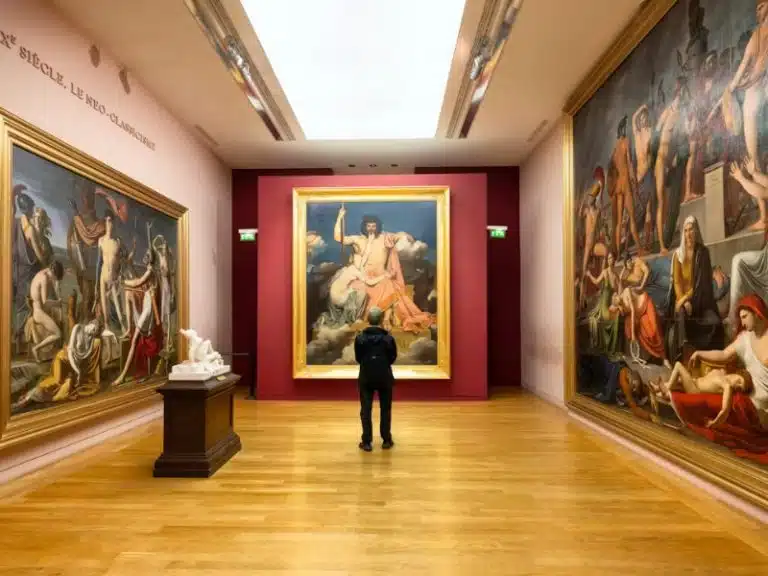
The museum occupies the 17th-century former priory of the Knights of Malta in the Mazarin quarter, beside the Gothic church of Saint-Jean-de-Malte. It is named after the painter François-Marius Granet, who left his collection to the city, and it holds several paintings by Paul Cézanne, who was born in Aix.
Read the full story →
2Place des Quatre-Dauphins
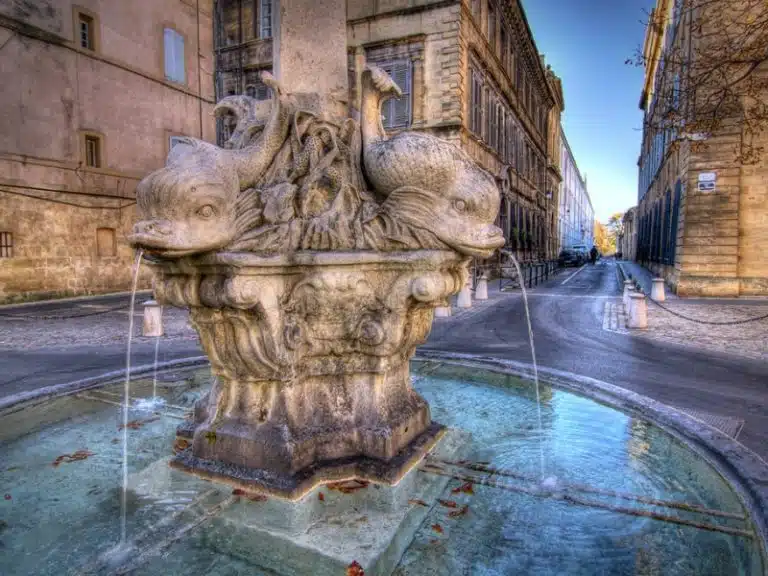
This small square in the Mazarin quarter takes its name from the fountain of 1667 by Jean-Claude Rambot, where four dolphins spout water around an obelisk crowned by a pine cone. The quarter around it was laid out in the 17th century on a regular grid of streets lined with elegant private mansions.
3Hôtel de Caumont
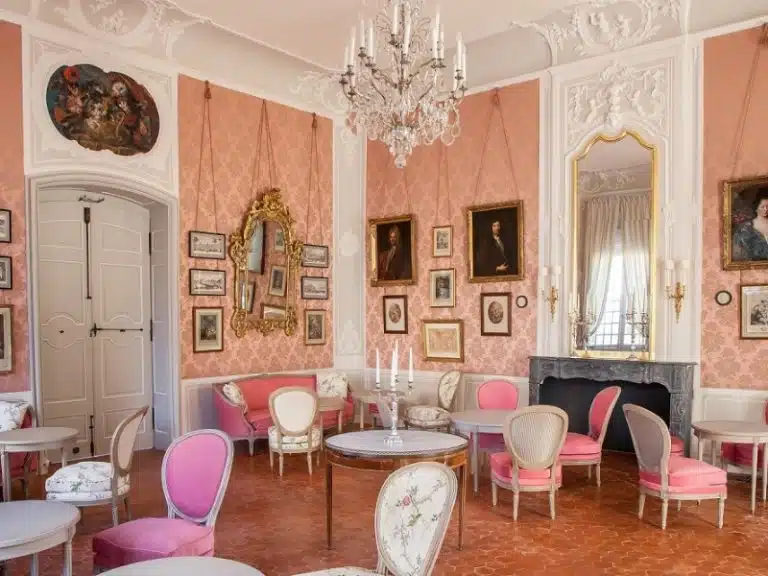
This aristocratic mansion was built in the first half of the 18th century and is one of the finest examples of its kind in Aix. Since 2015 it has housed the Caumont Centre d'Art, and behind the building lies a formal French garden.
4Cours Mirabeau
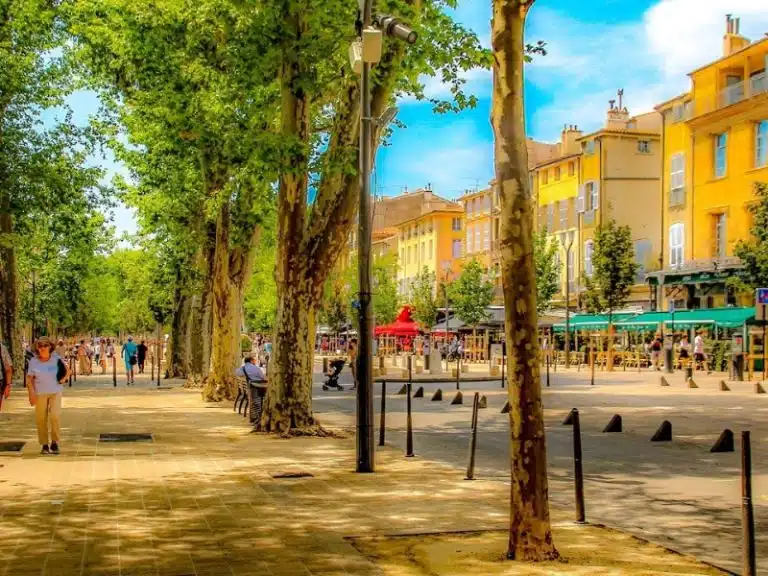
Laid out in the mid-17th century along the line of the old ramparts, this broad avenue shaded by plane trees separates the old town from the Mazarin quarter. Mansions with carved doorways and wrought-iron balconies line its south side, and in the middle a moss-covered fountain still flows with warm water from the town's springs.
5Fontaine de la Rotonde
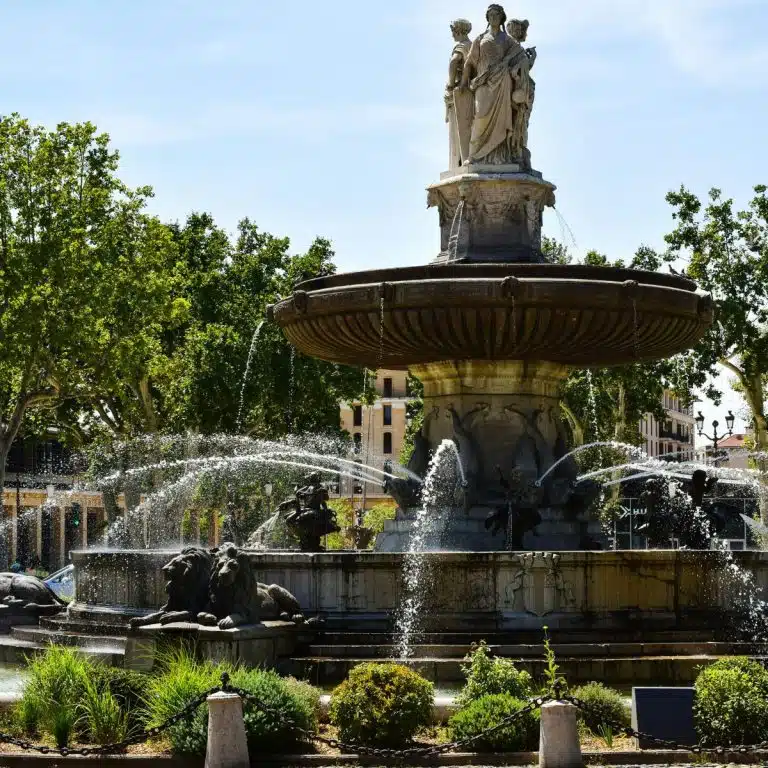
Built in 1860 at the western end of the Cours Mirabeau, this large fountain stands in the middle of a busy roundabout. Three statues crown it, representing Justice, Agriculture and the Fine Arts, with Justice looking down the Cours Mirabeau.
6Place d'Albertas
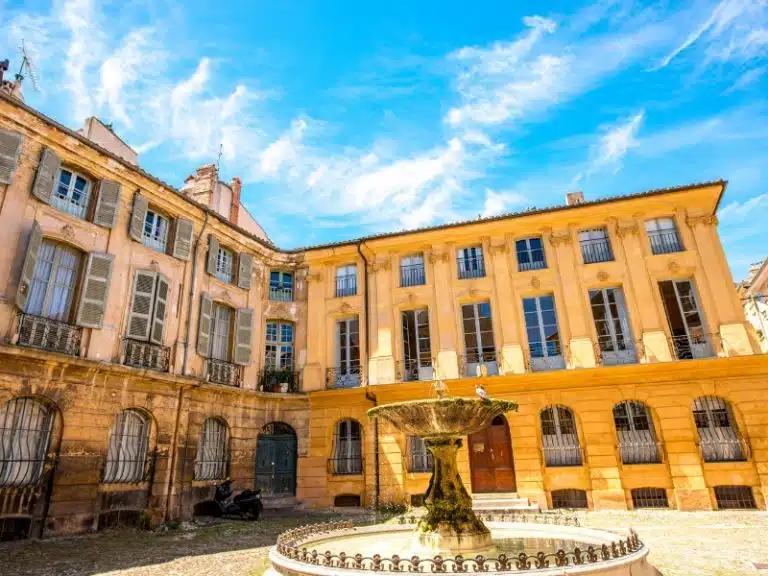
Jean-Baptiste d'Albertas had this small square laid out in 1745 opposite his family mansion, to give it a worthy setting. Its uniform façades with pilasters recall the royal squares of Paris, and the fountain in the middle was only added in 1912.
Read the full story →
7Place des Cardeurs
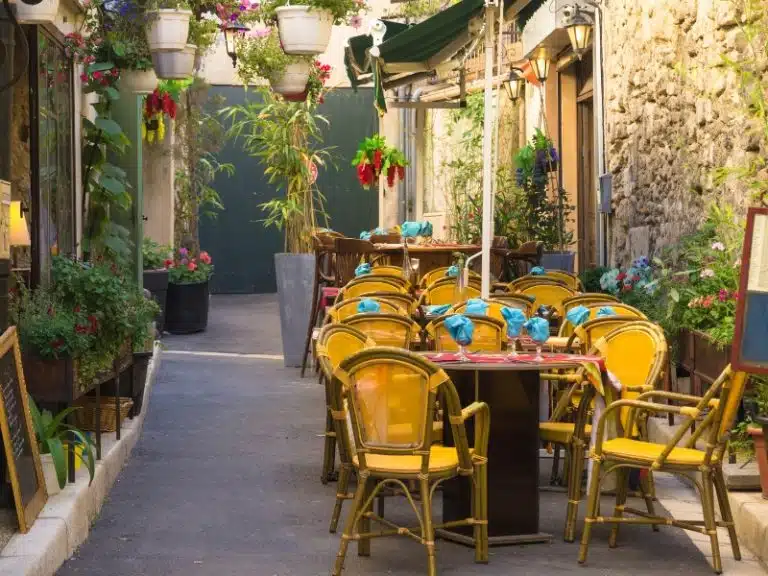
One of the largest squares in the old town, close to the town hall, Place des Cardeurs is named after the wool carders who once worked in this area. Today its colourful façades are lined with restaurant terraces, and a modern fountain stands in the square.
8Cathédrale Saint-Sauveur
Built over many centuries on the site of the Roman forum, Saint-Sauveur combines Romanesque, Gothic and later styles under one roof. Its early Christian baptistery reuses ancient Roman columns, and the cathedral owns Nicolas Froment's triptych of the Burning Bush, painted in the 1470s for King René. Look closely at the carved Gothic portal of the west façade.
9Église de la Madeleine
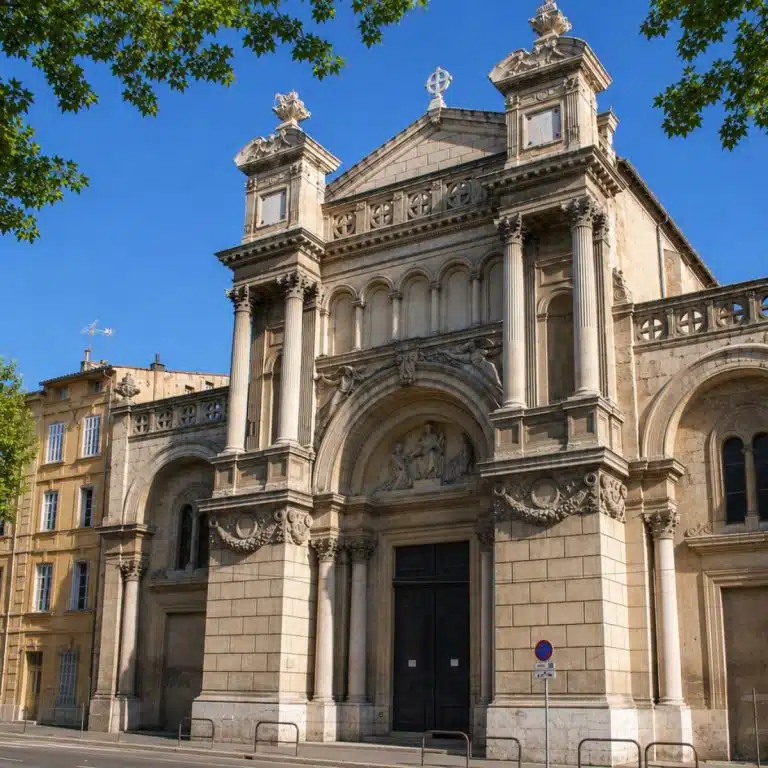
This church on Place des Prêcheurs was rebuilt at the end of the 17th century on the site of the church of the Dominican friars, the Preachers who gave the square its name. Its neoclassical façade was only added in the 19th century, and the church owns the central panel of the 15th-century Annunciation of Aix.
10Fontaine du Roi RenéFinish
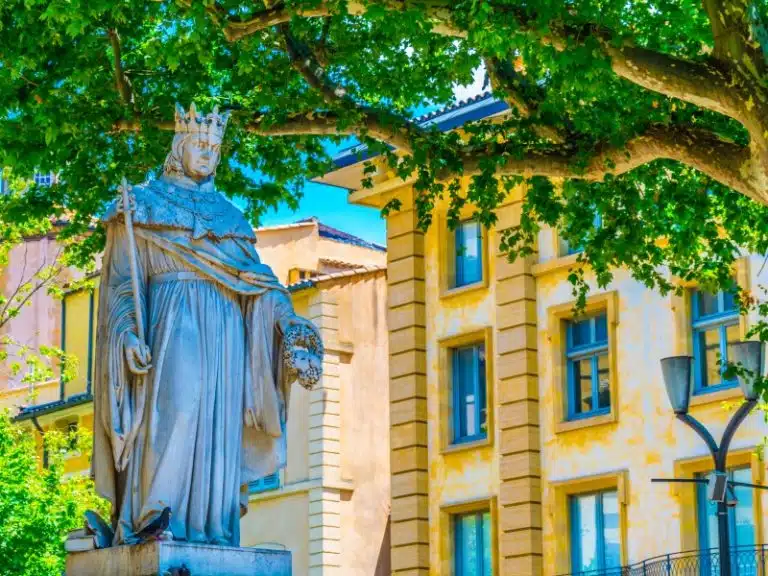
At the eastern end of the Cours Mirabeau stands King René, Count of Provence in the 15th century, in a statue by David d'Angers placed on the fountain in 1823. In his hand he holds a bunch of muscat grapes, recalling the tradition that he brought this grape variety to Provence.
Only logged in customers who have purchased this product may leave a review.







Reviews
There are no reviews yet.