
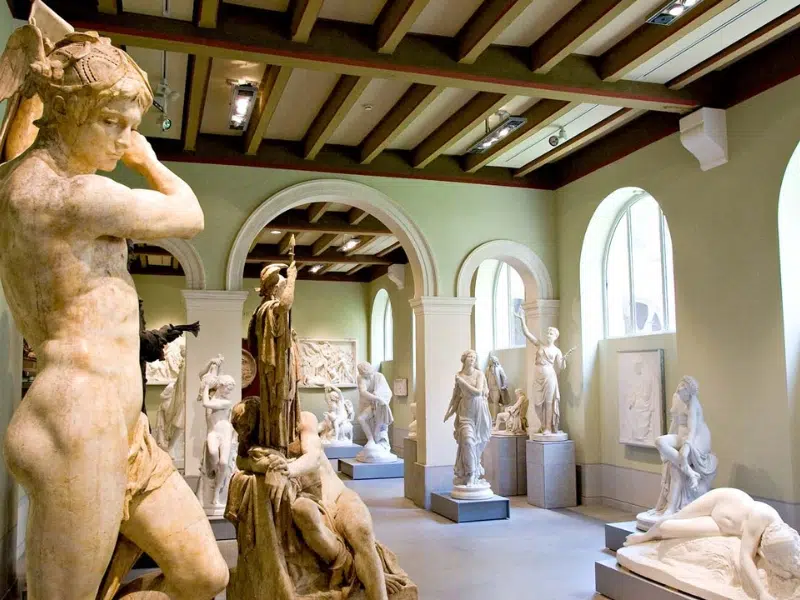
The Musée Granet is the main art museum of Aix-en-Provence, housed in the former priory of the Knights of Malta next to the Gothic church of Saint-Jean-de-Malte. It is named after the painter François Marius Granet, who left his collection to his home town. The twist: for decades the museum would not touch the work of the city's most famous son, Paul Cézanne, and it only received its first Cézanne paintings in 1984.
Musée Granet at a glance
- Where: Place Saint-Jean-de-Malte, on the edge of the Mazarin quarter, south of the Cours Mirabeau.
- Opened: 1838, as the Musée d'Aix; renamed Musée Granet in 1949, a hundred years after Granet's death.
- Building: the old priory of the Order of Saint John (the Knights of Malta), extended with new wings from 1860 onwards.
- What it is today: the city's museum of fine arts and archaeology, with paintings from the 14th to the 20th century and regular temporary exhibitions.
- Time needed: 1.5 to 2 hours for the collections, more if a major exhibition is on.
From a knights' priory to a painter's museum
The site belonged to the Knights Hospitaller from the 12th century, and their church, built mostly in the 1270s, is considered the first Gothic church in Provence. After the Revolution the priory buildings found new uses, and a city museum opened here in 1838. Its first collection was largely made up of antiquities gathered at the end of the 18th century by the Aix scholar Fauris de Saint-Vincens.
In 1849 François Marius Granet, born in Aix in 1775, died and left his paintings and drawings to the city; under the terms of his will, two hundred drawings went to the Louvre. Granet had spent seventeen years in Rome, painting monasteries, ruins and light-filled interiors. Other gifts followed, among them more than 800 works bequeathed by Bourguignon de Fabregoules in 1863. The museum grew wing by wing from 1860, and a major renovation before the 2006 Cézanne centenary exhibition gave it far more exhibition space.
What to look for
- Jupiter and Thetis by Ingres: a huge, strange canvas from 1811 with the sea nymph clinging to the knee of the enthroned god. It is the most famous painting in the building.
- Granet himself: the portrait of the young Granet painted in Rome by his friend Ingres, and Granet's own views of Roman monasteries and Provençal landscapes.
- The Cézanne room: works deposited by the French state in 1984, including Bathers and a Portrait of Madame Cézanne.
- Rembrandt's Self-Portrait with a Beret and other Flemish, Dutch and Italian paintings in the old masters section.
- Archaeology from the Entremont oppidum, the hill fort of the Celto-Ligurian Salyes just north of the city, which the Romans destroyed before founding Aix.
- The courtyard and the view of Saint-Jean-de-Malte: the museum and the church still share a garden, and the church's bell tower rises right beside the entrance.
The curator who said no
Cézanne was born in Aix in 1839, and as a young man he took drawing classes at the city's drawing school, then housed in the museum building. Yet the museum ignored him. Its curator Henri Pontier is reported to have vowed that no Cézanne would enter the museum as long as he lived. The museum only received its first Cézanne paintings in 1984, when the national museums deposited them in Aix because the master was missing from his home town's collection.
Tips for your visit
- Check the exhibition programme before you go: big temporary shows can take over part of the building, and some permanent works may be moved or lent out.
- Go early in the day or late in the afternoon in summer, when tour groups and the heat are at their peak around midday.
- Step into Saint-Jean-de-Malte before or after your visit; it is right next door and free to enter outside services.
- The Granet XXe annex in the Chapelle des Pénitents blancs showed the Planque collection of modern art from 2013; that collection left Aix in 2026, so check what the chapel shows now.
Nearby
- Saint-Jean-de-Malte: the Gothic church of the Knights of Malta, next door to the museum.
- Fontaine des Quatre-Dauphins: the 17th-century fountain with four dolphins at the centre of the Mazarin quarter, a few minutes' walk away.
- Hôtel de Caumont: an 18th-century mansion in the Mazarin quarter, now an art centre with exhibitions and a garden café.
- Cours Mirabeau: the plane-tree avenue lined with cafés and mansions, a few minutes' walk to the north.
See Aix-en-Provence with World City Trail
Our Aix-en-Provence scavenger hunt turns the old town into a game you play on your phone. The route takes around 2 hours, with about 43 minutes of walking, and you can start whenever you like.
If you prefer a different format, there is also a self-guided walking tour and an outdoor escape game in Aix-en-Provence.
Play the Aix-en-Provence scavenger hunt →
Take the self-guided walking tour of Aix-en-Provence →
Play the outdoor escape game in Aix-en-Provence →
Facts checked in October 2026.