
Just a short distance northwest of the historic city of Dijon, nestled in the picturesque Burgundy countryside, lies the Dijon-Prenois Racecourse. This legendary motor racing circuit, known for its fast, sweeping bends and significant elevation changes, has etched its name into the annals of motorsport history, particularly through its unforgettable Formula 1 duels. While its era as a consistent host of top-tier international events might be largely in the past, the Dijon-Prenois Racecourse in Dijon remains a cherished venue, pulsating with a rich heritage and continuing to thrill racing enthusiasts.
Birth and Evolution of a Fast Circuit
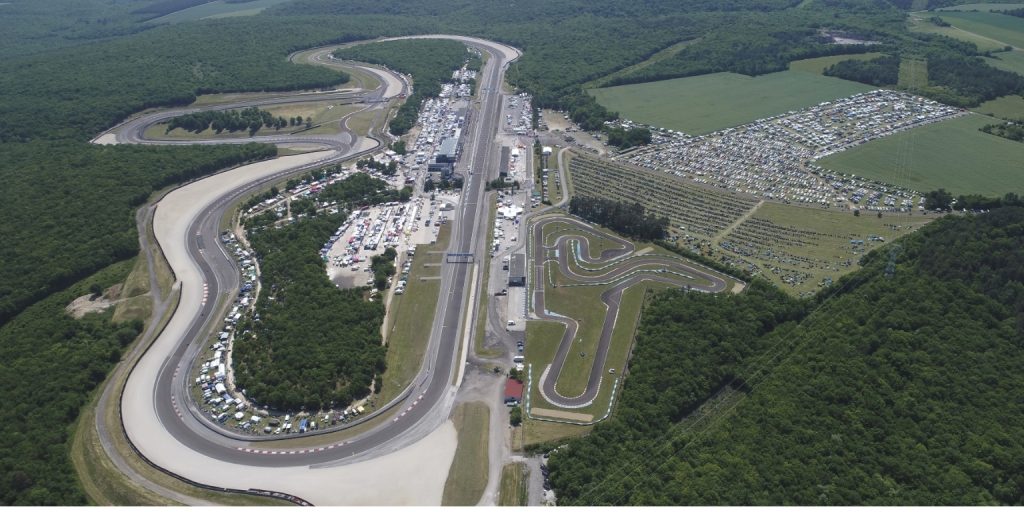
The vision for the Circuit Dijon-Prenois was brought to life by François Chambelland, a former rugby player and wrestler, who aimed to establish Dijon as an automotive hub. Construction of the circuit began in 1969, and it officially opened its doors on May 26, 1972, initially as a shorter, 3.289-kilometer (2.044-mile) track with just 8 turns. Its inaugural event was a European Prototype Championship race in June of that year.
The circuit quickly gained a reputation for its undulating terrain and exhilarating, high-speed corners. However, its initial short length proved challenging for Formula 1 races, leading to frequent congestion with backmarkers. To address this, the track underwent a significant extension in 1976, lengthening it to its current 3.801 kilometers (2.362 miles) with 9 turns. This modification made it more suitable for international events, retaining its challenging character with considerable elevation changes (a difference of 29 meters from highest to lowest points) and fast, flowing sections.
Formula 1 Glory and Epic Duels
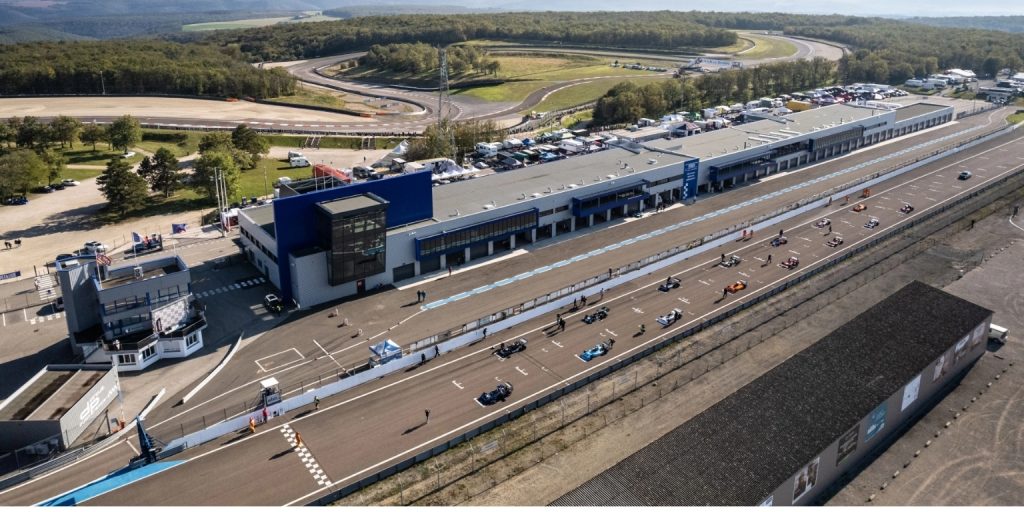
The Dijon-Prenois Racecourse became a prominent fixture on the Formula 1 calendar, hosting the French Grand Prix five times (1974, 1977, 1979, 1981, 1984) and the Swiss Grand Prix once in 1982 (due to Switzerland’s ban on motor racing).
Its most iconic moment, forever immortalized in motorsport lore, occurred during the 1979 French Grand Prix. While Jean-Pierre Jabouille secured a historic first victory for a turbo-charged F1 car and Renault, the true spectacle was the breathtaking battle for second place between Gilles Villeneuve (Ferrari) and René Arnoux (Renault). For several laps, the two drivers engaged in a relentless, wheel-to-wheel duel, trading positions multiple times with daring overtakes and even slight contact, pushing the limits of their cars and skill. This legendary fight remains one of the most thrilling and memorable moments in Formula 1 history and firmly established Dijon-Prenois’s reputation as a circuit that delivered spectacular racing.
Beyond Formula 1, Dijon-Prenois also hosted a variety of other prestigious international events, including the World Sportscar Championship (from 1973), Formula 3000, the FIA GT Championship, and the DTM (Deutsche Tourenwagen Masters) in 2009.
Modern Era: A Hub for Historic Racing
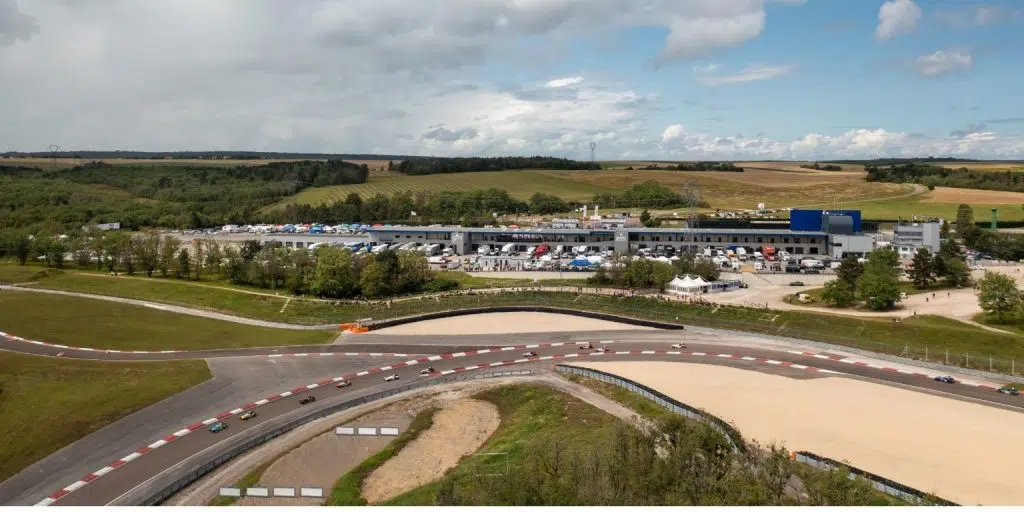
After its last Formula 1 Grand Prix in 1984, the Dijon-Prenois Racecourse gradually transitioned from a top-tier international venue to a vital national and regional circuit. However, it continues to be a vibrant hub for motorsport, particularly for historic racing events.
The most prominent of these is the Grand Prix de l’Âge d’Or (Golden Age Grand Prix), which has been held at Dijon-Prenois since 2004. This event attracts a spectacular array of classic Formula 1 cars, sports prototypes, and touring cars from bygone eras, allowing enthusiasts to relive the golden age of motorsport on a circuit perfectly suited to these historic machines. The track also hosts numerous national French championships, club races, driving experiences, and motorcycle events throughout the year. In 2001, a modern go-kart track was also added to the complex, further diversifying its offerings.
The Circuit Dijon-Prenois in Dijon, opened in 1972 and extended to 3.801 kilometers in 1976, is a cherished piece of motorsport heritage. While its days of hosting regular Formula 1 Grands Prix may be over, its legacy of fast, undulating corners and epic battles lives on. It continues to be a place where the roar of engines and the thrill of speed captivate audiences, ensuring its place as a revered track in the heart of Burgundy.