What is the Dijon outdoor escape game?
The Dijon outdoor escape game is an escape room taken into the streets: you play on your phone, and each of the 10 stops holds a puzzle that you crack by reading the surroundings and reasoning it through. Plan on about 2 hours, with 20 minutes on foot over 1.8 km, and start on a day that suits you.
Each puzzle is attached to a place in the old town, such as the Palace of the Dukes, the Jacquemart clock on Notre-Dame or the Bareuzai statue in the fountain of Place François Rude, and none of them depends on the others. Dijon suits this format because its centre is compact and largely pedestrian, so the puzzles follow each other like stages of one long walk.
- Durationabout 2 hours
- Walkingabout 20 min · 1.8 km
- Stops10
- LanguagesEnglish, German, French, Italian, Spanish, Dutch
What you do on the escape game
Solve
Work out the puzzle at each stop by observing the scene and thinking it through. No prior knowledge of Burgundy is needed.
Read the scene
The clues are in the details: carved gargoyles, façades, fountains and the shape of each square.
Walk
Google Maps takes you from stop to stop, about 20 minutes of walking over 1.8 km.
Pace yourself
No countdown runs. Ask for a hint when you are stuck, take a coffee break and carry on later or another day.
See the route and attractions →
How it works
- Book online Choose the number of players. Your booking reference arrives by email straight away.
- Get the app Download the World City Trail app from the App Store or Google Play and enter your booking reference.
- Play when you like Start whenever you are ready, walk at your own pace and pause any time. No guide, no fixed schedule.
Who it suits
Friends
Each puzzle gives the group something to debate on the way to the next landmark, and nobody has to know Dijon in advance.
Couples
A shared challenge that keeps you talking as you move from the palace to the cathedral, with no clock ticking.
Team building
Teams of up to 5 play on their own phones, so colleagues can split the puzzles and compare answers.
Good to know
- Bring a charged smartphone with mobile data; a power bank helps.
- Best started in daylight, so you can see the details the puzzles ask about.
- No entry tickets needed: everything happens outside the buildings. Going inside is optional and paid separately.
- Family friendly; children must be accompanied by an adult.
- Not suitable for wheelchair users and difficult with strollers.
- Teams of up to 5 work best; bigger groups split into several teams, one ticket per player.
- Every purchase helps support stray cats and dogs in Greece.
Puzzle route: from Place Darcy to the Halles de Dijon
10 stops · about 20 min walking · start: Place Darcy & Jardin Darcy · finish: Halles de Dijon
The first puzzle waits at Place Darcy & Jardin Darcy, and the route passes Porte Guillaume and Saint-Bénigne Cathedral before following rue de la Liberté to Place François Rude and Place de la Libération. Next come the Palace of the Dukes and Estates of Burgundy, the Museum of Fine Arts and Place des Ducs de Bourgogne, then Notre-Dame, and the last puzzle sits at the Halles de Dijon. Google Maps leads the way between stops, the app lets you change the order, and the puzzles need no entry tickets.
Open the route map ↗
1Place Darcy & Jardin DarcyStart
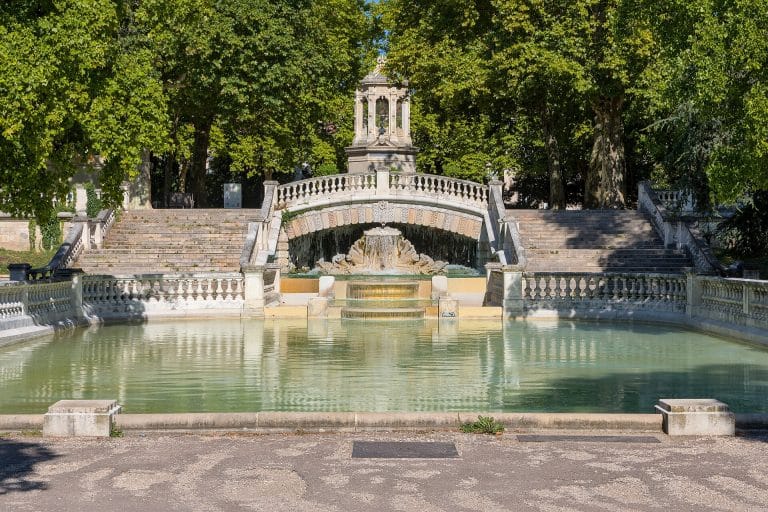
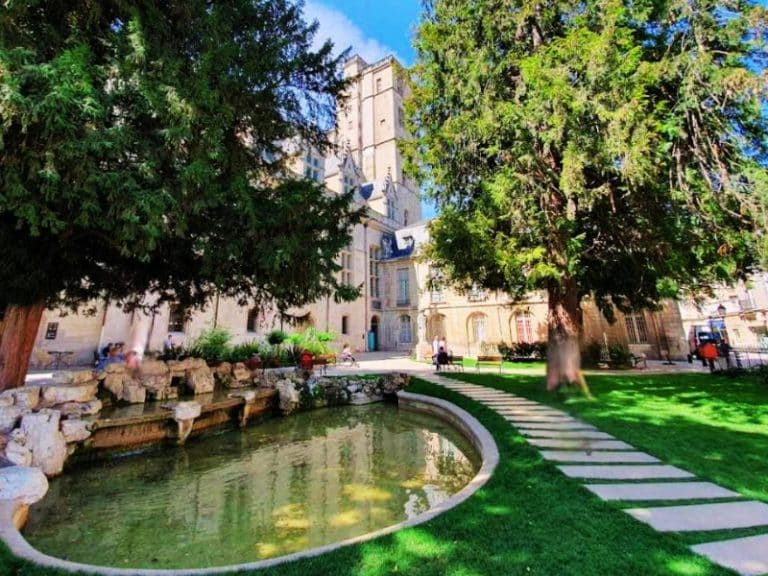
Place Darcy is the open square in central Dijon, and the neo-Renaissance Jardin Darcy lies beside it. The garden was laid out in 1880 by the architect Félix Vionnois on the site of the water reservoir that Henry Darcy built to supply the city's fountains, and it is Dijon's first public garden. Walk round the square and the garden's terraces, basins and fountains give a calm start to the route.
2Porte Guillaume
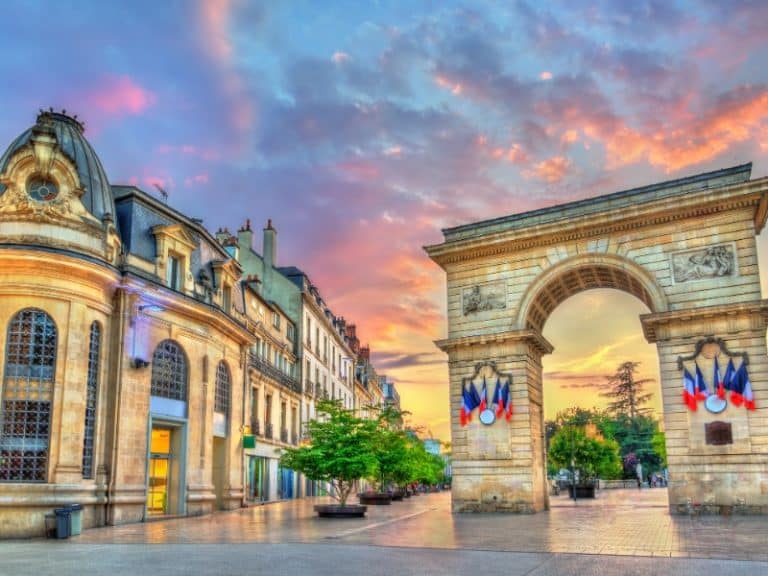
This triumphal arch was built in the 1780s and first dedicated to the Prince of Condé, governor of Burgundy. It takes its name from an older city gate, traditionally linked to Abbot William of Volpiano, and it marks the start of rue de la Liberté, the main street of the old town.
3Saint-Bénigne Cathedral
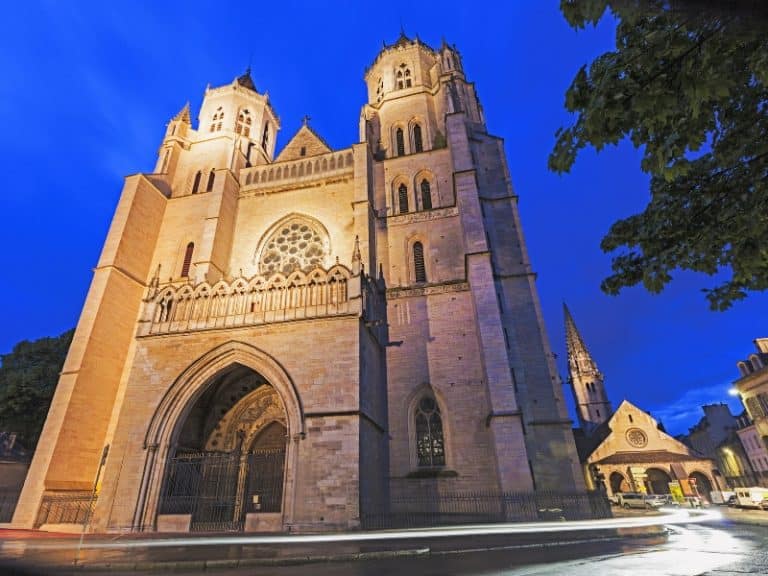
Dijon's cathedral is a Gothic church built mainly in the late 13th and 14th centuries on the site of an abbey founded at the tomb of Saint Benignus. Its roof is covered with colourful glazed tiles in Burgundian style, and below it lies a crypt with remains of the 11th-century rotunda of Abbot William of Volpiano.
Read the full story →
4Place François Rude
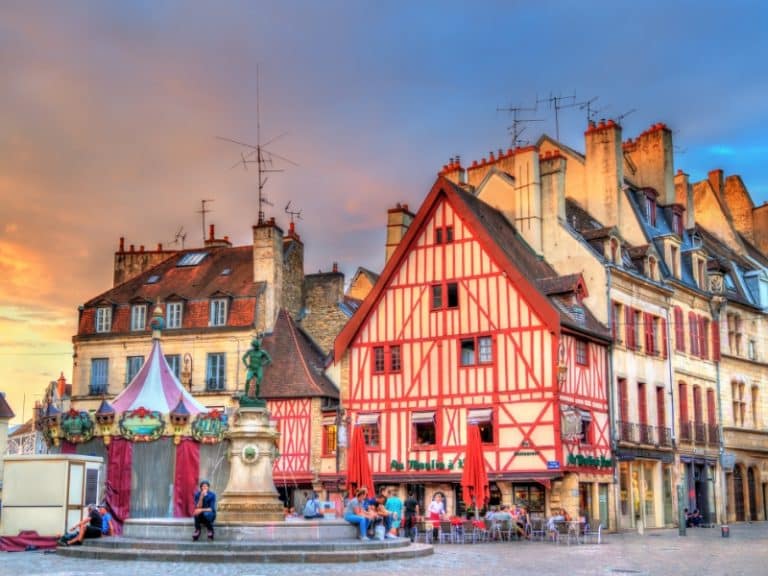
This small square on rue de la Liberté is named after the sculptor François Rude, born in Dijon in 1784 and known for the Marseillaise relief on the Arc de Triomphe in Paris. In its fountain stands the Bareuzai, a bronze winegrower treading grapes, and half-timbered houses line one side.
Read the full story →
5Place de la Libération
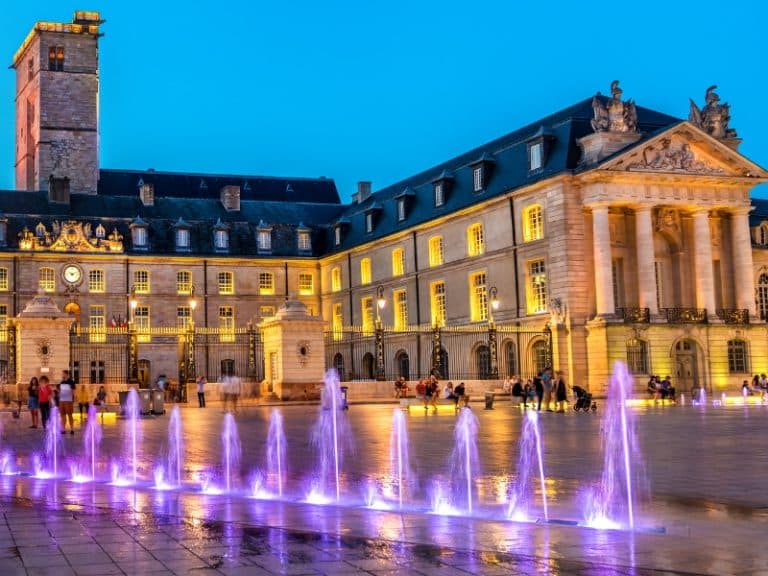
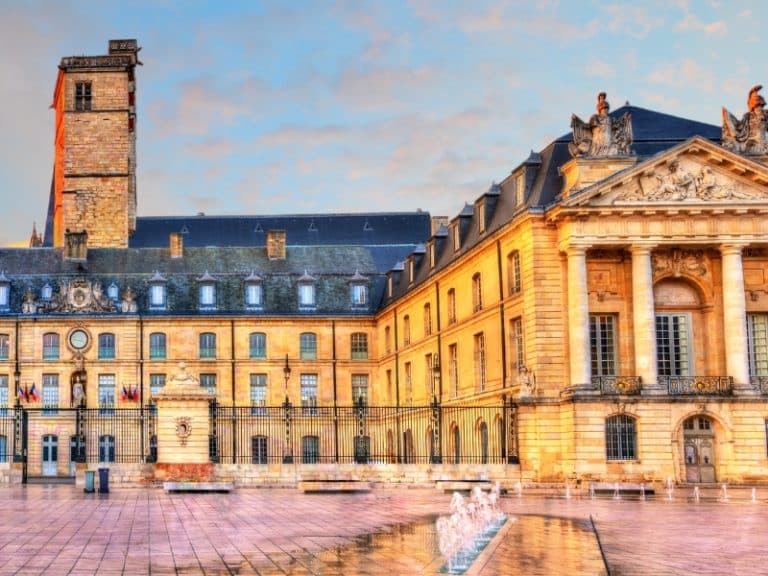
This semicircular square in front of the ducal palace was designed by Jules Hardouin-Mansart, an architect of Versailles, and built from the 1680s as the Place Royale. It took its present name after the liberation of Dijon in September 1944, and today it is a traffic-free square with fountains set into the paving.
Read the full story →
6Palace of the Dukes and Estates of Burgundy
The Valois dukes of Burgundy ruled a rich state from this palace in the 14th and 15th centuries, and Philip the Good added the 46-metre tower that still rises above the city. From the late 17th century it was rebuilt in classical style for the Estates of Burgundy, and today it houses the town hall and the Museum of Fine Arts.
Read the full story →
7Museum of Fine Arts
Founded in 1787, Dijon's Museum of Fine Arts is one of the oldest museums in France and fills a large part of the ducal palace. Its most famous works are the tombs of the dukes Philip the Bold and John the Fearless, surrounded by rows of small carved mourners.
8Place des Ducs de Bourgogne
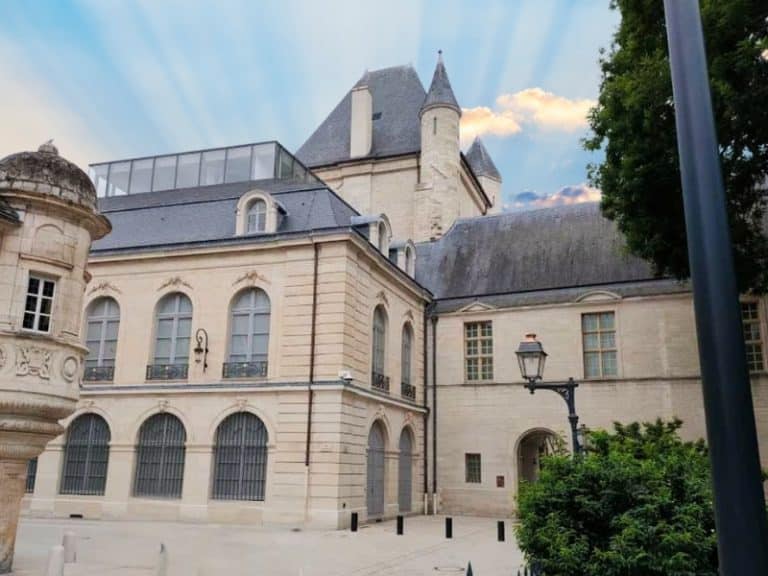
This small square on the north side of the palace shows the older, medieval parts of the ducal residence, very different from the classical front on Place de la Libération. It is framed by old townhouses and makes a quiet link between the palace and the streets around Notre-Dame.
Read the full story →
9Notre-Dame de Dijon
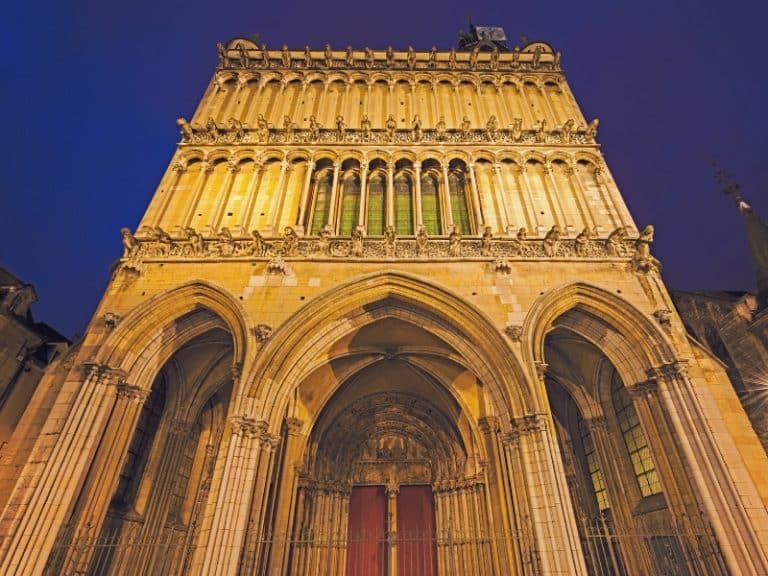
Notre-Dame was built in the first half of the 13th century, and its façade is lined with rows of carved gargoyles. On its tower the Jacquemart clock, brought from Kortrijk by Duke Philip the Bold in 1382, has figures that strike the hours. A small carved owl on a side wall is said to bring luck if you touch it with your left hand.
Read the full story →
10Halles de DijonFinish
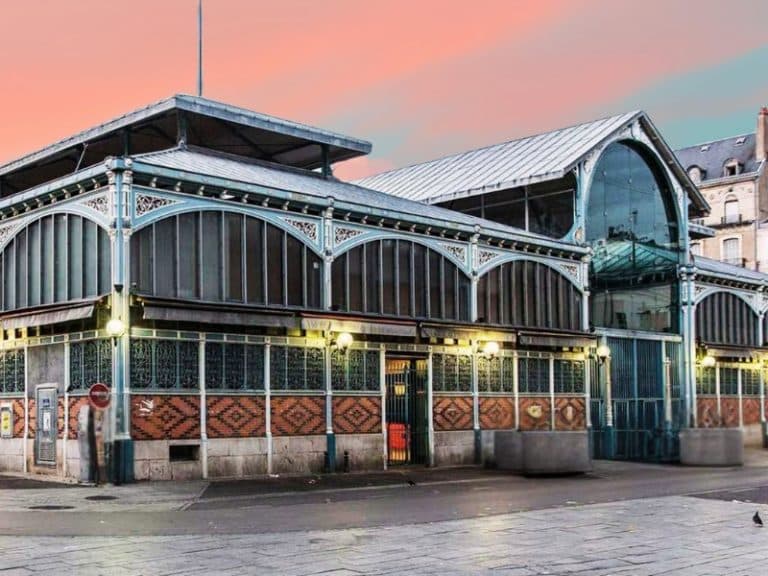
Dijon's covered market was built in iron and glass in the second half of the 19th century, inspired by Victor Baltard's market halls in Paris. On market days its stalls and the streets around it fill with Burgundy produce such as cheese, wine and mustard.
Read the full story →
Only logged in customers who have purchased this product may leave a review.





Anonymous (verified owner) –
Nice and smart puzzles !