What is the Austin outdoor escape game?
The Austin outdoor escape game is an escape room that leaves the building and moves onto the city streets: you play on your smartphone, and at each of the 10 stops a puzzle is waiting that you solve by looking at the surroundings and reasoning it through. Plan on about 2 hours, with 64 minutes on foot covering 2.7 km, and start on a day that suits you.
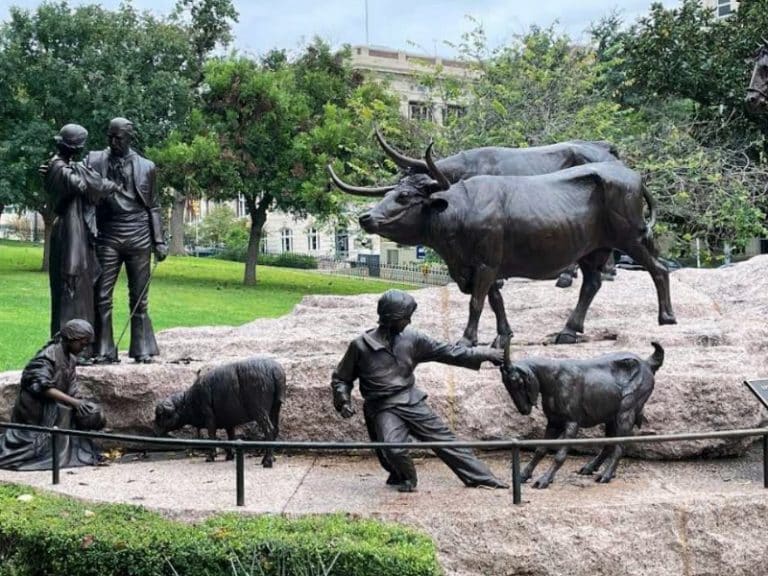
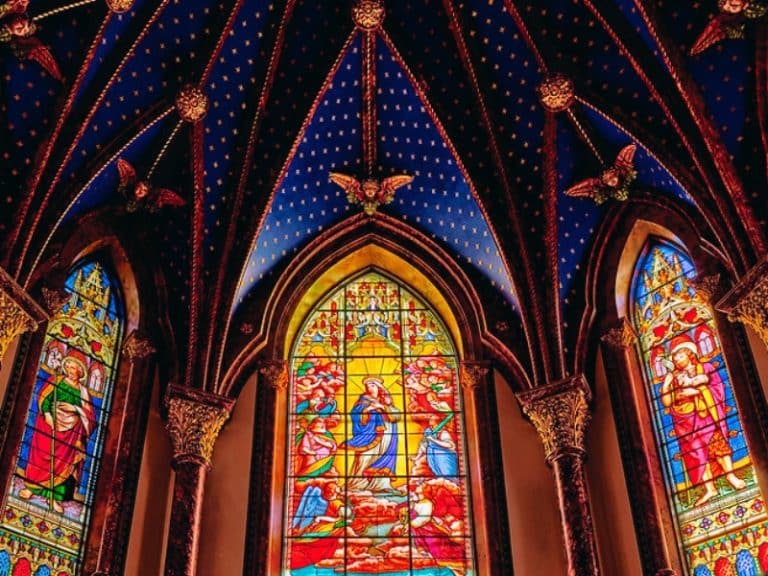
The puzzles stand alone rather than forming one storyline, and if you get stuck, up to three levels of hints are available. Downtown and the university campus suit this format, since the landmarks are linked by one walkable route of about 2.7 km, and looking closely at the outside of each monument is part of the game, from the Gothic Revival towers of the cathedral to the bronze figures on the Tejano Monument.
- Durationabout 2 hours
- Walkingabout 64 min · 2.7 km
- Stops10
- LanguagesEnglish, German, Spanish
What you do on the escape game
Solve
Work out the puzzle at every stop by watching your surroundings and reasoning it through. You need no background in Austin's history.
Look around
The clues sit in the setting of each landmark, from the monuments themselves to the layout of the grounds around them.
Walk
Follow Google Maps from stop to stop: about 64 minutes of walking across roughly 2.7 km.
Go at your own pace
There is no countdown. Ask for a hint when you need one, pause for a coffee and carry on later or on another day.
See the route and attractions →
How it works
- Book online Choose the number of players. Your booking reference arrives by email straight away.
- Get the app Download the World City Trail app from the App Store or Google Play and enter your booking reference.
- Play when you like Start whenever you are ready, walk at your own pace and pause any time. No guide, no fixed schedule.
Who it suits
Friends
Each puzzle gives the group something to debate, and nobody has to know the city beforehand.
Couples
A shared challenge that keeps you talking as you move from one landmark to the next, with no clock to watch.
Team building
Teams of up to 5 play on their own phones, so the game is simple to arrange for colleagues.
Good to know
- Bring a charged smartphone with mobile data; a power bank helps.
- Best started in daylight, so you can see the details the puzzles ask about.
- No entry tickets needed: everything happens outside the buildings. Going inside is optional and paid separately.
- Family friendly; children must be accompanied by an adult.
- Not suitable for wheelchair users and difficult with strollers.
- Teams of up to 5 work best; bigger groups split into several teams, one ticket per player.
- Every purchase helps support stray cats and dogs in Greece.
Puzzle route: from the UT Tower to Saint Mary Catholic Cathedral
10 stops · about 64 min walking · start: UT Tower · finish: Saint Mary Catholic Cathedral
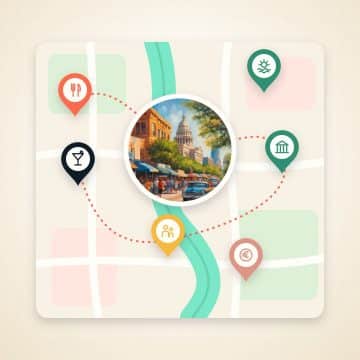
You begin at the UT Tower and finish at Saint Mary Catholic Cathedral, with eight stops in between: the George Washington Statue, Littlefield Fountain, the Bullock Texas State History Museum, the Texas Peace Officers' Memorial, the Texas State Capitol, the Confederate Soldiers Monument, the Texas African American History Memorial and the Tejano Monument. Start in daylight if you can, since the puzzles are solved outdoors and weather affects the walk. Google Maps guides you between stops, you can change the order in the app, and no entry tickets are needed.
Open the route map ↗
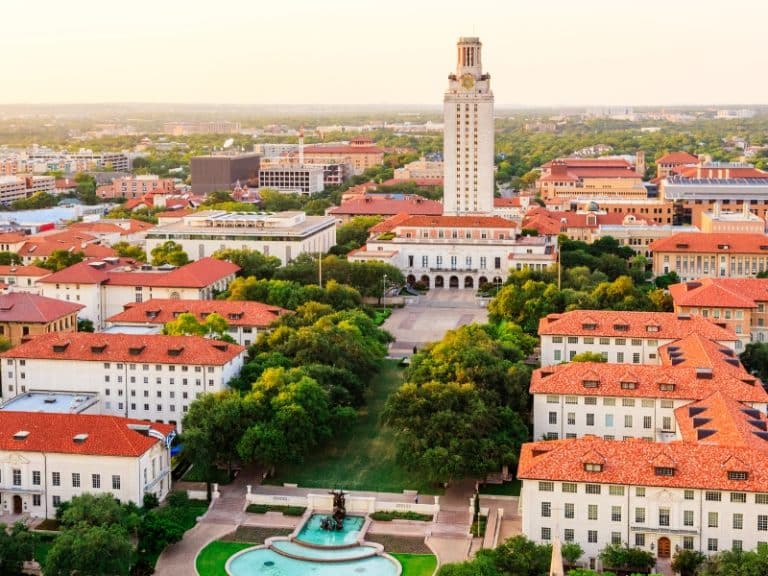
1UT TowerStart
The UT Tower rises 307 feet above the Main Building of the University of Texas at Austin, completed in 1937 to designs by Paul Philippe Cret. Its carillon has 56 bells and is played daily, and the tower is lit orange to mark university events.
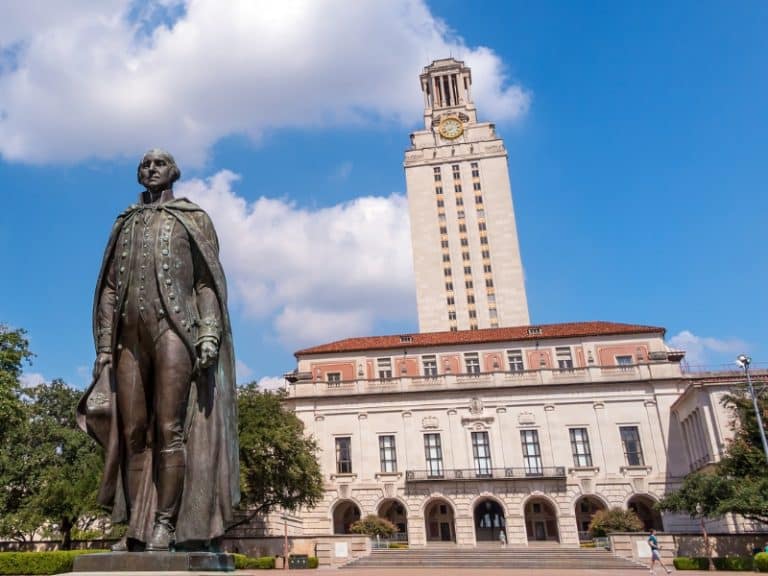
2George Washington Statue
This statue on the South Mall depicts Washington as he looked when named commander-in-chief in 1775. Pompeo Coppini, the Italian-born sculptor who also made the Littlefield Fountain, created it, and the Daughters of the American Revolution raised the money. It was dedicated on February 20, 1955.
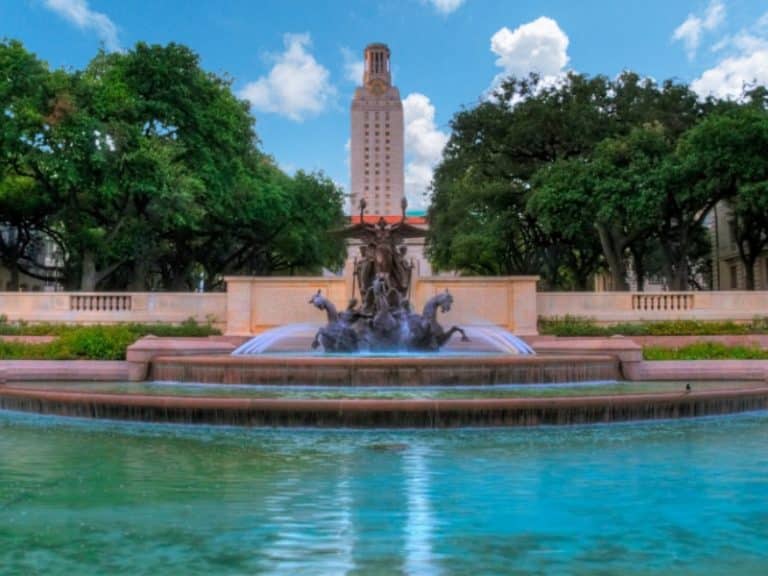
3Littlefield Fountain
Littlefield Fountain was dedicated on April 29, 1933, and paid for by George Littlefield, a former university regent. Its central bronze by Pompeo Coppini shows Columbia, a soldier and a sailor. The fountain honours students and alumni of the university who died in the First World War.
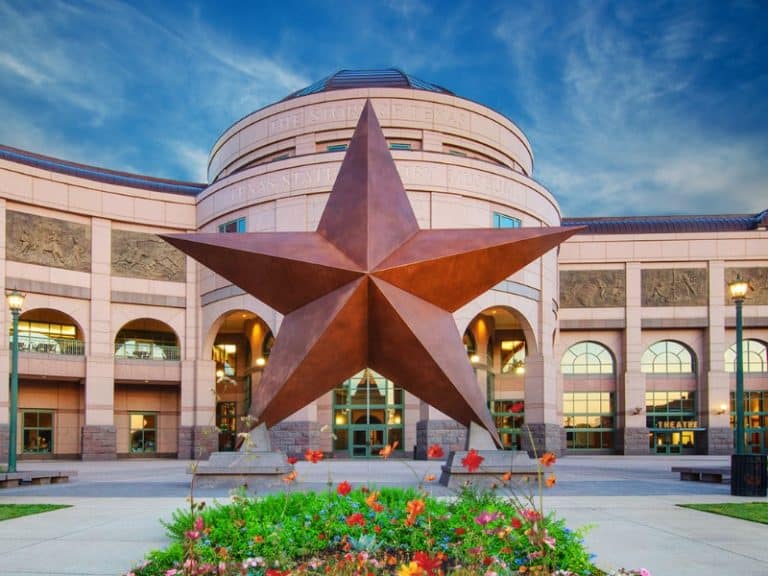
4Bullock Texas State History Museum
The Bullock Texas State History Museum held its grand opening in 2001 and is named after Bob Bullock, a former lieutenant governor who championed Texas history. Its long-term Texas History Gallery covers more than 16,000 years, and the La Belle ship hull is one of its centerpieces.
5Texas Peace Officers' Memorial
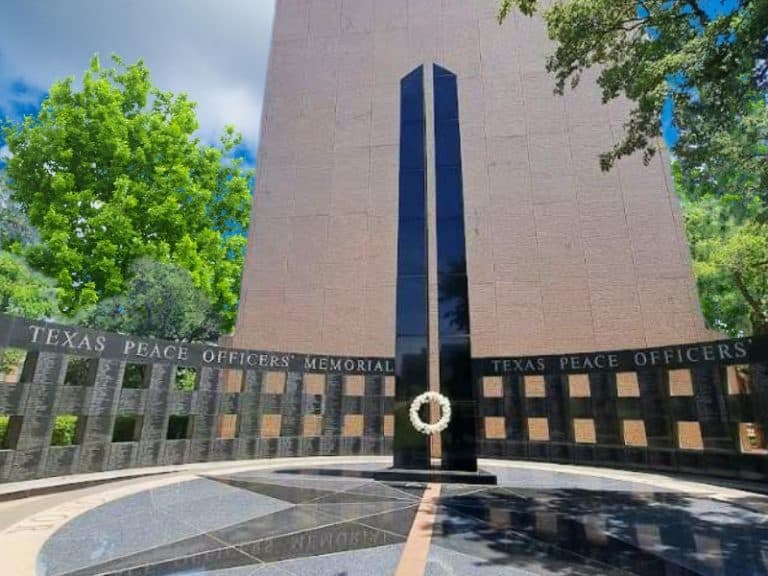
The Texas Peace Officers' Memorial was erected in 1999 on the Capitol grounds to honor law enforcement officers who died in service. Two granite spires stand side by side like an obelisk, and the names of officers who died since 1823 are carved into granite walls.
6Texas State Capitol
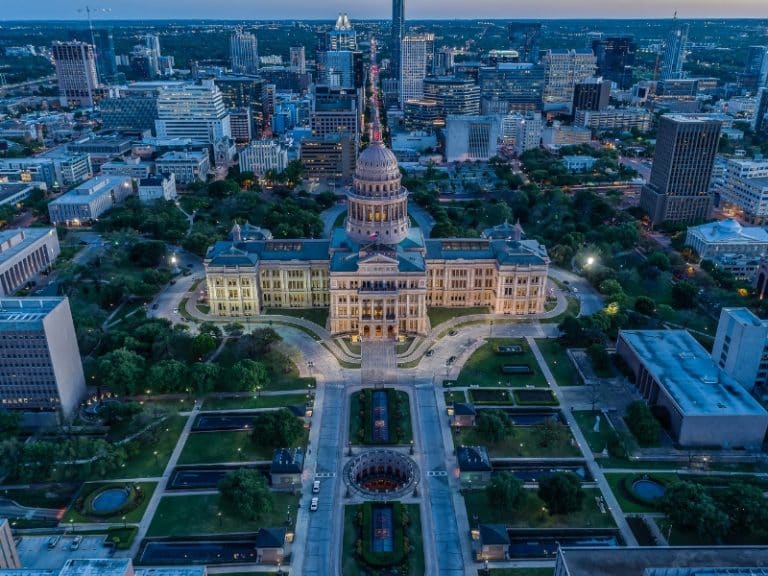
The Texas State Capitol was built from 1882 to 1888 to designs by Elijah Myers, and its exterior is clad in red granite from near Marble Falls. A statue of the Goddess of Liberty tops the dome, and at about 92 meters the building is taller than the Capitol in Washington.
7Confederate Soldiers Monument
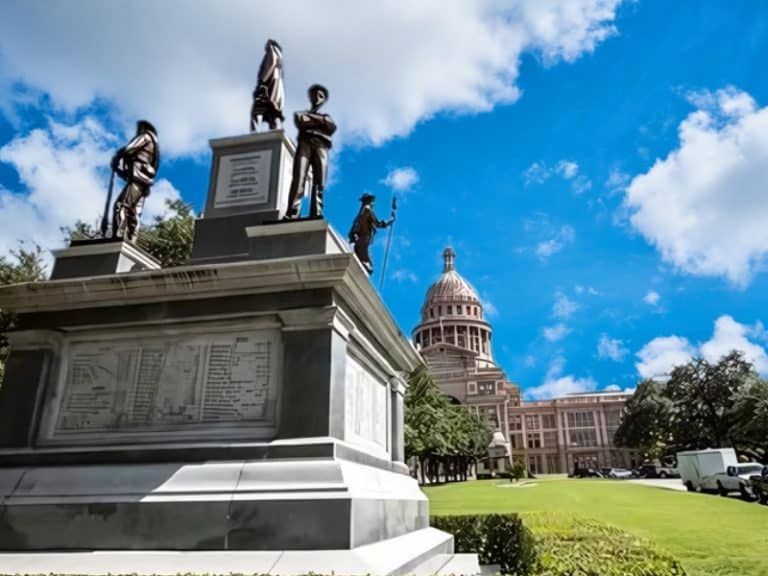
The Confederate Soldiers Monument stands on the Capitol grounds and was erected in 1903. Pompeo Coppini designed the sculpture and Frank Teich the base, and five bronze figures on it represent infantry, cavalry, artillery and navy, with Jefferson Davis at the top.
8Texas African American History Memorial
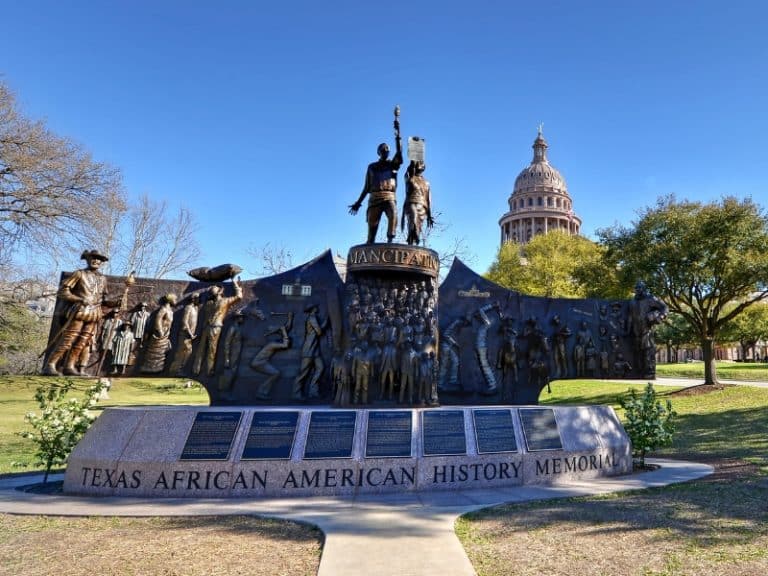
The Texas African American History Memorial was erected on the Capitol grounds in 2016 and designed by sculptor Ed Dwight. Its panels trace African American history in Texas from the 1500s to the present, including the figures Hendrick Arnold and Barbara Jordan and Juneteenth in 1865.
9Tejano Monument
The Tejano Monument was erected in 2012 by Tejano Monument Inc. and is the work of sculptor Armando Hinojosa. Nine life-size bronze figures stand on a base of Texas Sunset Red granite, and five plaques tell the story of the Tejanos' contribution to the state.
10Saint Mary Catholic CathedralFinish
Saint Mary Catholic Cathedral is a Gothic Revival church designed by the Irish-born architect Nicholas Clayton, whose cornerstone was laid in 1872. It became the cathedral of the Diocese of Austin in 1948, and its neo-Gothic towers were completed in 1907.
Only logged in customers who have purchased this product may leave a review.






Reviews
There are no reviews yet.