What is the Bonn outdoor escape game?
The Bonn outdoor escape game is an escape room taken out into the city: you play on your smartphone, and each of the 10 stops holds a puzzle that you crack by studying the surroundings and reasoning it through. Count on about 2 hours, including 24 minutes of walking over roughly 2.5 km, and begin whenever suits you.
The puzzles sit at the Minster, the Beethoven Monument, the Beethoven House, the Electoral Palace and the Egyptian Museum, among other landmarks. Each one stands alone, so there is no storyline to follow, and up to three levels of hints are available. Bonn's centre is flat and compact, which makes it easy to walk from the medieval Minster to the Electoral Palace without much fuss.
- Durationabout 2 hours
- Walkingabout 24 min · 2.5 km
- Stops10
- LanguagesEnglish, German, French, Italian, Spanish, Dutch
What you do on the escape game
Solve
Work out the puzzle at each stop from what you see and what the surroundings reveal. No knowledge of Bonn is needed beforehand.
Look closer
The answers hide in façades, carved heads, gates and the details of each square, so keep your eyes on the architecture.
Walk
Google Maps guides you from stop to stop: about 24 minutes on foot over roughly 2.5 km through the centre, from the station to the Electoral Palace.
Take your time
No countdown runs during the game. Use a hint when you need one, stop for a coffee and come back to the game later or another day.
See the route and attractions →
How it works
- Book online Choose the number of players. Your booking reference arrives by email straight away.
- Get the app Download the World City Trail app from the App Store or Google Play and enter your booking reference.
- Play when you like Start whenever you are ready, walk at your own pace and pause any time. No guide, no fixed schedule.
Who it suits
Friends on a day out
The puzzles give each stop something to debate, and nobody has to know Beethoven's biography to join in.
Couples
A shared challenge that keeps you talking as you wander between the Minster and the Beethoven House, with no clock ticking.
Team building
Teams of up to 5 people each play on their own phone and decide for themselves how to split the puzzles.
Good to know
- Bring a charged smartphone with mobile data; a power bank helps.
- Best started in daylight, so you can see the details the puzzles ask about.
- No entry tickets needed: everything happens outside the buildings. Going inside is optional and paid separately.
- Family friendly; children must be accompanied by an adult.
- Not suitable for wheelchair users and difficult with strollers.
- Teams of up to 5 work best; bigger groups split into several teams, one ticket per player.
- Every purchase helps support stray cats and dogs in Greece.
Puzzle route: from Bonn Central Station to the Egyptian Museum
10 stops · about 24 min walking · start: Bonn Central Station · finish: Egyptian Museum
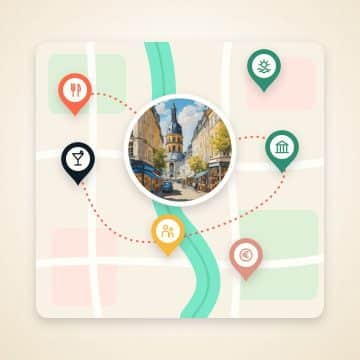
The game starts at Bonn Central Station and passes the Bonn Minster and the Martinsbrunnen before reaching the Beethoven Monument. From the Sterntor you continue to the Beethoven House, then the Palace Church and the Old Town Hall, followed by the Electoral Palace, and you finish at the Egyptian Museum. Daylight makes the best start, since rain and wind slow an outdoor game. Google Maps leads you between stops, the app lets you change the order, and the puzzles need no entry tickets.
Open the route map ↗
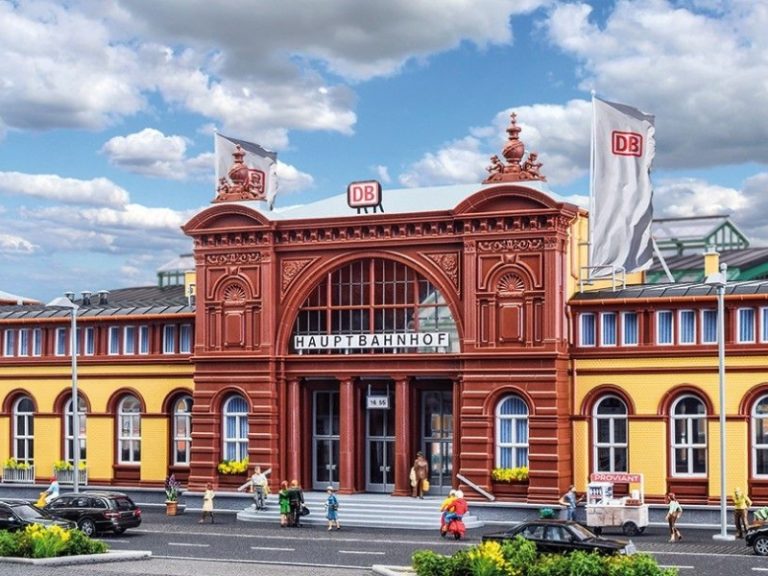
1Bonn Central StationStart
Bonn's main station lies on the western edge of the city centre, a short walk from Münsterplatz. The railway reached Bonn in 1844 with the line to Cologne, and from 1949 the station welcomed many politicians and diplomats, as Bonn became the seat of the West German government.
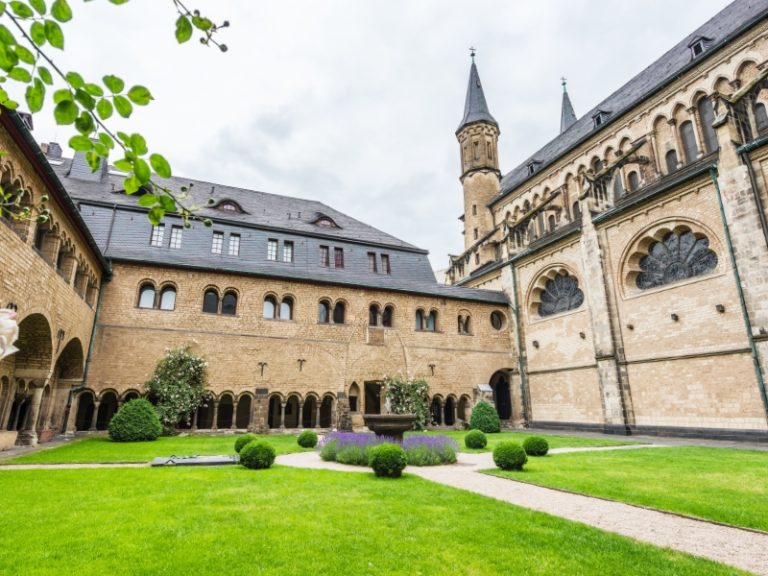
2Bonn Minster
Bonn Minster is one of the oldest churches in Germany, built mainly in Romanesque style between the 11th and 13th centuries. It is dedicated to Cassius and Florentius, Roman soldiers who according to legend died for their faith here, and two large stone heads of the saints by the sculptor Stephan Balkenhol lie beside it.
3Martinsbrunnen (St Martin's Fountain)
This fountain stands on Martinsplatz, right beside the Minster. Square and fountain are named after St Martin, the Roman soldier who according to legend cut his cloak in two to share it with a freezing beggar, a story the Rhineland still celebrates every November with lantern processions.
4Beethoven Monument
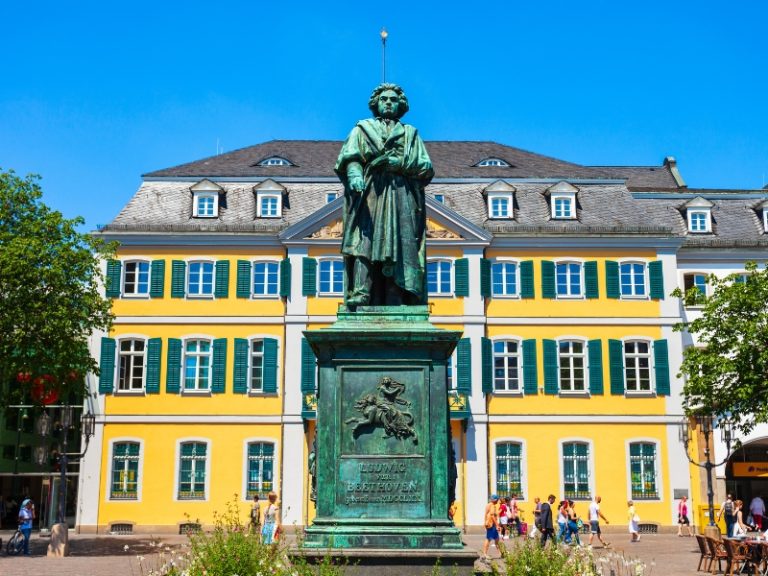
The bronze statue on Münsterplatz was unveiled in 1845, 75 years after Beethoven's birth, and was the first public monument to the composer. It was created by Ernst Julius Hähnel, Franz Liszt helped to pay for it, and Queen Victoria attended the celebrations for its unveiling.
5Sterntor
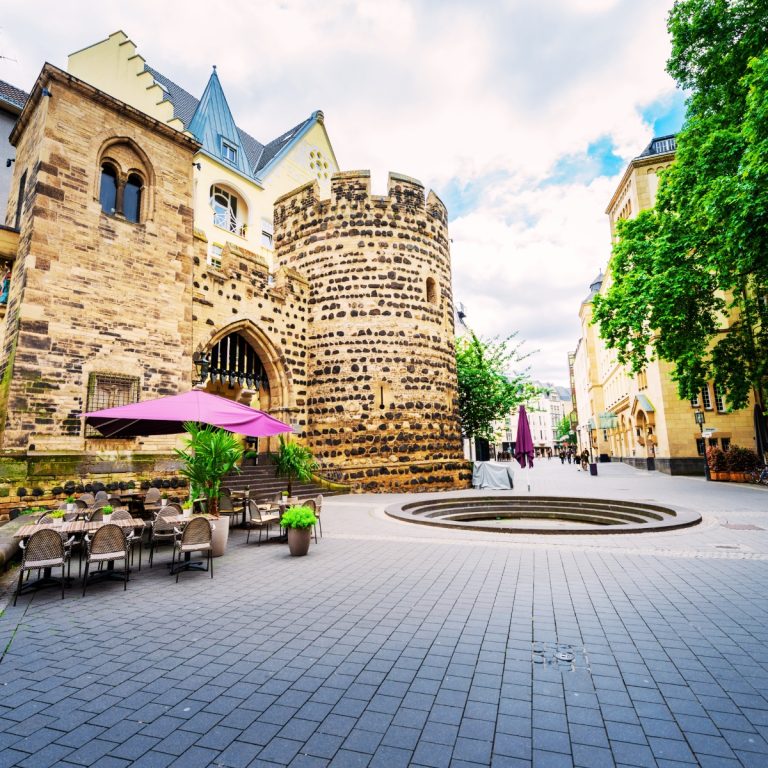
The Sterntor is the last surviving gate of Bonn's medieval town fortifications. It was taken down at the end of the 19th century to make way for traffic and then rebuilt a short distance away using its old stones, so the gateway you walk past today is a reconstruction.
6Beethoven House
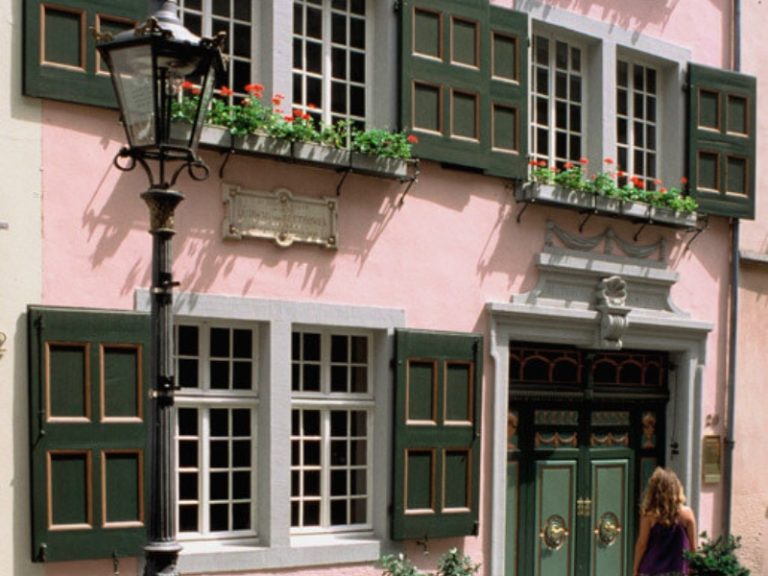
Ludwig van Beethoven was born in this house on Bonngasse in December 1770. In 1889 a group of Bonn citizens founded the Beethoven-Haus association to save the building, and today it holds one of the largest Beethoven collections in the world, from manuscripts to his instruments.
7Palace Church (Schlosskirche)
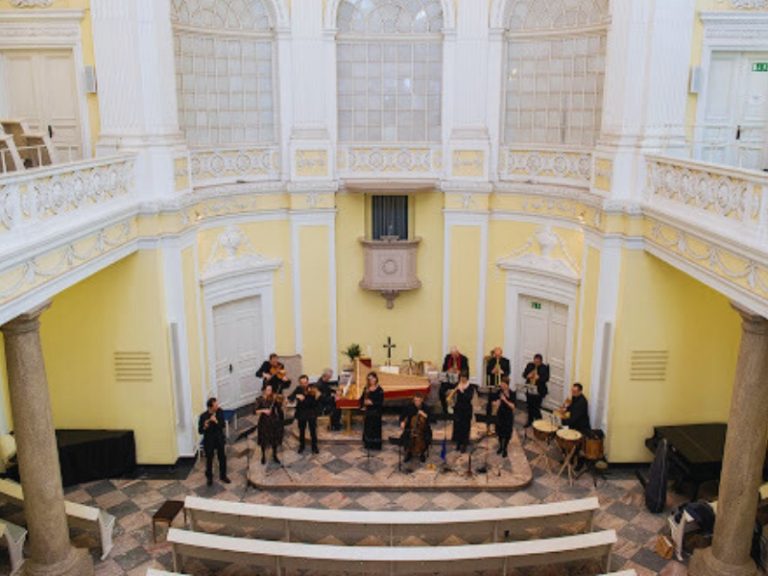
This church inside the former Electoral Palace was the court church of the prince-electors of Cologne, who ruled from Bonn. Today it serves as a Protestant university church, so services and concerts are still held in the palace where the electors once prayed.
8Old Town Hall (Altes Rathaus)
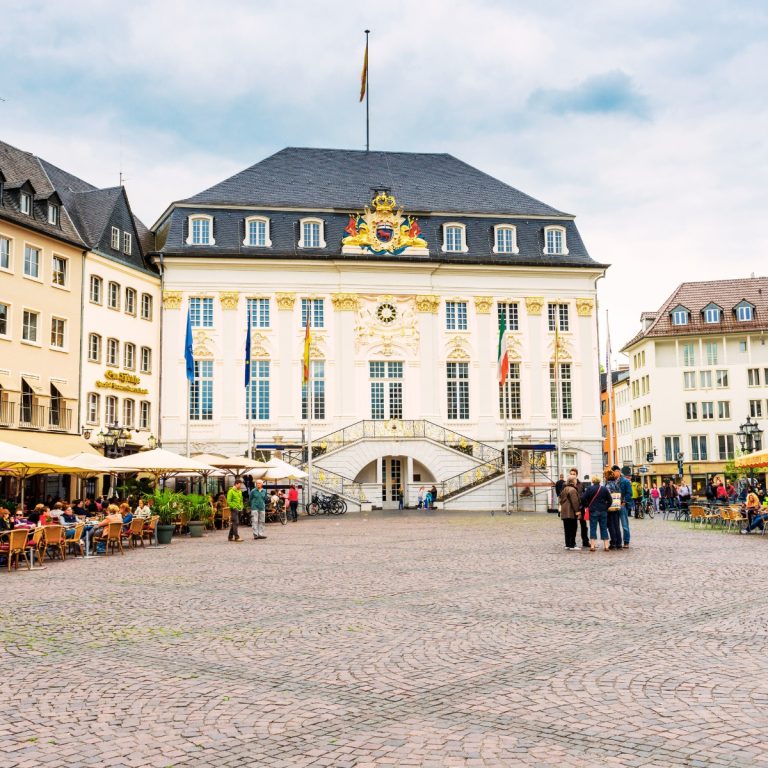
The late baroque Old Town Hall on the market square was built in 1737 and 1738 under Elector Clemens August. From its double staircase, state guests such as Charles de Gaulle and John F. Kennedy greeted the crowds while Bonn was the capital of West Germany.
9Electoral Palace
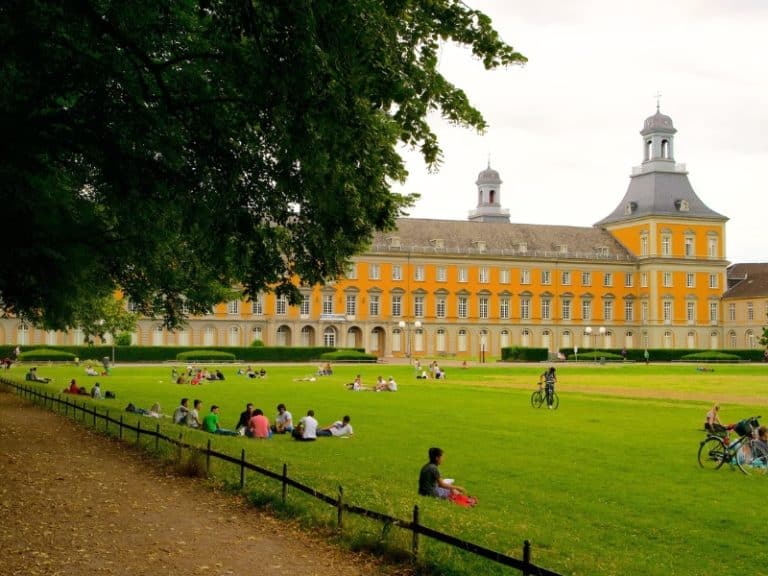
The Electoral Palace was built from 1697 to plans by Enrico Zuccalli for Joseph Clemens, prince-elector and archbishop of Cologne, who made Bonn his residence. Since 1818 it has been the main building of the University of Bonn, and its long front faces the Hofgarten, a wide lawn popular with students.
10Egyptian MuseumFinish
The Egyptian Museum of the University of Bonn is housed in the Koblenzer Tor, a baroque gate building of the palace complex from the 18th century with a road running through its arch. Its collection of objects from ancient Egypt is used both for teaching and for exhibitions open to visitors.
Only logged in customers who have purchased this product may leave a review.




Reviews
There are no reviews yet.