What is the Denver outdoor escape game?
The Denver outdoor escape game takes the escape room format out into the streets of central Denver: you play on your smartphone, and at each of the 10 stops a puzzle asks you to read the surroundings and reason your way to the answer. Allow around 3 hours, including 69 minutes on foot over 4.5 km, and start on whatever day suits your group.
The puzzles hang on real landmarks such as Coors Field, Union Station, Larimer Square, the Denver Performing Arts Complex, the Colorado State Capitol and the Cathedral Basilica of the Immaculate Conception. Each one stands on its own, so no storyline ties the stops together. Stuck? Nobody has to abandon a puzzle, since up to three levels of hints can be unlocked. Denver suits this format because the route keeps to walkable districts, from a ballpark past 19th-century blocks to the civic buildings.
- Durationabout 3 hours
- Walkingabout 69 min · 4.5 km
- Stops10
- LanguagesEnglish, German, Spanish
What you do on the escape game
Reason it out
Each stop holds one puzzle that you crack through logic and close observation. You need no prior knowledge of Denver.
Look around
The clues come from what surrounds each landmark, such as architecture and details that are easy to walk past.
Follow the map
Google Maps guides you from stop to stop. In the app you can change the start or the order if a different sequence suits you better.
Pace yourself
Nothing counts down. Ask for a hint when you are stuck, stop for lunch, and resume later or on another day.
See the route and attractions →
How it works
- Book online Choose the number of players. Your booking reference arrives by email straight away.
- Get the app Download the World City Trail app from the App Store or Google Play and enter your booking reference.
- Play when you like Start whenever you are ready, walk at your own pace and pause any time. No guide, no fixed schedule.
Who it suits
Groups of friends
Every puzzle is independent, so the group can think together, argue over the answer and then move on.
Couples
A shared challenge with no time pressure, where talking through each puzzle becomes part of the outing.
Team building
Teams of up to 5 people play on their own phones, and bigger groups split into several teams that follow the same route.
Good to know
- Bring a charged smartphone with mobile data; a power bank helps.
- Best started in daylight, so you can see the details the puzzles ask about.
- No entry tickets needed: everything happens outside the buildings. Going inside is optional and paid separately.
- Family friendly; children must be accompanied by an adult.
- Not suitable for wheelchair users and difficult with strollers.
- Teams of up to 5 work best; bigger groups split into several teams, one ticket per player.
- Every purchase helps support stray cats and dogs in Greece.
Puzzle route: from Coors Field to the Cathedral Basilica
10 stops · about 69 min walking · start: Coors Field · finish: Cathedral Basilica of the Immaculate Conception
Ten landmarks make up the route, opening at Coors Field and closing at the Cathedral Basilica of the Immaculate Conception. In between you reach Union Station, Larimer Square, the 16th Street Mall, the Denver Performing Arts Complex, Civic Center Park, the Denver Art Museum, the Colorado State Capitol and the Molly Brown House Museum. Daylight makes the best start, because everything happens outdoors. The app lets you reorder the stops, and no entry tickets are needed.
Open the route map ↗
1Coors FieldStart
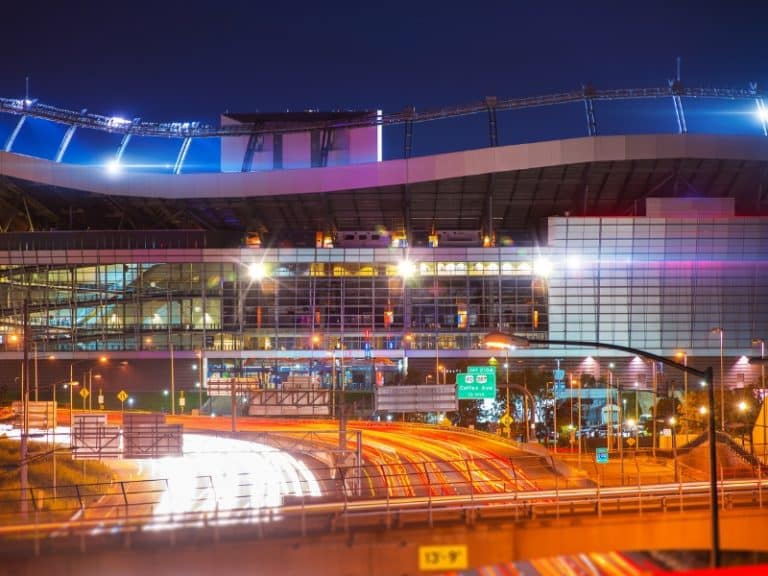
Coors Field opened in 1995 in Lower Downtown, two blocks from Union Station, and has been the home ballpark of the Colorado Rockies ever since. Designed by HOK Sport, now Populous, the ballpark holds about 50,000 spectators.
2Union Station
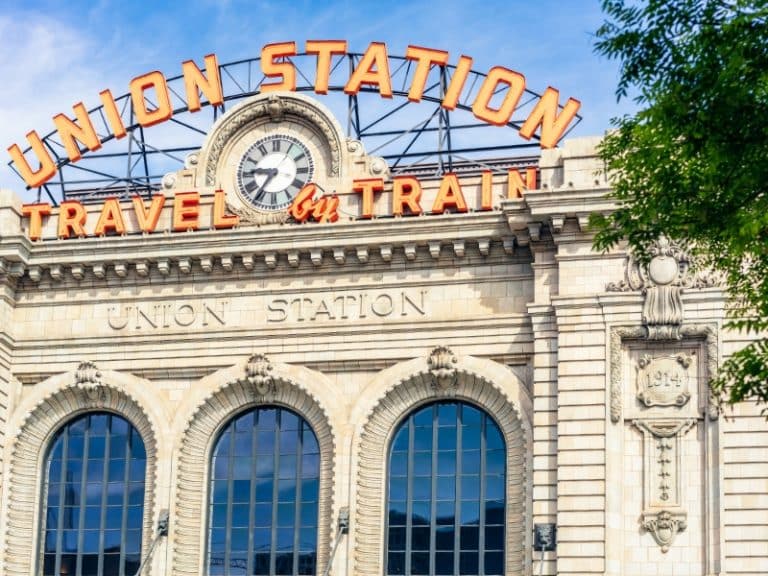
Denver's Union Station began as a railway depot in 1881, and its central building, completed in 1914 in the Beaux-Arts style, rose after a fire in 1894. The historic station reopened in 2014 after a renovation, and a 112-room hotel now occupies its upper floors.
3Larimer Square
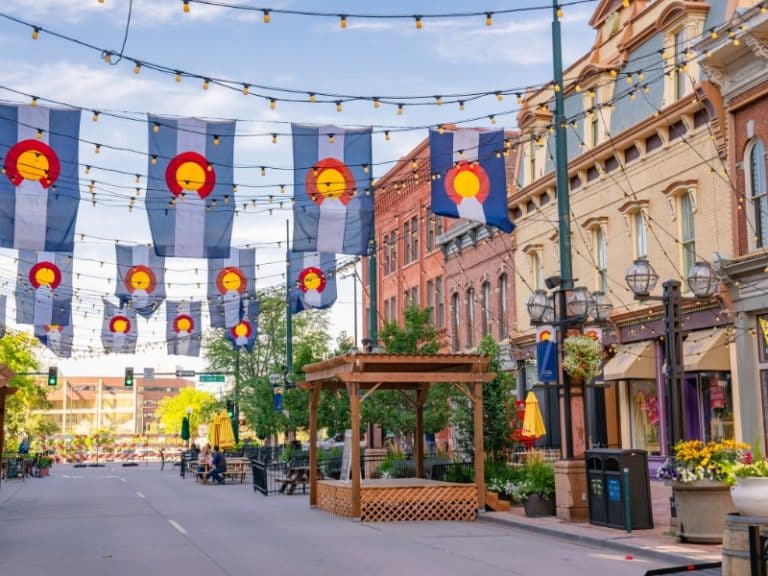
Larimer Square is described as Denver's oldest surviving commercial district, with most of its buildings dating from the 1870s to the 1890s. Restoration began in 1965, and in 1971 it became the city's first officially designated historic district.
416th Street Mall
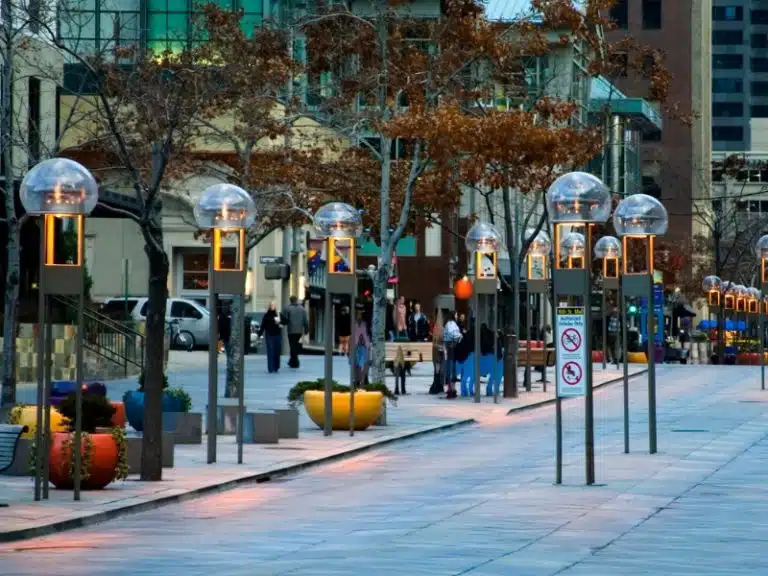
This downtown promenade of about 1.3 km opened in 1982 and was designed by Ieoh Ming Pei with the urban design firm OLIN. Its granite paving forms a diamond pattern that draws on the skin of the western diamondback rattlesnake and on Navajo blankets.
5Denver Performing Arts Complex
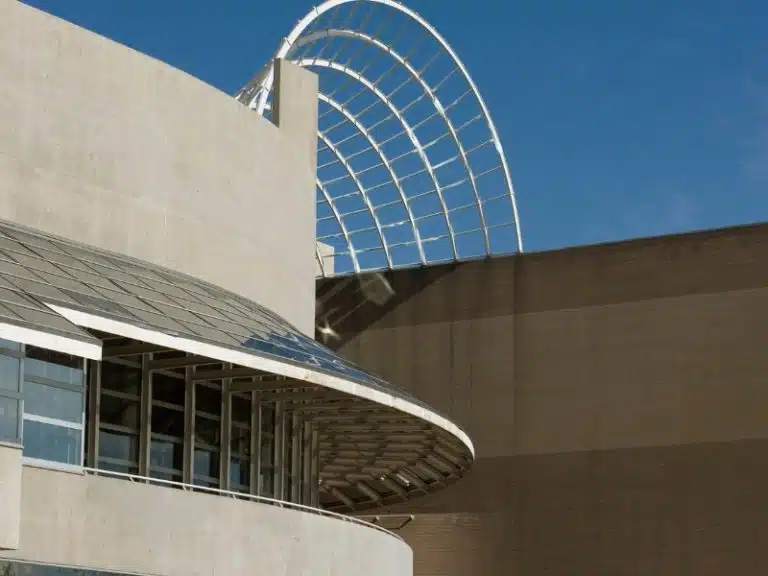
The Denver Performing Arts Complex houses ten performance spaces with more than 10,000 seats under an 80-foot glass roof. In the sculpture park to its west stands Jonathan Borofsky's The Dancers, two tall, partly abstract figures in mid-dance, installed in 2003.
6Civic Center Park
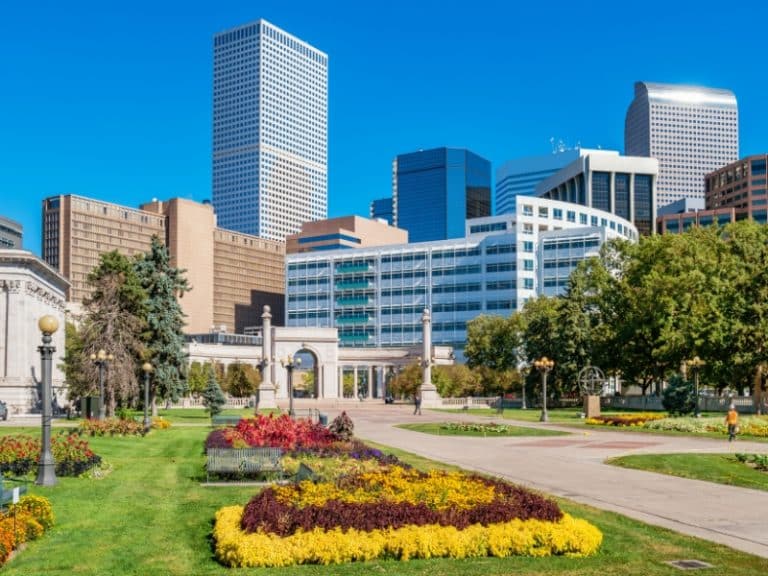
Civic Center Park opened in 1919 as the centrepiece of Denver's City Beautiful plan, first proposed by Robert Speer in 1904. Its Greek amphitheatre, formal gardens and east-west axis link the Colorado State Capitol with the City and County Building, which was finished in 1932.
7Denver Art Museum
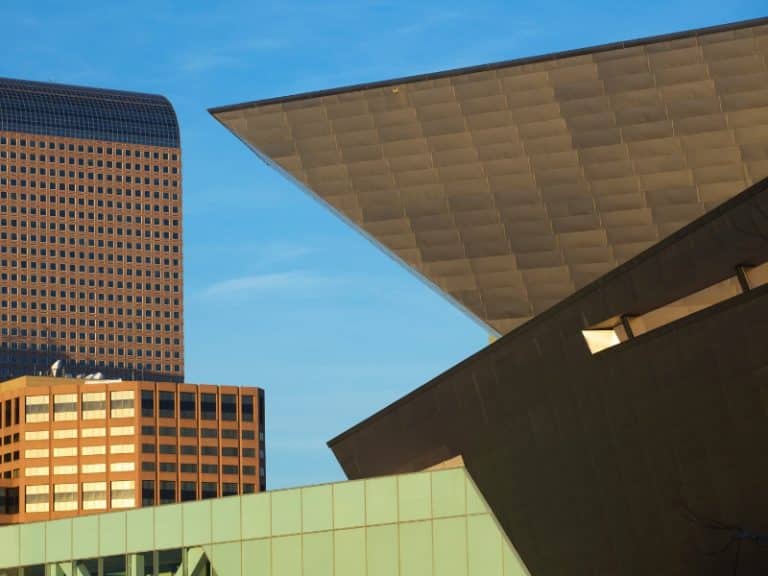
The museum's 1971 building was designed by the Italian architect Gio Ponti with the local firm James Sudler Associates. The museum is known for its American Indian art, and the Hamilton Building by Studio Daniel Libeskind, opened in 2006, stands beside it.
8Colorado State Capitol
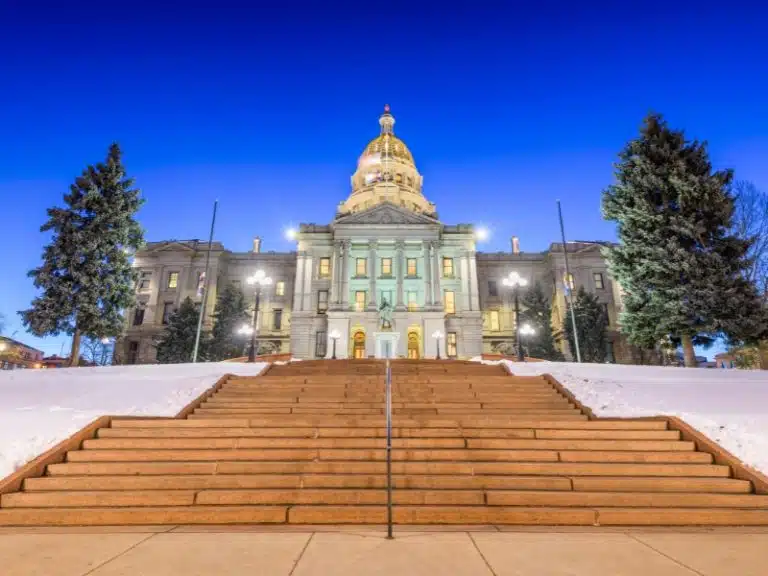
The Colorado State Capitol, designed by Elijah Myers, opened in 1894 with a granite exterior and a rose onyx interior. Its gold-leaf dome was gilded in 1908, and a marker on the 13th step of the staircase shows the point of exactly one mile above sea level.
9Molly Brown House Museum
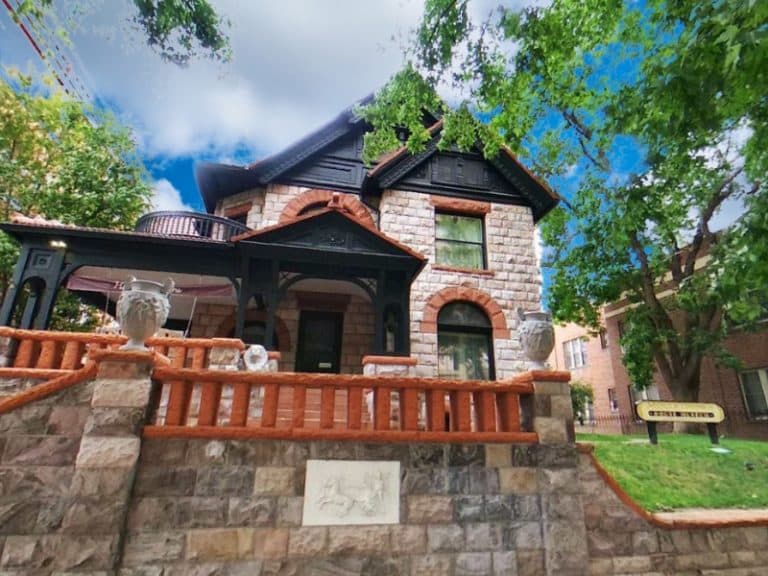
The Molly Brown House Museum at 1340 Pennsylvania Street was designed by William Lang in 1889 in Queen Anne and Richardsonian Romanesque styles. The Brown family bought it in 1894, and it has been a museum since 1971, after demolition concerns led to the founding of Historic Denver.
10Cathedral Basilica of the Immaculate ConceptionFinish
The Cathedral Basilica of the Immaculate Conception was designed in French Gothic style by Leon Coquard of Detroit, and its two spires, each 221 feet tall, frame the main façade. Its 75 stained-glass windows were made in Munich, and Pope John Paul II raised the church to a minor basilica in 1979.
Only logged in customers who have purchased this product may leave a review.








Reviews
There are no reviews yet.