What is the Hallstatt outdoor escape game?
The Hallstatt outdoor escape game is an escape room taken out of the building and into a village: you play on your smartphone, and each of the 10 stops holds a puzzle that you solve by reading the surroundings and reasoning step by step. Plan on about 2 hours, including 21 minutes of walking over 1.3 km, and start whenever the day suits you.
The puzzles hang on Hallstatt's own features: the Marktplatz, the Protestant church on the lake, the stairs up to Maria am Berg and the postcard viewpoint at the northern end. Each puzzle stands alone, so no storyline is needed, and up to three levels of hints are available. Because the village is so compact, the whole game stays within a short walk.
- Durationabout 2 hours
- Walkingabout 21 min · 1.3 km
- Stops10
- LanguagesEnglish, German, French, Italian, Spanish, Dutch
What you do on the escape game
Solve
Work out the puzzle at each stop from what you can see around you. No prior knowledge of Hallstatt is needed.
Read the details
Clues sit in the architecture, the lie of the land and the small details of the village, from the lakeside to the steep slopes.
Walk
Follow Google Maps between stops: about 21 minutes of walking across 1.3 km, with stairs and lanes to climb.
Take your time
There is no countdown. Use hints when you need them, stop for a coffee by the lake and carry on later or another day.
See the route and attractions →
How it works
- Book online Choose the number of players. Your booking reference arrives by email straight away.
- Get the app Download the World City Trail app from the App Store or Google Play and enter your booking reference.
- Play when you like Start whenever you are ready, walk at your own pace and pause any time. No guide, no fixed schedule.
Who it suits
Friends on a day out
Every stop gives the group a puzzle to argue over, and nobody has to know the village in advance.
Couples
A shared challenge that has you looking closely at things together, with no clock running in the background.
Team building
Teams of up to 5 play on their own phones, so colleagues can split the tasks or puzzle side by side.
Good to know
- Bring a charged smartphone with mobile data; a power bank helps.
- Best started in daylight, so you can see the details the puzzles ask about.
- No entry tickets needed: everything happens outside the buildings. Going inside is optional and paid separately.
- Family friendly; children must be accompanied by an adult.
- Not suitable for wheelchair users and difficult with strollers.
- Teams of up to 5 work best; bigger groups split into several teams, one ticket per player.
- Every purchase helps support stray cats and dogs in Greece.
Puzzle route: from the village edge to the viewpoint
10 stops · about 21 min walking · start: Monument (Denkmal) · finish: Hallstatt Viewpoint
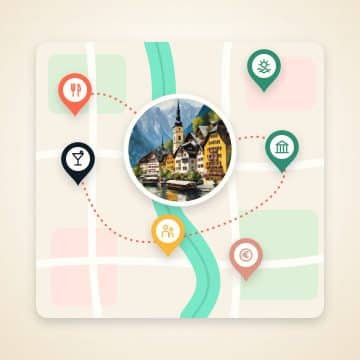
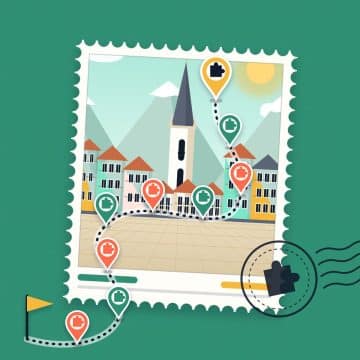
The first puzzle waits at the monument on the edge of the old village, and the last at the Hallstatt Viewpoint at the northern end. In between come the war memorial, the Ramsauer memorial, the World Heritage Museum, the Marktplatz, the village lanes, the Protestant church, Maria am Berg and the Charnel House. Daylight makes the best start, since the puzzles are solved outdoors and rain slows everything down. Google Maps guides you between stops, you can reorder them in the app, and no entry tickets are needed.
Open the route map ↗
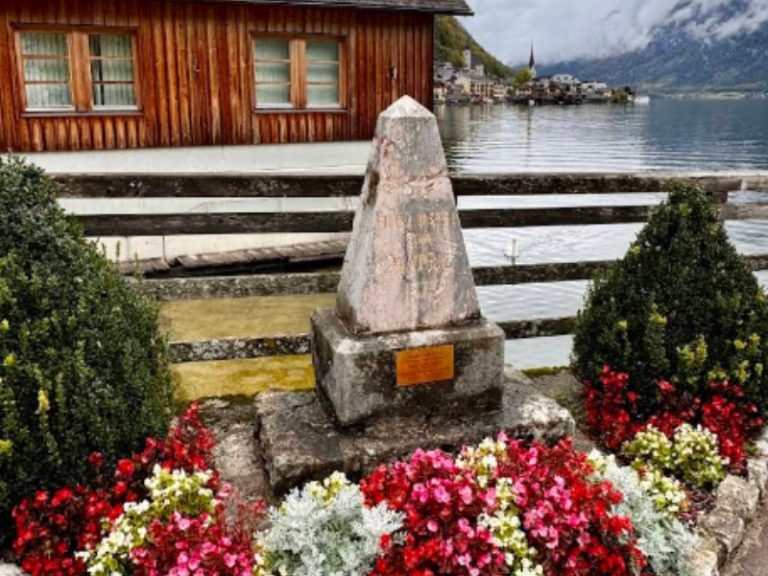
1Monument (Denkmal)Start
This monument stands on the edge of the old village, which is squeezed onto a narrow strip of land between Lake Hallstatt and steep mountain slopes. Salt has been mined in the mountain above for thousands of years, and the area has been part of a UNESCO World Heritage Site since 1997.
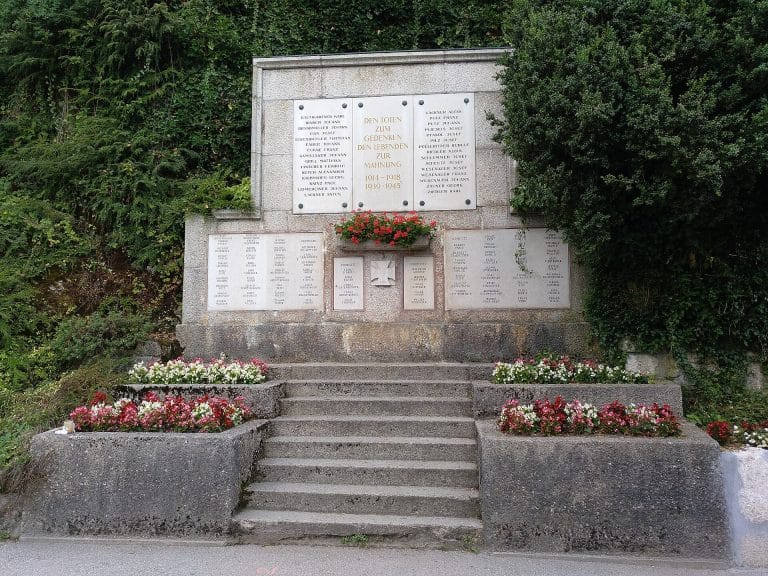
2War Memorial
This memorial honours the people of Hallstatt who lost their lives in the First and Second World Wars. Like similar memorials in many Austrian villages, it is a reminder of how deeply both wars reached even into a small community far from the front lines.
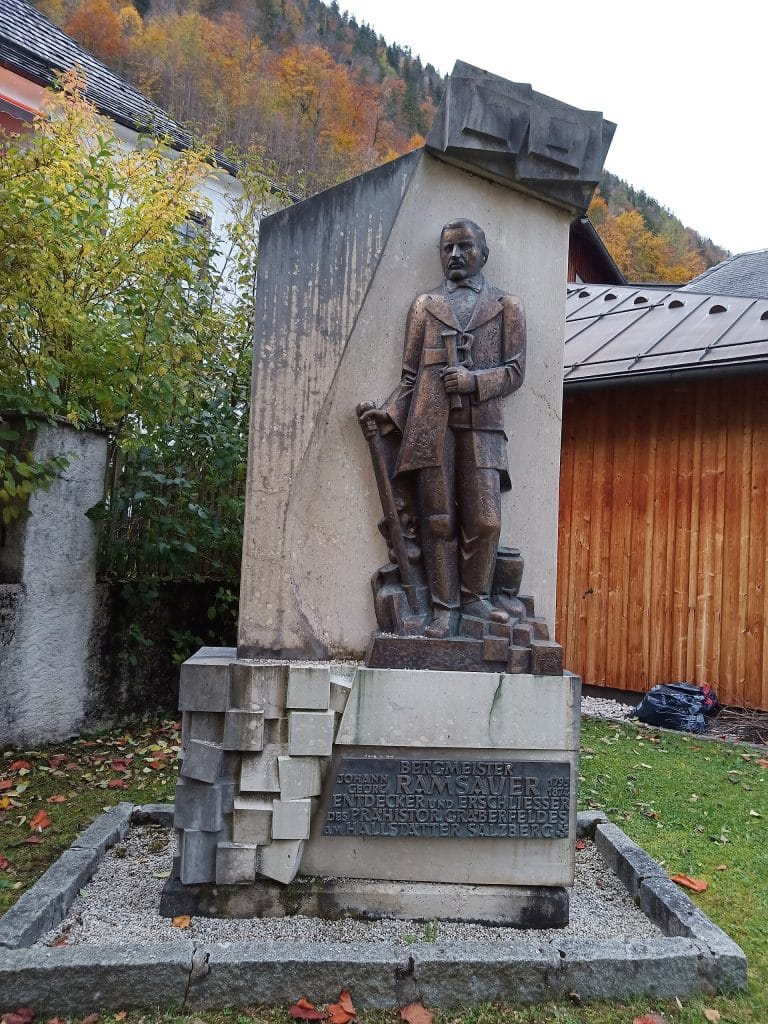
3Johann Georg Ramsauer Memorial
Johann Georg Ramsauer was the mine manager who in 1846 discovered a prehistoric burial ground on the Salzberg above Hallstatt. Over the following years he excavated close to a thousand graves with weapons, jewellery and bronze vessels. The finds were so important that an early Iron Age culture of Europe is named after Hallstatt.
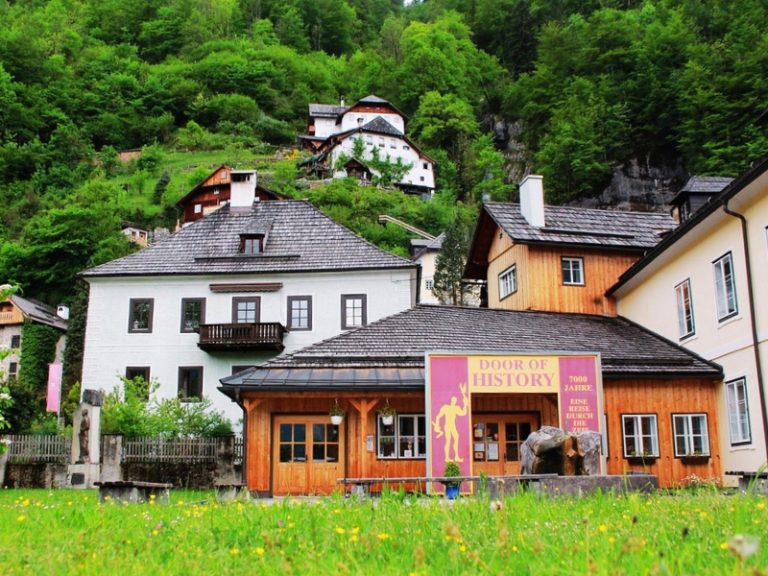
4Hallstatt World Heritage Museum
The museum on the lakeside street tells the long history of Hallstatt, from prehistoric salt miners and the finds of the Hallstatt culture to village life in later centuries. It explains how salt made this remote place wealthy long before it became a destination for travellers.
5Marktplatz
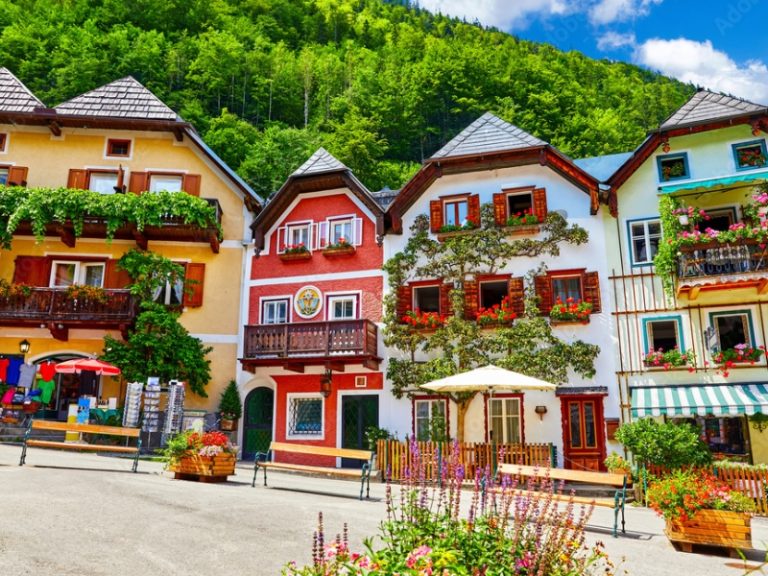
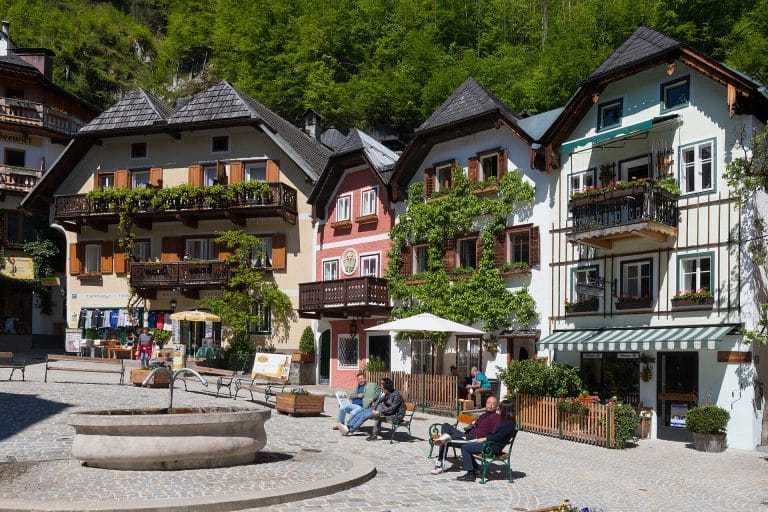
The small market square is the centre of the village, lined with tall, colourful houses with wooden balconies and window boxes. In the middle stands a Holy Trinity column, a type of baroque monument found on many Austrian squares. With so little flat land between mountain and lake, it is one of the few open spaces in Hallstatt.
6Village lanes
From here narrow lanes and stairways climb between houses built one above the other on the steep slope. Because flat land is so scarce, many Hallstatt houses have entrances on different levels, and some can only be reached on foot. Stacked firewood and tiny terraced gardens are part of the village scene.
7Protestant Parish Church
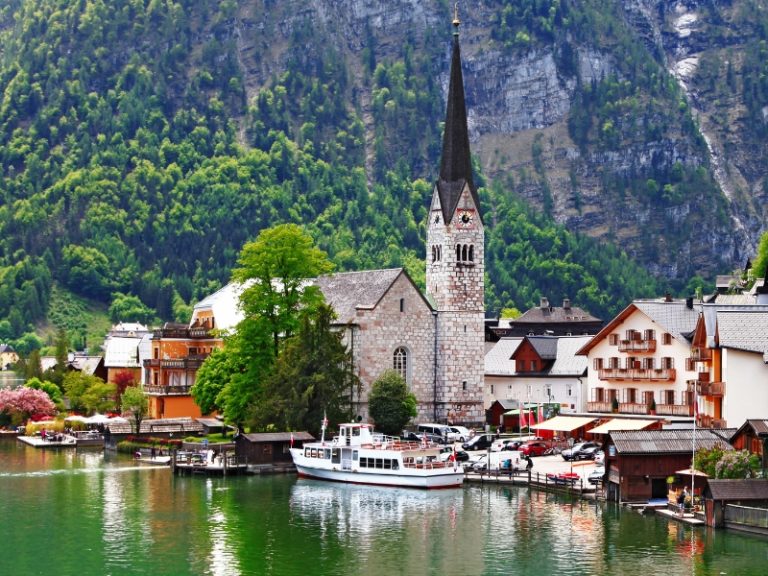
The neo-Gothic Protestant church with its slender pointed spire stands right on the lakeshore beside the market square and was completed in the 1860s. Many salt miners of the region secretly kept their Protestant faith during the Counter-Reformation, and only the Patent of Toleration of 1781 allowed them to worship openly. Its spire is part of the classic Hallstatt view.
8Church of the Assumption (Maria am Berg)
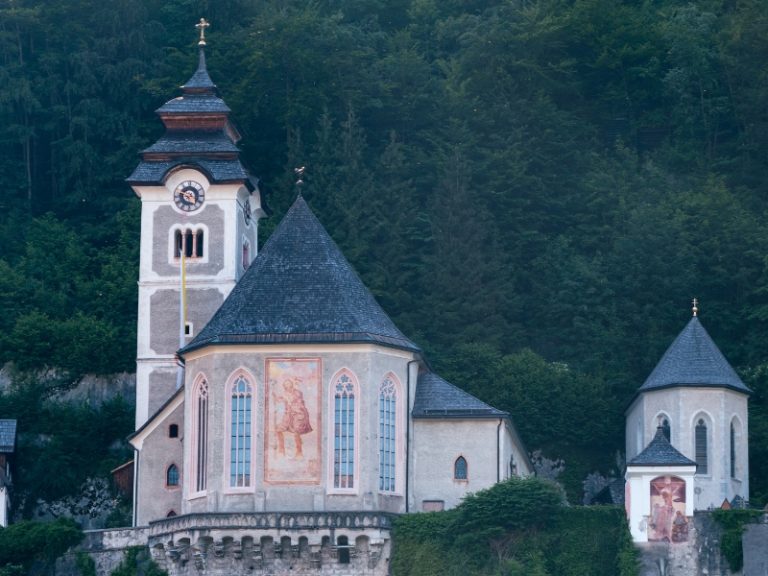
The Catholic parish church stands on a terrace above the rooftops and is reached by a covered stairway. The late Gothic building has carved winged altars from the early 16th century, and from its steep churchyard you look straight down onto the lake.
9Hallstatt Charnel House
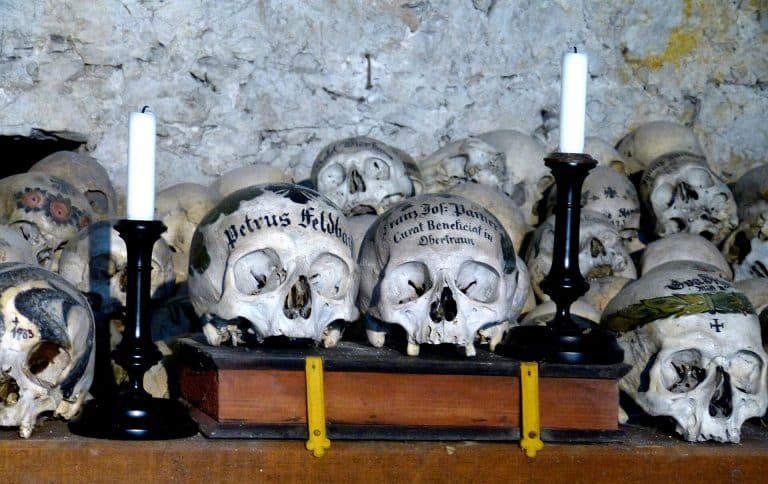
In the small St Michael's Chapel next to the Catholic church lies the Beinhaus, which holds more than 1,200 skulls. Because the churchyard had so little space, bones were exhumed after some years and kept here, and around 600 skulls were painted with names, dates and garlands of flowers or ivy. The custom goes back to the 18th century.
10Hallstatt ViewpointFinish
From this spot at the northern end of the village you get the view known from countless postcards: houses rising from the water, the spire of the Protestant church and the mountains behind. The scene is so famous that a full-size copy of Hallstatt was built in China in 2012.
Only logged in customers who have purchased this product may leave a review.






Anonymous (verified owner) –
Super way to explore Hallstatt!