What is the Manchester outdoor escape game?
Think of an escape room that has stepped out into the city centre. The Manchester outdoor escape game guides you on your phone from one landmark to the next, and each of the 10 stops holds a puzzle that you solve by observing the surroundings and reasoning it out. Allow about 2.5 hours, including 55 minutes of walking over 4.4 km, and start on a day that suits you.
The puzzles sit at places such as Manchester Cathedral, the Royal Exchange Theatre, Piccadilly Gardens, the Art Gallery, St Peter's Square, the Town Hall, Albert Square and the John Rylands Library. Each puzzle stands alone with no storyline to follow, and up to three levels of hints are available. Manchester suits an outdoor format well: its Victorian civic buildings and squares sit close together, so the route flows from one landmark to the next through the centre.
- Durationabout 2.5 hours
- Walkingabout 55 min · 4.4 km
- Stops10
- LanguagesEnglish, German, French, Italian, Spanish, Dutch
What you do on the escape game
Solve
Work out each puzzle from what surrounds you. You do not need to know the city's history beforehand.
Look closer
The answers are in the surroundings: in the stonework, the statues, the façades and the layout of each square.
Walk
Google Maps leads you across 4.4 km, about 55 minutes on foot, from one landmark to the next.
Take your time
No countdown runs. Use a hint when you are stuck, stop for a drink, and continue later or on another day.
See the route and attractions →
How it works
- Book online Choose the number of players. Your booking reference arrives by email straight away.
- Get the app Download the World City Trail app from the App Store or Google Play and enter your booking reference.
- Play when you like Start whenever you are ready, walk at your own pace and pause any time. No guide, no fixed schedule.
Who it suits
Friends on a day out
Each puzzle gives the group a fresh debate at the next landmark, and nobody needs prior knowledge of the city.
Couples
A shared challenge to work on as you walk between the squares and buildings, with no clock to race.
Team building
Teams of up to 5 play on their own phones, so colleagues can share the reasoning and compare answers.
Good to know
- Bring a charged smartphone with mobile data; a power bank helps.
- Best started in daylight, so you can see the details the puzzles ask about.
- No entry tickets needed: everything happens outside the buildings. Going inside is optional and paid separately.
- Family friendly; children must be accompanied by an adult.
- Not suitable for wheelchair users and difficult with strollers.
- Teams of up to 5 work best; bigger groups split into several teams, one ticket per player.
- Every purchase helps support stray cats and dogs in Greece.
Puzzle route: from the National Football Museum to the Science and Industry Museum
10 stops · about 55 min walking · start: National Football Museum · finish: Science and Industry Museum
The first puzzle waits at the National Football Museum and the last one at the Science and Industry Museum in Castlefield. In between, the trail passes Manchester Cathedral, the Royal Exchange Theatre, Piccadilly Gardens, the Art Gallery and St Peter's Square, then the Town Hall, Albert Square and the John Rylands Library. Google Maps guides you between stops, the app lets you change the starting point and the order, and no entry tickets are needed for the puzzles.
Open the route map ↗
1National Football MuseumStart
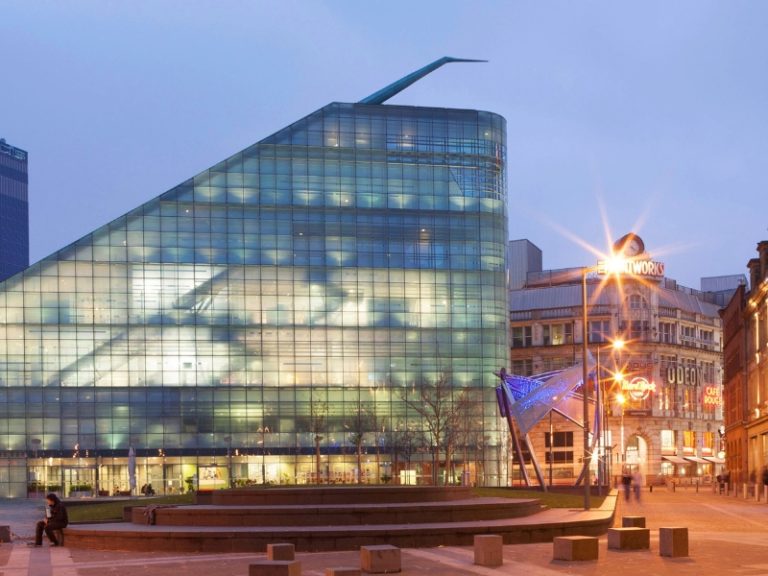
The National Football Museum fills the Urbis building, a sloping glass structure designed by Ian Simpson and opened in 2002. The museum moved here from Preston in 2012 and tells the story of the game in England, the country where the modern rules of football were first written down.
2Manchester Cathedral
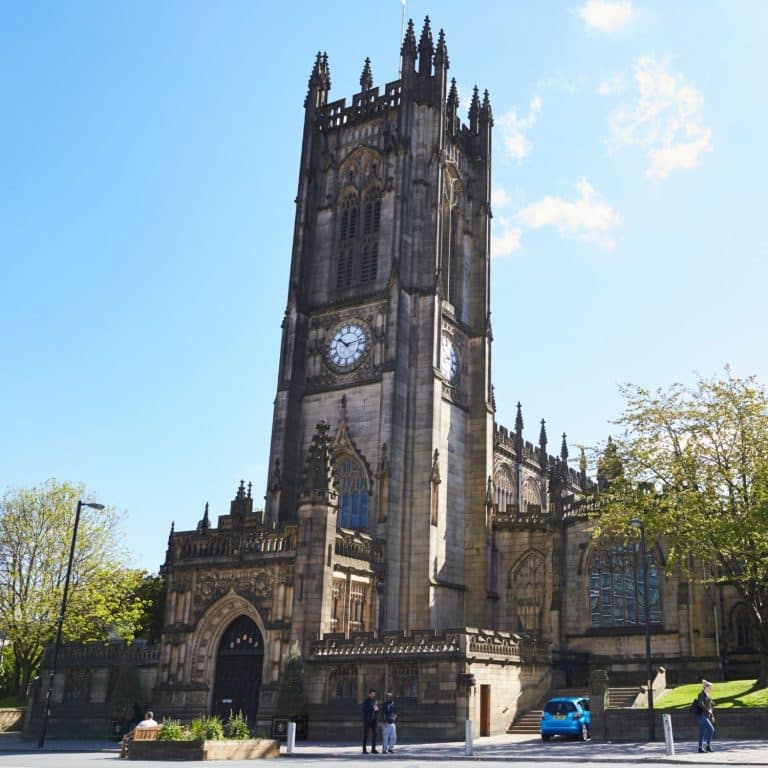
Manchester's cathedral began as a medieval parish church, became a collegiate church in 1421 and was made a cathedral in 1847. Its carved wooden choir stalls from around 1500 survived a German bomb that badly damaged the building in December 1940. Look for the grotesque faces and animals carved in its stonework.
3Royal Exchange Theatre
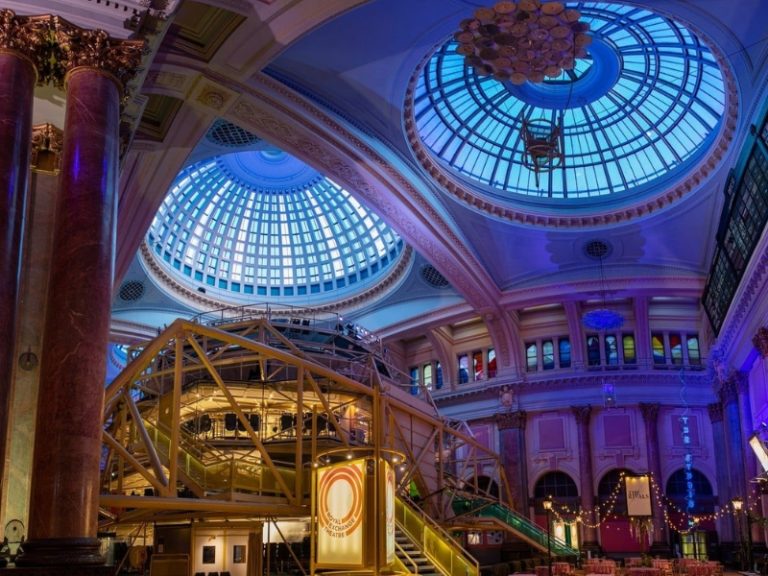
The Royal Exchange was the trading hall of Manchester's cotton industry, and its present building was completed in the early 20th century. Trading ended in 1968, and in 1976 a theatre in the round, a glass and steel module, was set up inside the great hall. The old trading board still shows the prices of the last day.
4Piccadilly Gardens
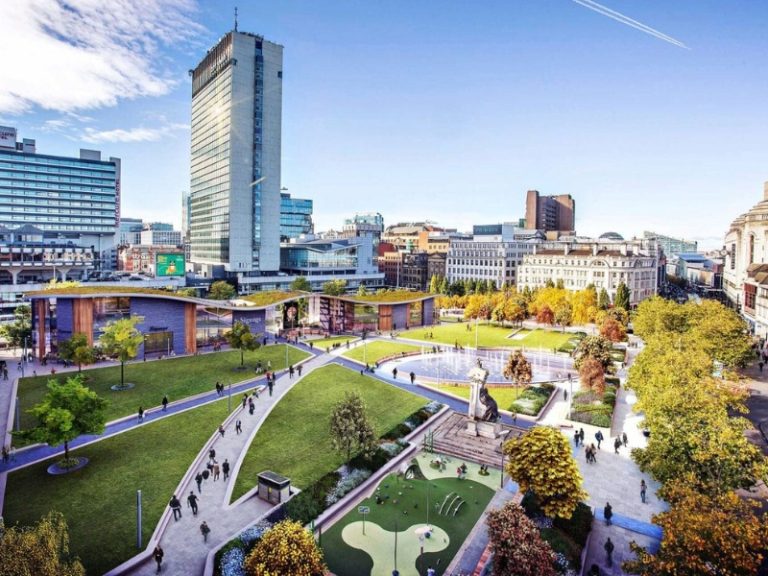
Piccadilly Gardens is the largest open space in Manchester city centre, laid out on the site of the Manchester Royal Infirmary, which moved away in the early 20th century. Statues of Queen Victoria, the Duke of Wellington, Robert Peel and James Watt stand here, and the curved concrete pavilion wall was designed by Tadao Ando.
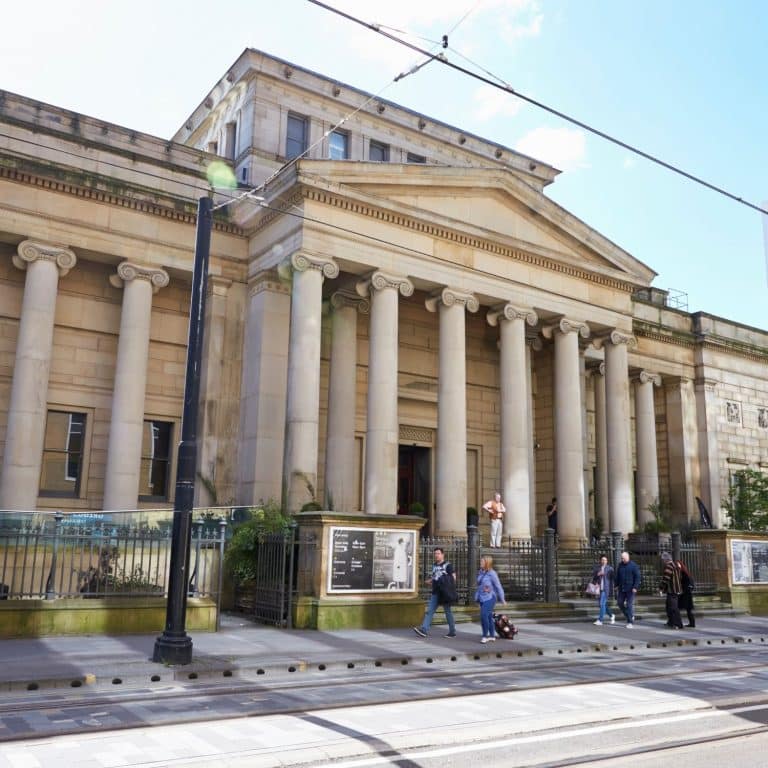
5Manchester Art Gallery
The gallery's main building on Mosley Street was designed by Charles Barry, later the architect of the Houses of Parliament, and built for the Royal Manchester Institution in the 1820s and 1830s. Its columned Greek-style portico leads to a collection known especially for its Pre-Raphaelite paintings.
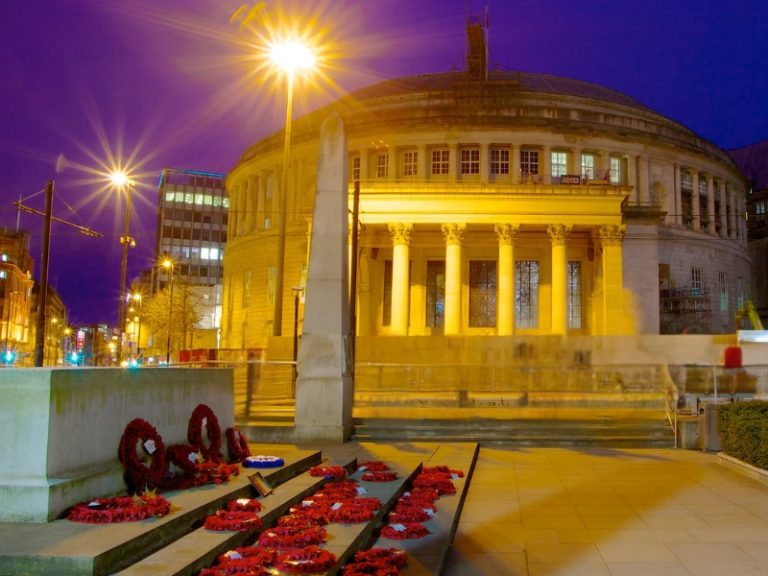
6St Peter's Square
The square takes its name from St Peter's Church, which stood here until 1907. Today it holds the Cenotaph by Edwin Lutyens and the round Central Library, opened in 1934. Nearby, in 1819, cavalry charged a peaceful crowd calling for parliamentary reform, in what became known as the Peterloo Massacre.
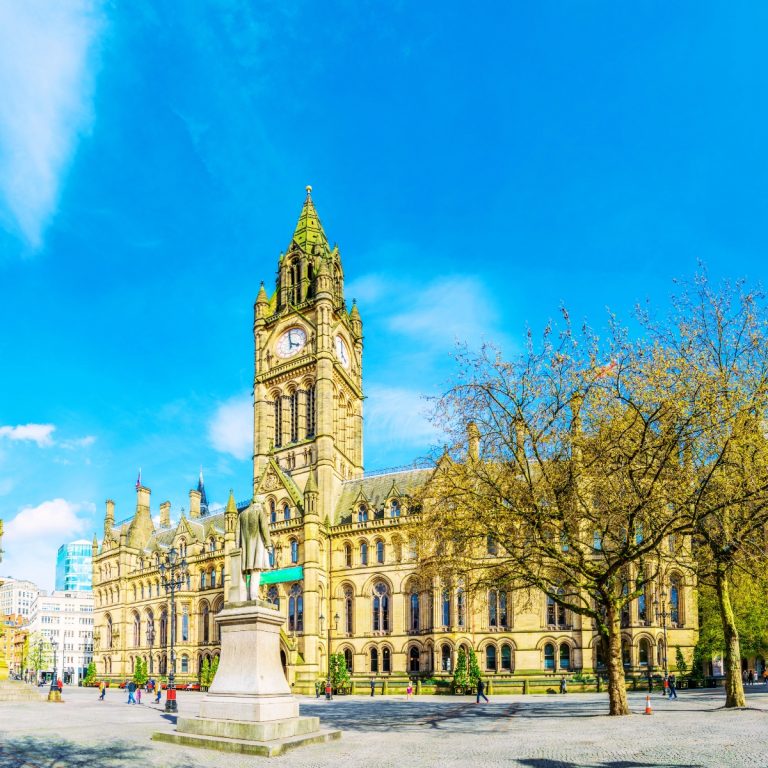
7Manchester Town Hall
Alfred Waterhouse designed this neo-Gothic town hall, which opened in 1877 and shows the pride and wealth of the Victorian cotton city. Its clock tower rises about 85 metres above Albert Square. Inside, the Great Hall is decorated with murals by Ford Madox Brown on the history of Manchester.
8Albert Square
Albert Square is named after Prince Albert, Queen Victoria's husband, and its centrepiece is the Albert Memorial, a Gothic canopy designed by Thomas Worthington in the 1860s. Statues of figures such as William Gladstone and John Bright stand around the square, which is used for public events and celebrations.
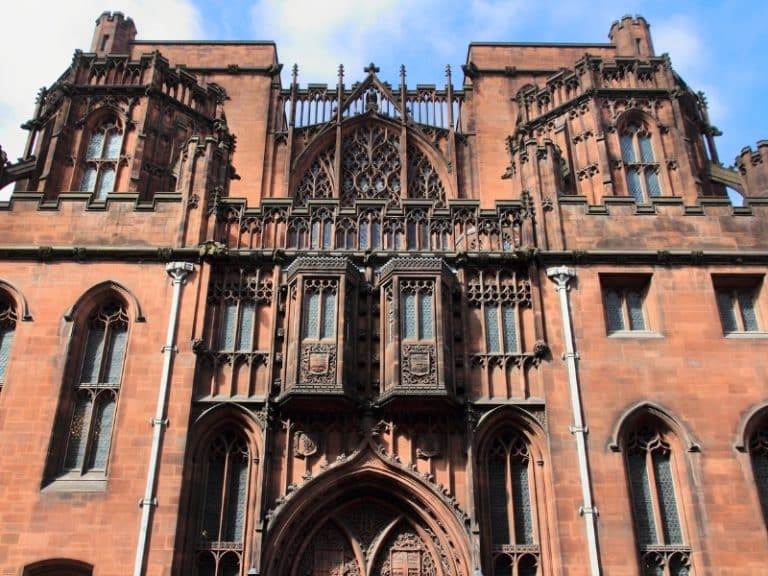
9John Rylands Library
Enriqueta Rylands built this neo-Gothic library on Deansgate in memory of her husband John Rylands, a wealthy cotton merchant, and it opened to readers in 1900. Its architect was Basil Champneys. Now part of the University of Manchester, it holds the Rylands fragment, one of the oldest known fragments of the Gospel of John.
10Science and Industry MuseumFinish
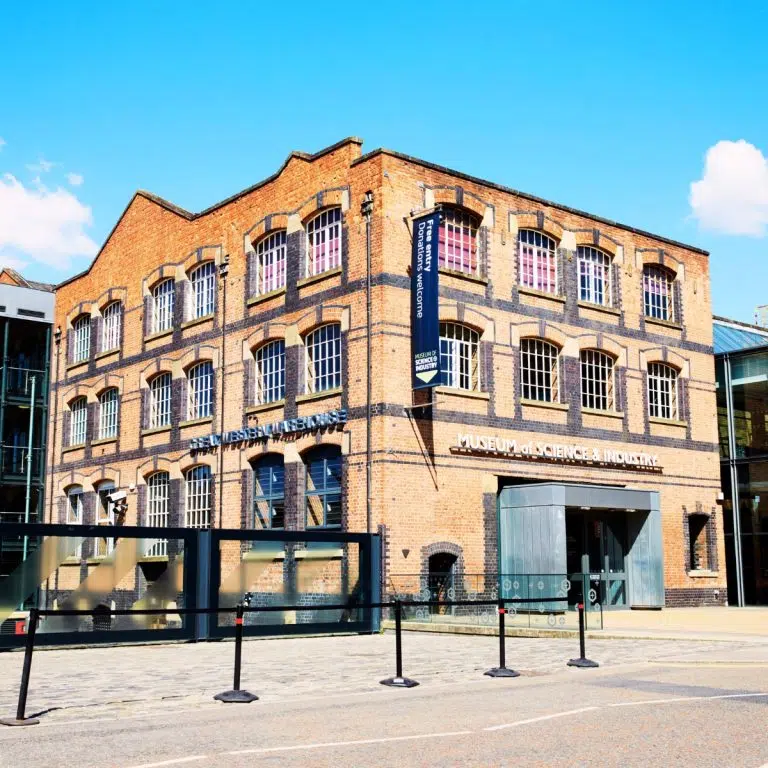
This museum in Castlefield stands on the site of Liverpool Road station, the Manchester end of the Liverpool and Manchester Railway, opened in 1830. It is considered the oldest surviving passenger railway station in the world, and the museum tells how Manchester became a centre of the Industrial Revolution.
Only logged in customers who have purchased this product may leave a review.







Reviews
There are no reviews yet.