What is the Perugia outdoor escape game?
The Perugia outdoor escape game takes the escape room idea out into the old town. You work through the route on your phone, and at each of the 10 landmarks a puzzle waits that you crack by looking carefully at your surroundings and reasoning it through. Allow about 2 hours, including 33 minutes of walking over 2.3 km, and start on any day that suits you.
Each puzzle belongs to one landmark, from the Etruscan Arch and the Palazzo dei Priori to the Fontana Maggiore and the Cathedral of San Lorenzo, and stands on its own, so no storyline ties the stops together. Stuck? Each puzzle carries clues on three levels at the outside, handed over one step at a time. Perugia suits this format because the old town sits on a hilltop and its monuments are close together, so the game feels like one long walk through the centre.
- Durationabout 2 hours
- Walkingabout 33 min · 2.3 km
- Stops10
- LanguagesEnglish, German, French, Italian, Spanish, Dutch
What you do on the outdoor escape game
Observe
Study the façade, the statue or the square in front of you. The clues belong to the surroundings, and no prior knowledge is needed.
Reason
Work out the answer logically with your group, and use one of the three hint levels if you get stuck.
Walk
Follow Google Maps from one landmark to the next: 33 minutes of walking across 2.3 km.
Set your pace
There is no countdown. Stop for a coffee, carry on later or another day, and change the order of the stops in the app if you prefer.
See the route and attractions →
How it works
- Book online Choose the number of players. Your booking reference arrives by email straight away.
- Get the app Download the World City Trail app from the App Store or Google Play and enter your booking reference.
- Play when you like Start whenever you are ready, walk at your own pace and pause any time. No guide, no fixed schedule.
Who it suits
Friends
The puzzles give everyone something to argue about at the next landmark, and nobody has to know the old town beforehand.
Couples
A shared challenge on foot. The walks between stops leave time to talk, and no time limit rushes you along.
Team building
Teams of up to 5 people solve the puzzles together, and everyone follows the game on their own phone.
Good to know
- Bring a charged smartphone with mobile data; a power bank helps.
- Best started in daylight, so you can see the details the puzzles ask about.
- No entry tickets needed: everything happens outside the buildings. Going inside is optional and paid separately.
- Family friendly; children must be accompanied by an adult.
- Not suitable for wheelchair users and difficult with strollers.
- Teams of up to 5 work best; bigger groups split into several teams, one ticket per player.
- Every purchase helps support stray cats and dogs in Greece.
Puzzle route: from the Etruscan Arch to Via della Viola
10 stops · about 33 min walking · start: Etruscan Arch · finish: Via della Viola
You begin at the Etruscan Arch and finish in Via della Viola, with eight stops in between: Teatro Morlacchi, the Church of San Filippo Neri, the Cathedral of San Lorenzo, the Palazzo dei Priori, the Fontana Maggiore, the National Gallery of Umbria, Corso Vannucci and Piazza della Repubblica. Start in daylight, since the puzzles are solved outdoors and rain slows everything down. You can reorder the stops in the app, and the puzzles need no entry tickets.
Open the route map ↗
1Etruscan ArchStart
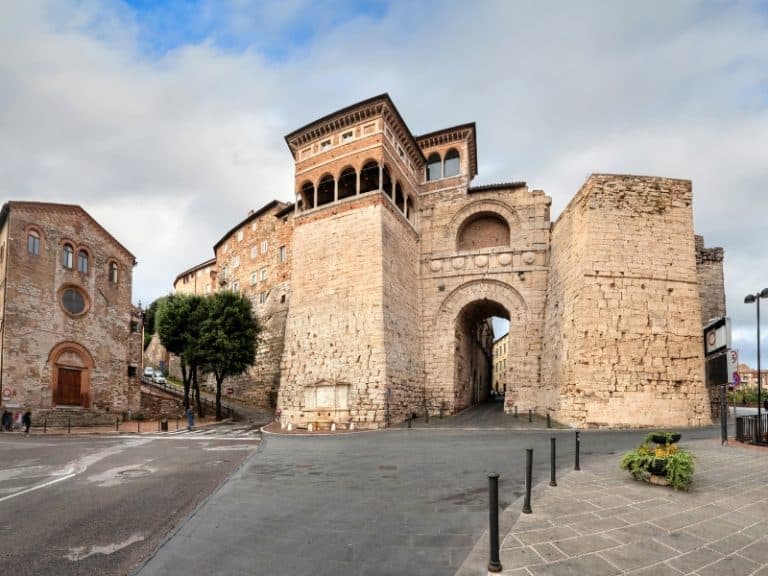
This massive gate in Perugia's Etruscan walls was built in the 3rd century BC from large blocks of travertine. After Octavian captured the city in 40 BC, the words AUGUSTA PERUSIA were carved above the arch, which is why it is also called the Arch of Augustus. A Renaissance loggia sits on top of its left-hand tower.
Read the full story →
2Teatro Morlacchi
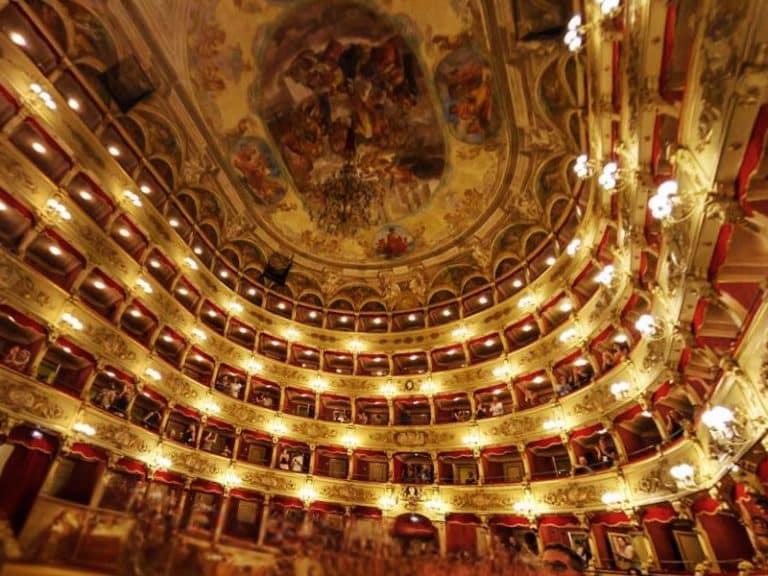
Perugia's historic theatre was built in the late 18th century and was first known as the Teatro del Verzaro. It was later renamed after Francesco Morlacchi, a composer born in Perugia who made his career at the court of Dresden. Behind its plain front lies a traditional horseshoe-shaped auditorium with tiers of boxes.
3Church of San Filippo Neri
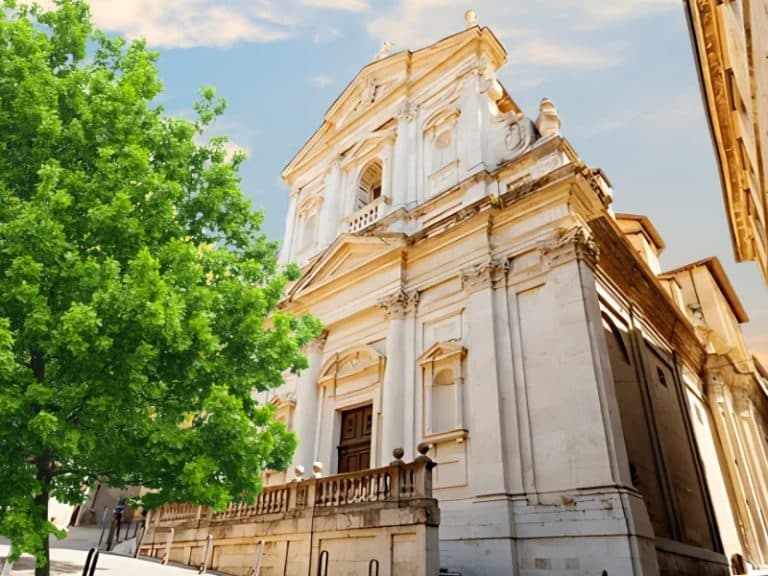
This Baroque church was built in the 17th century for the Oratorians, the congregation founded by Saint Philip Neri. Like the order's mother church in Rome, it is often simply called the Chiesa Nuova. Its tall, richly modelled façade rises above a small square in the old town.
4Cathedral of San Lorenzo
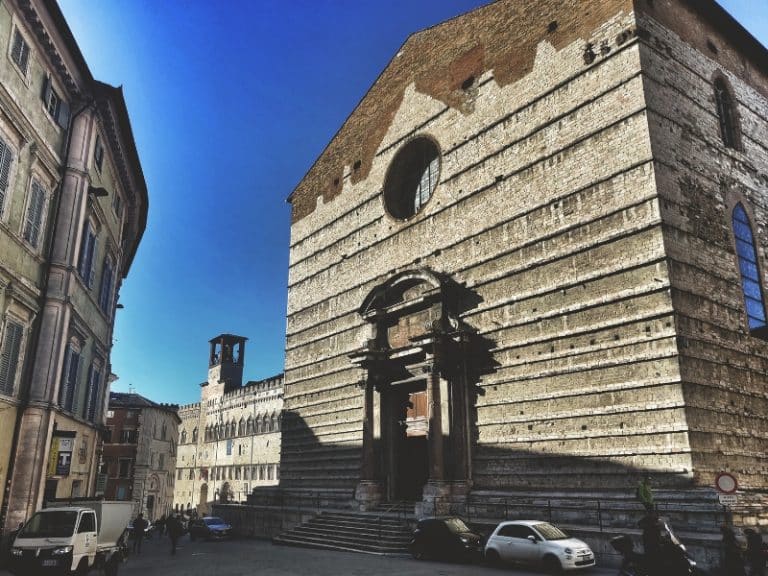
Perugia's Gothic cathedral was built between 1345 and 1490, yet its side facing Piazza IV Novembre was never finished and shows only a partial cladding of white and pink marble. On this side you see an outdoor pulpit used by Saint Bernardino of Siena, who preached here in 1425, and a bronze statue of Pope Julius III from 1555.
5Palazzo dei Priori
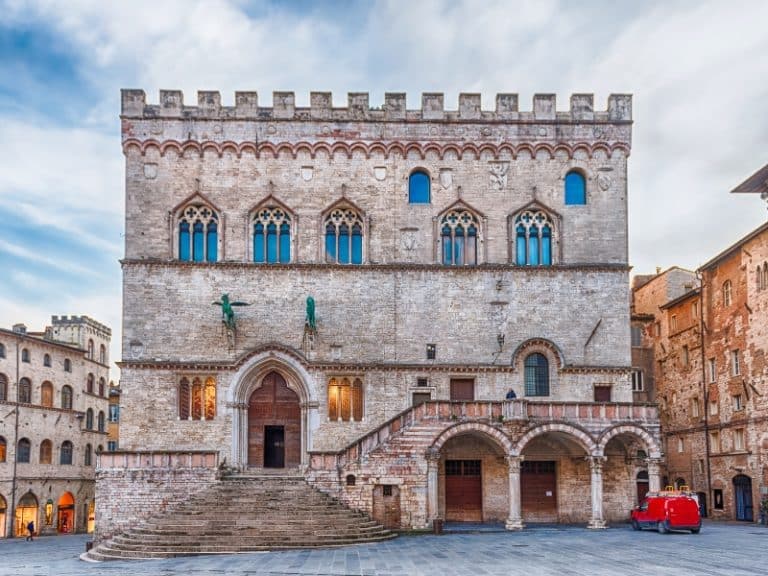
Built in stages from 1293 into the 15th century, this Gothic palace was the seat of the city's government and is still Perugia's town hall. Above the portal at the top of the stairs stand a bronze griffin, the symbol of Perugia, and a lion. Inside are the Sala dei Notari and the Collegio del Cambio, frescoed by Perugino.
6Fontana Maggiore
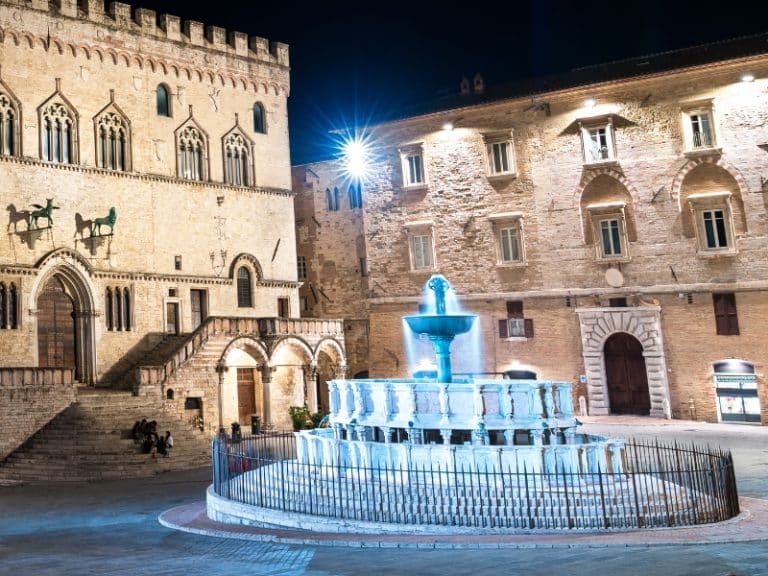
Built between 1275 and 1278, this fountain was designed by Fra Bevignate and carved by the sculptors Nicola and Giovanni Pisano. It celebrated the arrival of water from Monte Pacciano through a new aqueduct. Its two marble basins carry reliefs of the months, the liberal arts and biblical scenes, along with statues of saints and other figures.
7National Gallery of Umbria
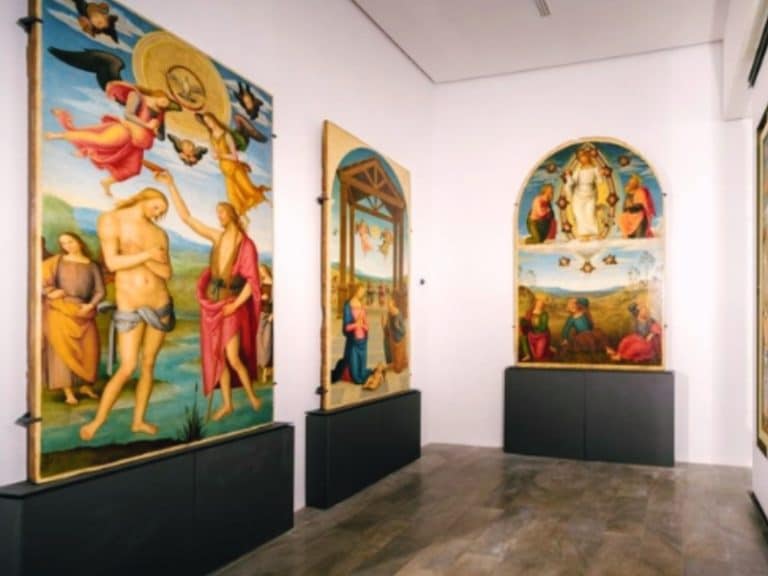
Umbria's main art museum occupies the upper floors of the Palazzo dei Priori. Its collection traces painting and sculpture in the region from the 13th to the 19th century, with works by Duccio, Fra Angelico, Piero della Francesca, Perugino and Pinturicchio.
8Corso Vannucci
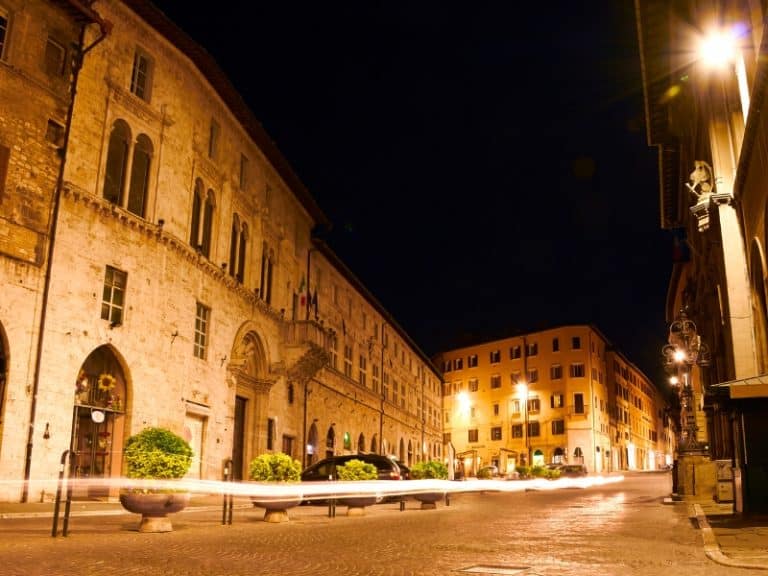
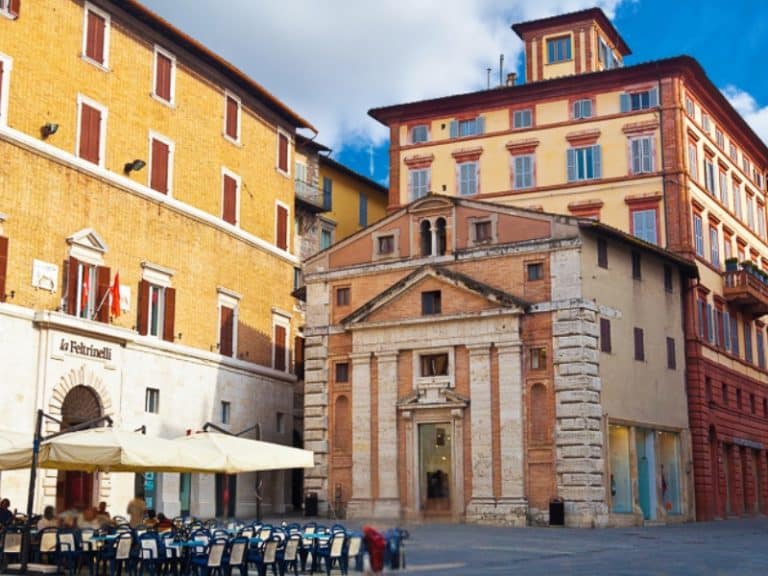
Perugia's main street runs along the hilltop from Piazza IV Novembre to Piazza Italia. It is named after Pietro Vannucci, the painter known as Perugino, who is said to have taught the young Raphael. Lined with palaces and closed to through traffic, it is where locals stroll in the evening.
9Piazza della Repubblica
This small square opens off Corso Vannucci, about halfway between Piazza IV Novembre and Piazza Italia. Its name honours the Italian Republic, created by the referendum of 1946, and it is one of the everyday meeting points of the old town.
10Via della ViolaFinish
This narrow lane in Perugia's historic centre shows the quieter side of the old town, away from the main squares. Old stone and brick houses, arches and small workshops line the street, and it is a good place to see how people still live inside the medieval city.
Read the full story →
Only logged in customers who have purchased this product may leave a review.




Reviews
There are no reviews yet.