

Table of Contents
The Temple du Change, located in Lyon’s enchanting Vieux Lyon district, is a captivating example of the city’s architectural and cultural evolution. This historic building has transformed over centuries, shifting from a bustling hub of commerce to a revered place of worship, offering a remarkable insight into Lyon’s rich and dynamic past.
From Stock Exchange to Sanctuary
The Temple du Change began as the Loge du Change, a stock exchange constructed between 1631 and 1653. Designed by Simon Gourdet, this elegant edifice was the epicenter of financial activity, drawing merchants and traders from across Europe to conduct business in Lyon. Its role as a commercial powerhouse underscored the city’s prominence in trade and finance during the 17th century.
In 1748, the building underwent significant renovations led by the renowned architect Jacques-Germain Soufflot, celebrated for designing the Panthéon in Paris. Soufflot’s enhancements, including the addition of a fifth arch to the façade, elevated the structure’s classical elegance and reinforced its grandeur.
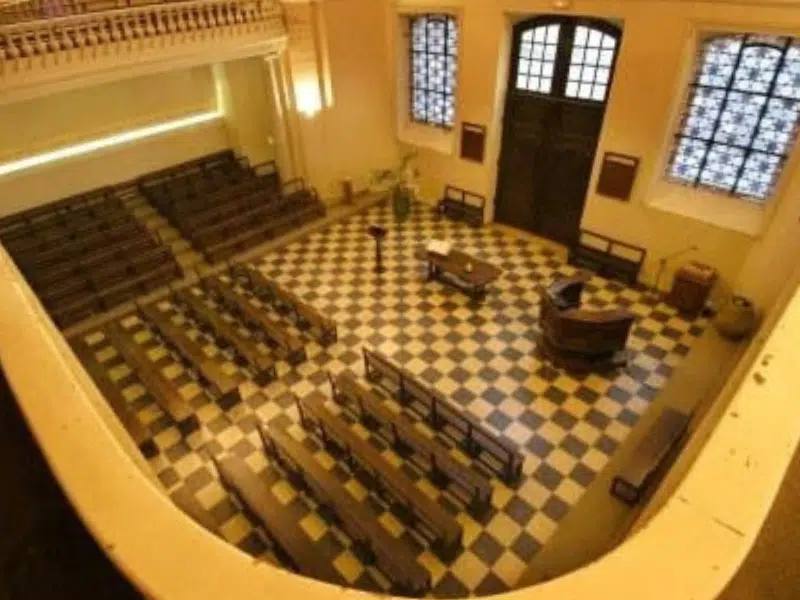
Following the tumultuous French Revolution, the building was repurposed as a Protestant church, reflecting the evolving religious and social dynamics of Lyon. This transformation marked a significant chapter in the building’s history, as it adapted to meet the spiritual needs of a changing community.
Architectural Features
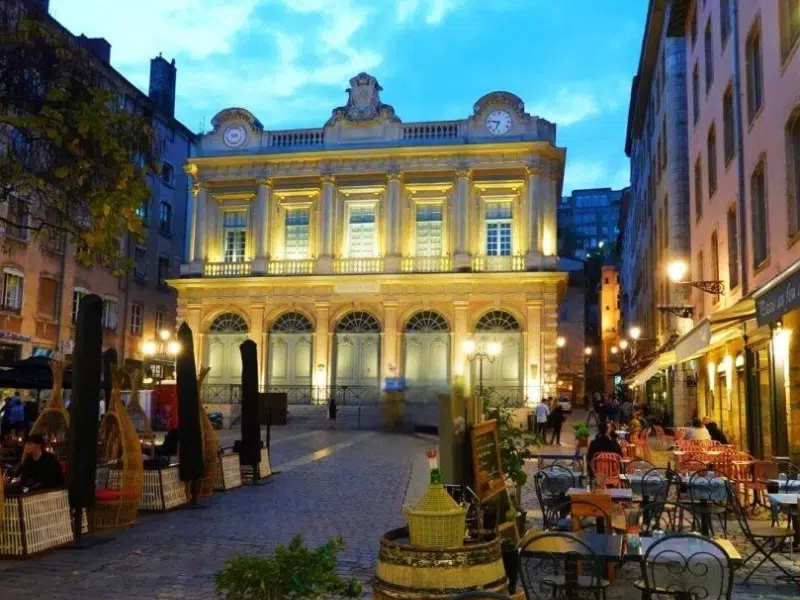
The Temple du Change stands as a beacon of classical elegance, with its harmonious design and understated sophistication. Its five symmetrical arches create a rhythm that exudes balance and refinement, a testament to the skill of its architects. These arches frame the façade, lending the building a sense of grandeur while maintaining its accessibility and connection to the bustling life of the Vieux Lyon.
The clean lines and balanced proportions of the structure are complemented by intricate stonework that adds depth and texture to its otherwise restrained aesthetic. The subtle ornamentation on the arches and cornices showcases the craftsmanship of the period, blending utility with artistry.
Soufflot’s addition of the fifth arch in the 18th century further elevated the building’s architectural harmony, extending its façade to provide a more monumental appearance. The façade’s integration with the historic streetscape exemplifies a seamless dialogue between the building and its urban surroundings, contributing to the cohesive beauty of the UNESCO World Heritage Site.
A Testament to Lyon’s Adaptability
Visitors to the Temple du Change can admire its architectural beauty and its integration into the historic Vieux Lyon streetscape. The harmonious design of the building invites exploration and offers a serene space for reflection. The surrounding district further enhances the experience, with its narrow cobblestone streets, vibrant cafes, and proximity to other iconic landmarks.
The Temple du Change is more than an architectural gem; it is a story of adaptation and resilience. Its journey from a commercial epicenter to a Protestant sanctuary reflects Lyon’s ability to evolve with the times while preserving its cultural essence. This unique landmark remains a symbol of the city’s enduring heritage, captivating visitors and standing as a proud testament to Lyon’s rich history.
Temple du Change is part of Lyon’s scavenger hunt and walking tour!
Embark on an unforgettable journey through the enchanting city of Lyon with World City Trail. Our interactive walking tour combines the thrill of exploration with the rich history and culture of this beautiful city.
Key Features:
Interactive gameplay: Solve engaging puzzles and challenges as you explore the city.
Hidden gems: Uncover lesser-known spots.
Cultural insights: Learn about the city’s fascinating history.
Flexibility: Explore at your own pace and create your own itinerary.
Family friendly activity and a great way to explore the city!
Further reading on Wikipedia: Lyon