
Table of Contents
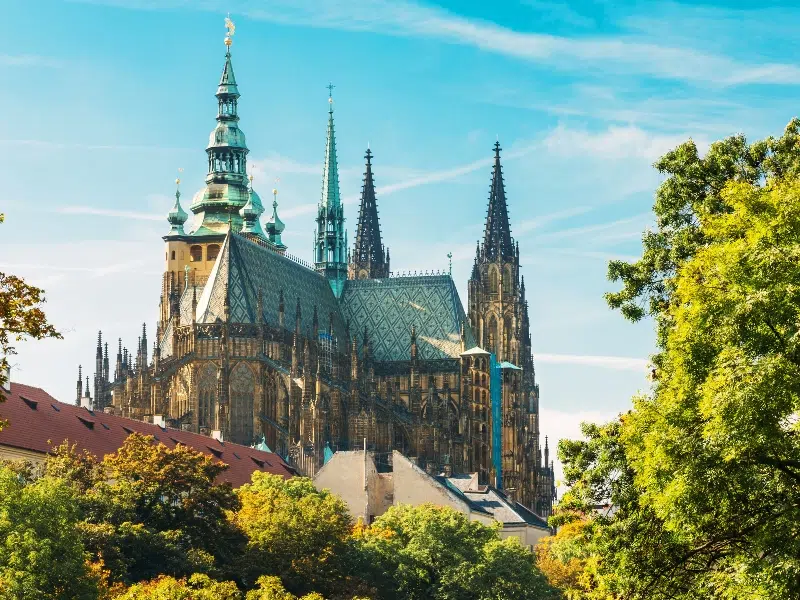
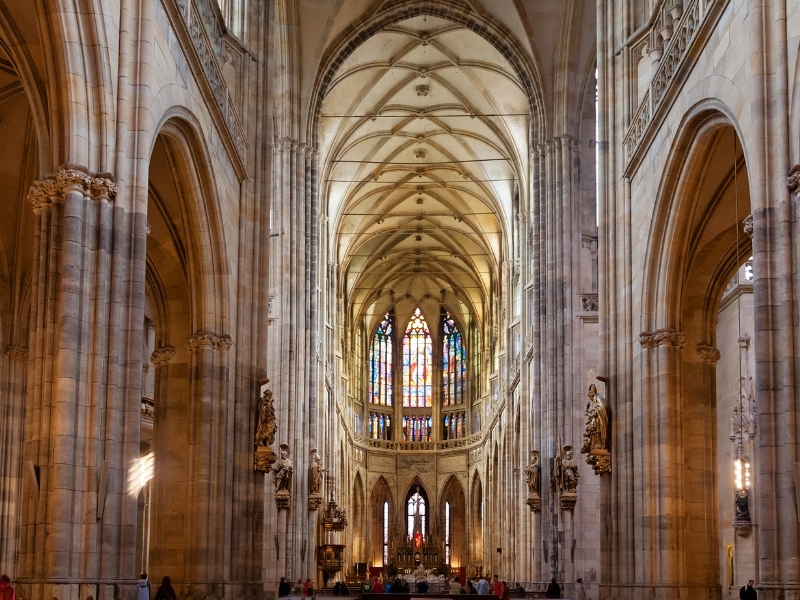
Saint Vitus Cathedral dominates the Prague Castle complex, standing as an awe-inspiring symbol of Czech history, spirituality, and artistic achievement. This architectural gem, with its soaring spires, elaborate stonework, and breathtaking stained glass windows, is more than just a place of worship—it is a monument to centuries of Czech heritage, reflecting the nation’s turbulent past and enduring resilience.
A Century-Long Journey of Construction
The construction of Saint Vitus Cathedral was a monumental task that spanned almost 600 years, reflecting the changing artistic styles, political climates, and ambitions of various rulers throughout history. The origins of Saint Vitus Cathedral date back to 929 AD, when Prince Wenceslaus—who would later become Saint Wenceslaus, the patron saint of Bohemia—commissioned a Romanesque rotunda on this very site. This modest church became a sacred space for early Czech rulers.
In 1344, under the reign of Holy Roman Emperor Charles IV, the decision was made to rebuild the structure into a grand Gothic cathedral that would rival the greatest churches of Europe. The emperor appointed Matthias of Arras as the lead architect, who laid the foundation for the French Gothic style of the cathedral. After his death, Peter Parler took over the project, adding his own artistic touches, including the stunning ribbed vaults, intricate tracery, and dynamic sculptural details that define the cathedral’s unique appearance.
Construction was interrupted multiple times due to wars, political turmoil, and financial challenges. It wasn’t until 1929, on the 1,000th anniversary of Saint Wenceslaus’ death, that the cathedral was finally completed in its entirety, with the finishing touches added in the Neo-Gothic style.
A Masterpiece of Gothic Architecture
Saint Vitus Cathedral is considered one of the most magnificent examples of Gothic architecture in Europe, incorporating Renaissance, Baroque, and Neo-Gothic elements that reflect its long and complex construction history. One of the cathedral’s most sacred and visually stunning spaces is the Saint Wenceslas Chapel, adorned with semi-precious stones and intricate 14th-century frescoes that depict the life and martyrdom of Saint Wenceslaus.
The chapel also houses a doorway leading to the Czech Crown Jewels, which are kept under tight security and displayed only on special occasions. Another striking feature of the Saint Vitus Cathedral is the Golden Gate, a magnificent southern entrance decorated with gold leaf mosaics depicting the Last Judgment. The intricate craftsmanship and shimmering details make it one of the most fascinating parts of the structure.
The South Tower, rising to a height of 96 meters (315 feet), offers breathtaking panoramic views of Prague’s red rooftops and winding streets. Climbing its 287 steps rewards visitors with one of the best vantage points in the city. The tower also houses the largest bell in the Czech Republic, Zikmund Bell, which dates back to 1549 and weighs an astonishing 16.5 tons.
A Shrine of Kings and Saint
For centuries, Saint Vitus Cathedral has played a central role in Czech royal and religious life. It has served as the coronation site of Bohemian rulers and is the final resting place of some of the country’s most influential figures.
- Royal Tombs: The cathedral’s crypt houses the tombs of Czech kings, queens, and emperors, including Charles IV, Rudolf II, and Wenceslaus IV. Their elaborately decorated sarcophagi reflect their status and historical importance.
- Saint Wenceslaus’ Remains: The cathedral is also home to the remains of Saint Wenceslaus, whose martyrdom in 935 AD solidified his legacy as the protector of Bohemia. His relics are kept in Saint Wenceslas Chapel, making it one of the most spiritually significant sites in the country.
- Tomb of Saint John of Nepomuk: Another prominent feature of the cathedral is the silver tomb of Saint John of Nepomuk, a Bohemian saint who was martyred for refusing to betray the confessions of Queen Johanna. His ornate silver sarcophagus, supported by angelic figures, is one of the most elaborate Baroque funerary monuments in the world.
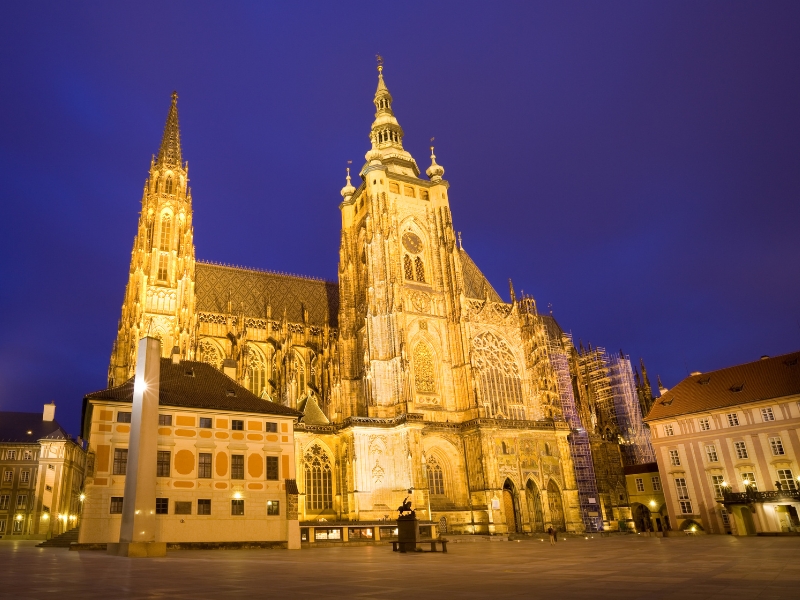
Saint Vitus Cathedral is part of Prague scavenger hunt and walking tour!
Embark on an unforgettable journey through the enchanting city of Prague with World City Trail. Our interactive walking tour combines the thrill of exploration with the rich history and culture of this beautiful city.
Key Features:
Interactive gameplay: Solve engaging puzzles and challenges as you explore the city.
Hidden gems: Uncover lesser-known spots.
Cultural insights: Learn about the city’s fascinating history.
Flexibility: Explore at your own pace and create your own itinerary.
Family friendly activity and a great way to explore the city!

Prague Scavenger Hunt and Self-Guided Tour
Price Per Person