

Table of Contents
The Royal Palace of Bucharest stands as a grand symbol of Romania’s monarchical history, a magnificent landmark in the heart of the capital that continues to captivate visitors with its architectural elegance and cultural significance. As one of the most important historical buildings in Bucharest, the palace has witnessed pivotal moments in Romania’s past, serving as the residence of the country’s kings and later transforming into a cultural institution. Today, it houses the National Museum of Art of Romania, preserving both the grandeur of its royal origins and its vital role in the country’s artistic heritage.
A Royal Legacy
The origins of the Royal Palace of Bucharest date back to the early 19th century when it was initially built as the residence of the country’s ruling princes. However, its transformation into a royal residence took place in 1882 when King Carol I, Romania’s first king, commissioned extensive renovations to reflect the power and prestige of the newly established monarchy. The building was further expanded and modernized under King Ferdinand I and Queen Marie, both of whom contributed to its evolution as a center of political and cultural activity.
The palace remained the primary royal residence until the abolition of the monarchy in 1947, when King Michael I was forced into exile. Following this political shift, the building was repurposed to serve as a national museum, ensuring its preservation as a historical and cultural landmark.
Architectural Grandeur
The Royal Palace of Bucharest boasts a stunning architectural style that blends neoclassical and Beaux-Arts influences, reflecting the grandeur associated with European royal residences of the 19th and early 20th centuries. Its symmetrical facade, grand columns, and ornate detailing exude a regal presence, making it one of the most imposing buildings in the city.
The interior of the palace is equally impressive, featuring opulent ballrooms, intricate chandeliers, lavish marble staircases, and exquisite frescoes. The throne room, one of the most historically significant spaces within the palace, remains a testament to the grandeur of Romania’s monarchy, where important state ceremonies and royal receptions once took place.
During the interwar period, the palace underwent additional renovations to further enhance its elegance, with contributions from renowned architects and artists of the time. Although parts of the palace suffered damage during World War II, extensive restoration efforts have preserved its original splendor.
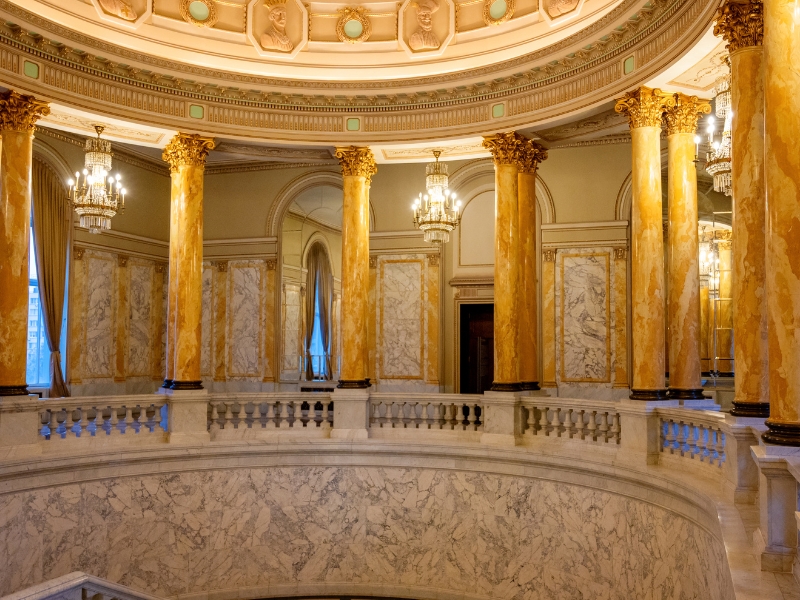
Transformation into the Museum of Art
After the fall of the monarchy, the Royal Palace of Bucharest found a new purpose as a cultural institution. It was officially repurposed to house the National Museum of Art of Romania, a transformation that allowed the historic building to remain an essential part of the nation’s heritage.
Today, visitors to the palace can explore its vast art collections, which include an impressive array of Romanian and European masterpieces. The museum is home to iconic works by Nicolae Grigorescu, Ion Andreescu, and Theodor Aman, as well as renowned international artists such as Rembrandt, El Greco, and Rubens. This rich collection ensures that the Royal Palace of Bucharest continues to serve as a cultural beacon, attracting art lovers from around the world.
The Royal Palace’s Role in Romania’s Identity
Beyond its artistic and architectural significance, the Royal Palace of Bucharest remains deeply intertwined with Romania’s national identity. It stands as a reminder of the country’s royal past, a period marked by both progress and challenges, and serves as a symbol of resilience and transformation. The palace has witnessed major historical events, including royal coronations, diplomatic gatherings, and political upheavals, all of which have shaped the course of Romania’s history.
Despite the abolition of the monarchy, the palace continues to hold an emotional and cultural connection for many Romanians, preserving the memory of the country’s royal heritage. Special events and exhibitions held within its halls further reinforce its status as a place of learning and reflection, ensuring that its legacy is passed on to future generations.
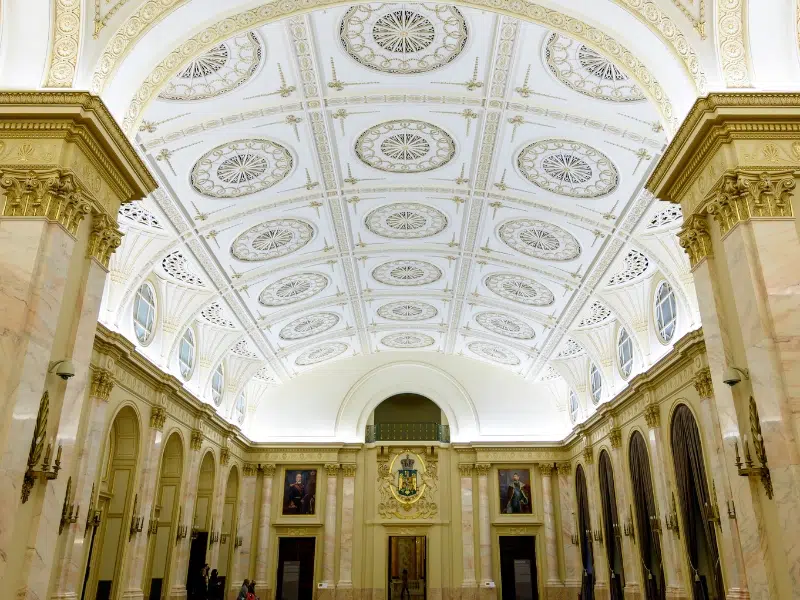
Royal Palace of Bucharest is part of Bucharest scavenger hunt and walking tour!
Embark on an unforgettable journey through the enchanting city of Bucharest with World City Trail. Our interactive walking tour combines the thrill of exploration with the rich history and culture of this beautiful city.
Key Features:
Interactive gameplay: Solve engaging puzzles and challenges as you explore the city.
Hidden gems: Uncover lesser-known spots.
Cultural insights: Learn about the city’s fascinating history.
Flexibility: Explore at your own pace and create your own itinerary.
Family friendly activity and a great way to explore the city!
Further reading on Wikipedia: Bucharest