
Nestled at the foot of the iconic Acropolis hill, the Acropolis Museum in Athens is a state-of-the-art institution dedicated to housing and displaying the magnificent artifacts discovered on the Sacred Rock. Far from being a traditional, dusty exhibition space, this critically acclaimed museum is a contemporary architectural masterpiece, designed to offer visitors a profound and engaging journey through the art and history of ancient Athens, all while directly connecting with the very site from which its treasures originate.

A Long-Awaited Vision: The Museum’s Genesis
The idea of a modern, purpose-built museum for the Acropolis finds its roots in the late 19th and early 20th centuries, as archaeological excavations on the Acropolis began to unearth an unprecedented wealth of sculptures, architectural fragments, and votive offerings. The original small Acropolis Museum, built directly on the rock in 1874, quickly became inadequate to properly house and display the growing collection. The need for a new, larger, and more technologically advanced facility became increasingly apparent throughout the 20th century.
However, the path to the realization of Acropolis Museum was long and complex, fraught with political, archaeological, and architectural challenges. After several failed attempts and international competitions, the project finally gained significant momentum in the early 2000s. The site chosen was strategically located on the ancient road that led up to the Acropolis, over the ruins of a Roman and early Byzantine settlement, ensuring a deep connection to the historical context of the artifacts.
The design for the new Acropolis Museum was awarded to the acclaimed Swiss-American architect Bernard Tschumi, in collaboration with Greek architect Michael Fotiadis. Their innovative vision aimed to create a building that was both respectful of its ancient surroundings and boldly modern, incorporating natural light and clear sightlines to the Acropolis itself.
Construction of the museum began in 2003. After years of meticulous building, careful archaeological excavation beneath the site (which are now visible through glass floors), and the delicate transfer of thousands of artifacts, the Acropolis Museum officially opened its doors to the public on June 20, 2009.
A Masterpiece of Design and Display
The Acropolis Museum is celebrated for its ingenious architectural design, which plays a crucial role in the visitor experience:
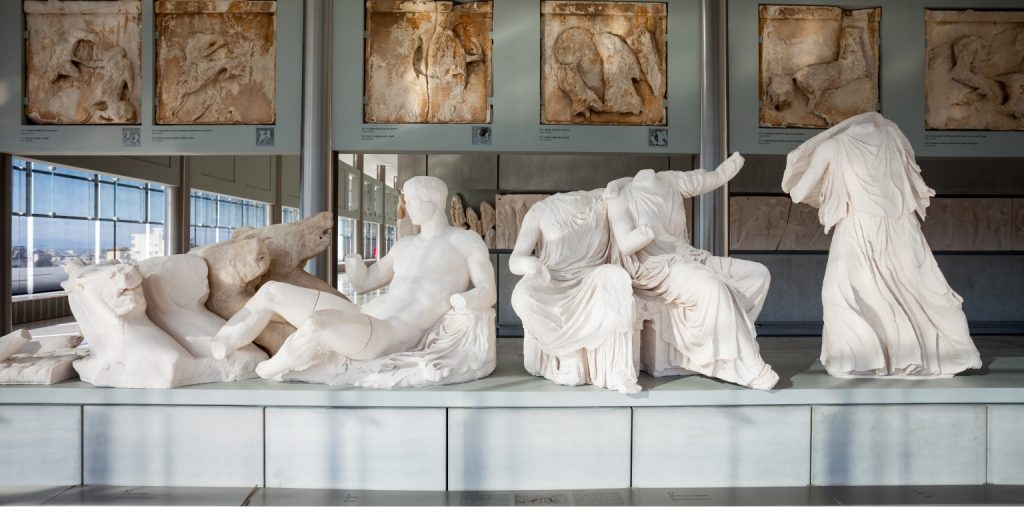
- Transparency and Light: The museum utilizes extensive glass surfaces, flooding the interior with natural light and offering constant visual connections to the Acropolis and the urban landscape of Athens. The top floor, in particular, known as the Parthenon Gallery, is rotated to align precisely with the orientation of the Parthenon on the Acropolis, allowing the marble sculptures to be viewed in natural light similar to their original placement.
- Archaeological Excavation on View: The ground floor features a “floating” glass floor that reveals the excavated remains of an ancient Athenian neighborhood beneath the museum, offering a tangible link to the city’s continuous history.
- Narrative Flow: The museum’s exhibitions are organized thematically and chronologically, leading visitors on a narrative journey from the archaic period through the Roman era, culminating in the Parthenon Gallery. This thoughtful layout enhances understanding and appreciation of the artifacts’ historical context.
- The Parthenon Gallery: This top floor is the crown jewel, displaying the surviving architectural sculptures of the Parthenon in their original positions on a steel and glass structure that replicates the dimensions of the temple’s frieze. This allows visitors to appreciate the scale and artistry of the sculptures, even including casts of those held in the British Museum, in a powerful plea for their return.

Treasures of the Acropolis
The Acropolis Museum houses an unparalleled collection of artifacts recovered from the Acropolis, including:
- Archaic Period: Stunning korai (female statues) and kouroi (male statues), early architectural sculptures, and votive offerings.
- Classical Period: Masterpieces from the Parthenon, including metopes depicting battles, fragments of the frieze illustrating the Panathenaic procession, and pedimental sculptures. Also, parts of the Erechtheion and Propylaia.
- Roman and Early Christian periods: Objects from the later phases of the Acropolis, showcasing its continuous use.
The Acropolis Museum in Athens, with its construction starting in 2003 and its grand opening on June 20, 2009, has not only provided a world-class home for Greece’s invaluable heritage but has also become a powerful symbol of the nation’s cultural pride. It offers an essential, enlightening, and deeply moving experience for anyone seeking to connect with the timeless legacy of ancient Greek civilization.