
The phrase “St. Enoch Travel Centre in Glasgow” often leads to a slight misconception, as the building historically known as the St. Enoch Travel Centre is no longer functioning as such in the traditional sense. However, its history and prominent location make it a significant landmark in Glasgow’s city center, inextricably linked to the city’s public transport past. Today, while travel services have evolved, the iconic building at St. Enoch Square remains a focal point, now repurposed but still vital to the area’s charm.
From Subway Headquarters to Iconic Landmark
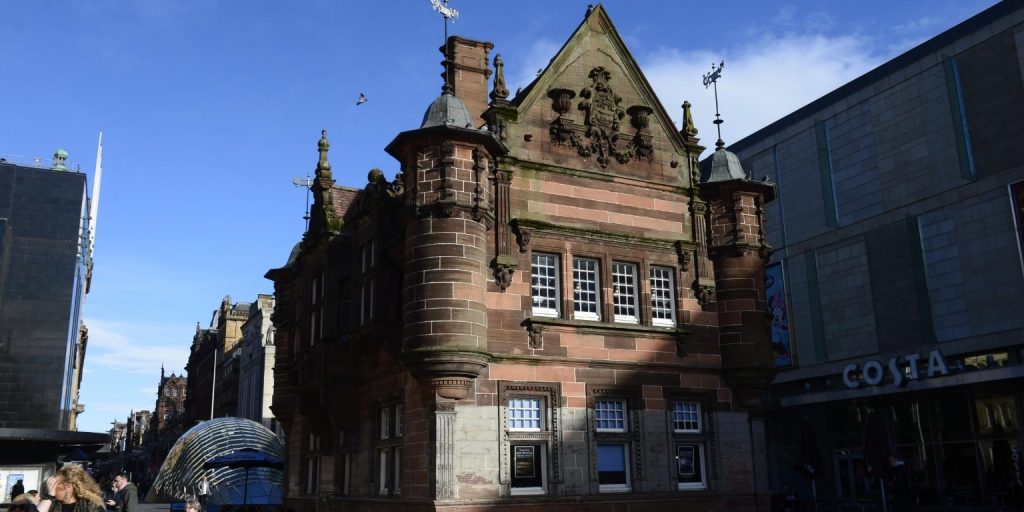
The building widely referred to as the St. Enoch Travel Centre in Glasgow is the distinctive red sandstone structure located directly on St. Enoch Square. Designed by Scottish architect James Miller and completed in 1896, this ornate, Jacobean-style building initially served a dual purpose: it was both the main booking office for the newly opened Glasgow District Subway Railway Company and its corporate headquarters.
Glasgow’s Subway, famously nicknamed the “Clockwork Orange” for its circular route and distinctive orange trains, is the world’s third-oldest underground metro system, following London and Budapest. The St. Enoch building, with its domed turrets, fanciful gables, and red-tiled roof, was the most architecturally elaborate of all the original subway stations, reflecting the pride and ambition of the Victorian era.
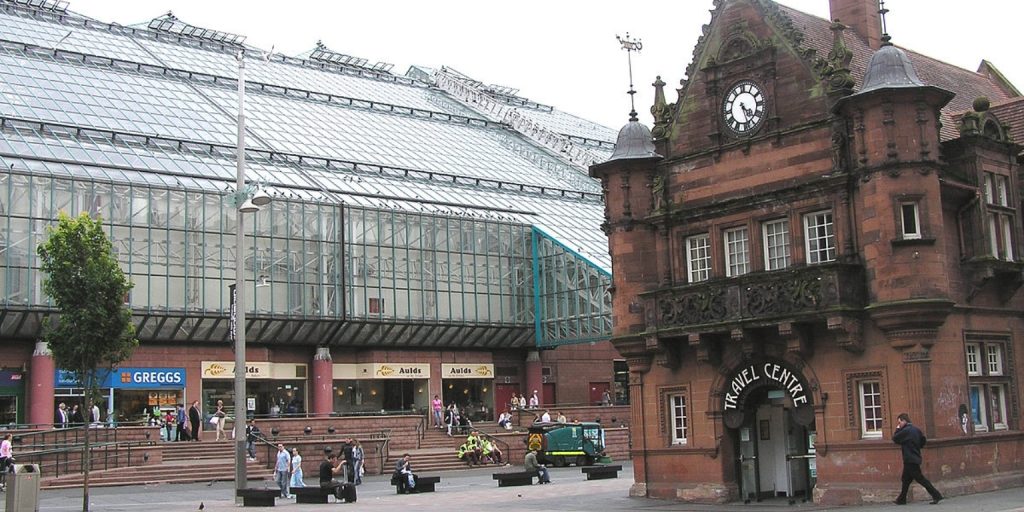
For decades, it was the central hub for purchasing tickets and accessing information for Glasgow’s unique underground railway. When the entire subway system underwent a major modernization program between 1977 and 1980, the station’s entrance and ticket facilities were moved underground. It was at this point that the historic surface building was repurposed and began its role as a dedicated “Travel Information Centre,” operated by the Strathclyde Partnership for Transport (SPT). It continued in this capacity, providing public transport information and services, for several years.
A Site of Continuous Evolution
The area around St. Enoch Square itself has a rich and ever-changing history. The current St. Enoch Centre, a large glass-roofed shopping mall (one of Europe’s largest glass-covered structures), was built on the site of the former St. Enoch mainline railway station and hotel, which closed in 1966 and was demolished in 1977. This grand mainline station and hotel, distinct from the Subway building, was a major transport hub in its own right for over a century.
The original Subway building, now popularly remembered as the St. Enoch Travel Centre, notably survived the extensive redevelopment of the square. It was even temporarily suspended in the air during the 1970s renovations to allow for the reconstruction of the underground station platforms, a testament to its recognized historical and architectural significance. It received a Category A listing, signifying it as a building of national importance.

The Present Day: Repurposed Charm
While its function as a primary public transport information center eventually moved back into the underground subway station’s concourse around 2008, the iconic building on St. Enoch Square remains. In December 2009, it began a new chapter, becoming home to a Caffe Nero coffee shop. This transformation allows the public to continue to appreciate its unique interior and exterior architecture while enjoying a modern amenity.
Today, when people refer to the “St. Enoch Travel Centre,” they might be thinking of the various travel-related services available within the broader St. Enoch Centre shopping mall, such as currency exchange bureaus (like No1 Currency) or travel agents (like Barrhead Travel). However, the specific, historic building at St. Enoch Square, once the direct point of contact for Glasgow’s Subway commuters and then a dedicated information center, is now a charming and bustling coffee shop.
The St. Enoch Travel Centre in Glasgow, the distinctive red sandstone building designed by James Miller in 1896, represents a fascinating slice of Glasgow’s transport and architectural heritage. From its origins as the Subway’s heart to its role as a public travel information hub, and now as a popular café, it stands as a resilient and beloved landmark, constantly adapting while retaining its unique historical character in the ever-evolving landscape of Glasgow city center.