
The Corral del Carbón, located in the heart of Granada, is a historic monument of immense significance. Often overlooked by visitors rushing to the nearby Alhambra, this site is a rare and precious gem, representing the only remaining Nasrid caravanserai in Spain. Its history is a fascinating journey through centuries of use, from a bustling coal yard to a theater and a tenement, and its architecture is a powerful testament to the skill of the artisans who blended Islamic and Christian traditions.
A Building of Many Lives
The name Corral del Carbón literally translates to “Coal Yard,” a moniker that reflects one of its many uses over the centuries. It was originally built in the early 14th century, during the Nasrid dynasty, and its primary function was a alhóndiga—a caravanserai or inn for merchants. This was a place where traveling traders could stable their animals, store their goods, and find lodging for the night, all within the secure confines of a large courtyard. Its strategic location, close to the city’s main market square and the busy commercial heart of Granada, made it a vital hub for trade and commerce.
Following the Christian conquest of Granada in 1492, the building was appropriated by the new rulers. For a period, it continued its function as a caravanserai, but its use gradually changed. In the 16th century, the site was sold to a wealthy man who converted the inn into a tenement for rental housing. Later, parts of the building were transformed into a vibrant open-air theater, which was a popular form of entertainment during the Spanish Golden Age. The courtyard, with its natural acoustics, provided the perfect setting for theatrical performances. This period, in particular, left a significant mark on the building’s social and cultural history.
As the centuries passed, the building fell into a state of decay and neglect. By the early 20th century, it was a dilapidated structure at risk of demolition. Recognizing its historical value, the Spanish state declared it a National Monument in 1918 and acquired it in 1933. A major restoration project was undertaken to save the building, meticulously returning it to its former glory.
A Masterpiece of Nasrid Architecture
The architecture of the Corral del Carbón is a stunning example of Nasrid design, characterized by its elegant use of space and intricate ornamentation. The most striking feature is the magnificent entrance archway, a monumental gateway that stands as a beautiful example of Hispano-Moorish architecture. This horseshoe arch is adorned with intricate geometric patterns carved into the stone, and an inscription in Arabic provides the building’s date of construction.
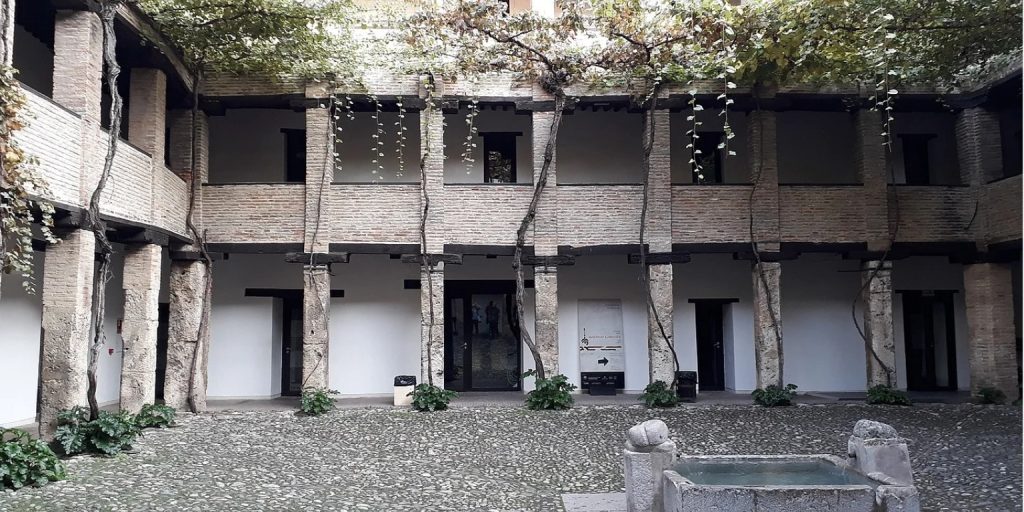
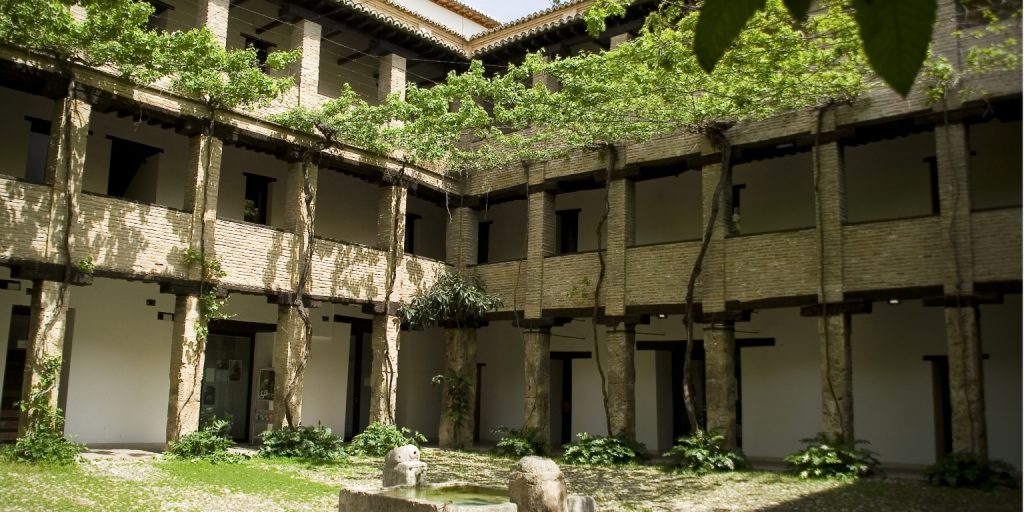
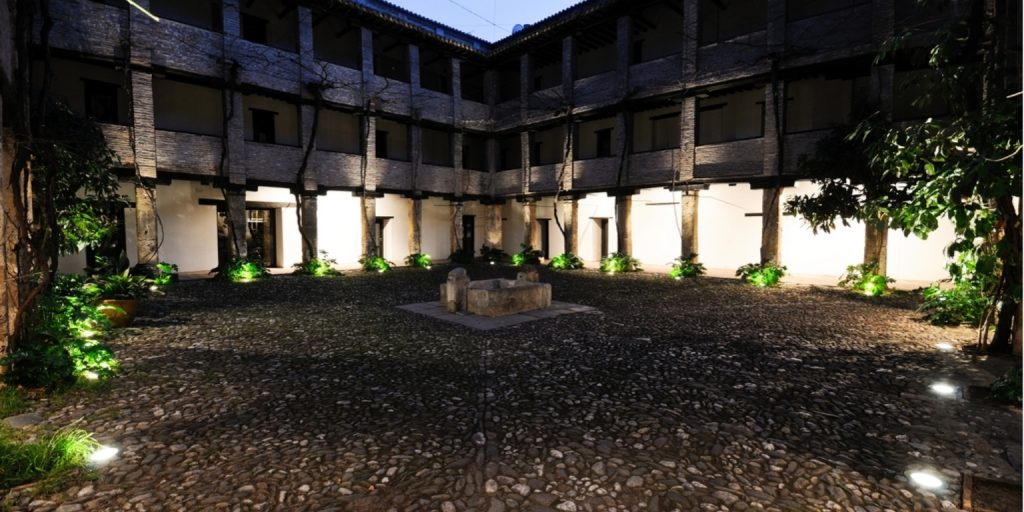
Beyond the archway is the central courtyard, the heart of the caravanserai. This open space, with its two-story wooden galleries and balconies, served as the main staging area for merchants and their goods. The wooden galleries are supported by brick pillars, and their construction reflects the functional nature of the building while still incorporating elegant design. The courtyard is simple yet powerful, a functional space that allows light and air to circulate while offering a tranquil atmosphere away from the bustling streets outside. The building’s original design, with its focus on a central courtyard, is a feature common in Islamic architecture, providing a place of security and respite.
A Cultural Hub Today
Today, the Corral del Carbón no longer functions as a caravanserai or a theater. Instead, it serves as a public cultural center, a peaceful oasis in the midst of Granada’s busy city center. The courtyard is a popular spot for visitors to rest and admire the architecture, while the rooms on the upper floors house the offices of the Granada branch of the Andalusian Public Foundation El Legado Andalusí. It is also the location of a local tourist information office and a small shop.
The building’s continuous presence in Granada’s urban fabric is a testament to its enduring legacy. It stands as a powerful reminder of the city’s multicultural past and its role as a crossroads of trade and culture. Visiting the Corral del Carbón offers a unique opportunity to step back in time and witness a piece of medieval Spanish history that has survived against all odds. It is a true hidden gem and an essential stop for anyone seeking to understand the full scope of Granada’s rich heritage.