What is the Barcelona self-guided walking tour?
The Barcelona self-guided walking tour runs from the old town to the harbour at a pace you set, with audio narration on your phone where a guide would normally stand. Allow about 3 hours: 51 minutes of that is time on your feet, the route measures 4.1 km, and at 10 stops you stand still and listen. Nothing is timed, and nobody is counting heads before moving on.
In the cathedral cloister the narration explains the thirteen white geese, a number tied to the belief that Eulalia was 13 years old when she was martyred. At Santa Maria del Mar you hear the tradition of the bastaixos, the harbour porters said to have carried the stones down from Montjuïc on their backs. On the waterfront come the 60-metre Columbus Monument, finished for the Universal Exhibition of 1888, and the ceramic head Roy Lichtenstein made for the Olympics of 1992.
- Durationabout 3 hours
- Walkingabout 51 min · 4.1 km
- Stops10
- LanguagesEnglish, German, French, Italian, Spanish, Dutch, Portuguese
What you do on the walk
Listen
Every stop brings narration about the place, the people who built it and the stories attached to it. The same text sits on screen for anyone who would rather read.
Walk on
Google Maps carries you from stop to stop: 51 minutes on foot spread over 4.1 km, at whatever pace suits you.
Pause
Stop for a coffee on a square in the Gothic Quarter or sit by the water, then take the walk up again, the same day or another one.
Eat and browse
Tips for food and shops near the route come with it. Your starting point and the order of the stops are yours to set in the app.
See the route and attractions →
How it works
- Book online Choose the number of people. Your booking reference arrives by email straight away.
- Get the app Download the World City Trail app from the App Store or Google Play and enter your booking reference.
- Walk when you like Start whenever you are ready, walk at your own pace and pause any time. No guide, no fixed schedule.
Who the walk suits
A first time in Barcelona
One walk connects the medieval streets, La Rambla and the harbour and explains what you are standing in front of.
Anyone who dislikes groups
No raised umbrella to follow and no meeting time: you stay where something holds you and move on when you are ready.
A single day in the city
3 hours covers the old town and the sea front, which leaves the afternoon for a beach, a museum or the Gaudí buildings uptown.
Good to know
- Bring a charged smartphone with mobile data; a power bank helps.
- No entry tickets needed: everything happens outside the buildings. Going inside is optional and paid separately.
- Family friendly; children must be accompanied by an adult.
- Not suitable for wheelchair users and difficult with strollers.
- Groups of up to 5 work best; larger groups split up, one ticket per person.
- Every purchase helps support stray cats and dogs in Greece.
The walk stop by stop: Plaça de Catalunya, the Cathedral, the waterfront, the Picasso Museum
10 stops · about 51 min walking · start: Plaça de Catalunya · finish: Picasso Museum (Museu Picasso)
The walk opens on Plaça de Catalunya, where the old town meets the grid of the Eixample, and turns at once to the Palau de la Música Catalana and Barcelona Cathedral. La Rambla then carries it past the Gran Teatre del Liceu and Palau Güell down to the Columbus Monument and over the Rambla de Mar. The waterfront leads to El Cap de Barcelona before the route cuts into La Ribera for Santa Maria del Mar, and the Picasso Museum ends it. A different opening stop or another order can be set in the app, and no stop asks for an entry ticket.
Open the route map ↗
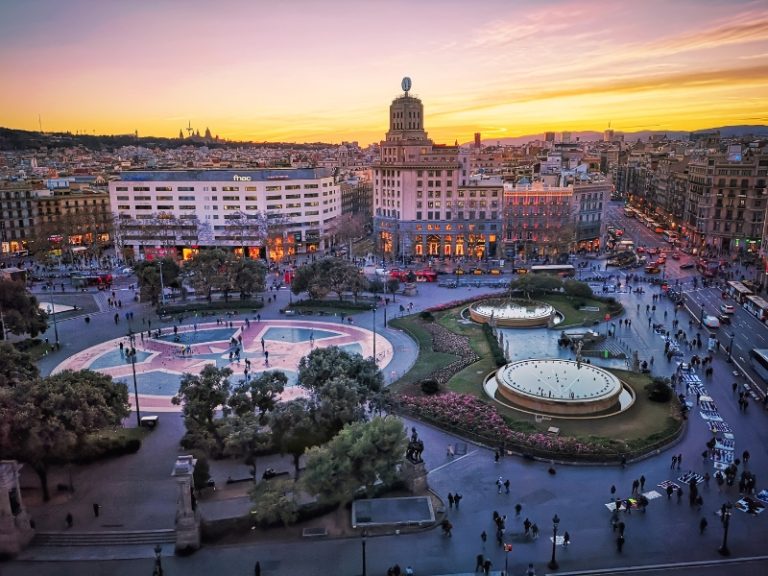
1Plaça de CatalunyaStart
Barcelona's central square links the old town, via La Rambla and Portal de l'Àngel, with the Eixample grid of the 19th-century city extension. It took its present form in the late 1920s, before the 1929 International Exhibition, and on one side stands Josep Maria Subirachs's monument to Catalan president Francesc Macià, installed in 1991.
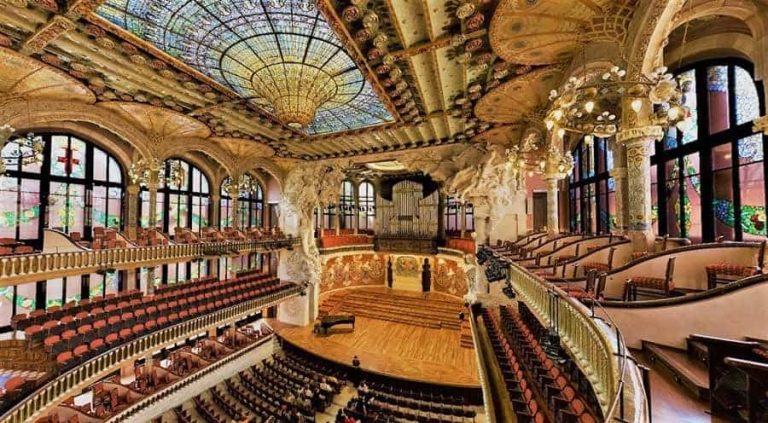
2Palau de la Música Catalana
Lluís Domènech i Montaner built this concert hall in 1905–1908 for the Orfeó Català choral society, and it is a UNESCO World Heritage Site. Look up at the corner of the building, where a sculpture group by Miquel Blay stands for Catalan song.
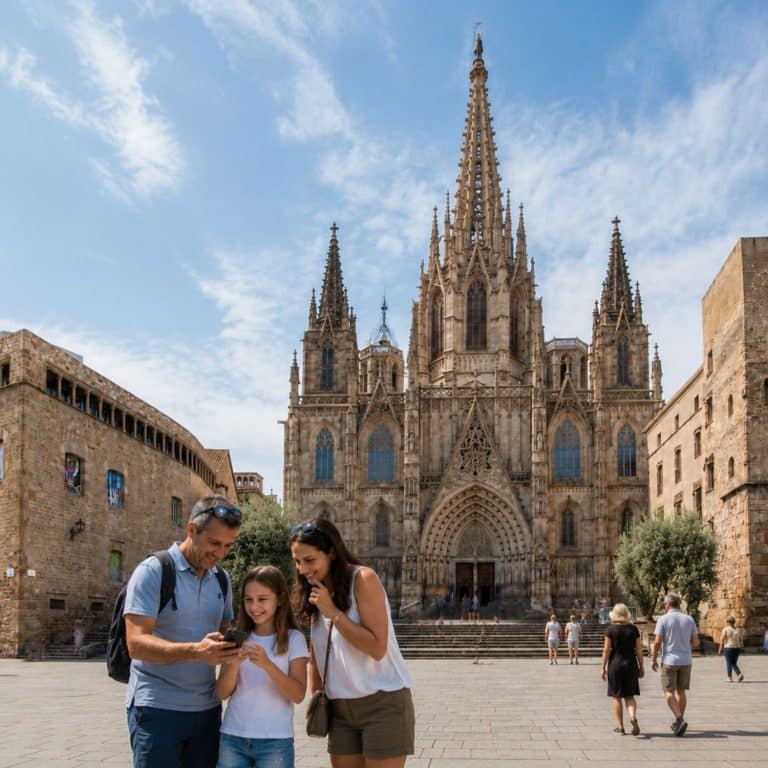
3Barcelona Cathedral
The Cathedral of the Holy Cross and Saint Eulalia was begun in 1298 on the site of earlier churches, but its neo-Gothic main façade was only completed in the early 20th century. Thirteen white geese live in the cloister, a number linked to the belief that Eulalia, the city's co-patron saint, was 13 when she was martyred.
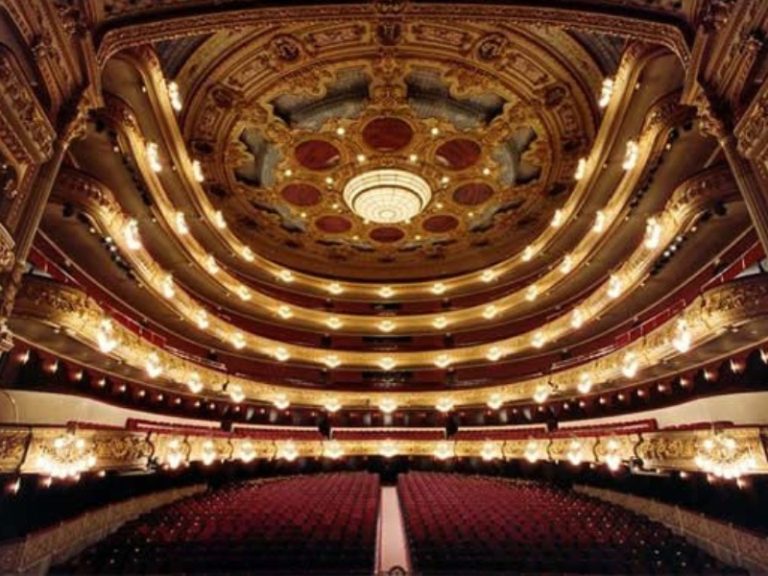
4Gran Teatre del Liceu
Barcelona's opera house opened on La Rambla in 1847. It was rebuilt after fires in 1861 and 1994 and reopened in 1999, and in 1893 an anarchist threw bombs into the stalls on the opening night of the season.
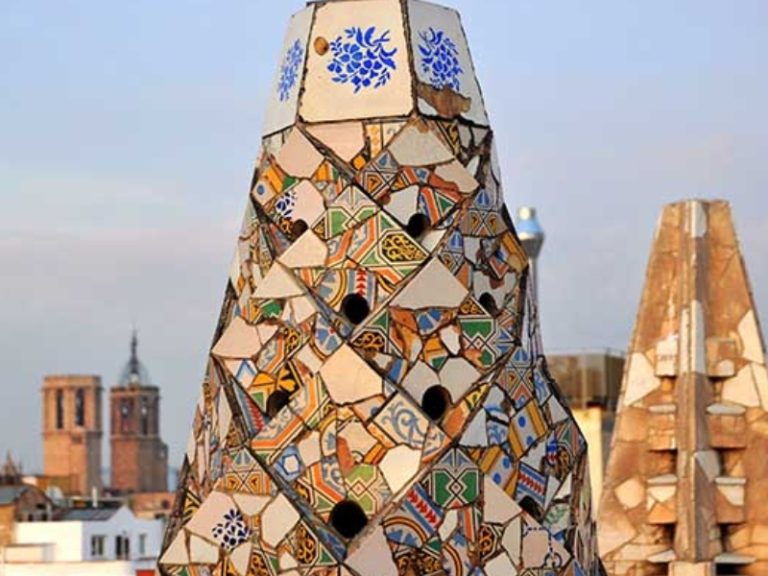
5Palau Güell
Antoni Gaudí built this town palace in 1886–1890 for his patron Eusebi Güell, and it is part of the UNESCO World Heritage listing of Gaudí's works. Look at the two wrought-iron gates shaped as parabolic arches, wide enough for horse-drawn carriages, and at the mosaic-covered chimneys on the roof.
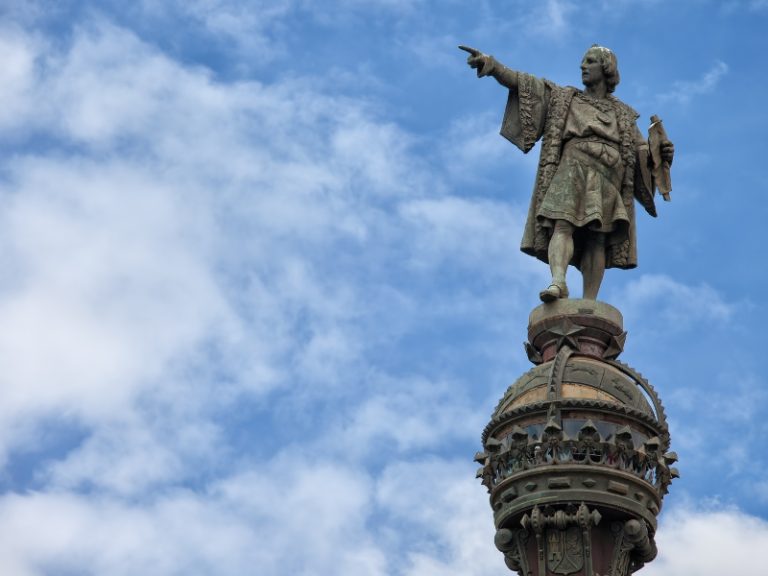
6Columbus Monument (Mirador de Colom)
The Columbus Monument at the bottom of La Rambla is 60 metres tall and was completed for the 1888 Universal Exhibition, after a competition won by Gaietà Buïgas. Columbus stands on top with his right arm stretched out towards the sea, and a lift inside the column goes up to a viewing platform.
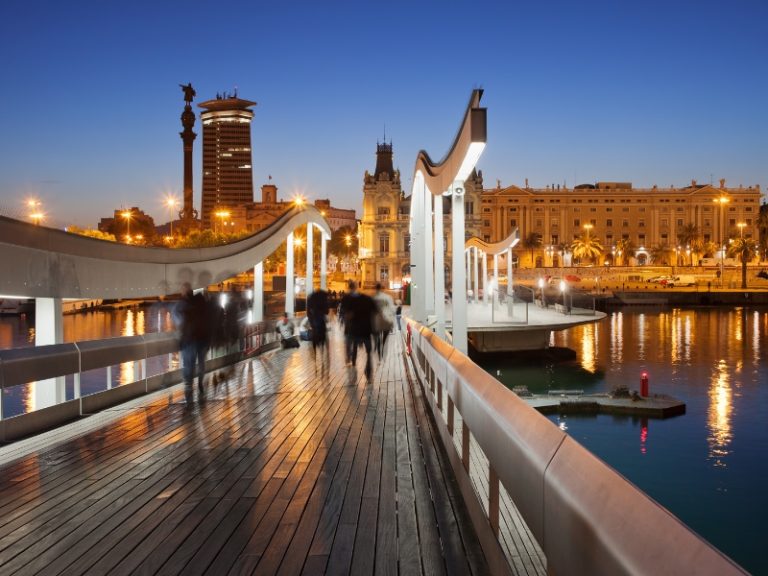
7Rambla de Mar
This wooden walkway, designed by the architects Helio Piñón and Albert Viaplana, continues La Rambla across the water of Port Vell to the Moll d'Espanya. It began operating in 1994, when the old harbour was being turned into a public waterfront.
Read the full story →
8El Cap de Barcelona (Barcelona Head)
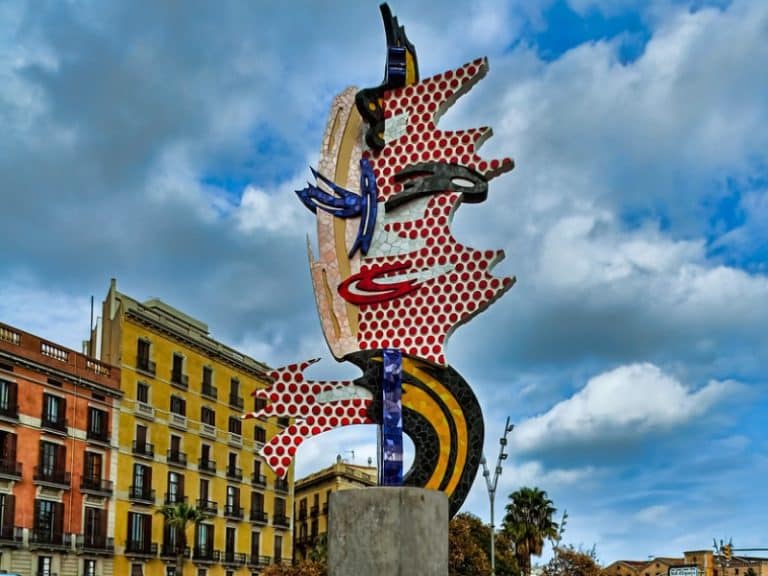
The American pop artist Roy Lichtenstein created this giant head for the 1992 Olympic Games, and it stands on the waterfront near the old port. It is made of concrete and glazed ceramic tiles, with the comic-strip dots and bold outlines typical of his work.
9Basilica of Santa Maria del Mar
Santa Maria del Mar in the La Ribera district was built between 1329 and 1383 and is one of the finest examples of Catalan Gothic. Inside, slender octagonal columns hold up a wide, open nave. According to local tradition, the harbour porters, the bastaixos, carried its stones on their backs from Montjuïc.
10Picasso Museum (Museu Picasso)Finish
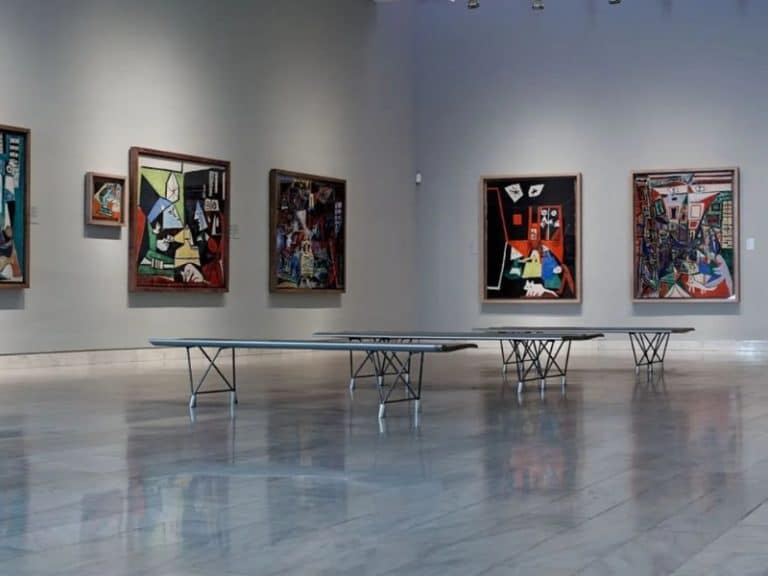
The Picasso Museum opened in 1963 on Carrer de Montcada and now occupies five adjoining medieval palaces. Its collection is especially strong on Picasso's early years, and it holds his complete Las Meninas series from 1957.
Only logged in customers who have purchased this product may leave a review.



Reviews
There are no reviews yet.