What is the Erfurt self-guided walking tour?
The Erfurt self-guided walking tour puts a narrator in your pocket instead of a group around you: the World City Trail app shows the way on a map, and at every landmark a recorded account starts, full of history, legends and odd facts. Count on roughly 2 hours for 10 stops and 2 km, of which only 28 minutes are spent actually walking. Cars are rare in the old centre, so the short legs between stops are quiet ones.
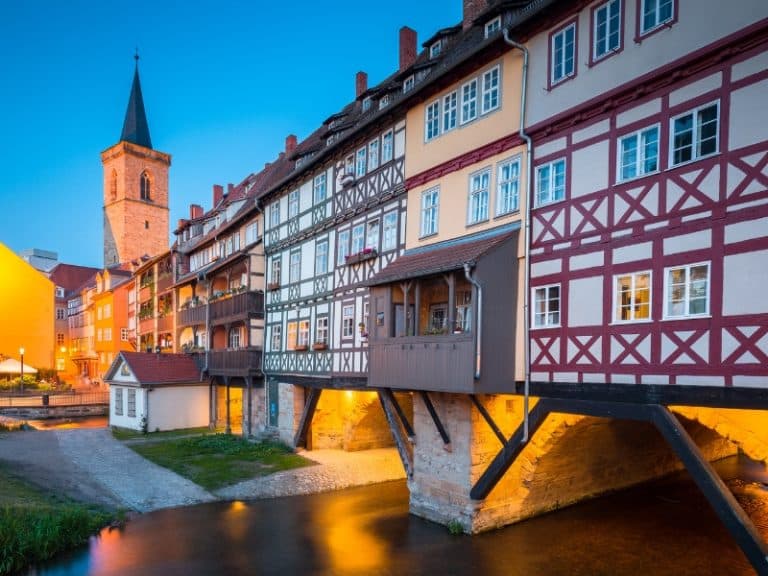
At the Luther Monument the narration explains how Erfurt shaped the Reformer long before Wittenberg: he studied here from 1501 and entered the Augustinian monastery in 1505. The Haus zum Stockfisch brings the story of woad, the plant that dyed cloth blue and made the city rich, and of houses known by names instead of numbers. On the Krämerbrücke you hear why the bridge of 1325, lined with half-timbered houses, hardly looks like a bridge at all, and at the Haus zum Breiten Herd you look up at a frieze of the five senses. Up on the Domberg come the Gloriosa bell, cast in 1497, and the cathedral where Luther was ordained a priest in 1507.
- Durationabout 2 hours
- Walkingabout 28 min · 2 km
- Stops10
- LanguagesEnglish, German, French, Italian, Dutch
How the walk works in practice
Stand, look, listen
At each stop the narration explains what stands before you: how it began, who shaped it, the legend attached to it and the detail most passers-by miss. If you would rather read than listen, each chapter appears in full on screen.
Leg by leg with Google Maps
Google Maps leads you from one stop to the next, 28 minutes of walking over 2 km altogether, at whatever speed you choose.
Break off whenever you like
Coffee, a museum, an early lunch: leave the walk when something tempts you and pick it up again at the same stop, later that day or on another.
Shape your route
The app adds suggestions for local food and shops, and you are free to start at another stop or rearrange the order.
See the route and attractions →
How it works
- Book online Choose the number of people. Your booking reference arrives by email straight away.
- Get the app Download the World City Trail app from the App Store or Google Play and enter your booking reference.
- Walk when you like Start whenever you are ready, walk at your own pace and pause any time. No guide, no fixed schedule.
A good fit for
History lovers
Dates, names and the reasons behind them: the narration fills in what the plaques leave out.
Two of you, or a few friends
Each of you listens on your own phone, side by side, and there is plenty to talk about between stops.
Visitors short on time
In about 2 hours you see the centre properly, with the rest of the day still free.
Good to know
- Bring a charged smartphone with mobile data; a power bank helps.
- No entry tickets needed: everything happens outside the buildings. Going inside is optional and paid separately.
- Family friendly; children must be accompanied by an adult.
- Not suitable for wheelchair users and difficult with strollers.
- Groups of up to 5 work best; larger groups split up, one ticket per person.
- Every purchase helps support stray cats and dogs in Greece.
From the Anger to the Domberg
10 stops · about 28 min walking · start: Angermuseum · finish: St Severus' Church
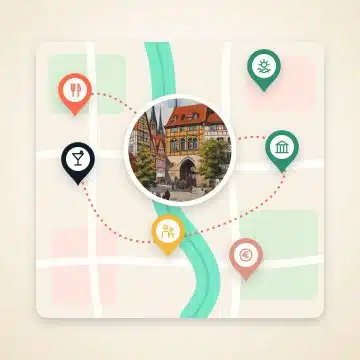
Beginning at the Angermuseum on the Anger, the walk passes the Luther Monument and the Haus zum Stockfisch before crossing the Krämerbrücke over the Gera. The Fischmarkt holds the next two stops, the Haus zum Breiten Herd and the neo-Gothic town hall, and the Natural History Museum on Große Arche leads on to the Domplatz. From there 70 steps climb to the cathedral, and St Severus' Church right beside it ends the tour. All stops are outside, and in the app you choose which one comes first.
Open the route map ↗
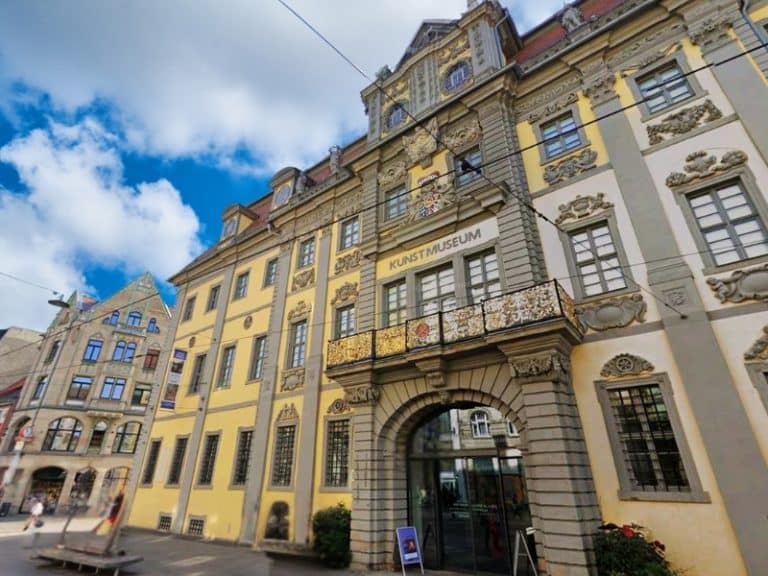
1AngermuseumStart
Erfurt's art museum occupies the former Packhof on the Anger, a Baroque building from the early 18th century where goods were once weighed and taxed. Its collections range from medieval art to modern painting, and one room was decorated with murals by the Expressionist painter Erich Heckel.
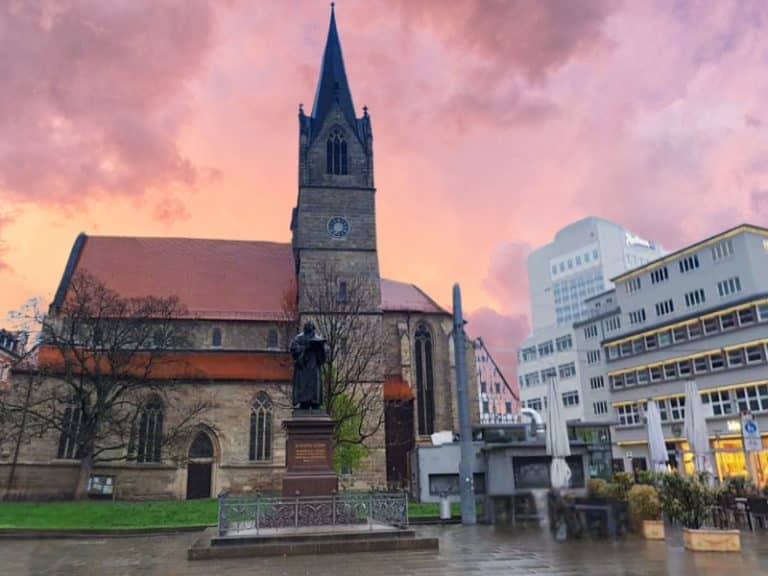
2Luther Monument
A bronze statue of Martin Luther by Fritz Schaper stands on the Anger in front of the Kaufmannskirche and was unveiled in 1889. Luther studied at Erfurt's university from 1501 and entered the city's Augustinian monastery in 1505, so Erfurt shaped him long before Wittenberg.
3Haus zum Stockfisch
This Renaissance house with a richly decorated sandstone façade was built in 1607 for a wealthy merchant and today houses the Stadtmuseum, Erfurt's city museum. Like many houses in Erfurt it carries a name instead of a number. Much of the city's wealth came from the trade in woad, a plant used to dye cloth blue.
4Krämerbrücke
First built in stone in 1325, the Krämerbrücke crosses the river Gera and is lined with half-timbered houses on both sides, so from the street it hardly looks like a bridge at all. It is the longest bridge in Europe continuously built over with inhabited houses. The Ägidienkirche stands at its eastern end.
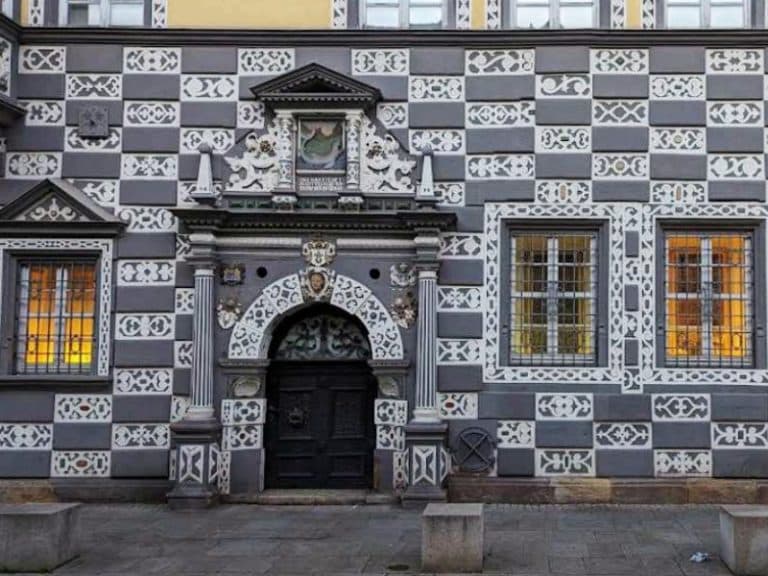
5Haus zum Breiten Herd
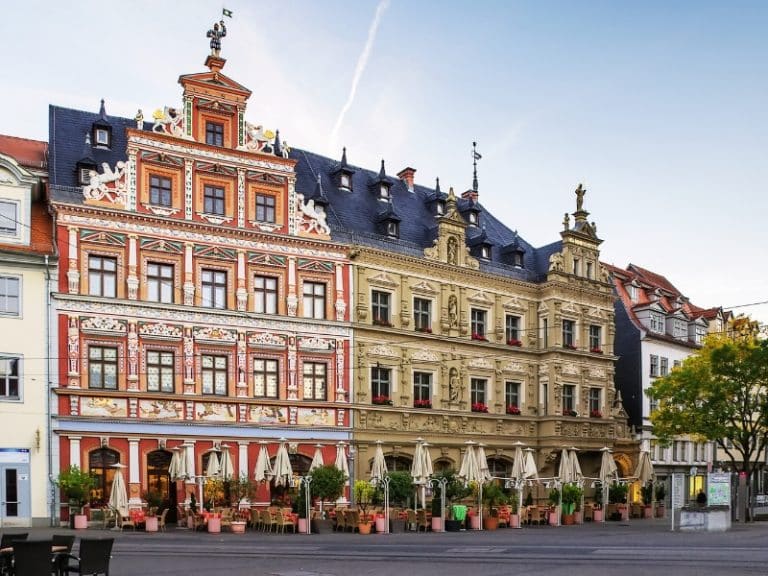
This Renaissance house on the Fischmarkt was built in 1584 and has one of the most richly decorated façades in Erfurt. Look up at the frieze above the ground floor: its carved figures represent the five senses.
6Erfurt Town Hall
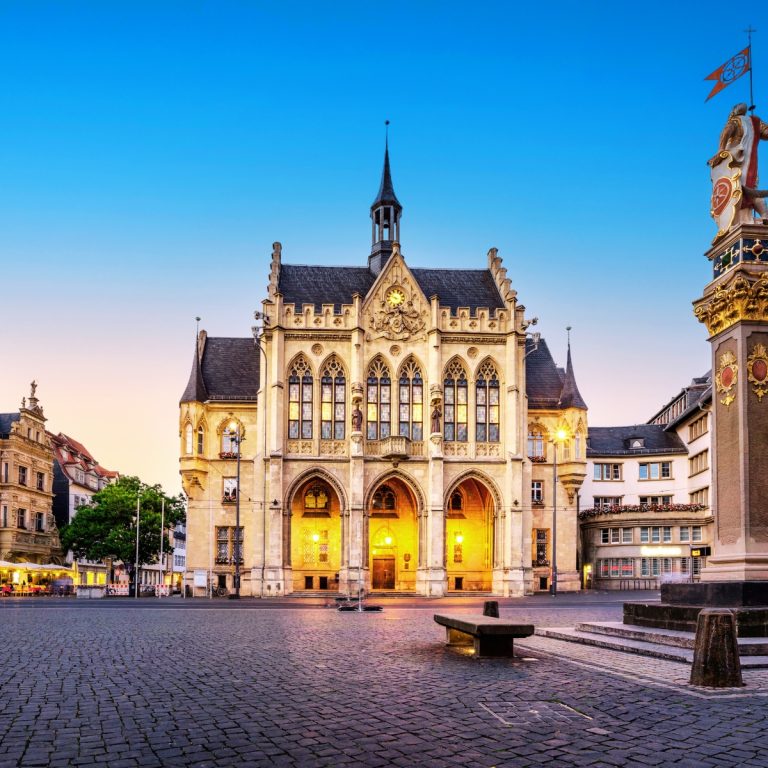
Erfurt's neo-Gothic town hall on the Fischmarkt was built between 1870 and 1875. Inside, its halls are decorated with paintings of Thuringian history and legends, including scenes from the lives of Martin Luther and Doctor Faust. In front of it, a statue of a Roman warrior from 1591 stands on a column in the middle of the square.
7Natural History Museum
Erfurt's natural history museum is housed in a former woad storehouse on the street Große Arche, a reminder of the trade that made the city rich. Its exhibitions present the landscapes, plants and animals of Thuringia over several floors.
8Domplatz
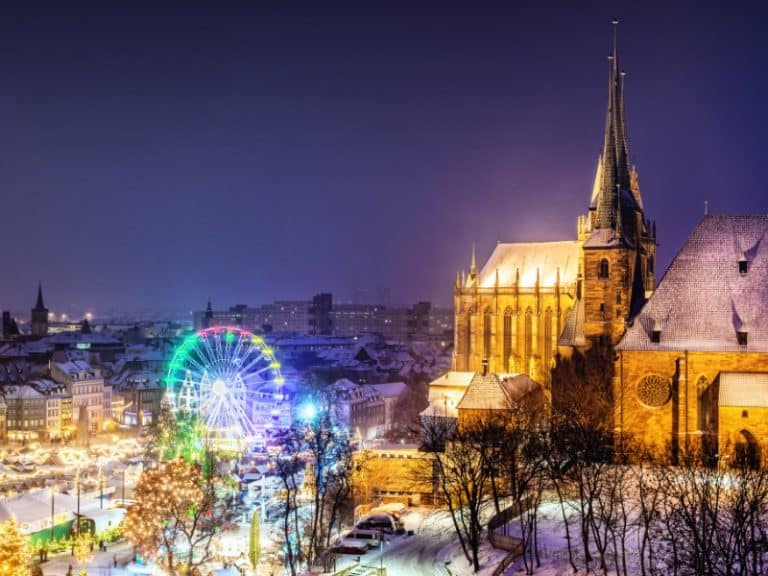
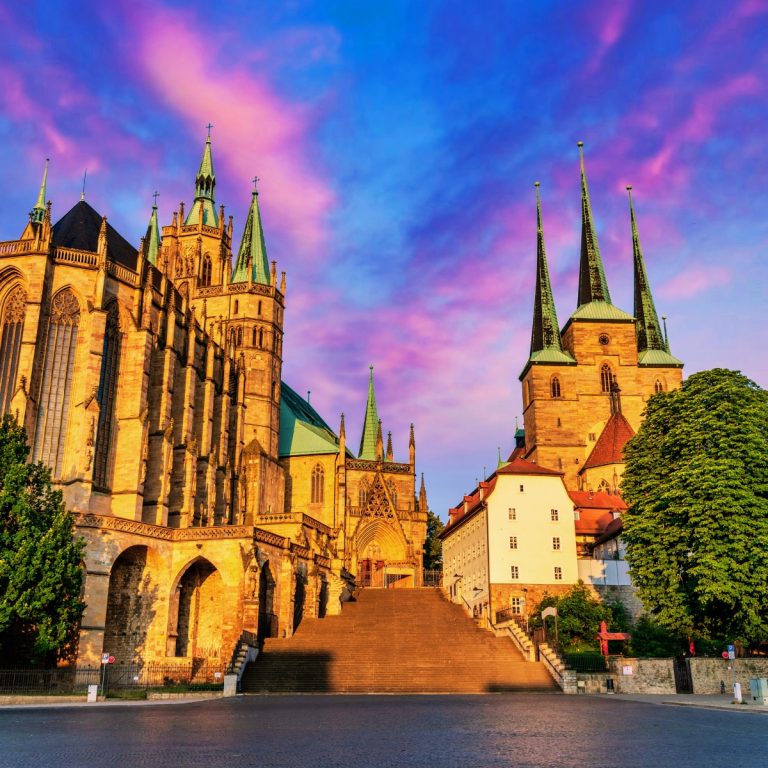
Domplatz is one of the largest squares in Germany, overlooked by the cathedral and St Severus' Church on the hill above. A broad flight of 70 steps leads up to them and serves as the stage for the open-air DomStufen-Festspiele in summer. The square is also used for markets, including Erfurt's Christmas market.
9Erfurt Cathedral
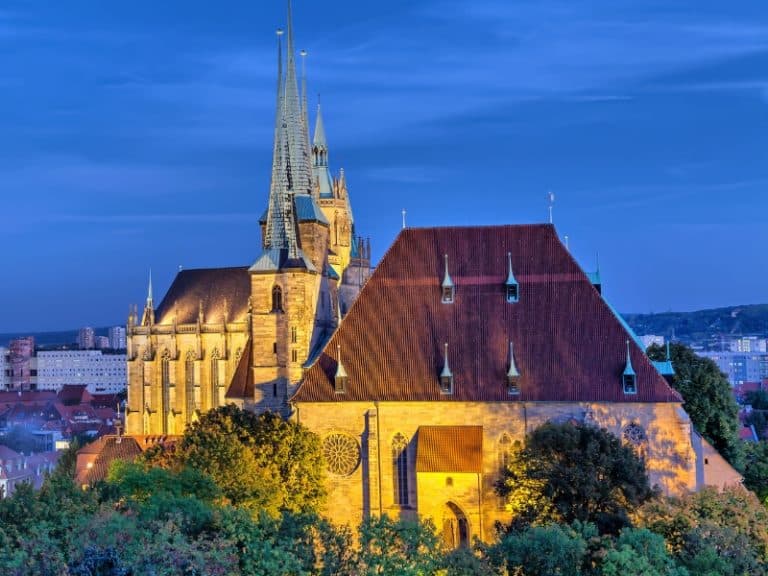
St Mary's Cathedral stands on the Domberg, and its Gothic choir rests on massive substructures because the hilltop was too small. In its central tower hangs the Gloriosa, cast in 1497, one of the largest free-swinging medieval bells in the world. Martin Luther was ordained a priest here in 1507.
10St Severus' ChurchFinish
St Severus' Church, right next to the cathedral, is a Gothic hall church with five aisles and three pointed spires. It holds the stone sarcophagus of Saint Severus, carved around 1365. Together, the two churches above the steps form Erfurt's best-known view.
Only logged in customers who have purchased this product may leave a review.





Reviews
There are no reviews yet.