What is the Liège outdoor escape game?
The Liège outdoor escape game is an escape room transplanted into the streets of the old city of the prince-bishops: a puzzle waits at each landmark, you open it on your phone and solve it by looking carefully and reasoning, with no prior knowledge involved. Plan for about 2 hours, of which 54 minutes of walking over 4.2 km and 10 stops.
Puzzles are set at the Collegiate Church of Saint-Jacques, at the Charlemagne Monument on Boulevard d'Avroy, outside the Royal Opera of Wallonia, on Place Saint-Lambert and at the Romanesque Collegiate Church of St Bartholomew. None of them depends on the others, so there is no plot to keep track of, and three levels of hints are available. The centre is flat and the route crosses the Meuse, which puts both riverbanks into the game.
- Durationabout 2 hours
- Walkingabout 54 min · 4.2 km
- Stops10
- LanguagesEnglish, German, French, Italian, Spanish, Dutch
What you do on the escape game
Solve
One puzzle per landmark, cracked by observing the surroundings and reasoning. No prior knowledge is needed.
Look twice
Clues sit in portals, brick and limestone façades, statues and the details of each square.
Cross the river
Google Maps links the stops: 54 minutes of walking over 4.2 km, including a bridge over the Meuse.
Take your time
No countdown is running. Call a hint, break for a coffee or a waffle and finish later or another day.
See the route and attractions →
How it works
- Book online Choose the number of players. Your booking reference arrives by email straight away.
- Get the app Download the World City Trail app from the App Store or Google Play and enter your booking reference.
- Play when you like Start whenever you are ready, walk at your own pace and pause any time. No guide, no fixed schedule.
Who it suits
Friends
Each puzzle gives the group something to pick apart on the walk to the next church or square, with no local knowledge required.
Couples
A challenge for two across both banks of the Meuse, with nothing timing you.
Colleagues
Teams of up to 5 play on their own phones, which makes it a practical format for a work day out.
Good to know
- Bring a charged smartphone with mobile data; a power bank helps.
- Best started in daylight, so you can see the details the puzzles ask about.
- No entry tickets needed: everything happens outside the buildings. Going inside is optional and paid separately.
- Family friendly; children must be accompanied by an adult.
- Not suitable for wheelchair users and difficult with strollers.
- Teams of up to 5 work best; bigger groups split into several teams, one ticket per player.
- Every purchase helps support stray cats and dogs in Greece.
Puzzle route: from St Paul's Cathedral to the Grand Curtius
10 stops · about 54 min walking · start: St Paul's Cathedral · finish: Grand Curtius
The first puzzle is at St Paul's Cathedral and the last at the Grand Curtius on the Meuse. In between you work through the Collegiate Church of Saint-Jacques, the Charlemagne Monument, the Aquarium-Muséum across the river, the Théâtre de Liège, the Royal Opera of Wallonia, Place Saint-Lambert, the Church of Saint-André on Place du Marché and the Collegiate Church of St Bartholomew. Start in daylight, because the puzzles are solved out in the street and rain or wind makes the walk less pleasant. Google Maps covers the distances, the app lets you change the order, and no entry tickets are needed.
Open the route map ↗
1St Paul's CathedralStart
Founded in the 10th century as a collegiate church, St Paul's became the cathedral of Liège in the early 19th century, after the old Cathedral of Saint Lambert had been destroyed in the wake of the Liège Revolution of 1789. The Gothic church you see was built mainly between the 13th and 15th centuries.
2Collegiate Church of Saint-Jacques
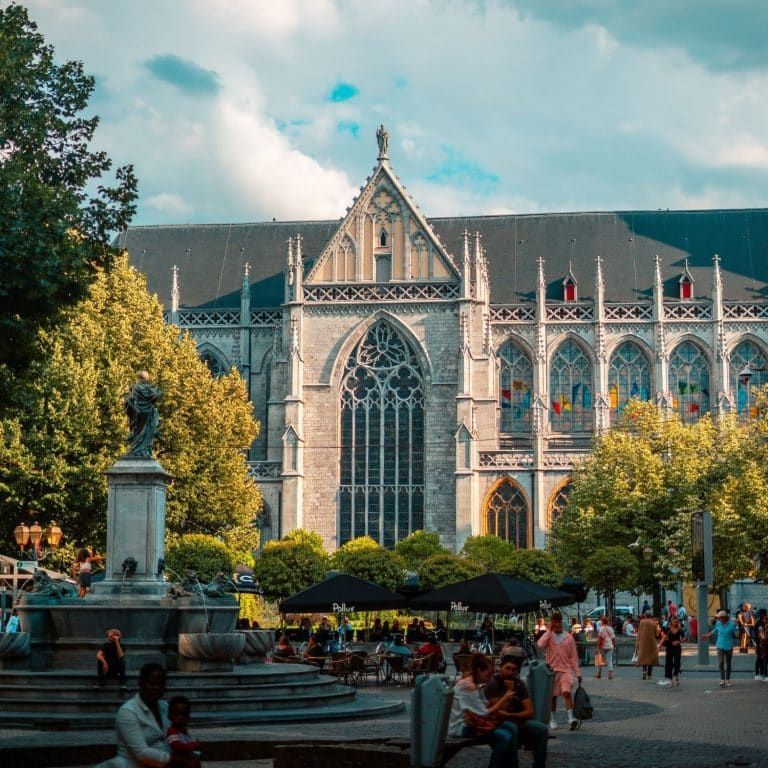
Saint-Jacques was founded in the early 11th century as a Benedictine abbey, and its Romanesque west front survives from that time. The nave was rebuilt in the 16th century in flamboyant Gothic style, with richly painted vaults. On the north side, look for the Renaissance portal attributed to the Liège artist Lambert Lombard.
3Charlemagne Monument
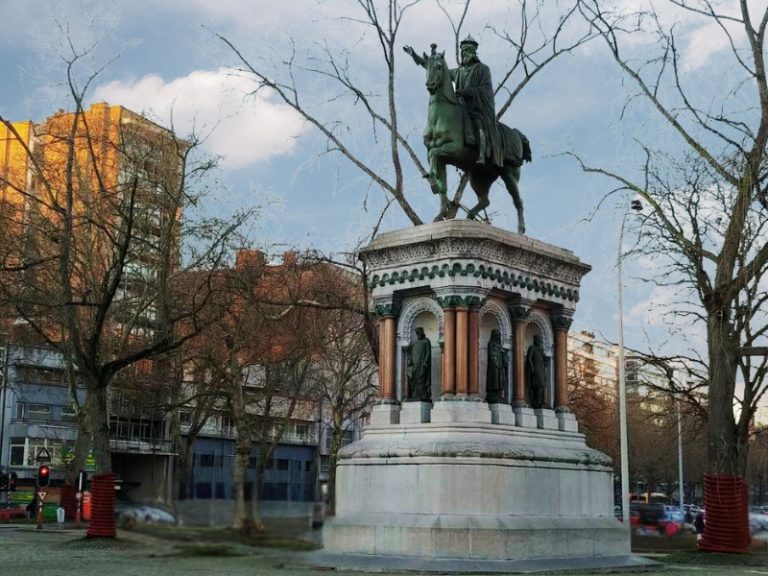
This equestrian statue of Charlemagne by the Liège sculptor Louis Jehotte was unveiled in 1868 on Boulevard d'Avroy. Around the pedestal stand his ancestors, among them Pepin of Herstal and Charles Martel, because the Carolingian family had strong roots in the Liège region. A local tradition even claims that Charlemagne was born nearby.
Read the full story →
4Aquarium-Muséum
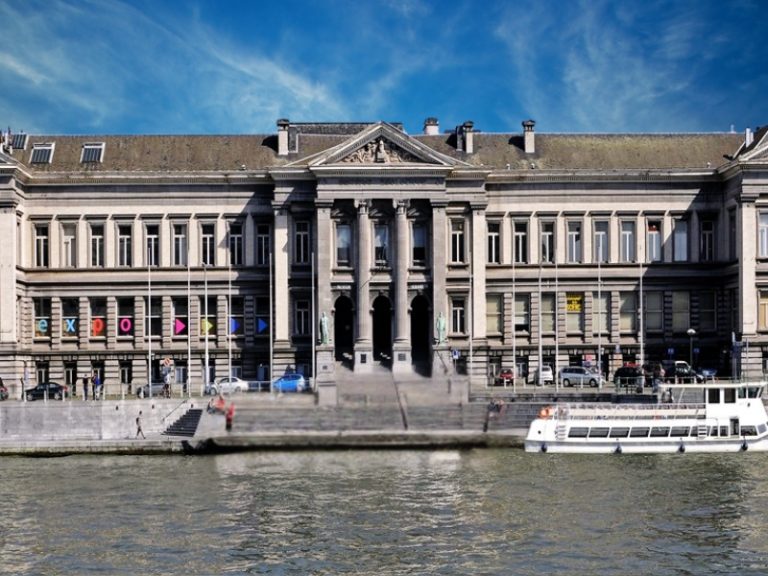
Run by the University of Liège, the Aquarium-Muséum occupies the 19th-century Institute of Zoology on the banks of the Meuse. Its aquariums show fish from rivers and seas around the world, and the zoology museum holds thousands of animal specimens collected by the university over many generations.
5Théâtre de Liège
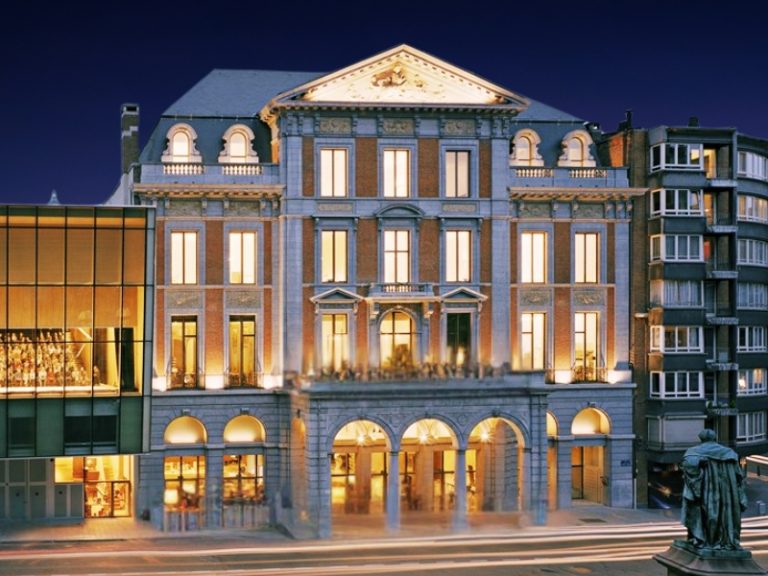
The Théâtre de Liège, the city's main stage for contemporary drama, is housed in the former Émulation building on Place du Vingt-Août, opposite the main building of the University of Liège. When the theatre moved in, in the 2010s, the historic façade was joined to a modern glass extension.
6Royal Opera of Wallonia
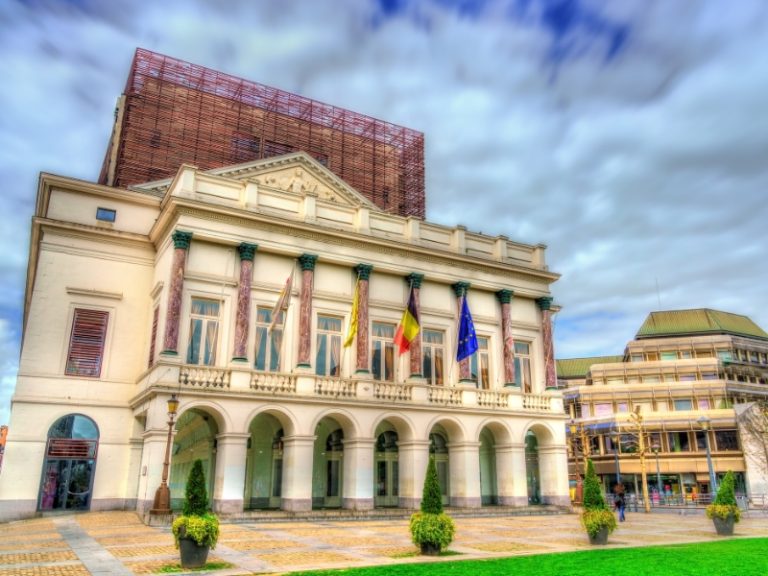
The Royal Opera of Wallonia performs in Liège's neoclassical Théâtre Royal, which opened in 1820. In front of it stands a statue of André-Modeste Grétry, the opera composer born in Liège in 1741. His heart is kept in the pedestal of the statue.
7Place Saint-Lambert
Liège grew around the spot where Bishop Lambert was murdered around the year 700, and the huge Cathedral of Saint Lambert later stood on this square. It was demolished in the years after the Liège Revolution of 1789. Its foundations can be seen in the Archéoforum beneath the square.
8Church of Saint-André
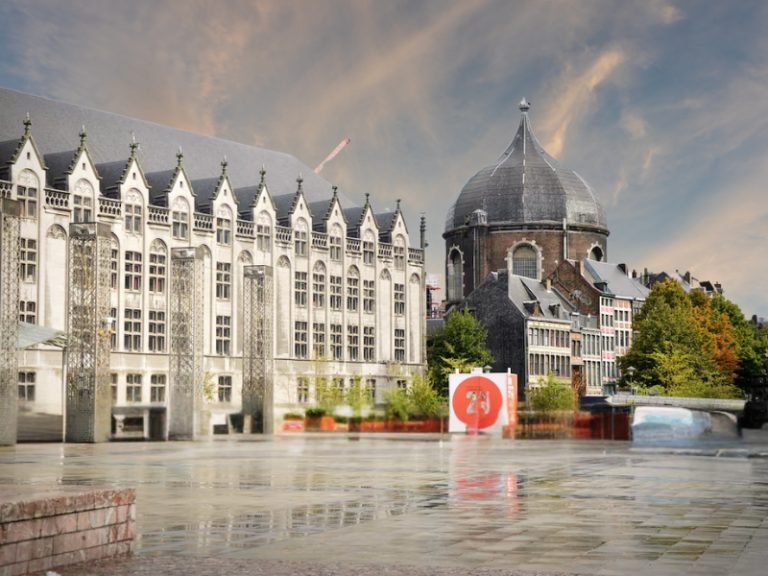
The domed Church of Saint-André stands on Place du Marché, the old market square of Liège. It was rebuilt in neoclassical style in the second half of the 18th century and is now used for exhibitions and events. Nearby rises the Perron, the column topped by a pine cone and a cross that symbolises the city's liberties.
9Collegiate Church of St Bartholomew
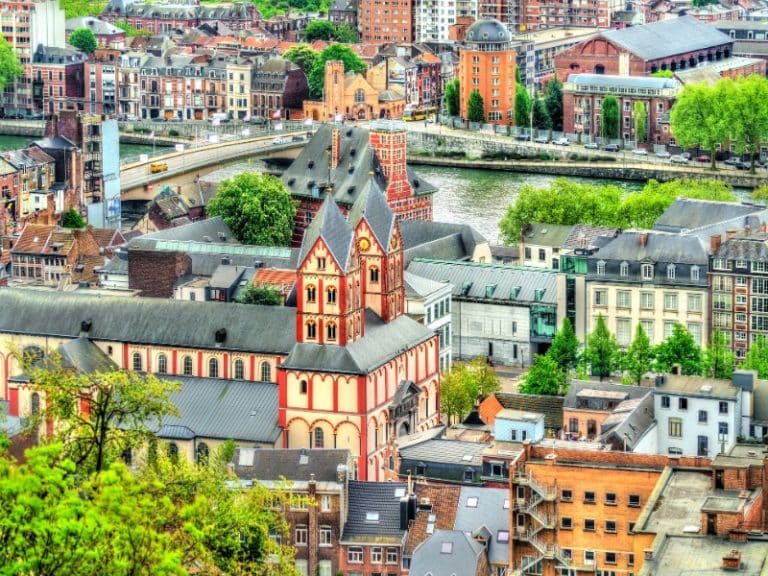
This Romanesque collegiate church was built in the 11th and 12th centuries, and its massive twin-towered west front is typical of the Meuse region. Inside stands the baptismal font made by Renier de Huy between 1107 and 1118, a brass basin resting on oxen and one of the major works of Mosan art.
10Grand CurtiusFinish
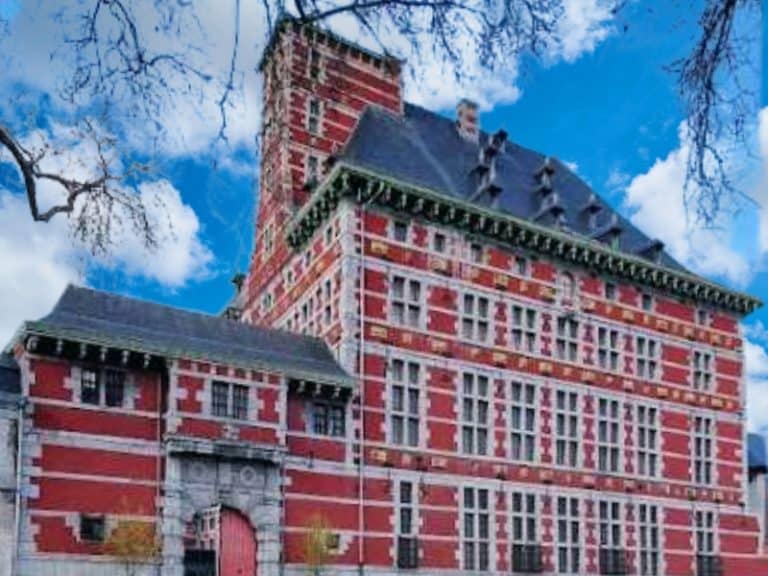
The Grand Curtius museum takes its name from Jean Curtius, a wealthy arms supplier and industrialist who built this mansion on the Meuse around 1600. Its red brick façade striped with bands of limestone is typical of the Mosan Renaissance. Today the complex brings together collections of archaeology, decorative arts, weapons and glass.
Only logged in customers who have purchased this product may leave a review.




Reviews
There are no reviews yet.