What is the Montpellier self-guided walking tour?
The Montpellier self-guided walking tour is an audio-narrated walk led by the World City Trail app on your phone: it guides you from stop to stop and, at each one, tells the history, legends and curious details of the place in front of you. The whole outing runs to about 2 hours, 36 minutes of it on foot across 2.6 km and 10 stops. The route leads from the busy Comédie into the narrow lanes of the Écusson and out onto the open Peyrou, so the city changes character as you go.
At the Opéra Comédie you hear that its interior was designed by Cassien Bernard, a pupil of Charles Garnier, and that the hall seats 1,200. Saint-Roch introduces the saint born in Montpellier who became the patron of pilgrims, and walkers still get their pilgrim credential stamped at the church's hostel. On the Rue du Bras-de-Fer the narration explains the iron tie rod behind the lane's name and why its painted steps keep changing. At the Porte du Peyrou comes Louis XIV and the equestrian statue of him set up in 1718, and in the Jardin des Plantes the garden Henri IV founded in 1593, often called the oldest botanical garden in France.
- Durationabout 2 hours
- Walkingabout 36 min · 2.6 km
- Stops10
- LanguagesEnglish, German, French, Italian, Spanish, Dutch
Your walk, stop by stop
Stories on the spot
History, local legends and fun facts are told right where they happened, by voice or as text, so you can look at the building while you hear about it.
Navigation built in
Each leg opens in Google Maps; all the legs together add up to about 36 minutes on foot and 2.6 km.
Stop and resume
Step into a café or a museum halfway through. The app remembers the last stop you reached, and you continue when you are ready, even days later.
Local tips, your order
Recommendations for regional food and shops come with the narration, and the starting point and sequence of stops can be changed in the app.
See the route and attractions →
How it works
- Book online Choose the number of people. Your booking reference arrives by email straight away.
- Get the app Download the World City Trail app from the App Store or Google Play and enter your booking reference.
- Walk when you like Start whenever you are ready, walk at your own pace and pause any time. No guide, no fixed schedule.
Made with these walkers in mind
First trip in Montpellier?
The walk connects the main sights in a sensible order and explains each one, which makes the centre easy to understand from day one.
Independent travellers
No meeting point and no group to keep up with: stay put wherever a detail grabs you, and walk on once you are ready.
Families with children
The young ones get legends, the grown-ups get history, and anyone can tap pause.
Good to know
- Bring a charged smartphone with mobile data; a power bank helps.
- No entry tickets needed: everything happens outside the buildings. Going inside is optional and paid separately.
- Family friendly; children must be accompanied by an adult.
- Not suitable for wheelchair users and difficult with strollers.
- Groups of up to 5 work best; larger groups split up, one ticket per person.
- Every purchase helps support stray cats and dogs in Greece.
From the Comédie to the Canourgue
10 stops · about 36 min walking · start: Place de la Comédie · finish: Place de la Canourgue
The walk starts on Place de la Comédie, with the Opéra Comédie on one side, and heads into the Écusson past Saint-Roch and along the painted Rue du Bras-de-Fer. The Porte du Peyrou opens onto the Promenade du Peyrou, where the Saint-Clément aqueduct ends at its reservoir, and from there you continue to the Jardin des Plantes. Saint-Pierre Cathedral, with its fortress-like porch, comes next, and Place de la Canourgue, shaded by hackberry trees, completes the tour. All stops are outdoors, and you pick the first one in the app.
Open the route map ↗
1Place de la ComédieStart
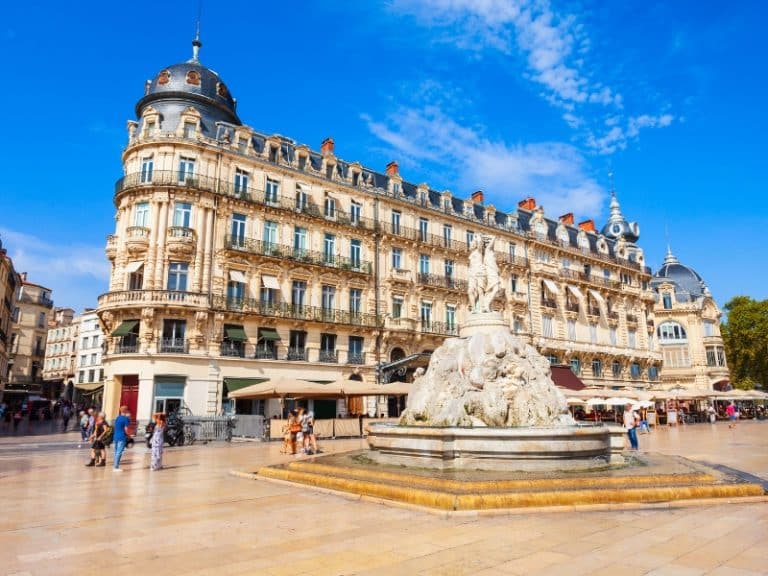
Place de la Comédie is a large pedestrian square in the centre of Montpellier, lined with cafés and served by the tram network. It is the city's main meeting point, and the Opéra Comédie stands on one side of it.
2Opéra Comédie
The Opéra Comédie opened in 1888, with its interior designed by Cassien Bernard, a pupil of Charles Garnier, who had worked on it from 1884. The main auditorium seats 1,200, and the building has been a listed historic monument since 2020. It is the home of the Opéra Orchestre national Montpellier Occitanie.
3Saint-Roch Church
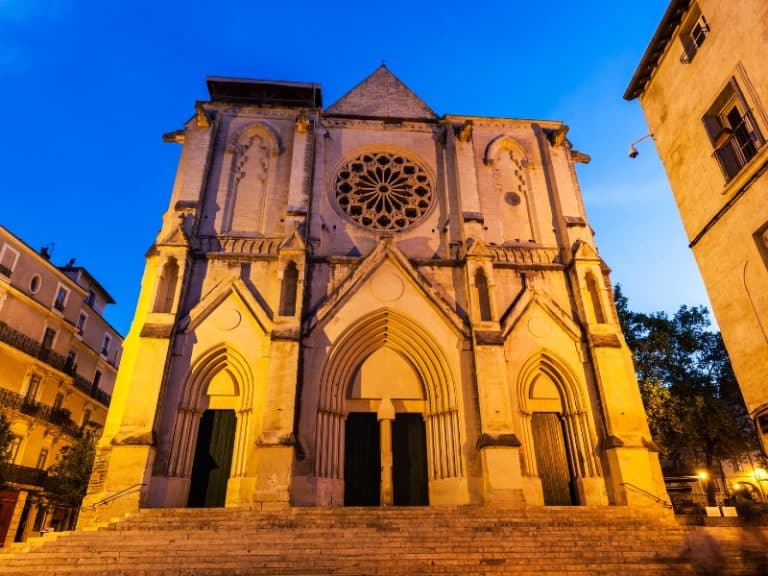
Saint-Roch is named after Saint Roch, a saint born in Montpellier who became the patron of pilgrims. The sanctuary was consecrated in 1867, and it still runs a pilgrims' hostel where walkers can stay and get their pilgrim credential stamped.
4Rue du Bras-de-Fer
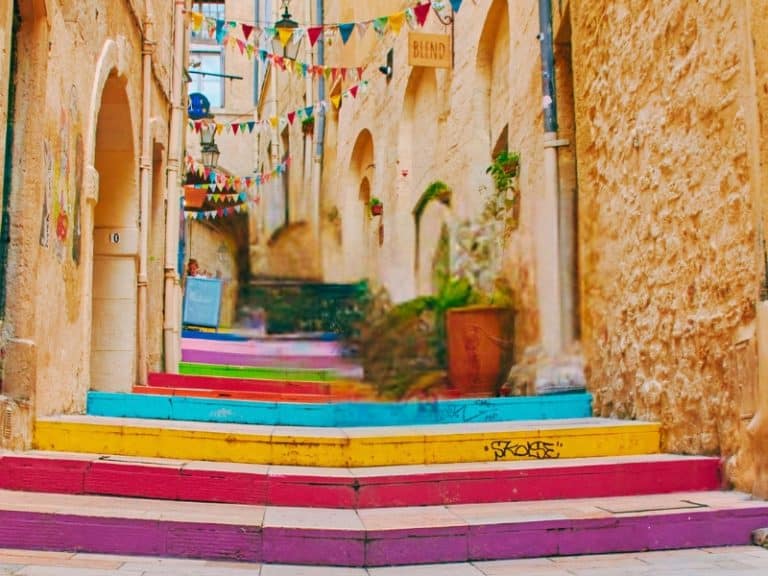
Rue du Bras-de-Fer is a medieval lane in the Écusson, the old centre of Montpellier, known for its painted staircase. Its name is traced to an old metal tie rod that once braced its narrow façades, and the paintings are retouched irregularly, so they change over time.
Read the full story →
5Porte du Peyrou (Arc de Triomphe)
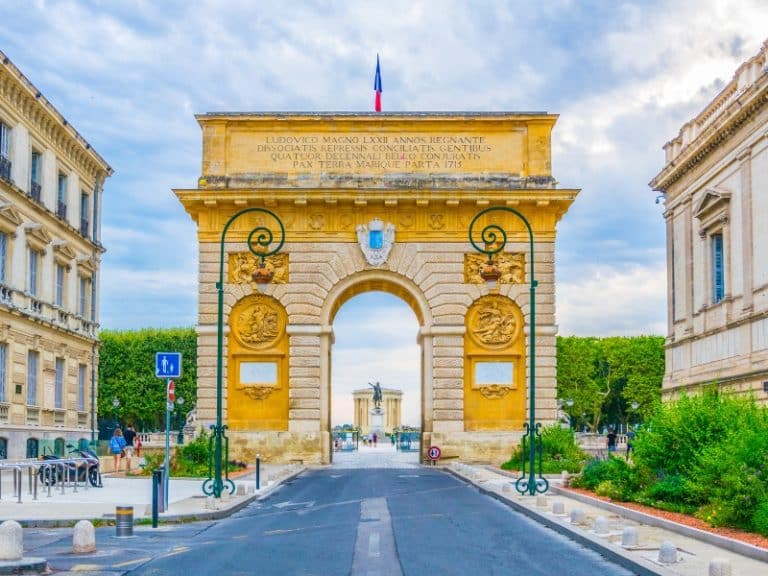
The Porte du Peyrou, often called the Arc de Triomphe, is a triumphal arch built in 1691 at the entrance to the Peyrou promenade. It honours Louis XIV, and the equestrian statue of the king, designed in 1690 by François d'Orbay, was set up on the promenade in 1718.
6Promenade du Peyrou
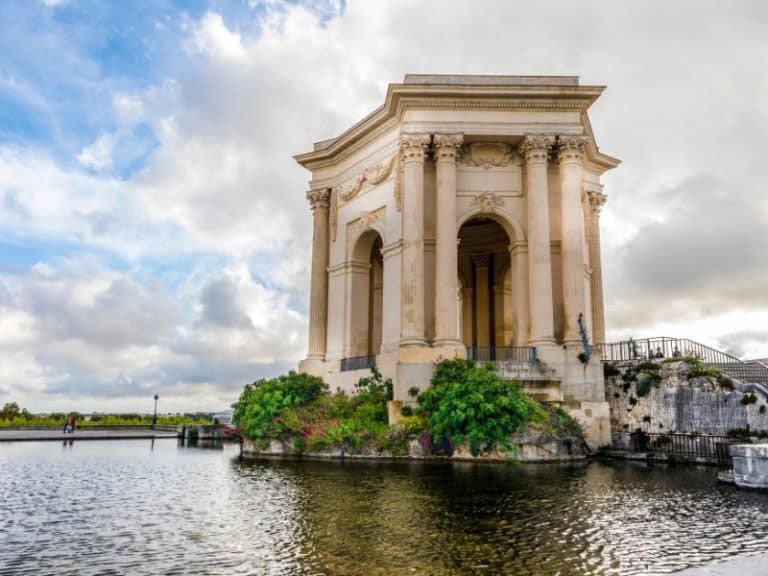
The Promenade du Peyrou is a broad formal esplanade laid out in 1689 on the edge of the old town. Its equestrian statue of Louis XIV stands here, and at its far end the Saint-Clément aqueduct feeds a reservoir built in 1753.
7Saint-Clément Aqueduct
The Saint-Clément aqueduct was built in 1753 to carry water to Montpellier, and it ends at the reservoir on the Peyrou. Its long row of arches is a visible reminder of the city's eighteenth-century water supply.
Read the full story →
8Jardin des Plantes
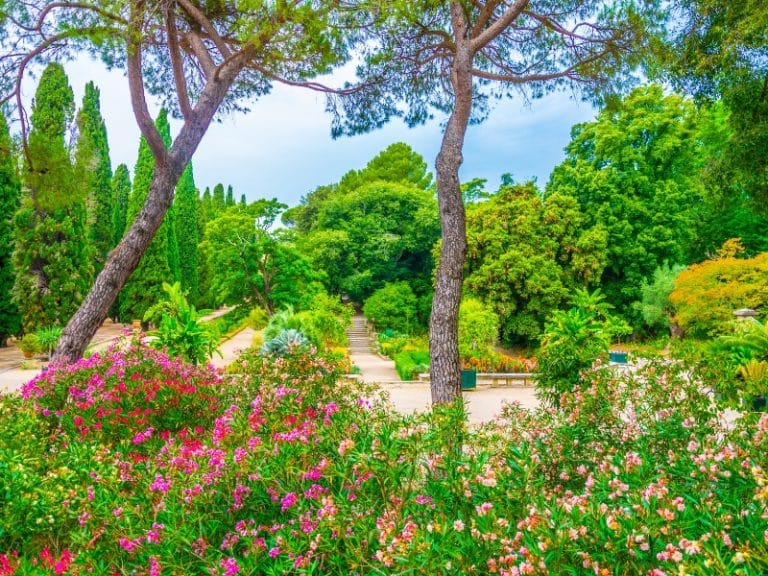
The Jardin des Plantes was founded in 1593 by Henri IV, and it is often called France's oldest botanical garden. Its shaded paths and historic plantings make it a green retreat close to the old town.
9Saint-Pierre Cathedral
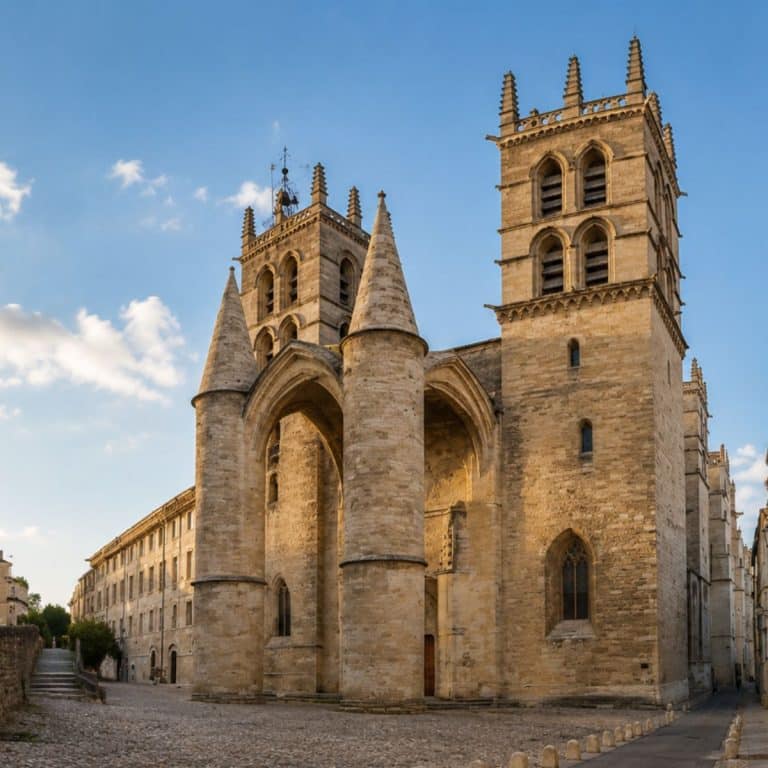
Saint-Pierre Cathedral was commissioned by Pope Urban V in 1364 and became a cathedral in 1536, when the see moved from Maguelone to Montpellier. Its fortress-like porch, supported by two large cylindrical pillars, has earned it the local nickname Fort Saint-Pierre.
10Place de la CanourgueFinish
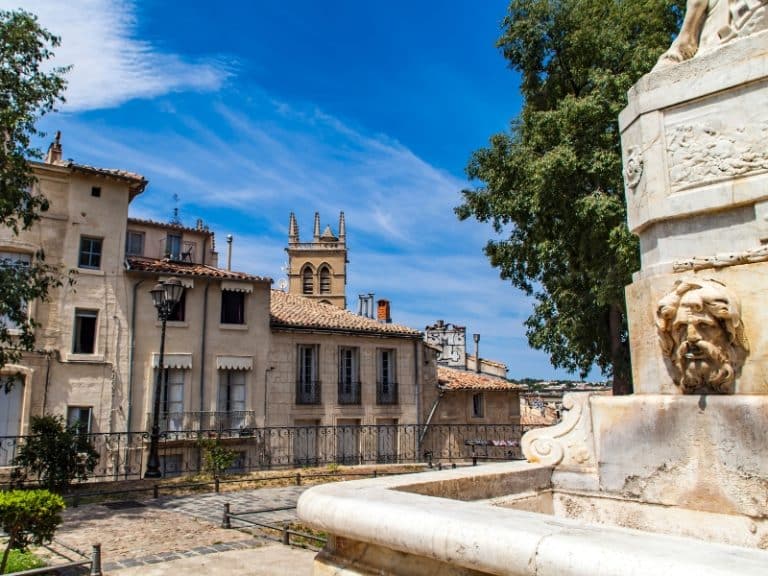
Place de la Canourgue is one of Montpellier's oldest squares, shaded by hackberry trees. Its fountain of unicorns from the city's coat of arms dates from the 17th century, and the square is ringed by town mansions of the 17th and 18th centuries with a view of the cathedral.
Only logged in customers who have purchased this product may leave a review.









Reviews
There are no reviews yet.