What is the Rome outdoor escape game?
The Rome outdoor escape game is an escape room that has swapped its locked door for the streets of the historic centre: a puzzle waits at each landmark and you crack it on your phone, from what you can see around you. Reckon with about 2 hours, 78 minutes of them walking, 5.5 km in all and 10 stops, starting on the day you prefer.
Puzzles are set at Castel Sant'Angelo, Bernini's angels on Ponte Sant'Angelo, Piazza Navona, the Pantheon, the marble elephant of Piazza della Minerva, Sant'Andrea della Valle, Piazza Venezia, the spiral column of Trajan's Forum, Michelangelo's square on the Capitoline Hill and the Colosseum. The puzzles are independent, with no plot running between them, and three hint levels wait in reserve. Rome stacks inscriptions, reliefs and statues on almost every façade, which gives this kind of game plenty to work with.
- Durationabout 2 hours
- Walkingabout 78 min · 5.5 km
- Stops10
- LanguagesEnglish, German, French, Italian, Spanish, Dutch, Polish
What you do on the escape game
Solve
Every landmark comes with its own puzzle, opened by observation and reasoning. No background in Roman history needed.
Look closer
Clues live in inscriptions, reliefs, obelisks and the figures carved above the doorways.
Walk
Google Maps bridges the gaps: 78 minutes of walking altogether, across roughly 5.5 km.
Take your time
Nothing is counting down. Use a hint if a puzzle will not budge, stop for a gelato and continue later or another day.
See the route and attractions →
How it works
- Book online Choose the number of players. Your booking reference arrives by email straight away.
- Get the app Download the World City Trail app from the App Store or Google Play and enter your booking reference.
- Play when you like Start whenever you are ready, walk at your own pace and pause any time. No guide, no fixed schedule.
Who it suits
Friends on a day out
Ten puzzles give the group a reason to stand still and actually read Rome, one monument at a time.
Couples
A shared challenge from the Tiber to the Colosseum, entirely at your own speed.
Team building
Teams of up to 5 play on their own phones, which works well for colleagues out of the office.
Good to know
- Bring a charged smartphone with mobile data; a power bank helps.
- Best started in daylight, so you can see the details the puzzles ask about.
- No entry tickets needed: everything happens outside the buildings. Going inside is optional and paid separately.
- Family friendly; children must be accompanied by an adult.
- Not suitable for wheelchair users and difficult with strollers.
- Teams of up to 5 work best; bigger groups split into several teams, one ticket per player.
- Every purchase helps support stray cats and dogs in Greece.
Puzzle route: from Castel Sant'Angelo to the Colosseum
10 stops · about 78 min walking · start: Castel Sant'Angelo · finish: Colosseum
Castel Sant'Angelo opens the game, and Ponte Sant'Angelo carries you over the Tiber into the old centre for Piazza Navona, the Pantheon, Piazza della Minerva and Sant'Andrea della Valle. Piazza Venezia marks the turn towards ancient Rome, with Trajan's Forum and the Capitoline Hill before the final puzzle at the Colosseum. Starting in daylight pays off, because the answers are found on the buildings themselves and rain makes the cobbles slow going. Google Maps links the stops, their order can be rearranged in the app, and solving the puzzles needs no entry ticket.
Open the route map ↗
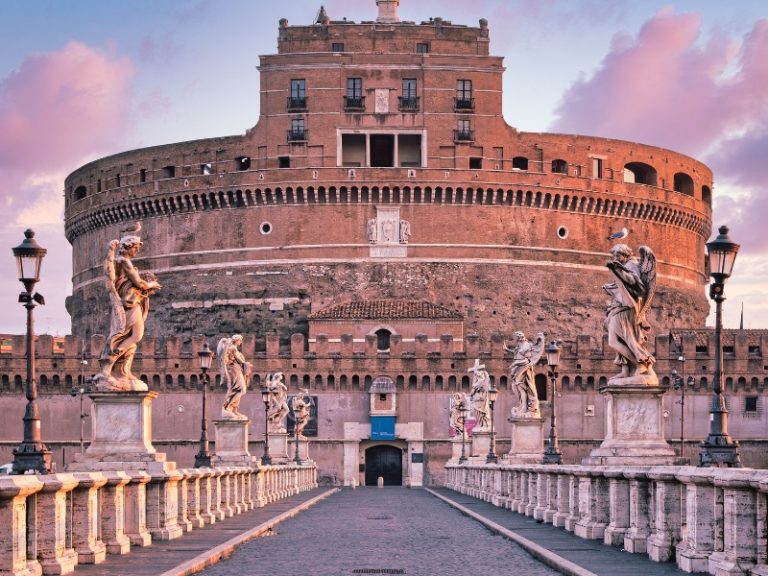
1Castel Sant'AngeloStart
The round fortress began as the mausoleum of Emperor Hadrian, completed in 139 AD. Popes later turned it into a castle and prison: Pope Clement VII took refuge here during the Sack of Rome in 1527, and a raised corridor, the Passetto di Borgo, links it to the Vatican.
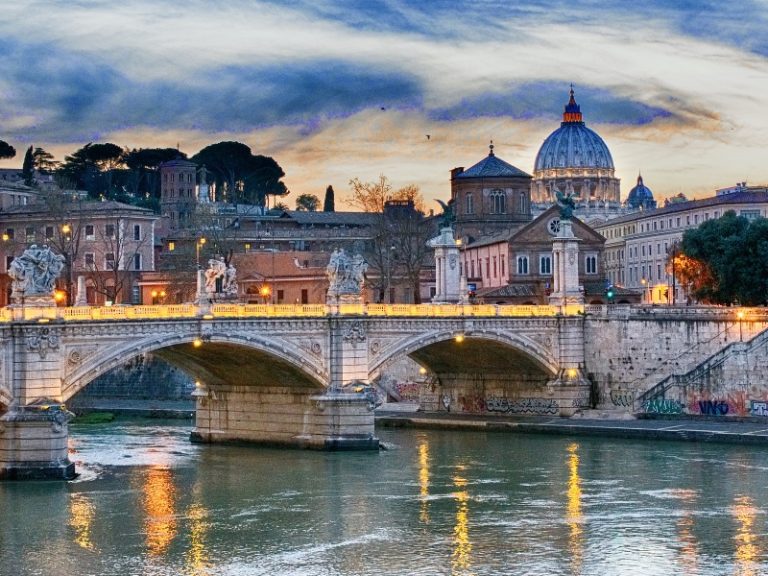
2Ponte Sant'Angelo
Emperor Hadrian completed this bridge in 134 AD as the approach to his mausoleum. Its marble angels holding the instruments of the Passion were designed by Gian Lorenzo Bernini from 1669; the two he carved himself are now in the church of Sant'Andrea delle Fratte, and copies stand in their place.
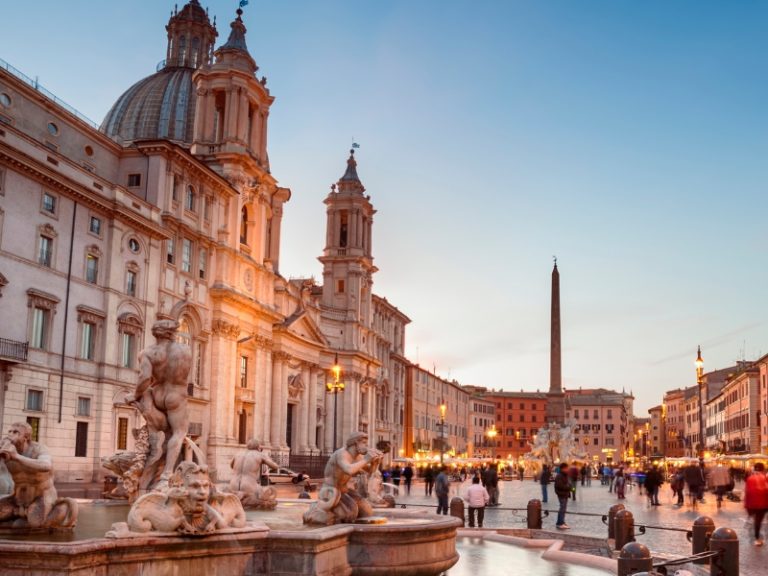
3Piazza Navona
The long oval square keeps the shape of the Stadium of Domitian, built in 86 AD for athletic contests. In the middle stands Bernini's Fountain of the Four Rivers, completed in 1651, opposite the church of Sant'Agnese in Agone, which Francesco Borromini completed; a popular story says Bernini's river gods recoil from his rival's church, but it is only a legend.
4Pantheon
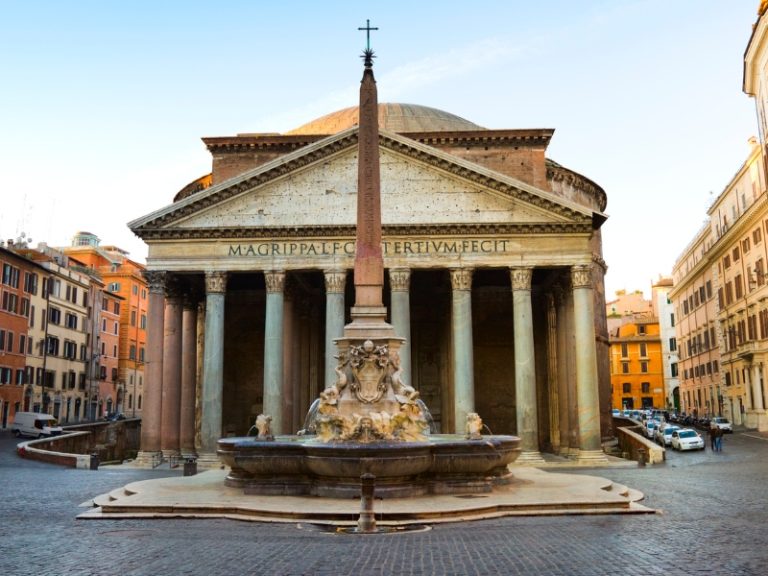
The Pantheon was rebuilt under Emperor Hadrian between about 113 and 125 AD, although the inscription on its portico still names Marcus Agrippa, who built the first temple here. Its concrete dome, 43 metres across, is lit only by the open oculus at the top, and the painter Raphael is buried inside.
5Piazza della Minerva
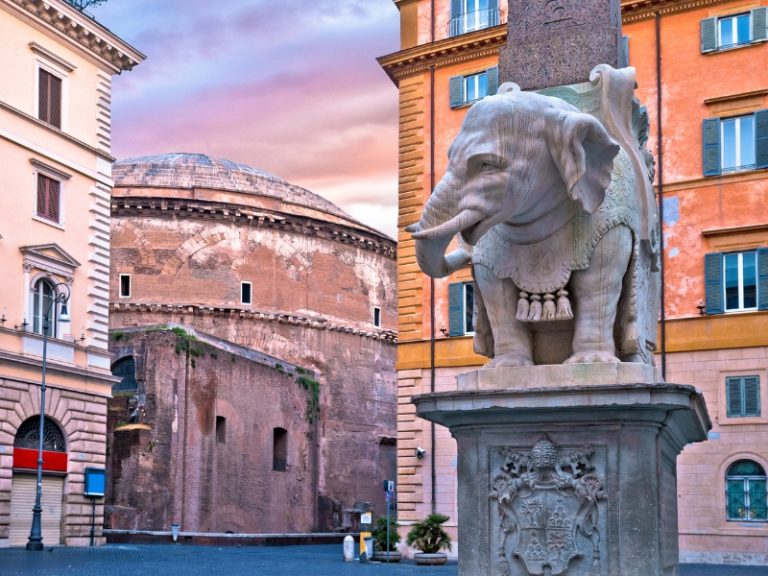
In this small square stands Bernini's marble elephant carrying an ancient Egyptian obelisk, unveiled in 1667; the obelisk had been found nearby during excavations in 1665. Behind it rises Santa Maria sopra Minerva, one of the few Gothic churches in Rome.
Read the full story →
6Sant'Andrea della Valle
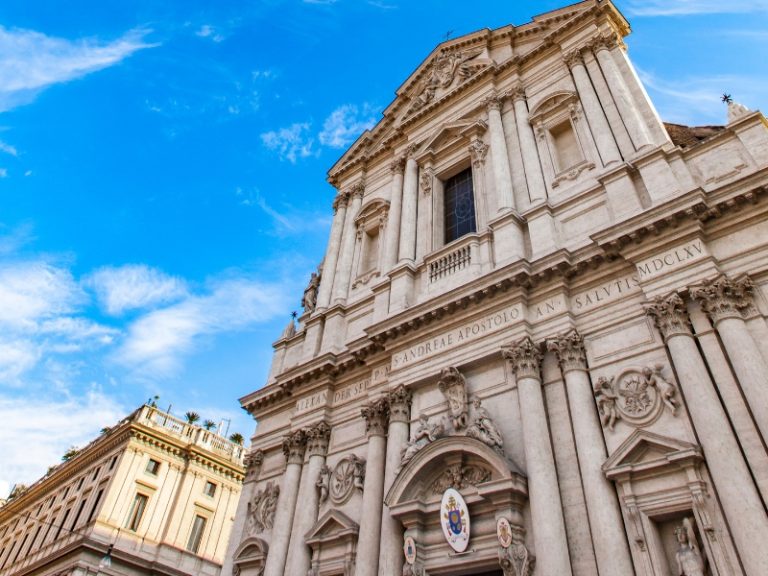
Building of this church began in 1591 and went on into the 17th century; Carlo Maderno's dome, inaugurated in 1622, is the second highest in Rome after St Peter's. The travertine façade was added by Carlo Rainaldi, and the first act of Puccini's opera Tosca is set inside the church.
7Piazza Venezia
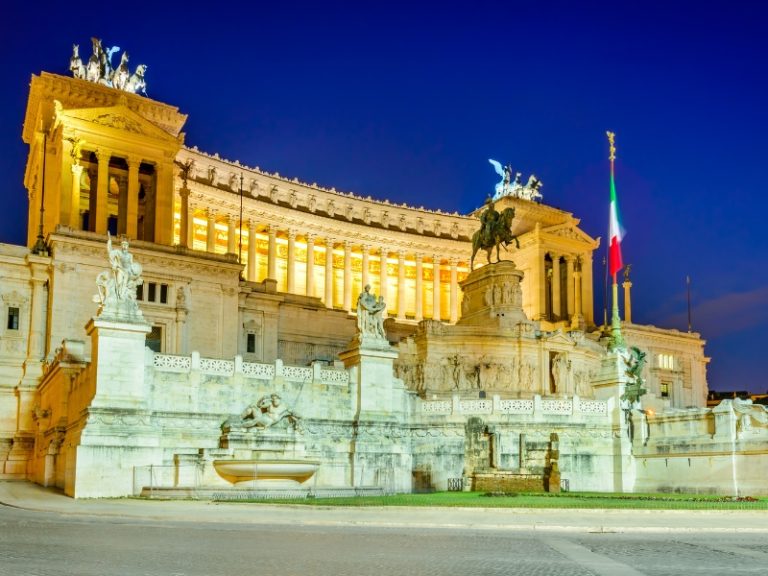
The busy square is dominated by the Vittoriano, the white marble monument to Victor Emmanuel II, the first king of united Italy, inaugurated in 1911 and completed in 1935. It holds the Tomb of the Unknown Soldier, buried here in 1921, and on the west side stands Palazzo Venezia, from whose balcony Mussolini gave his speeches.
8Trajan's Forum
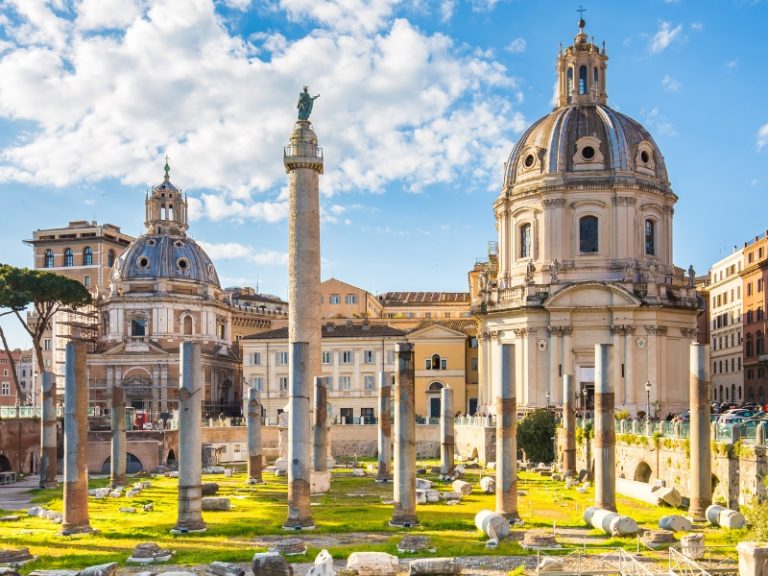
The last of the imperial forums was designed by Apollodorus of Damascus for Emperor Trajan. Its column, dedicated in 113 AD, is wrapped in a spiral relief about 180 metres long showing Trajan's wars against the Dacians, and since 1587 a statue of Saint Peter has stood on top.
9Capitoline Hill (Campidoglio)
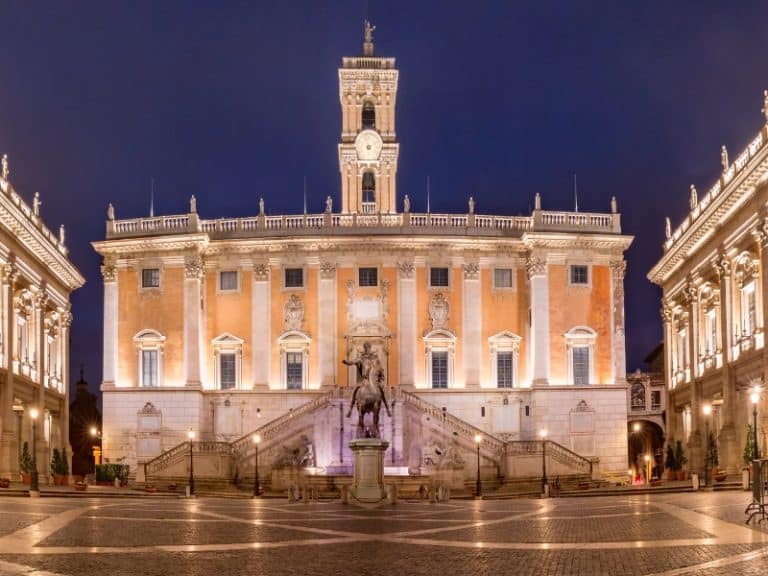
Pope Paul III commissioned Michelangelo to redesign the square on the Capitoline Hill in the 1530s, and his oval pavement and palace façades still frame it. The Capitoline Museums here go back to a gift of ancient statues by Pope Sixtus IV in 1471, and the equestrian statue of Marcus Aurelius in the middle is a copy of the bronze original kept inside.
10ColosseumFinish
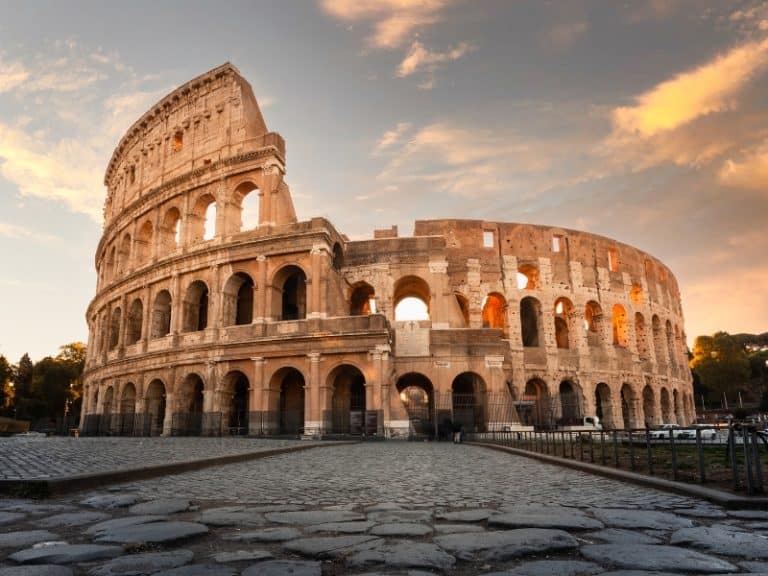
The Flavian Amphitheatre was begun under Emperor Vespasian around 70–72 AD and inaugurated by his son Titus in 80 AD. It could hold an estimated 50,000 spectators for gladiator fights and animal hunts, and it is the largest amphitheatre ever built.
Only logged in customers who have purchased this product may leave a review.




Italy –
Collected on GetYourGuide
Buon modo per girare Rome nei luoghi principali e non solo! Belli gli indovinelli e le curiosit? legate ai luoghi stessi. Bella idea
Germany –
Collected on GetYourGuide
Grunds?tzlich ganz gut, um einen ?berblick ?ber die Stadt zu bekommen. Die Informationen zu den einzelnen Sehensw?rdigkeiten findet man so aber auch auf Wikipedia. Die R?tsel sind eine ganz coole Abwechslung und helfen, dass man sich die Infos gut merken kann. Die Tour hatte aber leider keine Storyline, die die verschiedenen Stationen in Zusammenhang gebracht h?tte.
Anne– France –
Collected on GetYourGuide
L’id?e est excellente et les ?nigmes plut?t sympas mais je trouve vraiment dommage que le jeu soit ? faire sur une seule journ?e. Nous avons visit? la ville par secteur sur plusieurs jours (avec des visites qui prenaient tu temps) et pour faire le jeu il faut passer ou repasser par tous les lieux importants en une journ?e. On aurait pr?f?r? pouvoir r?pondre aux ?nigmes au fur et ? mesure, lorsqu’on se trouvait sur les lieux concern?s.
France –
Collected on GetYourGuide
Super, des ?nigmes assez facile mais un bon moyen de visiter une dizaine de sites avec quelques explications.