What is the Savannah self-guided walking tour?
The Savannah self-guided walking tour turns your phone into a storyteller: the World City Trail app sets out the way through the city and, at every stop, narrates the history, legends and odd facts that belong to the place. Count on roughly 3 hours for the whole route, with 56 minutes of walking spread over 3.8 km and 10 stops, starting whenever you choose. The walk heads north from Forsyth Park, square after square, until it reaches the river.
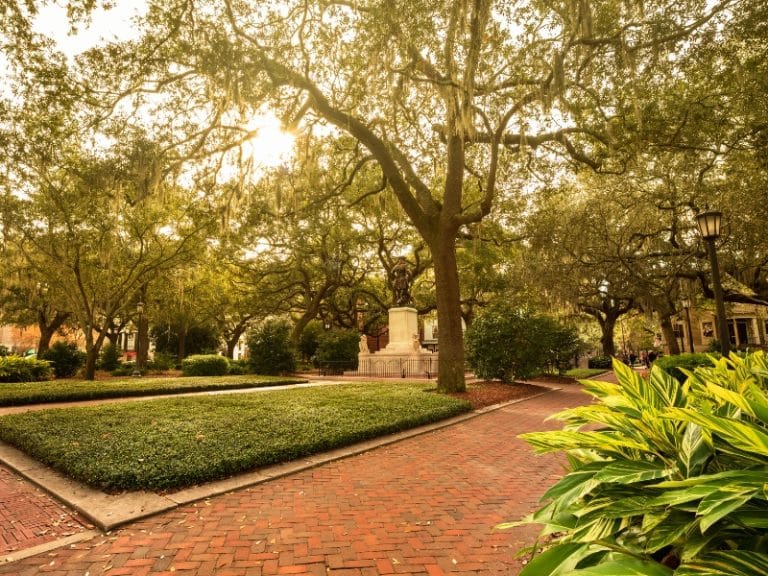
At Monterey Square the narration tells of the Pulaski monument and of Mercer House, made famous by Midnight in the Garden of Good and Evil, and at the Sorrel-Weed House you hear the legend of Matilda, which has made it a favourite of ghost tours. Chippewa Square is where the bench from Forrest Gump was placed, beneath the statue of James Oglethorpe, who founded the colony of Georgia in 1733. At the Owens-Thomas House the story turns to Lafayette addressing the crowd from the cast-iron veranda in 1825 and to the haint blue ceiling of the slave quarters, and at City Market to the demolition of 1954 that set off the city's preservation movement.
- Durationabout 3 hours
- Walkingabout 56 min · 3.8 km
- Stops10
- LanguagesEnglish, German, French, Spanish, Portuguese
What happens along the way
Listen on the spot
Each stop opens with narration about the place in front of you: when it was built, who shaped it, the legends around it and the detail most people walk past. The same chapter is there as text if you would rather read.
Follow the map
Google Maps connects each stop with the following one. Across 3.8 km the walking adds up to roughly 56 minutes, and the speed is entirely yours.
Stop whenever you like
Lunch, a museum visit or a rest in the shade: the app keeps your place, so you carry on later that day or on another one.
Eat and shop locally
Tips for cafés, restaurants and local shops near the route come built in. You can also start at a different stop or change the order in the app.
See the route and attractions →
How it works
- Book online Choose the number of people. Your booking reference arrives by email straight away.
- Get the app Download the World City Trail app from the App Store or Google Play and enter your booking reference.
- Walk when you like Start whenever you are ready, walk at your own pace and pause any time. No guide, no fixed schedule.
A good fit for these travellers
Curious minds
Why a square carries its name, who spoke from a balcony, what a statue recalls: the narration gives you the background.
Families and couples
Legends hold the children's attention, the history keeps adults interested, and nobody hurries you along.
Repeat visitors
Even streets you already know take on new meaning once you hear what happened in them.
Good to know
- Bring a charged smartphone with mobile data; a power bank helps.
- No entry tickets needed: everything happens outside the buildings. Going inside is optional and paid separately.
- Family friendly; children must be accompanied by an adult.
- Not suitable for wheelchair users and difficult with strollers.
- Groups of up to 5 work best; larger groups split up, one ticket per person.
- Every purchase helps support stray cats and dogs in Greece.
From the fountain to the river, square by square
10 stops · about 56 min walking · start: Forsyth Park Fountain · finish: East River Street
Forsyth Park Fountain is your first stop, and from there you head north to Monterey Square and the Cathedral Basilica of St. John the Baptist on Lafayette Square. The Sorrel-Weed House and Chippewa Square follow, then Colonial Park Cemetery, where Button Gwinnett lies, and the Owens-Thomas House with its slave quarters. Reynolds Square and City Market take you to the last stop, East River Street, along the Savannah River. The order and the first stop can be changed in the app, and none of the stops asks for an admission ticket.
Open the route map ↗
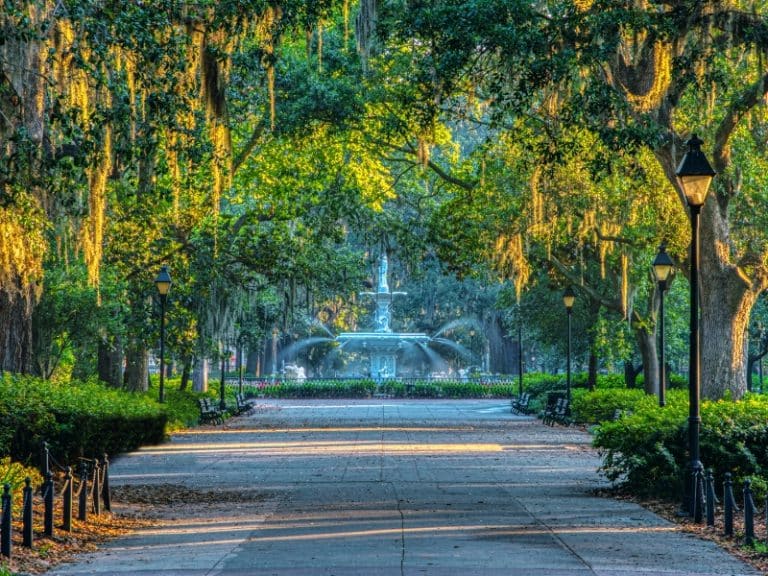
1Forsyth Park FountainStart
The cast-iron fountain was installed in 1858 and cast by the Janes, Beebe and Company foundry in New York. The park takes its name from Georgia governor John Forsyth, and the fountain is one of the city's most photographed landmarks.
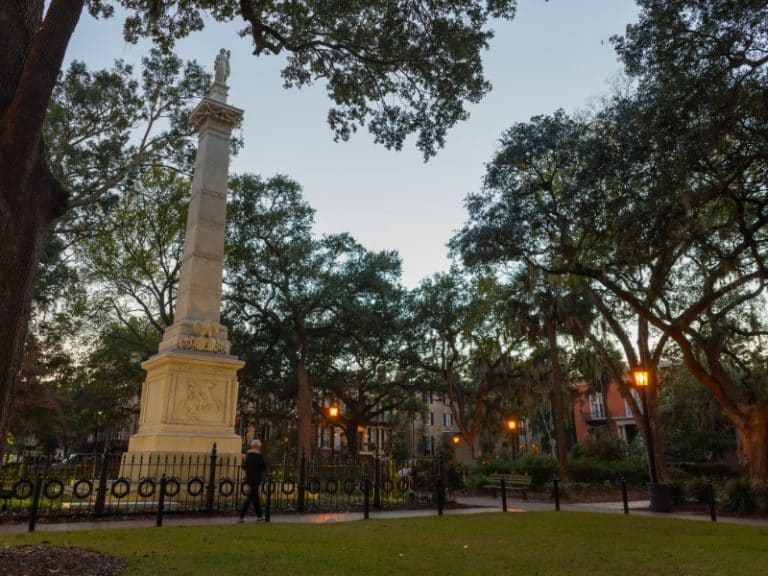
2Monterey Square
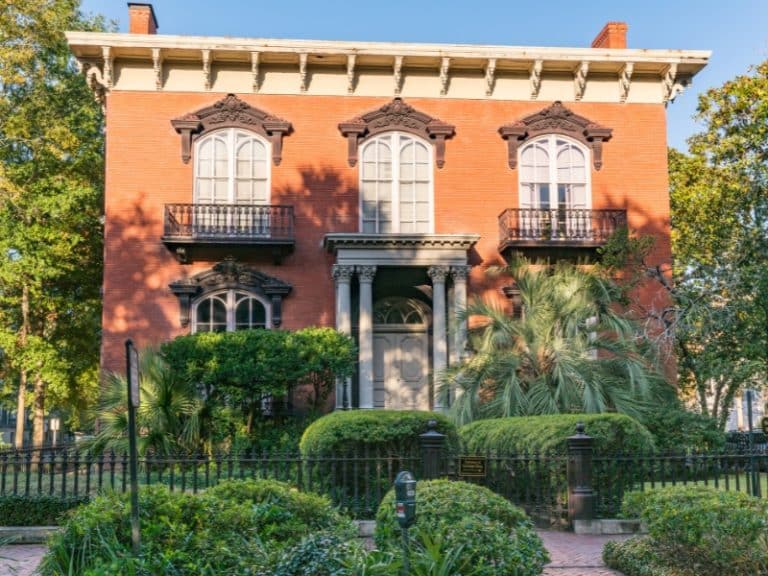
Monterey Square was laid out in 1847 and is named after the Battle of Monterrey in the Mexican-American War. The monument to Casimir Pulaski, the Polish-born hero of the American Revolution, dates from 1853, and the nearby Mercer House became famous after the book Midnight in the Garden of Good and Evil.
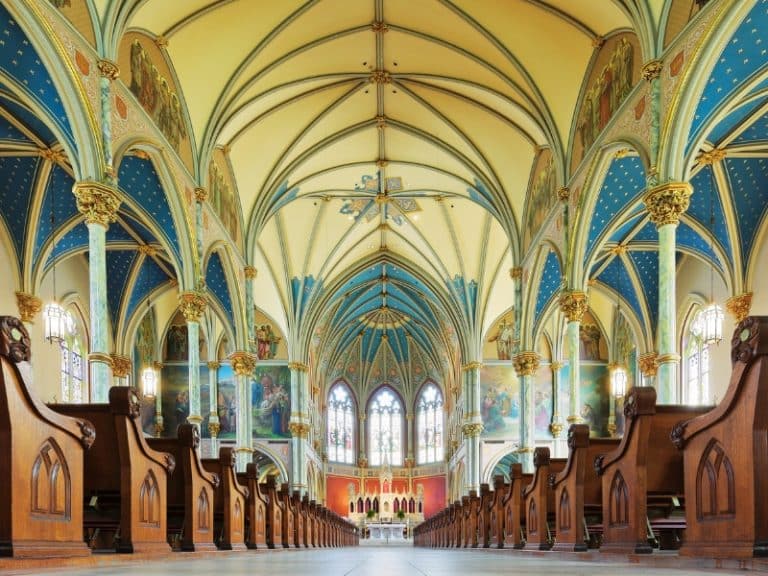
3Cathedral Basilica of St. John the Baptist
This Gothic Revival cathedral was dedicated in 1876 on Lafayette Square, and its twin spires were added in 1896. A fire gutted the interior in 1898, and in 2020 Pope Francis raised the church to the rank of minor basilica.
4Sorrel-Weed House
Francis Sorrel, a wealthy shipping merchant, had this Greek Revival house built between 1835 and 1840, designed by the architect Charles Cluskey. At about 10,000 square feet it is one of the largest houses in the city, and ghost stories such as the legend of Matilda, Sorrel's wife, make it a favourite of ghost tours.
5Chippewa Square
Chippewa Square is named after the Battle of Chippewa in the War of 1812, and it is where the bench from the 1994 film Forrest Gump was placed. The statue in the centre honours James Oglethorpe, the British general who founded the colony of Georgia in 1733.
6Colonial Park Cemetery
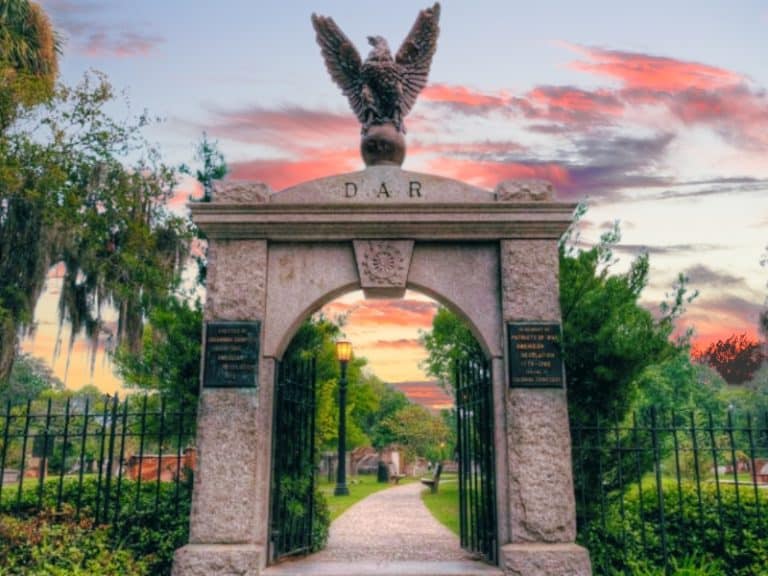
This cemetery dates from the mid-18th century and is one of the oldest in the city. Among those buried here is Button Gwinnett, a signer of the Declaration of Independence, who died in a duel in 1777.
7Owens-Thomas House & Slave Quarters
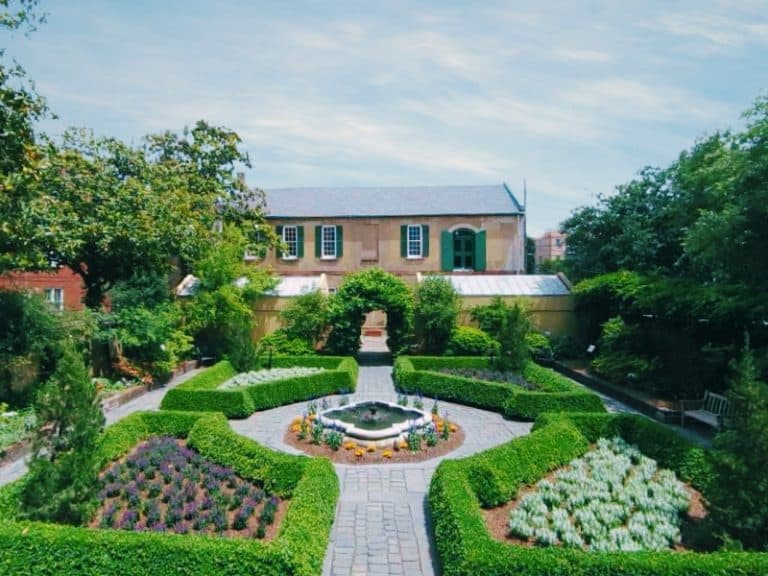
The English architect William Jay designed this Regency house, completed in 1819. In 1825 the Marquis de Lafayette addressed the people of Savannah from its cast-iron veranda, and the slave quarters behind the house, among the best preserved in the South, have a ceiling painted haint blue, a colour said to keep spirits away.
8Reynolds Square
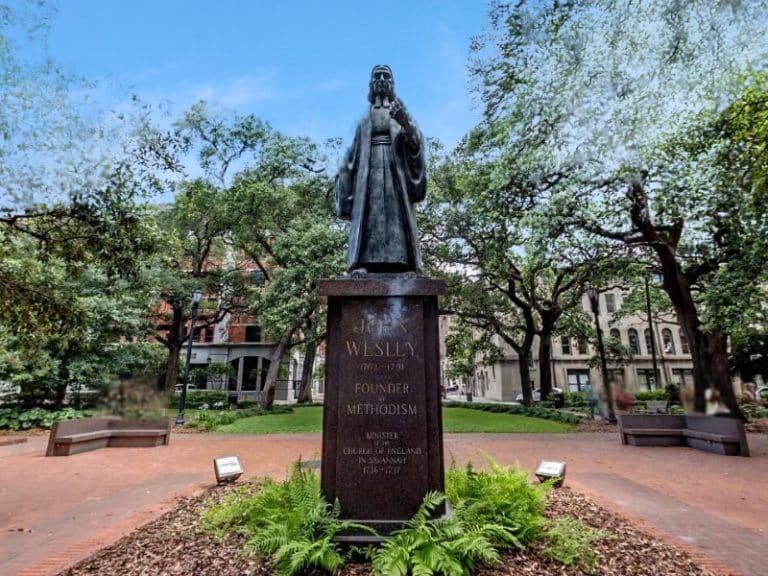
Reynolds Square was laid out in 1734 as Lower New Square and is named after Captain John Reynolds, later governor of Georgia. A monument to John Wesley, founder of Methodism, has stood here since 1969, and the Olde Pink House, dating from about 1771, is the oldest building on the square.
9City Market
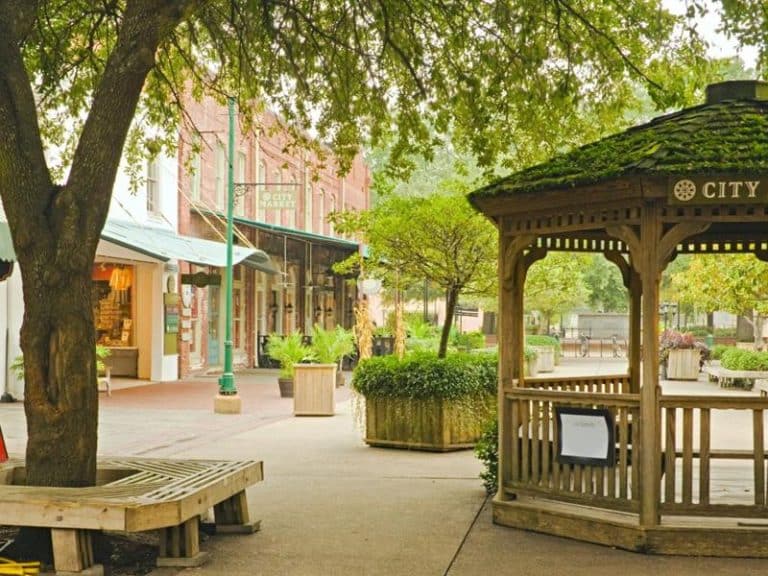
Trading took place on this site from around 1733, and the brick City Market of 1876 was demolished in 1954 to make way for a parking garage. Public anger over that loss helped launch Savannah's historic preservation movement, and today the old buildings house restaurants, galleries and shops.
10East River StreetFinish
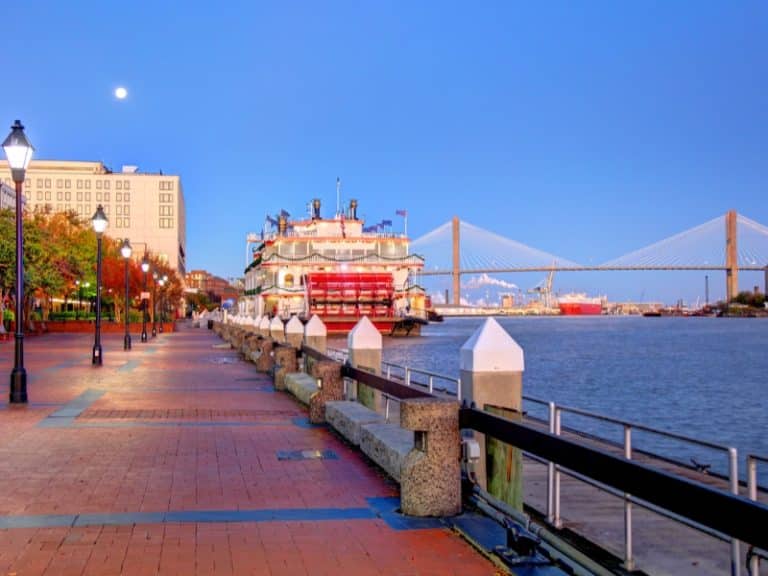
East River Street runs beside the Savannah River below the bluff, where cotton warehouses once stood along the wharves. Nearby, the Waving Girl statue in Morrell Park honours Florence Martus, who waved to ships from 1887 to 1931.
Read the full story →
Only logged in customers who have purchased this product may leave a review.






Anonymous (verified owner) –
Practical and flexible