What is the Stuttgart self-guided walking tour?
The Stuttgart self-guided walking tour is an audio-narrated walk led by the World City Trail app on your phone: it guides you from stop to stop and, at each one, tells the history, legends and curious details of the place in front of you. The whole outing runs to about 2 hours, 43 minutes of it on foot across 3 km and 10 stops. The route moves from park to palace square to the medieval market, so the scenery changes with almost every leg.
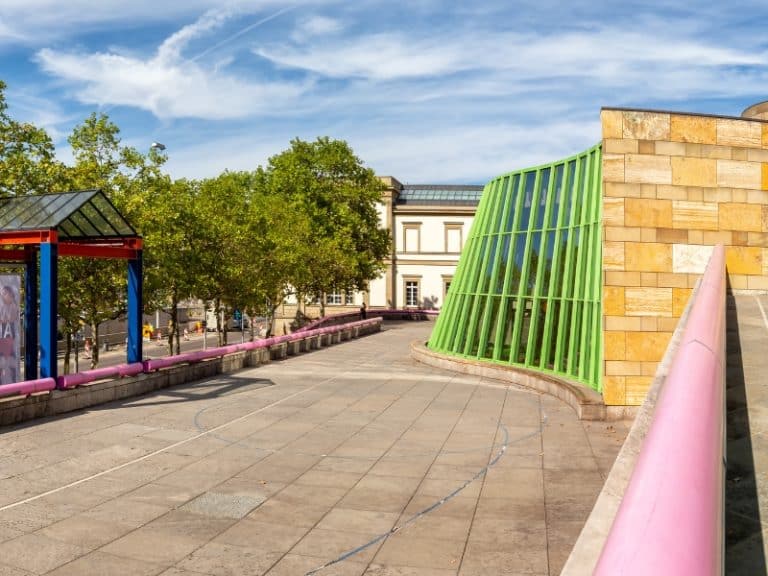
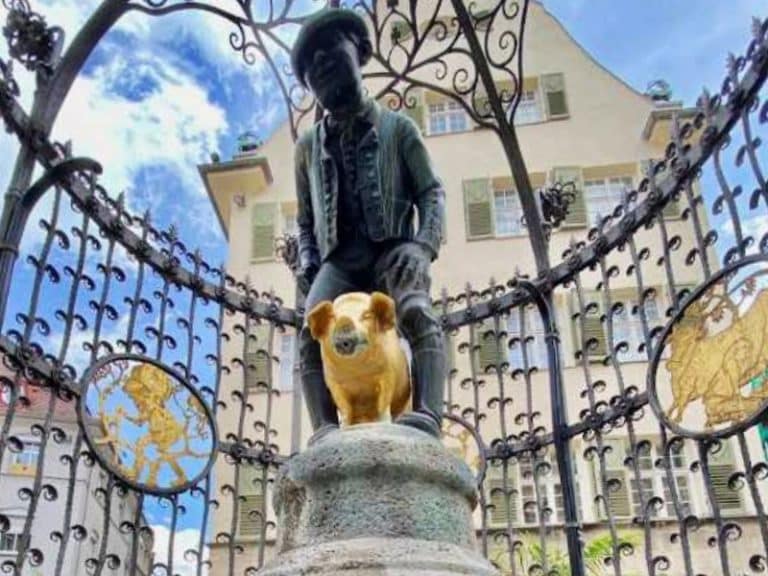
Near the Staatsgalerie you hear how James Stirling's 1984 extension, with its bright pink and blue handrails, became a well-known example of postmodern architecture. At the New Palace the narration follows Duke Carl Eugen's residence from 1746 through the bombing of 1944 and its rebuilding from 1958. The Old Castle takes you back to its Dürnitzbau of around 1350, and Schillerplatz to Bertel Thorvaldsen's memorial to the poet, unveiled in 1839. At the Stiftskirche you learn that the Reformer Johannes Brenz lies beneath the choir, and the walk ends with the Grimm fairy tale behind the Hans im Glück Fountain: a young man who trades away everything and still counts himself lucky.
- Durationabout 2 hours
- Walkingabout 43 min · 3 km
- Stops10
- LanguagesEnglish, German, French, Italian, Spanish, Dutch
Your walk, stop by stop
Stories on the spot
History, local legends and fun facts are told right where they happened, by voice or as text, so you can look at the building while you hear about it.
Navigation built in
Each leg opens in Google Maps; all the legs together add up to about 43 minutes on foot and 3 km.
Stop and resume
Step into a café or a museum halfway through. The app remembers the last stop you reached, and you continue when you are ready, even days later.
Local tips, your order
Recommendations for regional food and shops come with the narration, and the starting point and sequence of stops can be changed in the app.
See the route and attractions →
How it works
- Book online Choose the number of people. Your booking reference arrives by email straight away.
- Get the app Download the World City Trail app from the App Store or Google Play and enter your booking reference.
- Walk when you like Start whenever you are ready, walk at your own pace and pause any time. No guide, no fixed schedule.
Made with these walkers in mind
First trip in Stuttgart?
The walk connects the main sights in a sensible order and explains each one, which makes the centre easy to understand from day one.
Independent travellers
No meeting point and no group to keep up with: stay put wherever a detail grabs you, and walk on once you are ready.
Families with children
The young ones get legends, the grown-ups get history, and anyone can tap pause.
Good to know
- Bring a charged smartphone with mobile data; a power bank helps.
- No entry tickets needed: everything happens outside the buildings. Going inside is optional and paid separately.
- Family friendly; children must be accompanied by an adult.
- Not suitable for wheelchair users and difficult with strollers.
- Groups of up to 5 work best; larger groups split up, one ticket per person.
- Every purchase helps support stray cats and dogs in Greece.
Palace gardens, castle squares and a fairy-tale fountain
10 stops · about 43 min walking · start: Biergarten im Schlossgarten · finish: Hans im Glück Fountain
The tour sets out from the beer garden in the Schlossgarten, a short walk from the main station, and passes the Staatsgalerie on the way to the New Palace and Schlossplatz, lined by the Königsbau. Next comes the Old Castle, whose walls frame Schillerplatz, with the Stiftskirche on the same square. The equestrian statue of Emperor Wilhelm I on Karlsplatz leads on to the Marktplatz and its town hall, and the Hans im Glück Fountain completes the walk. Every stop is outside, and the app lets you choose where to begin.
Open the route map ↗
1Biergarten im SchlossgartenStart
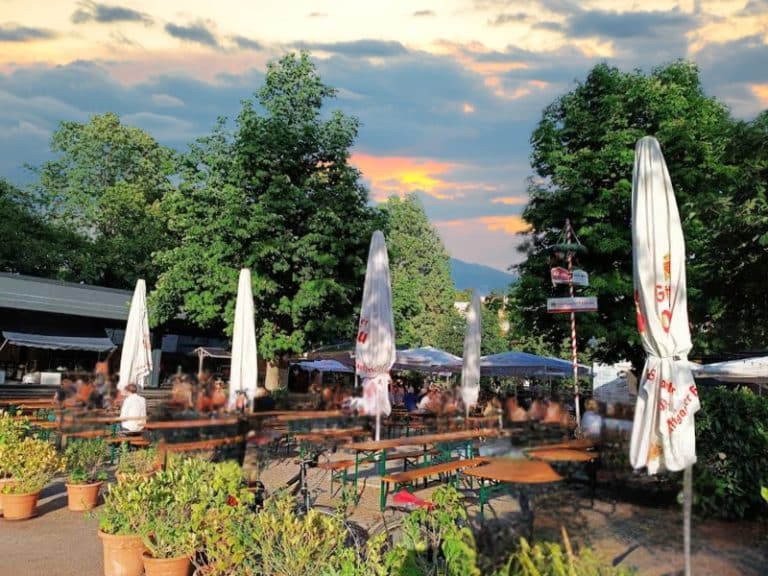
This large beer garden lies in the Mittlerer Schlossgarten, a short walk from the main station. The park was once the palace garden of the rulers of Württemberg and is now a public green space in the city centre.
2Staatsgalerie Stuttgart
The Staatsgalerie is Stuttgart's main art museum, with a collection that reaches from the Middle Ages to the present day. Its neoclassical building opened in 1843, and the extension by James Stirling, opened in 1984, is a well-known example of postmodern architecture with bright pink and blue handrails.
3New Palace (Neues Schloss)
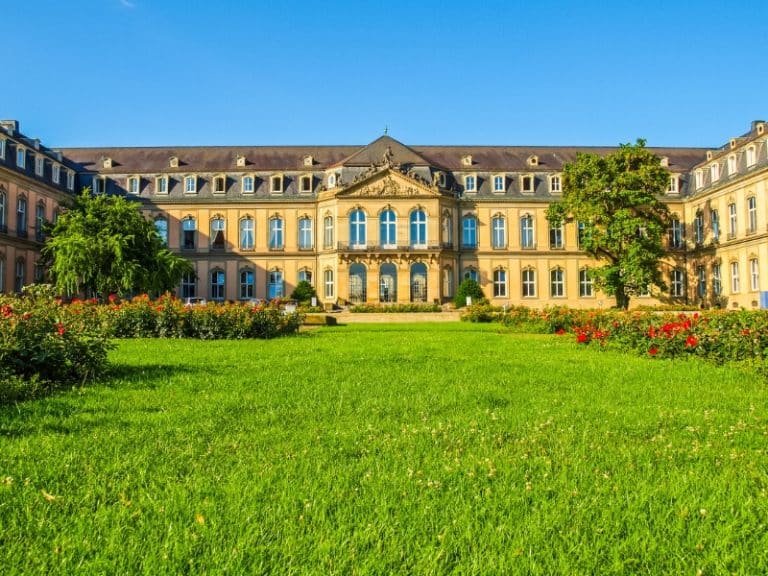
Duke Carl Eugen of Württemberg had work begin on this Baroque residence in 1746, and building went on for decades. The palace was heavily damaged in 1944, rebuilt from 1958 to 1964, and today it houses offices of the state ministries of Baden-Württemberg.
4Schlossplatz
Schlossplatz is the large square in front of the New Palace, once the forecourt of the Württemberg residence. It is bordered by the Königsbau, a long building with shops.
5Old Castle (Altes Schloss)
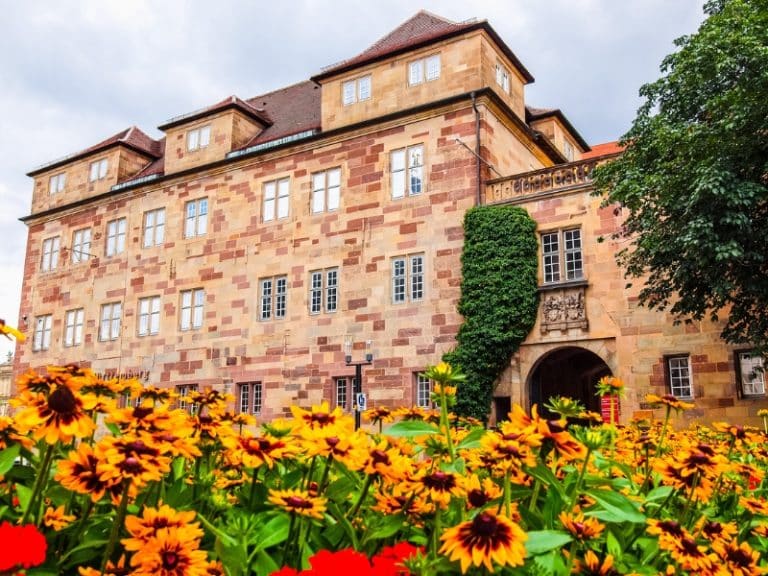
The Old Castle was the seat of the Württemberg dukes, and its oldest wing, the Dürnitzbau, dates from around 1350. Its Renaissance arcaded wing was completed shortly after 1542, and the building still frames Schillerplatz today.
6Schillerplatz
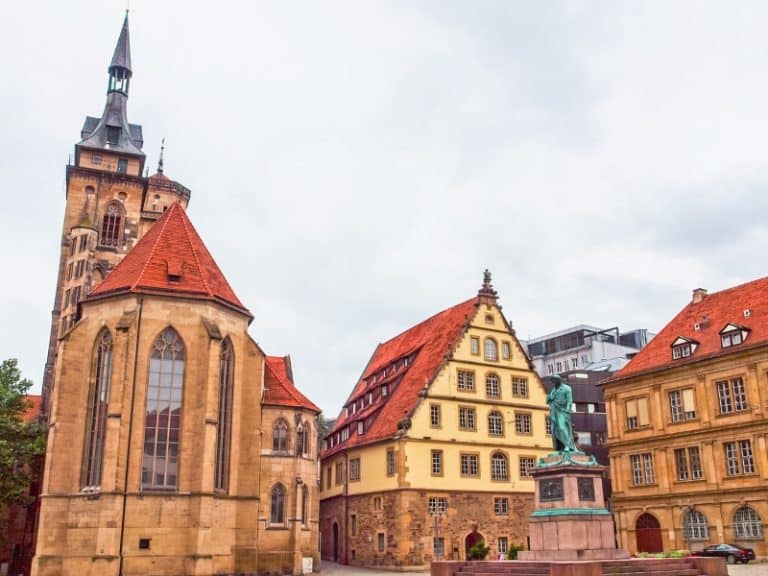
The square is named after the poet Friedrich Schiller, whose memorial by the Danish sculptor Bertel Thorvaldsen was unveiled in the centre in 1839. The square was laid out as a Renaissance square in 1594, and it still has the Stiftskirche and the Old Castle on its edges.
Read the full story →
7Stiftskirche
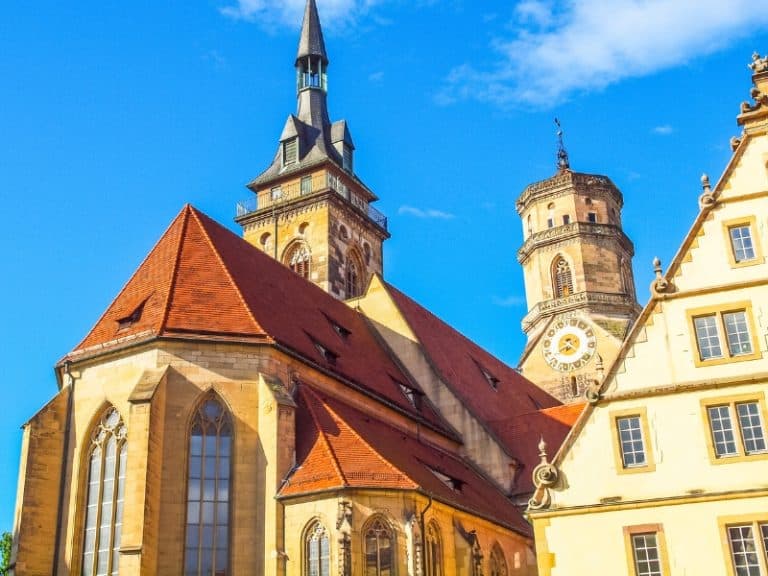
The Stiftskirche is the main church of the Lutheran Church in Württemberg. Its origins go back to a Romanesque church of 1240, and its Gothic choir was added between 1321 and 1347. Heavily damaged in 1944, it was rebuilt after the war, and the Reformer Johannes Brenz, who died in 1570, is buried beneath its choir.
8Kaiser Wilhelm Monument
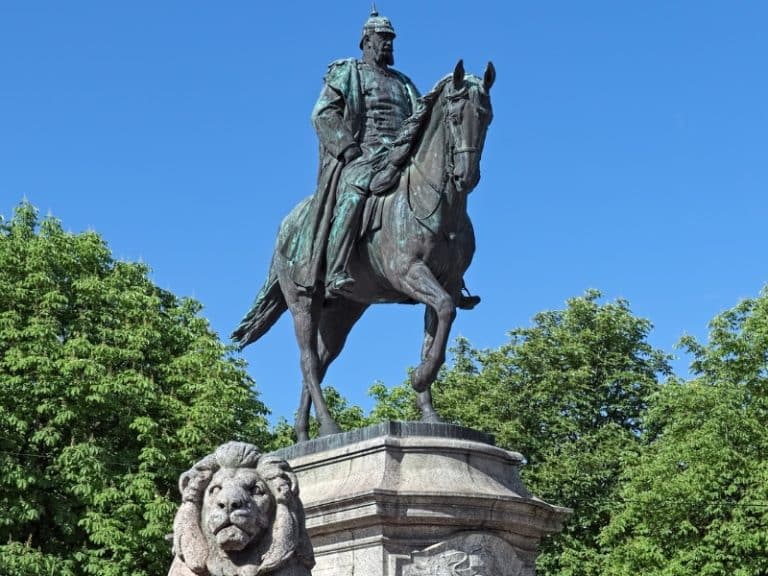
This bronze equestrian statue of Emperor Wilhelm I in military dress was erected in 1898, ten years after his death, by the sculptor Wilhelm von Rümann. It stands on a stone base with reliefs and eagles on Karlsplatz in the city centre.
9Marktplatz
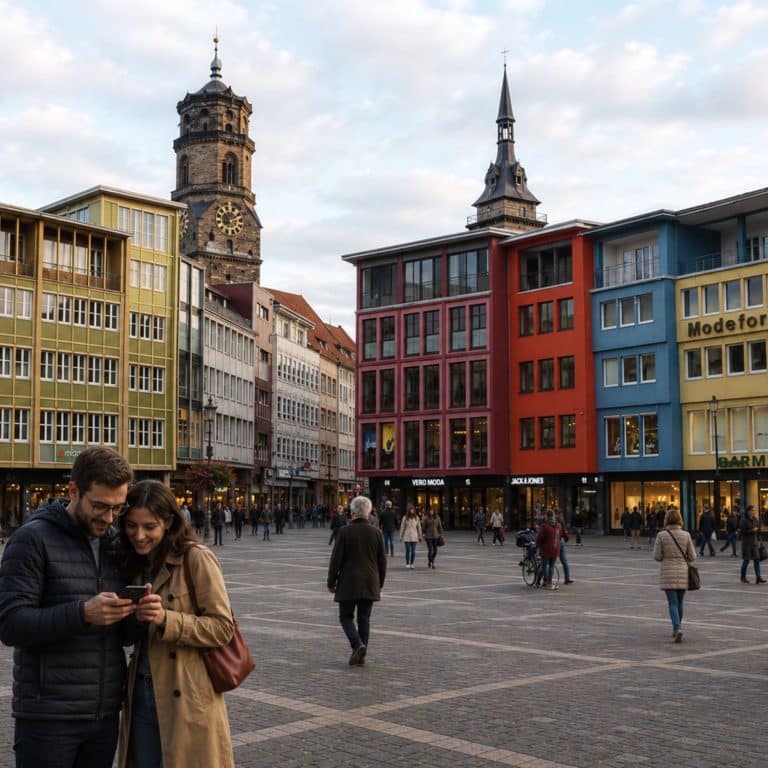
The Marktplatz has been a market square since the Middle Ages, and markets are still held here. The town hall on it dates from the 1950s and replaces a 14th-century building destroyed in the Second World War, and a weekly farmers' market still fills the square.
10Hans im Glück FountainFinish
The fountain takes its name from the Grimm fairy tale Hans im Glück, about a young man who trades his reward for one thing after another and still counts himself lucky. Six bronze medallions on the railing around its basin show scenes from the story, and the fountain stands in a square whose current layout dates from 1909.
Only logged in customers who have purchased this product may leave a review.







Reviews
There are no reviews yet.