What is the Turin self-guided walking tour?
The Turin self-guided walking tour is a walk through the Savoy centre at a speed you set, with audio narration on your phone doing the work a guide would normally do. Allow about 3 hours: 41 minutes of that is time on your feet, the route measures 3 km, and at 10 stops you stand still and listen. There is no timetable, and no group moves on without you.
At the cathedral the narration turns to the stepped dome Guarino Guarini raised over the Chapel of the Holy Shroud and to the linen cloth kept below it. On Piazza Carlo Alberto comes the story that Friedrich Nietzsche, who lodged nearby, broke down in January 1889 after throwing his arms around a horse. Later you hear how the Museo Egizio grew out of a royal purchase of 1824, and why the first parliament of united Italy met in Palazzo Carignano.
- Durationabout 3 hours
- Walkingabout 41 min · 3 km
- Stops10
- LanguagesEnglish, German, French, Italian, Spanish, Dutch
What you do on the walk
Listen
Each stop brings the history of the place, the legends attached to it and the details that go unnoticed. The same text sits on screen for anyone who would rather read.
Walk on
Google Maps carries you from stop to stop: 41 minutes on foot over 3 km, much of it under the arcades.
Break off
Order a coffee at a marble counter or give an hour to a museum, then take the walk up again, the same day or another one.
Eat and browse
Tips for food and shops near the route come with the stops. Your opening stop and the order are yours to set in the app.
See the route and attractions →
How it works
- Book online Choose the number of people. Your booking reference arrives by email straight away.
- Get the app Download the World City Trail app from the App Store or Google Play and enter your booking reference.
- Walk when you like Start whenever you are ready, walk at your own pace and pause any time. No guide, no fixed schedule.
Who the walk suits
A first visit to Turin
One walk puts the Baroque squares, the royal palaces and the arcades in order and explains what you are standing in front of.
Anyone who dislikes groups
No raised umbrella and no meeting time: you stay where something holds you and move on when you are ready.
A single day in the city
3 hours covers the historic centre, which leaves the afternoon for the Mole Antonelliana or a museum.
Good to know
- Bring a charged smartphone with mobile data; a power bank helps.
- No entry tickets needed: everything happens outside the buildings. Going inside is optional and paid separately.
- Family friendly; children must be accompanied by an adult.
- Not suitable for wheelchair users and difficult with strollers.
- Groups of up to 5 work best; larger groups split up, one ticket per person.
- Every purchase helps support stray cats and dogs in Greece.
The walk stop by stop: the cathedral, Piazza Castello, Piazza San Carlo, Piazza Solferino
10 stops · about 41 min walking · start: Turin Cathedral (San Giovanni Battista) · finish: Piazza Solferino
The walk opens at Turin Cathedral, a few steps from the Roman Palatine Gate, then turns into Piazza Castello for the Royal Palace and Palazzo Madama. The glass roof of the Galleria Subalpina leads through to Piazza Carlo Alberto, and from there to the National Museum of the Italian Risorgimento, Palazzo Carignano and the Egyptian Museum. Piazza San Carlo follows under its arcades, and Piazza Solferino closes the walk. The app takes a different opening stop or another order, and no stop asks for an entry ticket.
Open the route map ↗
1Turin Cathedral (San Giovanni Battista)Start
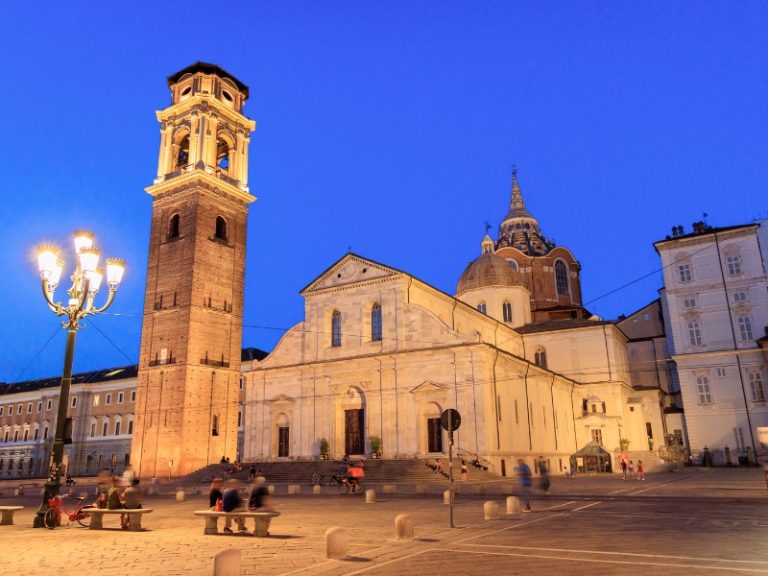
Built between 1491 and 1498, the cathedral of Saint John the Baptist is Turin's main Renaissance church, with a white marble façade. Behind it rises the stepped dome of Guarino Guarini's Chapel of the Holy Shroud, and the Shroud of Turin is kept in the cathedral.
2Royal Palace of Turin
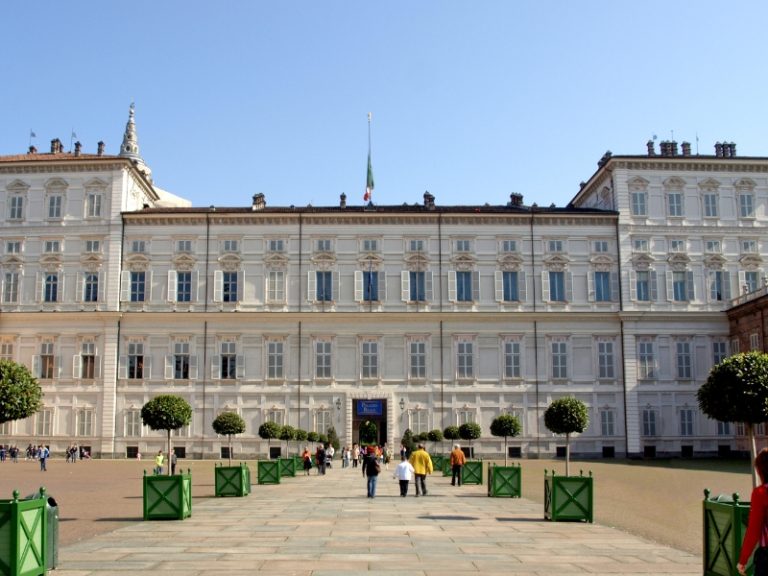
For centuries this palace was the main residence of the House of Savoy, the dynasty that later ruled united Italy. Its sober façade dates mainly from the 17th century, and statues of Castor and Pollux guard the gate in front. It belongs to the Savoy residences listed by UNESCO in 1997.
3Palazzo Madama
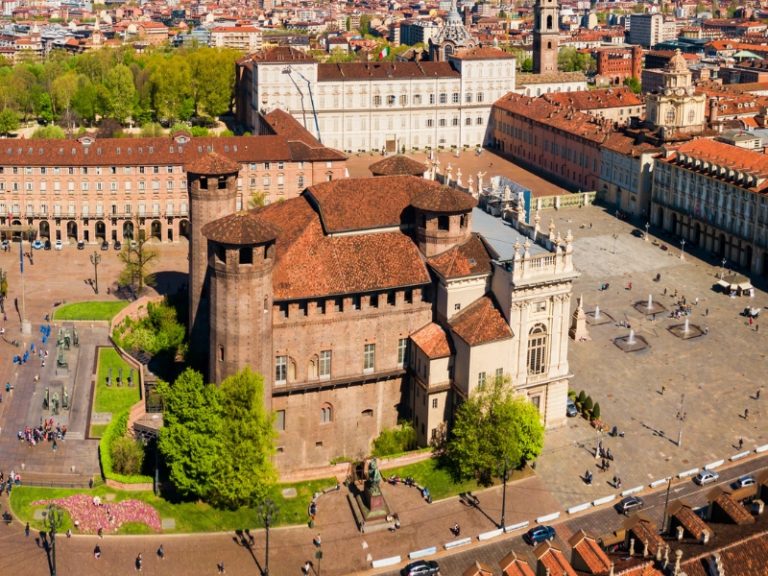
The building in the middle of Piazza Castello shows two thousand years at once: a Roman gate, a medieval castle and a Baroque façade by Filippo Juvarra from the early 18th century. It is named after two royal widows, the Madame Reali, who lived here, and in 1861 it housed the first Senate of the Kingdom of Italy.
4Galleria Subalpina
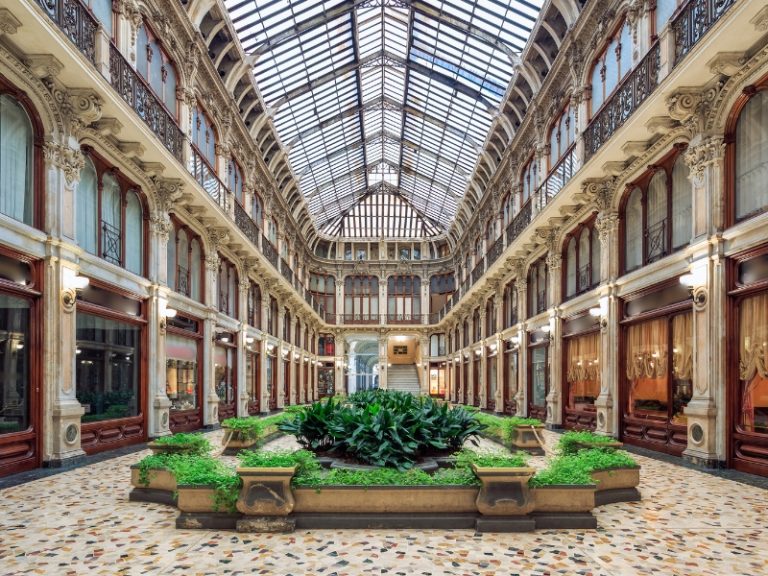
This covered shopping arcade, opened in 1874, links Piazza Castello with Piazza Carlo Alberto under a roof of iron and glass. Its marble floors, stucco and old shop fronts recall the elegant cafés and shops of 19th-century Turin.
Read the full story →
5Piazza Carlo Alberto
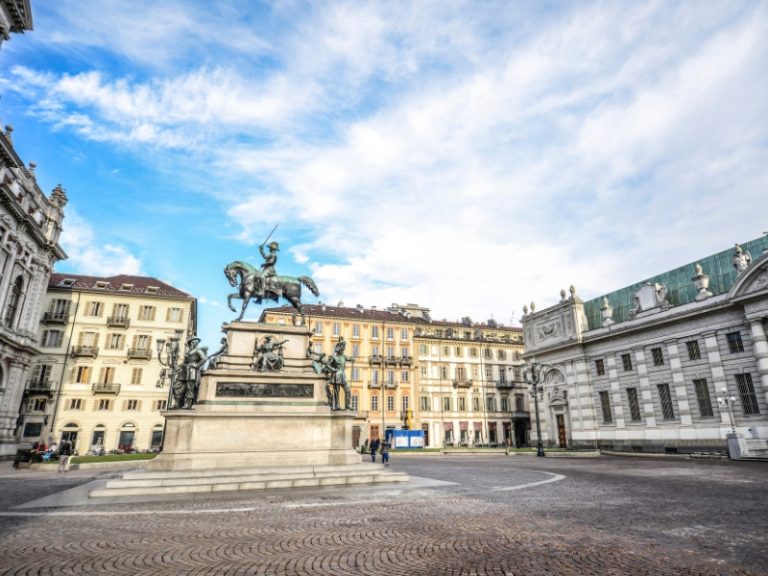
The square is named after King Charles Albert, whose equestrian bronze by Carlo Marochetti stands in the middle. On one side rises the 19th-century rear façade of Palazzo Carignano. According to a famous story, the philosopher Friedrich Nietzsche, who lived nearby, broke down here in January 1889 after embracing a horse.
6National Museum of the Italian Risorgimento
Housed in Palazzo Carignano, this is Italy's national museum of the Risorgimento, the 19th-century movement that unified the country. Paintings, weapons, flags and documents tell the story of unification, and the visit includes the hall of the Subalpine Parliament of the Kingdom of Sardinia.
7Palazzo Carignano
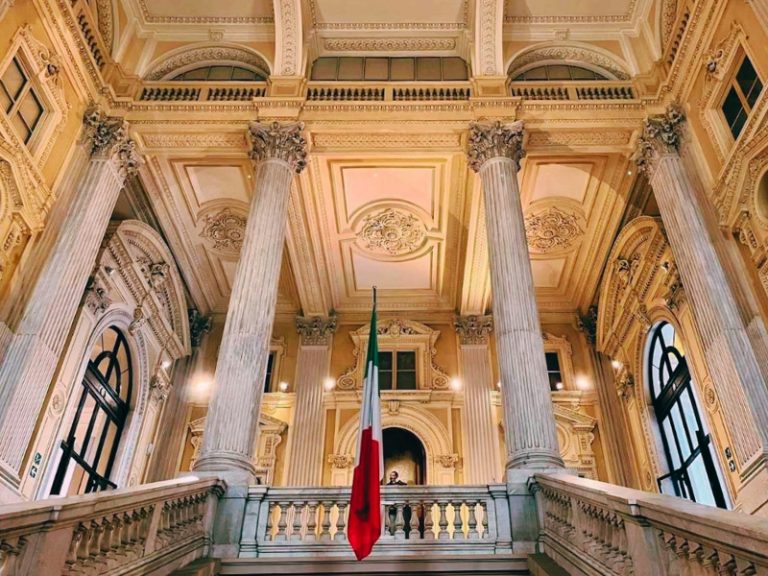
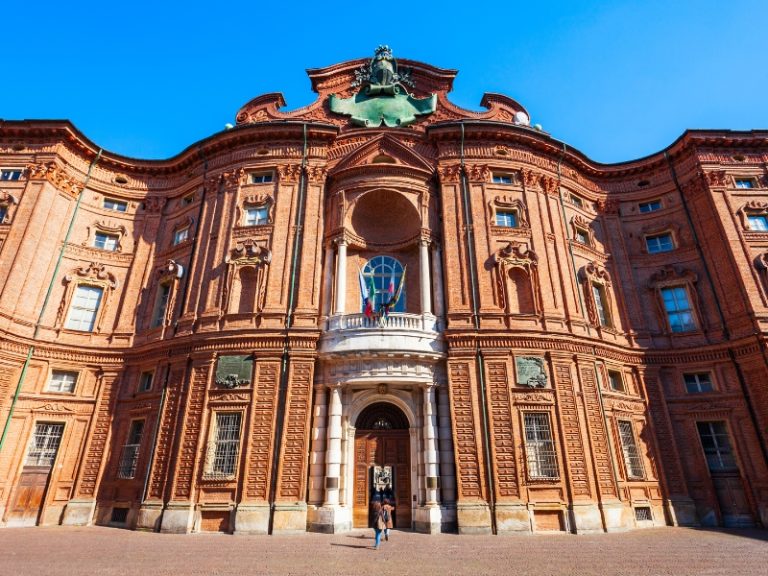
Guarino Guarini designed this palace for the Carignano branch of the Savoy family, begun in 1679, with an undulating brick façade facing Piazza Carignano. Victor Emmanuel II, the first king of united Italy, was born here in 1820, and the first Italian Parliament met here in 1861.
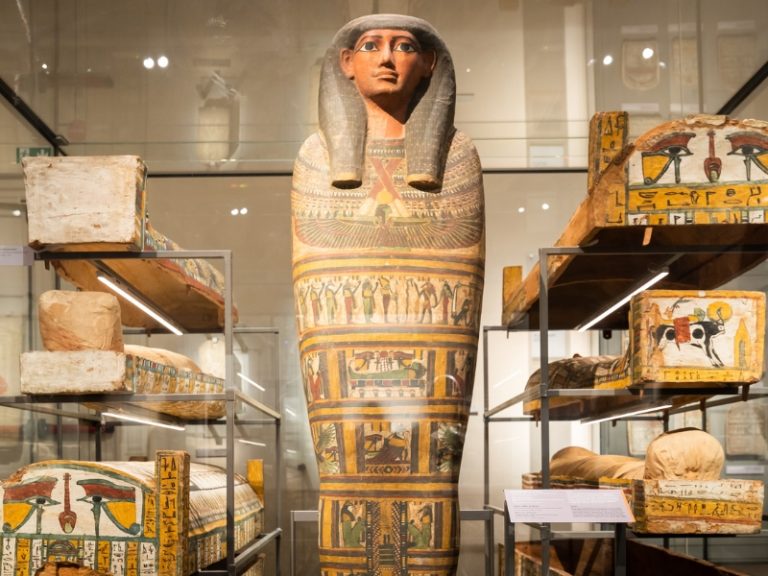
8Egyptian Museum (Museo Egizio)
Founded in 1824, the Museo Egizio is considered the oldest museum in the world devoted entirely to ancient Egypt. Its collection began with objects bought by King Charles Felix from Bernardino Drovetti, and it occupies the 17th-century palace of the Academy of Sciences.
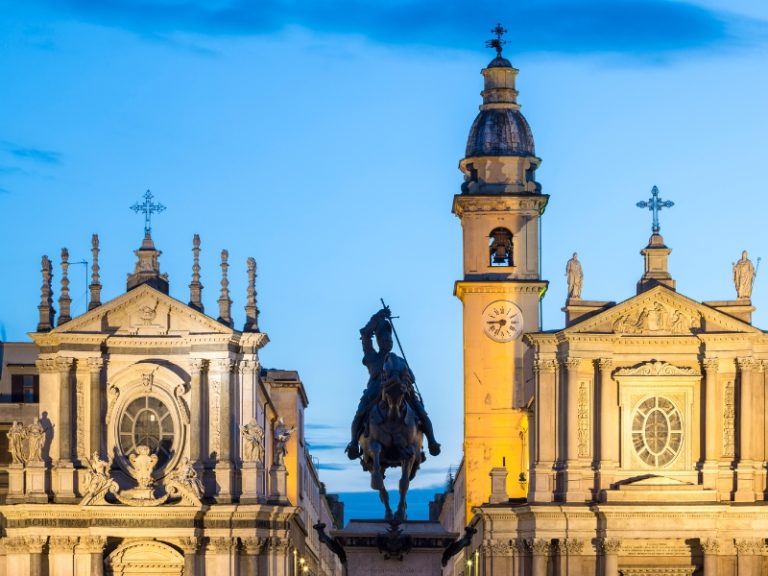
9Piazza San Carlo
This Baroque square framed by arcades is often called Turin's drawing room. At its southern end stand the twin churches of San Carlo and Santa Cristina, and in the middle Duke Emanuele Filiberto sheathes his sword on horseback, a bronze by Carlo Marochetti from 1838.
Read the full story →
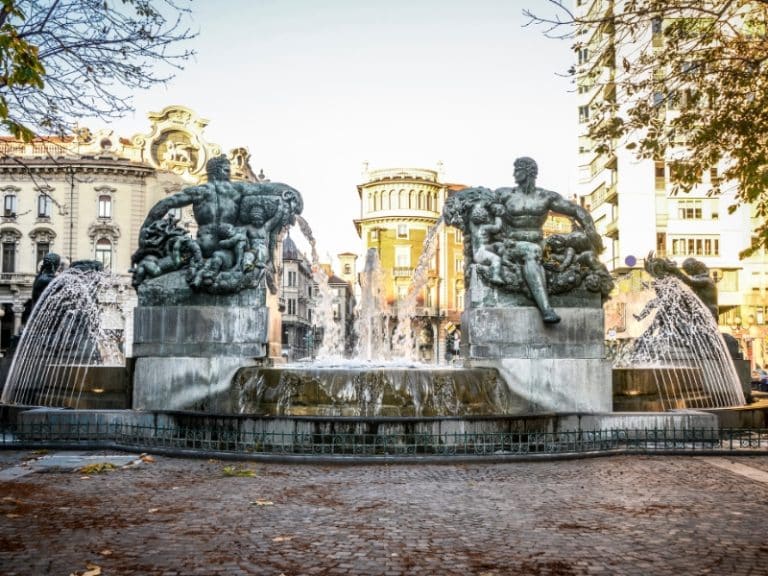
10Piazza SolferinoFinish
This 19th-century square is named after the Battle of Solferino of 1859, a victory of France and Piedmont-Sardinia over Austria. Its Fontana Angelica, from the early 20th century, has bronze figures said to represent the seasons, and an equestrian statue of Prince Ferdinand, Duke of Genoa, also stands on the square.
Only logged in customers who have purchased this product may leave a review.




Reviews
There are no reviews yet.