What is the Valencia outdoor escape game?
The Valencia outdoor escape game is an escape room taken out into the open air: you play on your phone, and at each of the 10 stops a puzzle is hidden in the surroundings, to be cracked through careful observation and logic. The full route takes about 2 hours, of which roughly 43 minutes go on foot over 3.5 km, and you choose the day you set off.
Each puzzle belongs to a landmark, from the bullring and City Hall to the cathedral and the Central Market, and it stands on its own without a shared plot. Stuck? Three levels of hints are there to help. The route suits this format because the stops sit close enough together that the walks between them feel short.
- Durationabout 2 hours
- Walkingabout 43 min · 3.5 km
- Stops10
- LanguagesEnglish, German, French, Italian, Spanish, Dutch
What you do during the escape game
Solve
Work out the puzzle at each stop by watching the surroundings and reasoning it through. You bring no prior knowledge of the city.
Look around
Clues are tucked into the details of each place, from façades to the way a square is laid out.
Navigate
Google Maps leads you from stop to stop across about 3.5 km of walking.
Set your own pace
No clock counts down. Ask for a hint when you need one, or pause and carry on later or on another day.
See the route and attractions →
How it works
- Book online Choose the number of players. Your booking reference arrives by email straight away.
- Get the app Download the World City Trail app from the App Store or Google Play and enter your booking reference.
- Play when you like Start whenever you are ready, walk at your own pace and pause any time. No guide, no fixed schedule.
Who the game suits
Friends
Everyone gets a puzzle to chew on at the next stop, and nobody needs to know Valencia beforehand.
Couples
A shared challenge that keeps the conversation going as you wander between landmarks, with no timer adding pressure.
Team building
Colleagues each play on their own phone, so the activity works well for teams that want to puzzle things out together.
Good to know
- Bring a charged smartphone with mobile data; a power bank helps.
- Best started in daylight, so you can see the details the puzzles ask about.
- No entry tickets needed: everything happens outside the buildings. Going inside is optional and paid separately.
- Family friendly; children must be accompanied by an adult.
- Not suitable for wheelchair users and difficult with strollers.
- Teams of up to 5 work best; bigger groups split into several teams, one ticket per player.
- Every purchase helps support stray cats and dogs in Greece.
Puzzle route: from the Plaça de Bous to Puente de las Flores
10 stops · about 43 min walking · start: Plaça de Bous (Bullring) · finish: Puente de las Flores
Your first puzzle waits at the Plaça de Bous bullring beside the Estació del Nord, and the last one sits on the Puente de las Flores above the Turia Gardens. In between come City Hall, the Central Market, La Lonja de la Seda, the Plaça de la Mare de Déu, Valencia Cathedral, the University of Valencia at La Nau, the garden square of El Parterre and the Mercat de Colón. Choose a bright day to begin, because the game is played outdoors and rain or wind will slow it down. Google Maps handles the directions, and the puzzles need no entry tickets.
Open the route map ↗
1Plaça de Bous (Bullring)Start
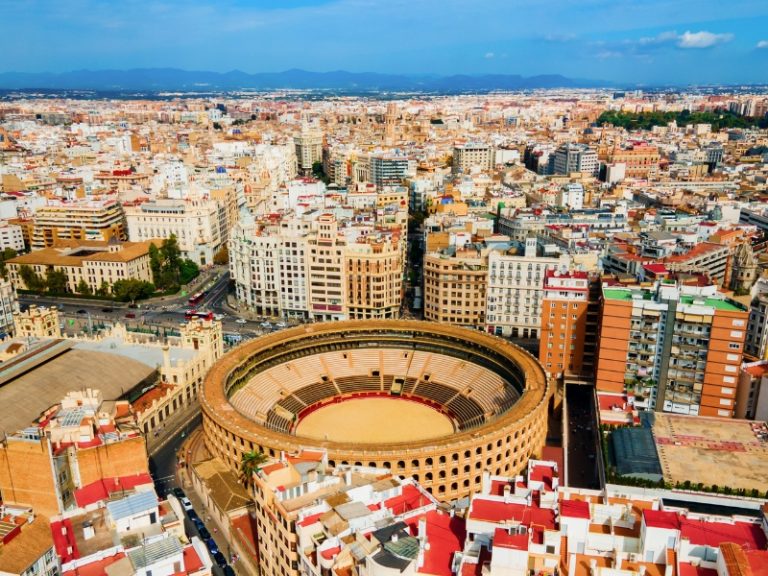
Valencia's bullring was built in the 1850s to a design by Sebastián Monleón, who took his inspiration from the amphitheatres of ancient Rome. Its round brick façade is made of tiers of arches stacked one above the other. Bullfights are held here during the Fallas in March and the July Fair.
2City Hall
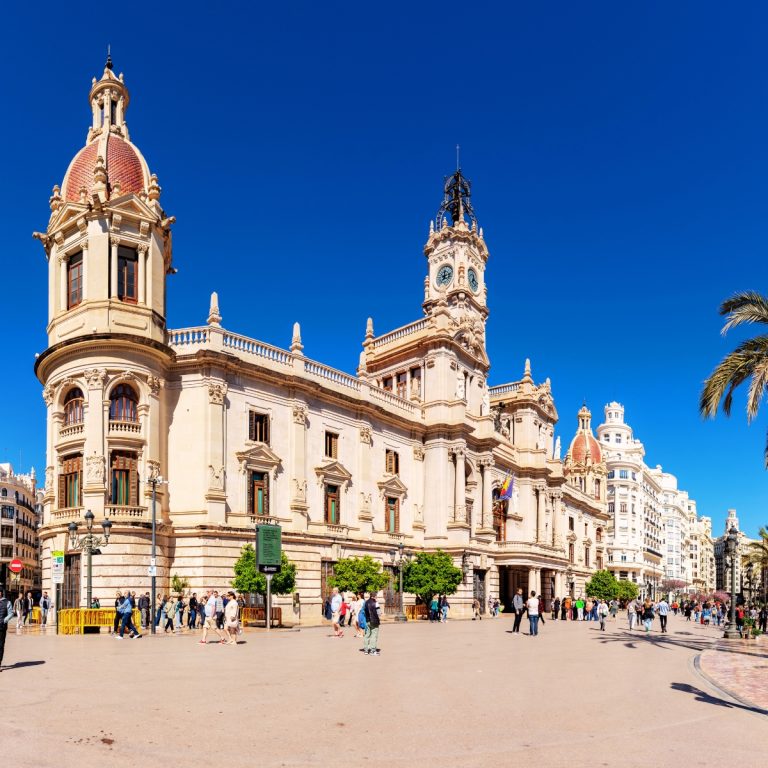
Valencia's City Hall dominates the Plaça de l'Ajuntament with its clock tower and richly decorated early 20th-century façade. During the Fallas in March, crowds gather in the square in front of it for the mascletà, a deafening daytime display of firecrackers.
3Central Market
The Central Market opened in 1928 to a design by Alexandre Soler i March and Francesc Guàrdia i Vial, and it is one of the largest covered markets in Europe. Iron, glass and colourful ceramics make it a showcase of Valencian Art Nouveau. Look up at the domes: one weather vane is a parrot, a much-loved local symbol.
4La Lonja de la Seda
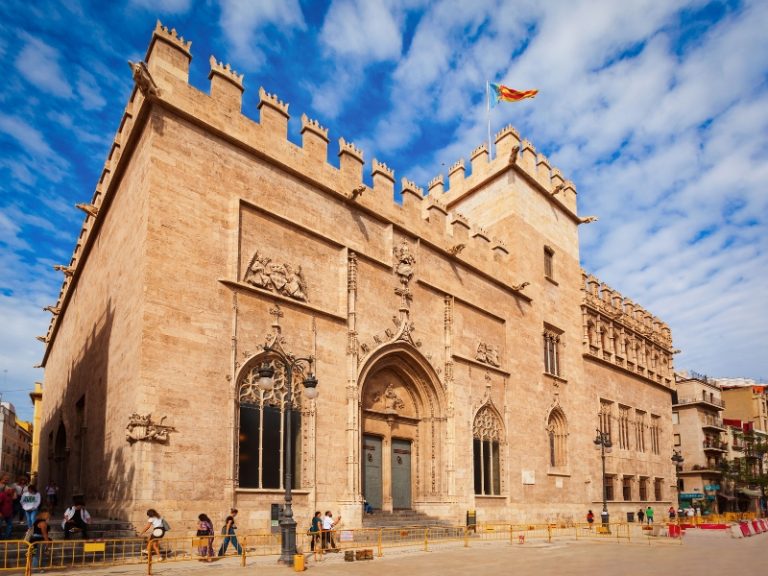
The Silk Exchange was built at the end of the 15th century under the master builder Pere Compte, when Valencia was one of the great trading cities of the Mediterranean. In its Hall of Columns, twisted pillars spread into the vault like palm trees. It has been a UNESCO World Heritage Site since 1996.
5Plaça de la Mare de Déu
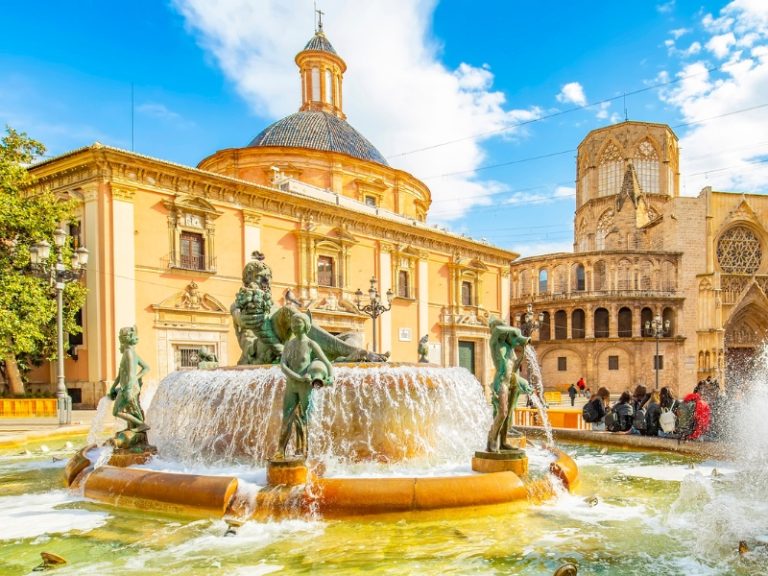
This square lies on the site of the forum of Roman Valentia and is framed by the cathedral and the Basilica of Our Lady of the Forsaken, the city's patron. Its fountain shows the river Turia as a reclining man surrounded by female figures who stand for the irrigation channels of the Valencian farmland.
Read the full story →
6Valencia Cathedral
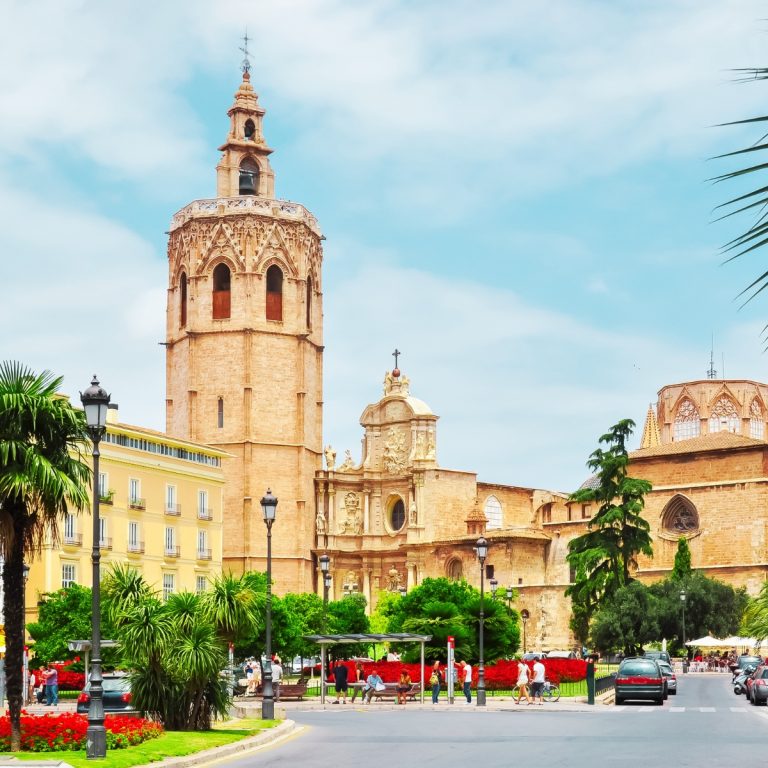
Begun in 1262 on the site of the former main mosque, the cathedral has a Romanesque, a Gothic and a Baroque doorway. A chapel inside keeps the Holy Chalice, venerated as the Holy Grail, and the octagonal bell tower, the Micalet, is a symbol of the city. Every Thursday the Water Tribunal meets at the Apostles' Door.
7University of Valencia (La Nau)
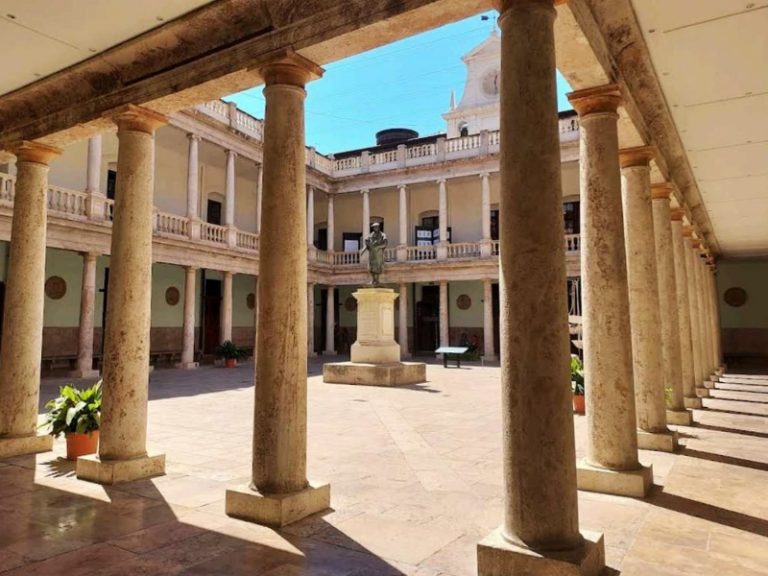
The University of Valencia was founded in 1499, and its historic building on Carrer de la Universitat, known as La Nau, was its home for centuries. In the cloister stands a statue of the humanist Joan Lluís Vives, one of the city's most famous scholars. Today La Nau is a university cultural centre.
8Plaça d'Alfons el Magnànim (El Parterre)
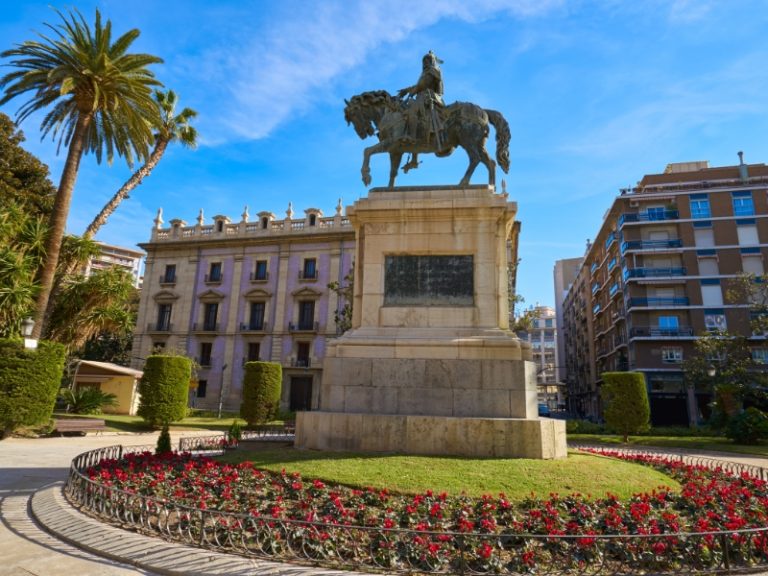
This garden square, known as El Parterre, is named after Alfonso the Magnanimous, King of Aragon. At its centre rides an equestrian statue of King James I, who conquered Valencia in 1238. Look out for the giant fig trees with their huge aerial roots.
9Mercat de Colón
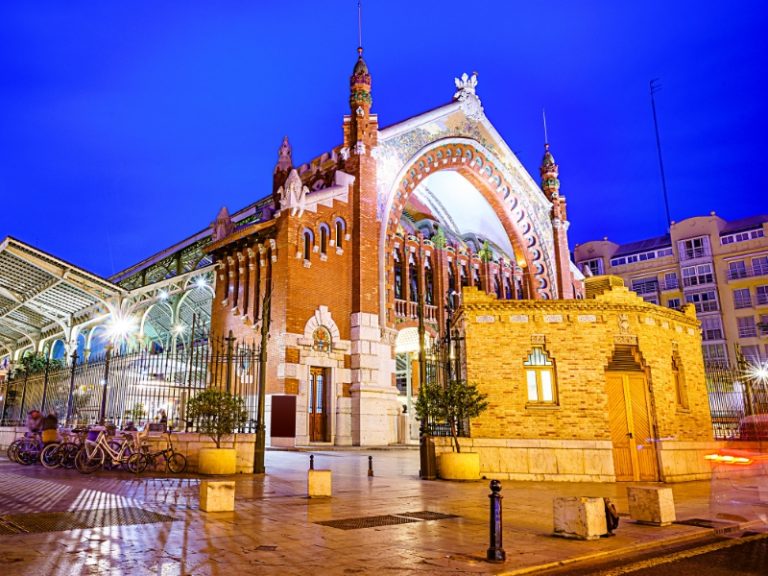
Built between 1914 and 1916 to a design by Francisco Mora Berenguer, the Colón Market is one of the best-known examples of Valencian Art Nouveau. Its brick arches are covered in colourful ceramic mosaic. Today its iron and glass hall is filled with cafés and restaurants.
10Puente de las FloresFinish
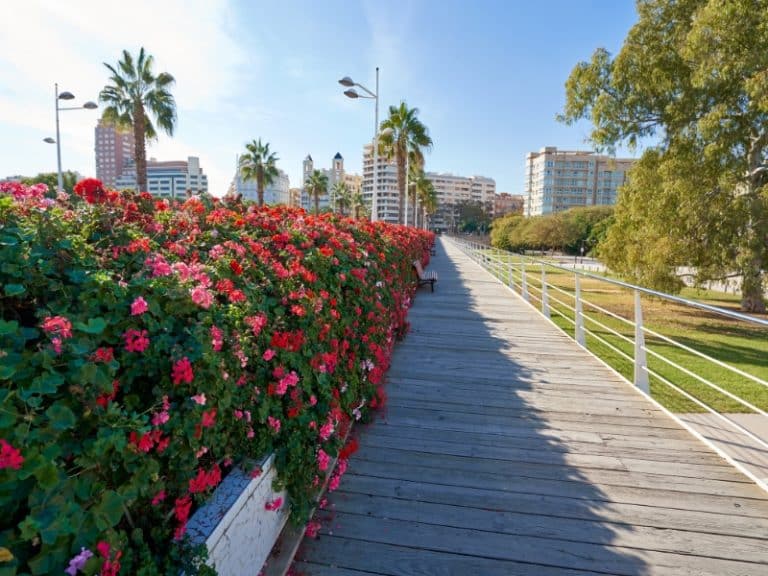
This bridge crosses the Turia Gardens, the long park laid out in the old bed of the river Turia after the river was diverted following the flood of 1957. Its sides are lined with flower beds that are replanted with the seasons, which gives the bridge its name.
Only logged in customers who have purchased this product may leave a review.






Reviews
There are no reviews yet.