What is the Warsaw outdoor escape game?
The Warsaw outdoor escape game is an escape room with no walls: the puzzles are planted in the city itself, at 10 landmarks between the New Town and the Saxon Garden, and your phone hands them to you one at a time. Allow roughly 2 hours, of which 51 minutes go on walking across 3.8 km, and choose the day yourself.
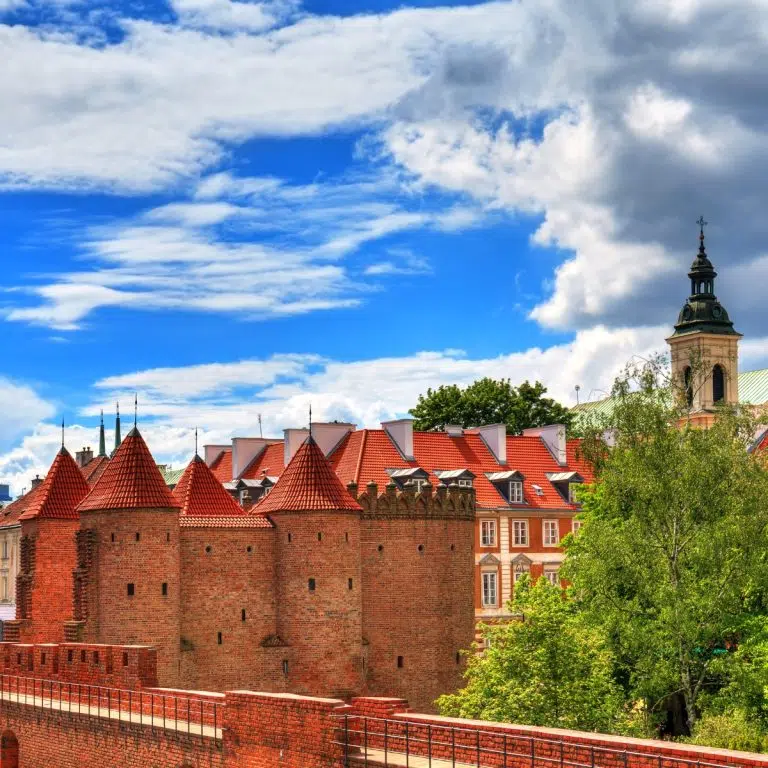
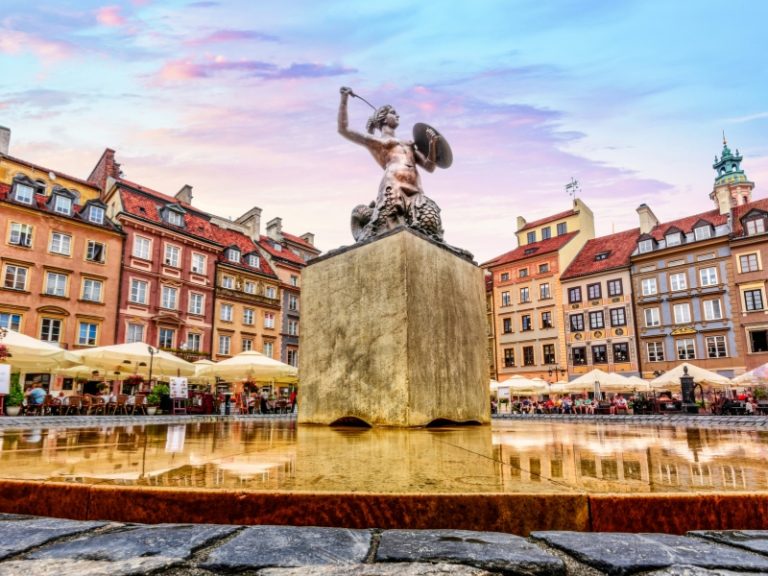
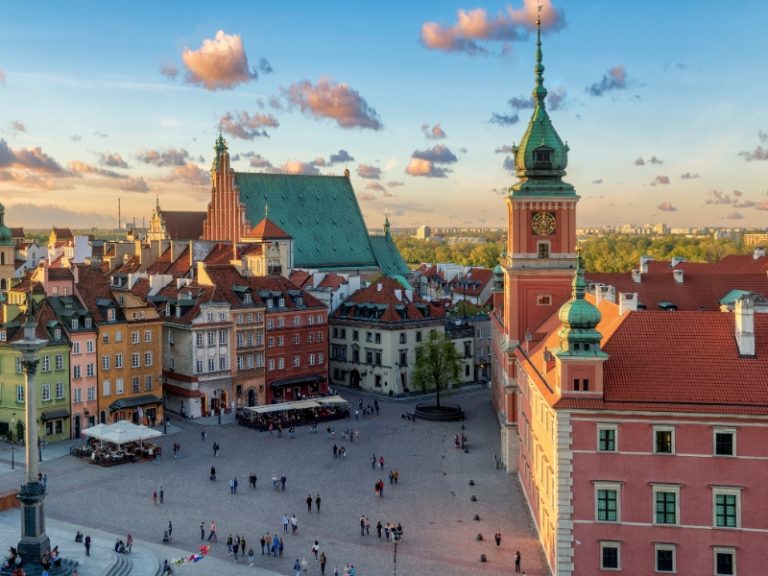
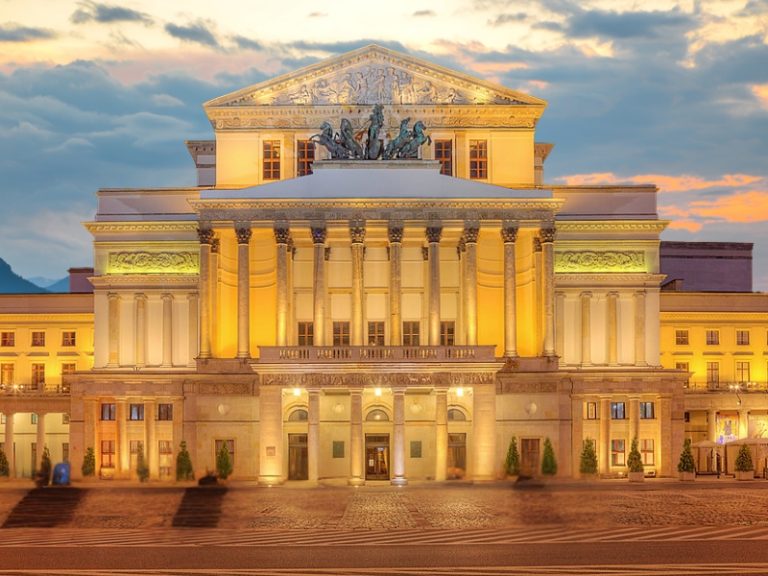
Puzzles wait at the Barbican, on the Old Town Market Square beside the Warsaw Mermaid, under Sigismund's Column at the Royal Castle and outside the Grand Theatre. None of them depends on the others, so there is no plot to keep track of, and three levels of hints stand by when a solution refuses to come. The rebuilt centre packs these landmarks into a few hundred metres, which keeps the legs between puzzles short.
- Durationabout 2 hours
- Walkingabout 51 min · 3.8 km
- Stops10
- LanguagesEnglish, German, French, Italian, Spanish, Polish
What you do on the escape game
Work it out
Each landmark holds a puzzle you crack from what stands in front of you, using logic instead of background knowledge.
Read the detail
The answers sit in brickwork, inscriptions and statues, so a close look at a façade is usually what moves you on.
Walk the city
Google Maps gives the directions between landmarks: 51 minutes of walking spread over 3.8 km.
Keep your own pace
Nothing counts down. Call up a hint when you want one, break for lunch and carry on later or on another day.
See the route and attractions →
How it works
- Book online Choose the number of players. Your booking reference arrives by email straight away.
- Get the app Download the World City Trail app from the App Store or Google Play and enter your booking reference.
- Play when you like Start whenever you are ready, walk at your own pace and pause any time. No guide, no fixed schedule.
Who it suits
Friends
Every puzzle gives the group something to argue about on the way to the next landmark, and nobody needs to know Warsaw already.
Couples
A challenge for two that keeps the conversation going between landmarks, without a clock pushing you along.
Team building
Teams of up to 5 each play on their own phones, which makes the format easy to organise for colleagues.
Good to know
- Bring a charged smartphone with mobile data; a power bank helps.
- Best started in daylight, so you can see the details the puzzles ask about.
- No entry tickets needed: everything happens outside the buildings. Going inside is optional and paid separately.
- Family friendly; children must be accompanied by an adult.
- Not suitable for wheelchair users and difficult with strollers.
- Teams of up to 5 work best; bigger groups split into several teams, one ticket per player.
- Every purchase helps support stray cats and dogs in Greece.
Puzzle route: from the New Town to the Obelisk Drogowskaz
10 stops · about 51 min walking · start: Church of the Visitation of the Blessed Virgin Mary · finish: Obelisk Drogowskaz
Above the Vistula escarpment, the Church of the Visitation holds puzzle one; the New Town Market Square comes next, then Krasiński Garden beside the Warsaw Uprising Monument. The Barbican lets you into the Old Town for the Market Square and the Royal Castle, after which come the Grand Theatre, the Tomb of the Unknown Soldier, the Saxon Garden and the closing puzzle at the Obelisk Drogowskaz. Starting in daylight is wise, since all of it happens outdoors; the app reorders the stops, and entry tickets play no part.
Open the route map ↗
1Church of the Visitation of the Blessed Virgin MaryStart
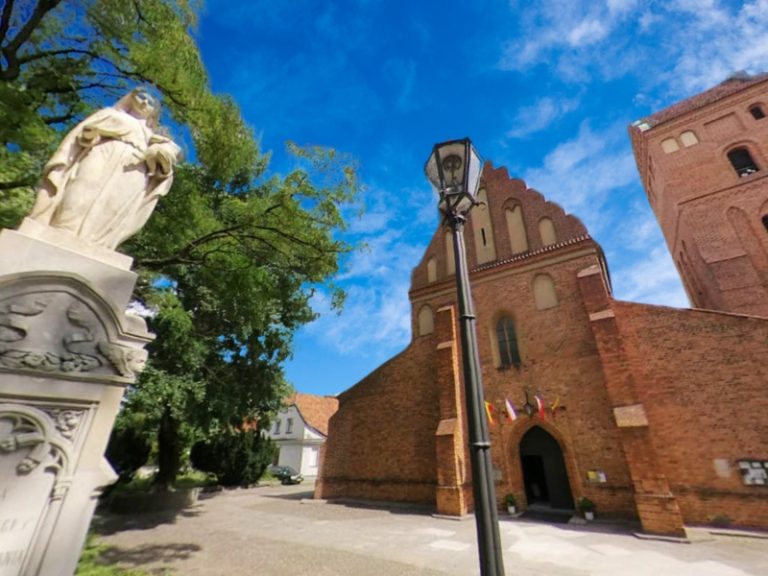
Founded in 1409, this is one of the oldest churches in Warsaw. Its Gothic brick walls and free-standing bell tower stand on the edge of the Vistula escarpment in the New Town, and after its destruction in 1944 it was rebuilt in its medieval form.
2New Town Market Square
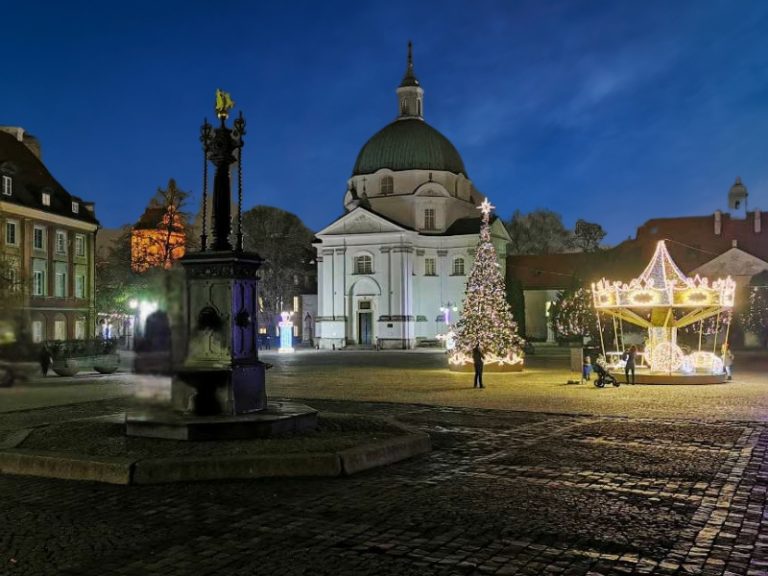
The New Town grew up around 1400 as a separate town north of the old walls, with its own market square and town hall. Today the square is framed by rebuilt burghers' houses and the baroque Church of St Casimir, designed by Tylman van Gameren, and Marie Curie was born a few steps away on Freta Street.
3Krasiński Garden
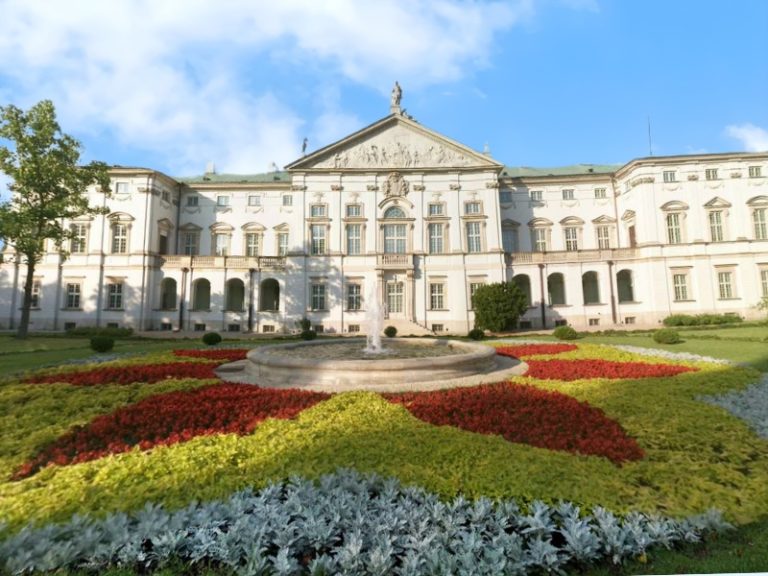
Krasiński Garden was laid out in the late 17th century behind the baroque Krasiński Palace, designed by Tylman van Gameren, and opened to the public in 1768. On Krasiński Square next to it stands the Warsaw Uprising Monument, unveiled in 1989, with its bronze insurgents emerging from the ruins.
4Warsaw Barbican
The Barbican is a semicircular brick fortification built in 1540 to guard the northern gate of the Old Town walls, designed by Jan Baptysta of Venice. It later lost its military role and was partly demolished, and its reconstruction in the 1950s restored the link between the Old Town and the New Town.
5Old Town Market Square
The Old Town Market Square was laid out in the late 13th century, and almost all of its burghers' houses were destroyed in 1944 and rebuilt after the war. In the centre stands the Warsaw Mermaid, the city's symbol, cast in bronze by Konstanty Hegel in 1855, and the Old Town has been a UNESCO World Heritage Site since 1980.
6Royal Castle
The Royal Castle became the residence of Polish kings after the court moved from Kraków around 1600, and here the Constitution of 3 May 1791 was adopted. German troops blew it up in 1944, and it was rebuilt between 1971 and 1984, largely with donations from Poles; in front of it rises Sigismund's Column, erected in 1644.
7Grand Theatre – Polish National Opera
The Grand Theatre on Theatre Square was designed by Antonio Corazzi and opened in 1833, and today it is home to the Polish National Opera. Burnt out in 1939, it was rebuilt and reopened in 1965 with one of the largest stages in Europe, and statues of Stanisław Moniuszko and Wojciech Bogusławski stand in front of its colonnade.
8Tomb of the Unknown Soldier
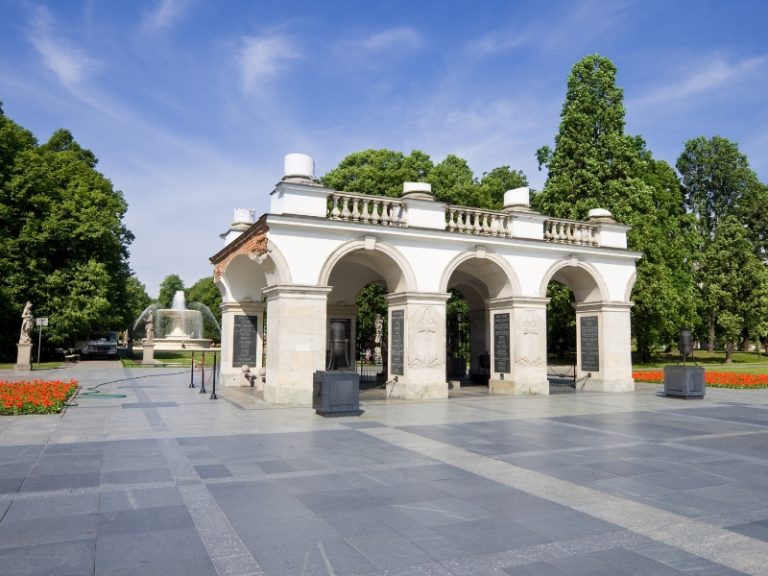
The Tomb of the Unknown Soldier lies beneath the surviving arcades of the Saxon Palace, which German troops blew up in December 1944. It was created in 1925 for an unknown soldier who fell in the defence of Lwów, and a guard of honour stands watch by its eternal flame.
9Saxon Garden
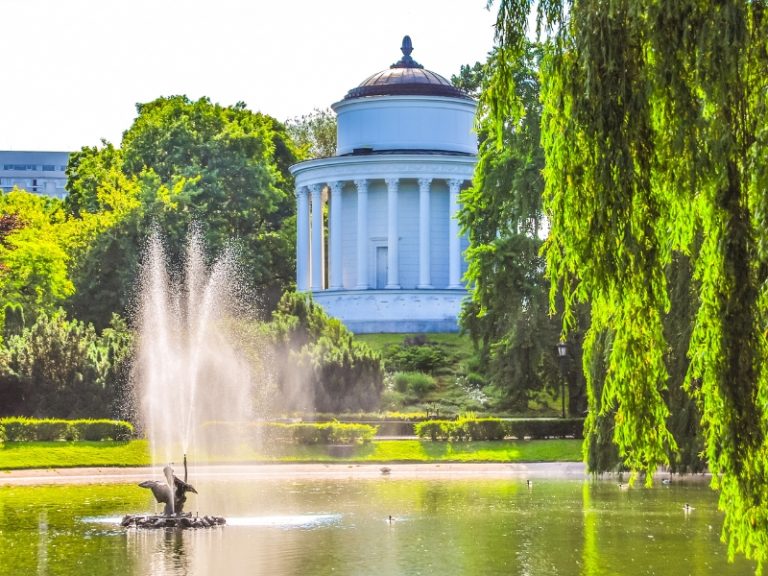
The Saxon Garden was opened to the public in 1727 under King Augustus II the Strong, making it one of the first public parks in Poland. Look for the baroque sandstone statues along its paths, the fountain and the water tower designed by Henryk Marconi in the form of a round classical temple.
10Obelisk DrogowskazFinish
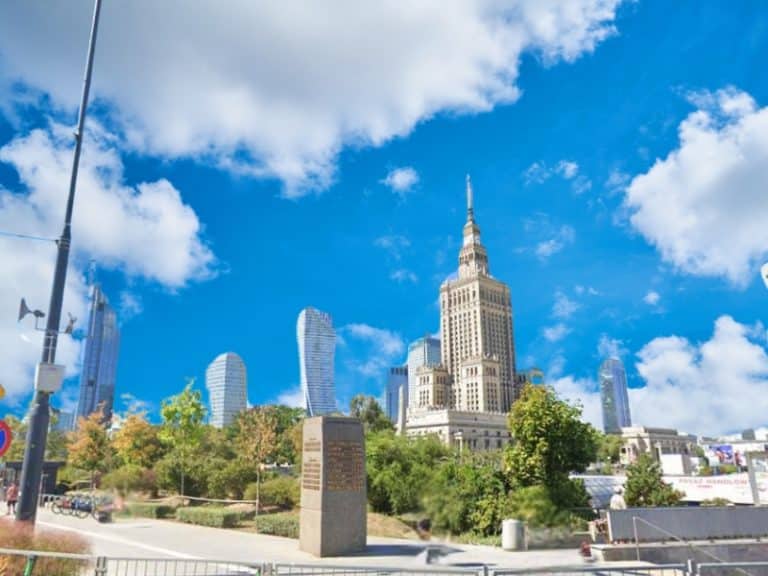
The Obelisk Drogowskaz stands close to the Saxon Garden. Drogowskaz is Polish for signpost, and the obelisk is a reminder of how travellers once found their way along the main roads leading in and out of the city.
Only logged in customers who have purchased this product may leave a review.





Reviews
There are no reviews yet.