
Table of Contents
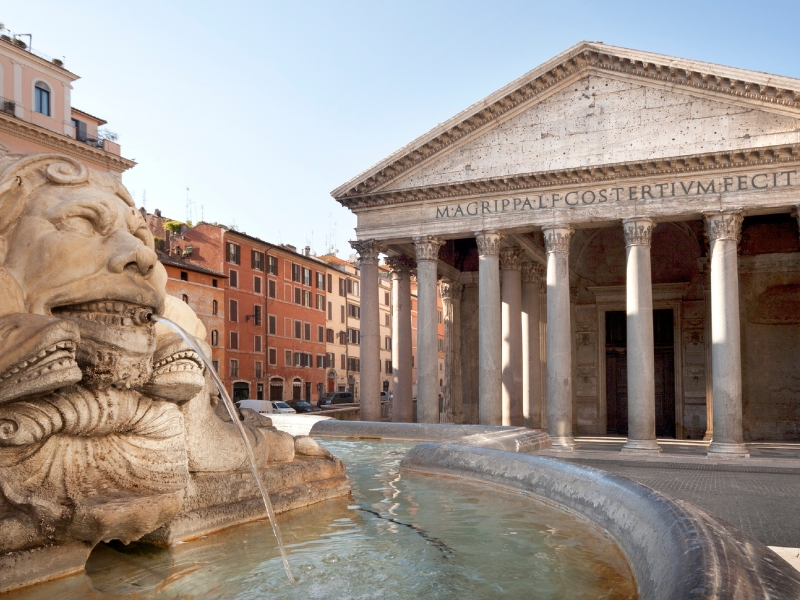
The Pantheon, a masterpiece of Roman architecture, stands as a testament to the ingenuity and ambition of the Roman Empire. This iconic structure, nestled in the heart of Rome, has captivated visitors for centuries with its awe-inspiring design, its remarkable state of preservation, and its enduring connection to the past.
A Legacy of Imperial Vision
Commissioned by Marcus Vipsanius Agrippa, a prominent statesman and close confidante of Emperor Augustus, the original Pantheon was built around 27 BC. Designed as a temple dedicated to all the gods (“pantheon” in Greek), it reflected the Roman belief in a multitude of deities and their influence on human life. This first Pantheon, a rectangular temple with a portico and a traditional gabled roof, served as a testament to Roman power and a symbol of the empire’s reverence for the divine.
However, this original structure was destroyed by fire in 80 AD. Emperor Hadrian, recognizing the significance of this temple, undertook the ambitious task of rebuilding it on a grander scale. Between 118 and 126 AD, Hadrian oversaw the construction of the magnificent structure we see today, a testament to his own imperial vision and a showcase of Roman architectural prowess.
A Masterpiece of Engineering
The Pantheon is renowned for its innovative design and its remarkable state of preservation. The most striking feature is the oculus, a massive circular opening in the center of the dome, which serves as the building’s primary source of light. This ingenious design creates a dramatic interplay of light and shadow, illuminating the interior of the Pantheon in a breathtaking manner. Sunlight streams through the oculus, casting ever-changing patterns on the marble floors, creating a sense of awe and wonder.
The dome itself, with a diameter of 43.44 meters (142.5 feet), was a technological marvel for its time. It was built using innovative concrete techniques, with the thickness of the concrete gradually decreasing as it rises towards the apex, creating a self-supporting structure of remarkable lightness and strength. This revolutionary approach to construction allowed the Romans to create a dome of unprecedented size and scale, pushing the boundaries of architectural possibility.

A Journey Through Time
In 609 AD, the Pantheon was converted into a Christian church, dedicated to the Virgin Mary and all the martyrs (Santa Maria ad Martyres). This conversion helped to preserve the Pantheon, ensuring its survival through the turbulent Middle Ages. The church has continued to serve as a place of worship, attracting pilgrims and tourists alike.
The Pantheon has also served as a burial place for renowned figures, including the artist Raphael, kings of Italy, and other notable individuals. This adds another layer to the Pantheon’s rich history, connecting its past with the present and highlighting its enduring significance as a place of cultural and historical importance.
A Timeless Icon of Roman Genius
The Pantheon stands as a timeless testament to the ingenuity and ambition of the Roman Empire. Its innovative design, its remarkable state of preservation, and its enduring connection to the past continue to inspire awe and wonder in visitors from around the world.
Visiting the Pantheon is an unforgettable experience. Standing beneath the awe-inspiring dome, experiencing the play of light and shadow, and contemplating the ingenuity of its design is an experience that will stay with visitors long after they have left. The Pantheon serves as a powerful reminder of the brilliance of Roman civilization and its lasting impact on the world.

Pantheon is part of Rome scavenger hunt and walking tour!
Embark on an unforgettable journey through the enchanting city of Rome with World City Trail. Our interactive walking tour combines the thrill of exploration with the rich history and culture of this beautiful city.
Key Features:
Interactive gameplay: Solve engaging puzzles and challenges as you explore the city.
Hidden gems: Uncover lesser-known spots.
Cultural insights: Learn about the city’s fascinating history.
Flexibility: Explore at your own pace and create your own itinerary.
Family friendly activity and a great way to explore the city!
Further reading on Wikipedia: Rome