
Table of Contents
Saint Catherine Monastery, a hidden gem nestled within the heart of Tallinn’s medieval Old Town, offers a captivating glimpse into the city’s monastic past and its rich cultural heritage. Despite being partially in ruins, this historic complex remains one of the oldest and most evocative remnants of medieval religious life in Estonia. Walking through its stone corridors and past its Gothic arches, visitors can feel the echoes of centuries past, immersing themselves in a time when faith, scholarship, and craftsmanship flourished within the city’s fortified walls.
The Origins of the Monastery
Founded in the early 13th century by Dominican friars, Saint Catherine Monastery quickly became an influential religious institution. The Dominican Order, known for its commitment to preaching, education, and theological study, played a crucial role in shaping medieval Tallinn’s intellectual and spiritual landscape. The monastery was not only a place of worship but also a center of learning, where monks meticulously copied manuscripts, engaged in philosophical discourse, and provided guidance to the city’s faithful.
Strategically located within the Old Town walls, the monastery was deeply integrated into Tallinn’s urban life. Its position ensured protection for the friars while also allowing them to actively serve the community. For over three centuries, the Saint Catherine Monastery remained a vital hub of religious and cultural activity, contributing to the city’s development as a Hanseatic trading center.
Architectural Grandeur
Despite the passage of time and the destruction caused by historical conflicts, significant portions of the monastery still stand, offering a glimpse into its original grandeur. The ruins of the monastery church, with its imposing Gothic arches and weathered stone walls, evoke a sense of solemn beauty. Though the roof is long gone, the skeletal remains of the structure hint at the scale and magnificence it once possessed.
Beyond the Saint Catherine Monastery, fragments of the cloisters and monastic buildings provide insight into the daily lives of the Dominican friars. The cloistered courtyards, with their remnants of medieval stonework, once served as tranquil spaces for reflection and prayer. Even in its ruined state, the monastery’s design reveals the characteristic medieval balance between functionality and spiritual symbolism, emphasizing harmony between faith and architecture.
The Reformation and the Monastery’s Decline
Like many monastic institutions in Northern Europe, Saint Catherine Monastery fell victim to the sweeping changes brought about by the Protestant Reformation. In the 16th century, the movement against Catholicism gained momentum, leading to the suppression of religious orders in Estonia. In 1524, during the iconoclastic riots in Tallinn, the monastery was attacked, and much of its interior was destroyed. The friars were expelled, and the site was abandoned, marking a dramatic turning point in its history.
Over the following centuries, the monastery complex gradually fell into disrepair. While some of its structures were repurposed or dismantled, the ruins remained, silently bearing witness to the city’s turbulent past. Today, these remains serve as a reminder of Tallinn’s transformation through the ages, from a medieval stronghold of faith to a modern European capital.
Saint Catherine’s Passage
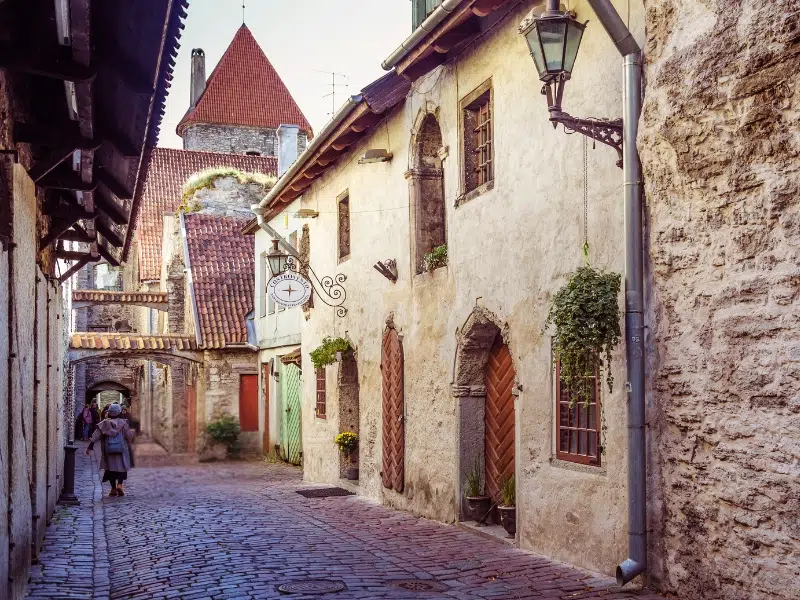
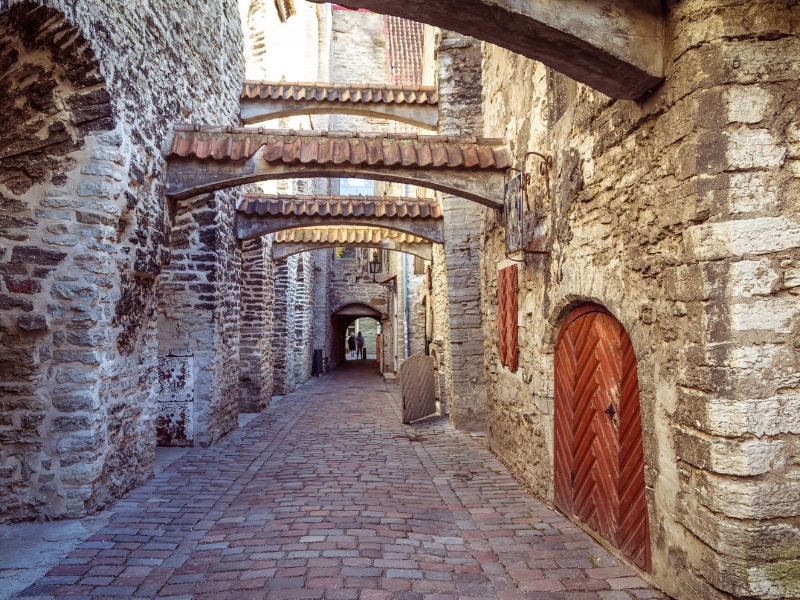
One of the most enchanting features of Saint Catherine Monastery is Saint Catherine’s Passage, a narrow, cobbled alleyway that runs alongside the monastery ruins. Flanked by medieval stone walls and archways, this passage is one of the most atmospheric locations in Tallinn’s Old Town.
Today, Saint Catherine’s Passage is home to a collection of artisan workshops, where skilled craftsmen practice traditional techniques such as glassblowing, pottery, leatherwork, and textile weaving. This blend of historical ruins and contemporary craftsmanship creates a unique ambiance, where visitors can witness centuries-old traditions being kept alive. The passage is particularly magical in the early morning or late evening, when soft light filters through the ancient stone, casting shadows that seem to whisper tales of the past.
Saint Catherine Monastery is part of Tallinn scavenger hunt and walking tour!
Embark on an unforgettable journey through the enchanting city of Tallinn with World City Trail. Our interactive walking tour combines the thrill of exploration with the rich history and culture of this beautiful city.
Key Features:
Interactive gameplay: Solve engaging puzzles and challenges as you explore the city.
Hidden gems: Uncover lesser-known spots.
Cultural insights: Learn about the city’s fascinating history.
Flexibility: Explore at your own pace and create your own itinerary.
Family friendly activity and a great way to explore the city!
Further reading on Wikipedia: Tallinn