
Perched on Sicily’s eastern coast, at the very foot of Europe’s most active volcano, lies Catania, a city inextricably linked to the majestic and formidable Mount Etna. This colossal stratovolcano, frequently draped in a plume of smoke, dominates Catania’s skyline and has profoundly shaped its landscape, history, architecture, and even the daily lives of its inhabitants. Far from being a distant landmark, Etna is a constant, living presence, both a benevolent provider of fertile soil and a potentially destructive force.
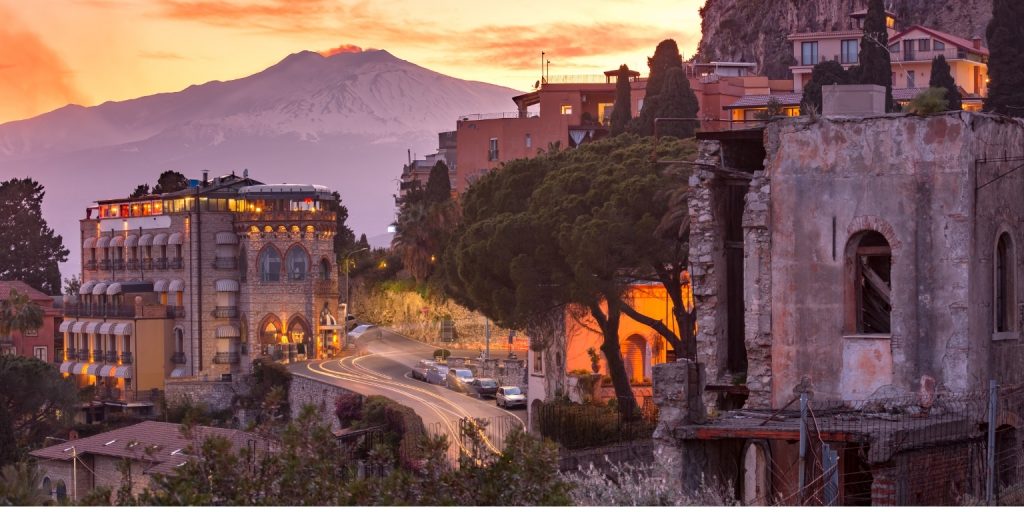
A Symbiotic Relationship: Proximity and Impact
Mount Etna stands approximately 30 kilometers (about 18 miles) northwest of Catania’s city center, making it a prominent feature visible from almost every corner of the urban landscape on a clear day. This close proximity has forged a unique and often challenging relationship between the city and the volcano.
Historically, Etna’s eruptions have directly impacted Catania on several occasions. The most devastating event was the 1669 eruption, considered the most violent in Etna’s recorded history. This catastrophic event saw massive lava flows descend the volcano’s flanks, engulfing numerous villages before reaching the city walls of Catania. While the walls initially held, a portion of the lava eventually breached them, flowing into the city and even reaching the Ionian Sea, altering Catania’s coastline forever.
Though remarkably few fatalities occurred within the city itself due to the slow-moving nature of the lava, vast areas of farmland and many surrounding towns were obliterated, and the city’s western part was submerged. This event dramatically reshaped Catania, leading to a significant rebuilding effort that defined much of its current Baroque architecture, often constructed using the very black volcanic stone that flowed from Etna.
Beyond direct lava flows, Catania frequently experiences ashfall during Etna’s more explosive phases. While often a nuisance, covering cars and streets in a fine black dust, these ash deposits contribute to the extraordinary fertility of the surrounding volcanic soil. This rich earth supports thriving agriculture, including vineyards producing Etna DOC wines, citrus groves, and pistachio farms, providing a vital economic backbone for the region and a natural counterpoint to the volcano’s destructive potential.
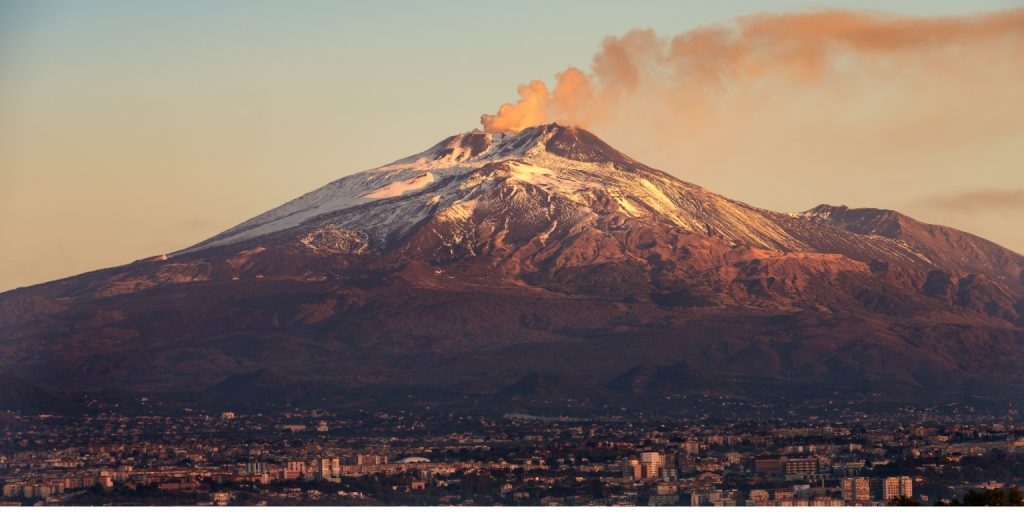
A UNESCO Heritage Site and Research Hub
Mount Etna was recognized as a UNESCO World Heritage Site in 2013, acknowledging its “exceptional level of volcanic activity” and its global scientific, cultural, and educational importance. It serves as a natural laboratory for volcanologists, geophysicists, and other Earth scientists, providing invaluable insights into ongoing geological processes. Its nearly continuous eruptive activity has been documented for at least 2,700 years, offering one of the world’s longest records of historical volcanism.
This scientific significance directly benefits Catania, as the city houses various research institutions and a highly specialized airport that must frequently contend with ash clouds but also serves as a hub for volcanic monitoring and research.
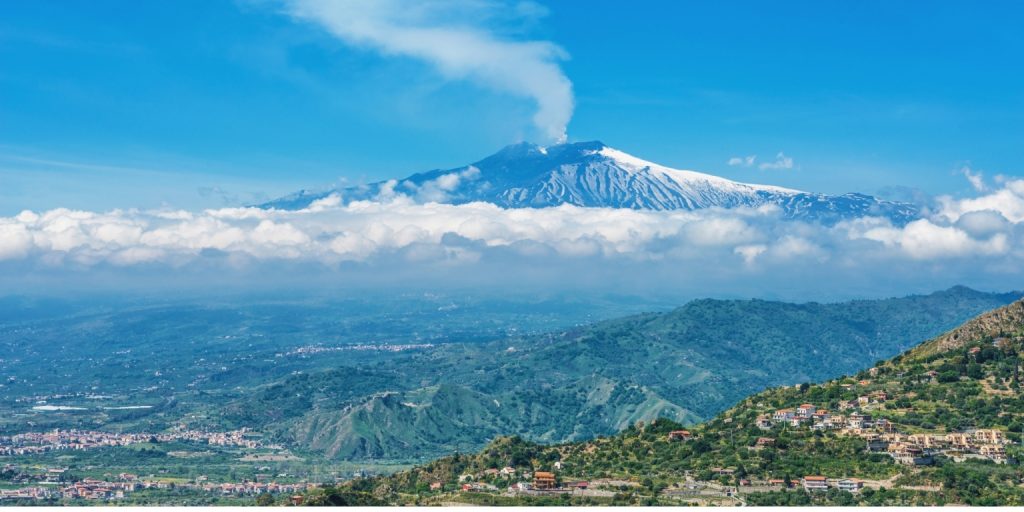
Tourism: Exploring the Lunar Landscape
For visitors to Catania, an excursion to Mount Etna is almost obligatory. The volcano is a major tourist draw, offering a diverse range of experiences from gentle hikes through fertile lower slopes to more adventurous treks towards the summit craters (often requiring guides due to changing volcanic activity and safety regulations).
From Catania, numerous tour operators offer half-day and full-day excursions. Visitors typically travel by bus or jeep to the Rifugio Sapienza on Etna’s southern slope (around 1,900 meters or 6,200 feet). From there, options include taking a cable car (Funivia dell’Etna) to higher altitudes (around 2,500 meters), followed by a 4×4 bus or guided trek to active secondary craters, offering a truly otherworldly, lunar landscape of black lava fields and volcanic rock formations. In winter, Etna even transforms into a ski resort, offering the unique experience of skiing on an active volcano.
The profound presence of Mount Etna shapes Catania’s identity, providing both a constant reminder of nature’s raw power and a source of incredible natural beauty and fertility. For centuries, the people of Catania have learned to coexist with this powerful giant, celebrating its contributions while respecting its unpredictable might, making their city a living testament to humanity’s resilience in the shadow of one of Earth’s most dynamic forces.