What is the Catania self-guided walking tour?
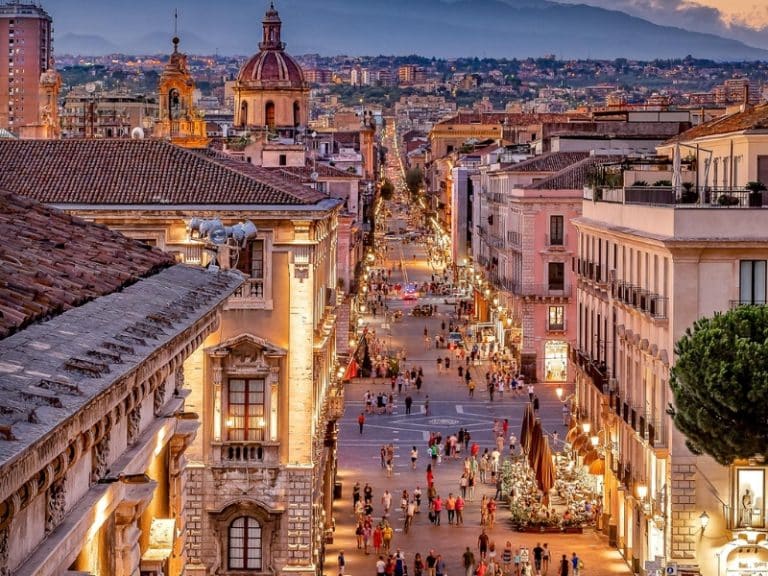
The Catania self-guided walking tour puts a storyteller in your pocket and leaves the pace to you: the World City Trail app guides you between landmarks and, at each of the 10 stops, recounts the history, the legends and the odd surprising fact. Budget around 2 hours for the full route; the 2.5 km of walking take up only about 34 minutes of that time. Many buildings on the way are of dark lava stone, and on a clear day Etna rises at the far end of Via Etnea.
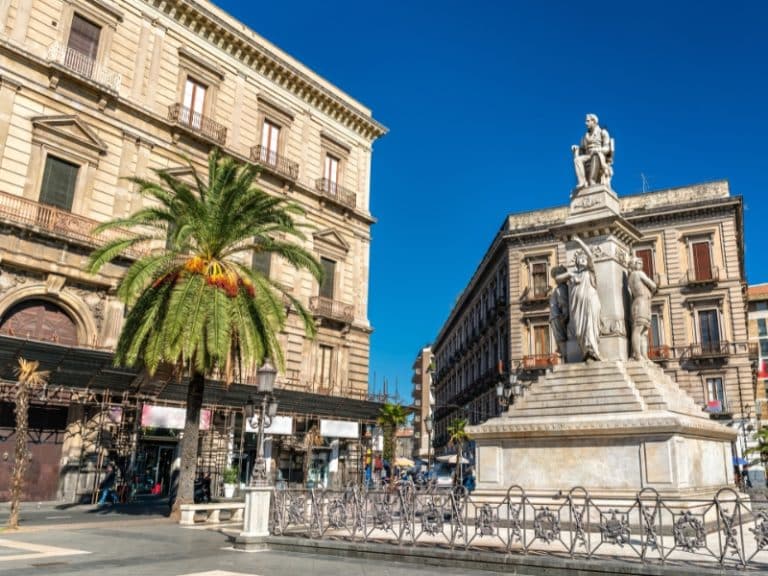
At Piazza Stesicoro the narration tells of the Greek poet Stesichorus, said to be buried in Catania, and of Bellini's monument with figures from his operas around the base. The bronze lamp posts of Piazza Università bring two local legends, Colapesce and the pious brothers who carried their parents to safety from an eruption of Etna. By the Elephant Fountain you hear why locals call the lava-stone animal 'u Liotru, after the sorcerer Heliodorus who is said to have ridden it, and at Castello Ursino how the lava of 1669 pushed the coastline back and left a seashore castle standing inland.
- Durationabout 2 hours
- Walkingabout 34 min · 2.5 km
- Stops10
- LanguagesEnglish, German, French, Italian, Spanish, Dutch
The walk, from first stop to last
Hear the story where it happened
As you reach each stop, the narration begins: who built the place and when, which legends grew up around it, and which small detail deserves a second look. If you would rather read, the same text appears on screen.
Let the map lead
Google Maps on your phone shows the next leg each time you set off again. Over 2.5 km that comes to about 34 minutes of walking, at whatever speed you like.
Break off, carry on later
A coffee, a museum or the rest tomorrow: the app keeps track of your progress, and the walk continues from that point.
Local tips on the way
Suggestions for places to eat and independent shops near the route are part of the narration. If the order does not suit you, change it in the app or begin at another stop.
See the route and attractions →
How it works
- Book online Choose the number of people. Your booking reference arrives by email straight away.
- Get the app Download the World City Trail app from the App Store or Google Play and enter your booking reference.
- Walk when you like Start whenever you are ready, walk at your own pace and pause any time. No guide, no fixed schedule.
Who the walk suits best
History lovers
Who built what, when and why: the narration fills in the background of every square, church and statue.
Couples and families
Legends keep younger listeners interested, the history holds the adults, and nobody hurries you along.
Second-time visitors
Streets you have walked before look different once you know what happened in them.
Good to know
- Bring a charged smartphone with mobile data; a power bank helps.
- No entry tickets needed: everything happens outside the buildings. Going inside is optional and paid separately.
- Family friendly; children must be accompanied by an adult.
- Not suitable for wheelchair users and difficult with strollers.
- Groups of up to 5 work best; larger groups split up, one ticket per person.
- Every purchase helps support stray cats and dogs in Greece.
Lava stone from the amphitheatre to the theatre
10 stops · about 34 min walking · start: Roman Amphitheatre · finish: Greek-Roman Theatre
The walk begins at the Roman Amphitheatre, partly visible in a pit on Piazza Stesicoro, and heads down Via Etnea, by way of Piazza Università, towards the Teatro Massimo Bellini. In Piazza Duomo three stops stand together, the Cathedral of Sant'Agata, the Elephant Fountain and the Porta Uzeda, whose arch frames the view down to the sea. From there you continue to Castello Ursino, and the walk closes at the Greek-Roman Theatre among the houses of Via Vittorio Emanuele II. You can start at another stop in the app, and everything is told from outside.
Open the route map ↗
1Roman AmphitheatreStart
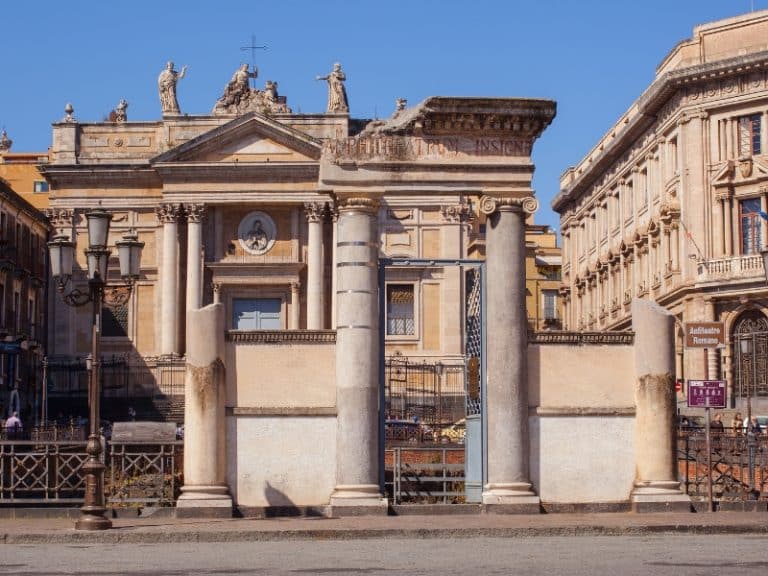
Only part of Catania's Roman amphitheatre can be seen today, in a pit below street level in Piazza Stesicoro. It dates from the 2nd century AD and was built largely of dark lava stone. Most of the arena still lies hidden beneath the surrounding streets and buildings.
2Piazza Stesicoro
This large square on Via Etnea is named after the ancient Greek poet Stesichorus, who according to tradition is buried in Catania. On one side stands the monument to Vincenzo Bellini by Giulio Monteverde, unveiled in 1882, with figures from his operas around the base.
3Via Etnea
Catania's main street runs straight for about 3 km from Piazza Duomo towards Mount Etna, which on clear days rises at its far end. Rebuilt after the earthquake of 1693, it is lined with Baroque churches and palaces in dark lava stone and pale limestone, such as the Basilica della Collegiata.
Read the full story →
4Piazza Università
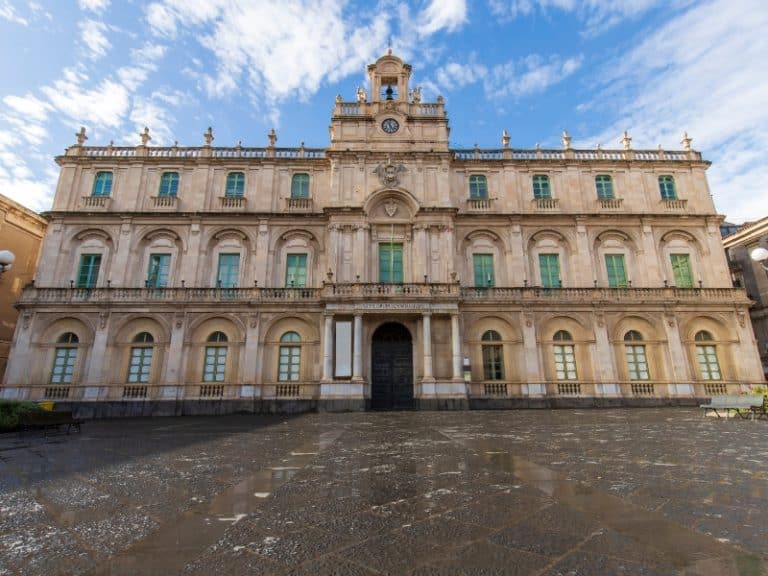
The square is named after the Palazzo dell'Università, seat of the University of Catania, founded in 1434 and the oldest university in Sicily. Its four bronze lamp posts tell local legends, among them Colapesce and the pious brothers who carried their parents to safety from an eruption of Etna.
5Teatro Massimo Bellini
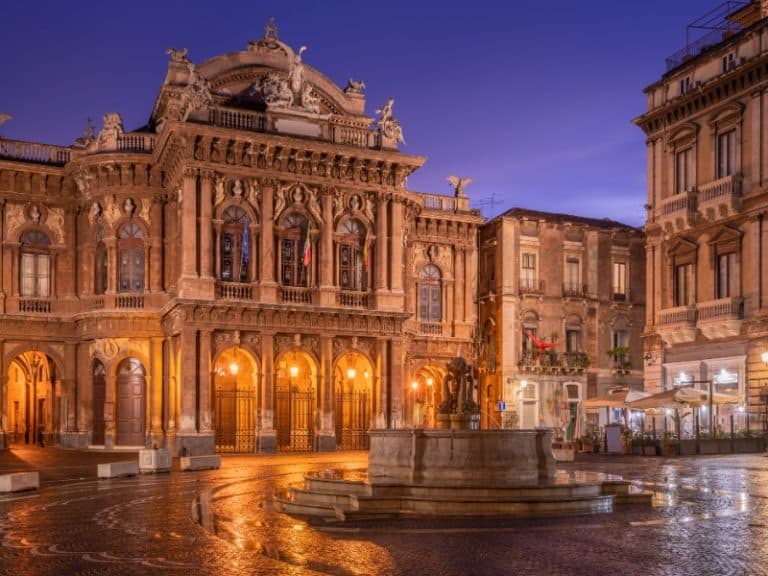
Catania's opera house opened in 1890 with Bellini's opera Norma and was designed by the architect Carlo Sada. It is named after Vincenzo Bellini, the composer born in Catania in 1801. Its richly decorated façade fills one side of Piazza Bellini.
Read the full story →
6Cathedral of Sant'Agata
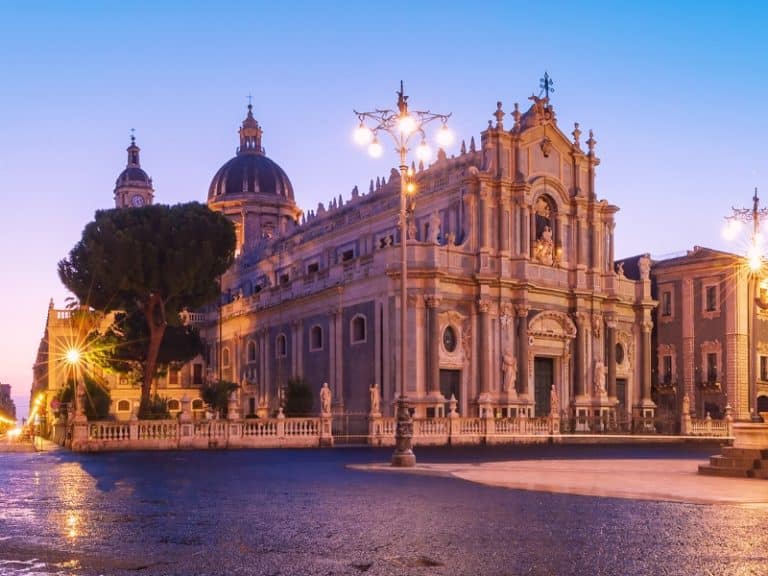
Catania's cathedral was founded by the Norman count Roger I at the end of the 11th century and largely rebuilt after the earthquake of 1693, with a Baroque façade by Giovanni Battista Vaccarini. It is dedicated to Saint Agatha, the city's patron, and holds the tomb of Vincenzo Bellini.
7Elephant Fountain
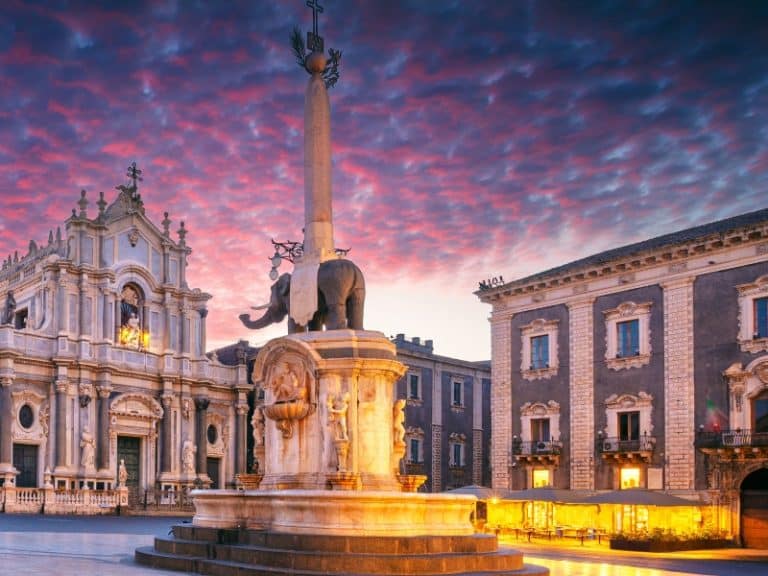
The symbol of Catania stands in Piazza Duomo: an ancient elephant carved from lava stone, carrying an Egyptian-style obelisk on its back. Giovanni Battista Vaccarini assembled the fountain in 1736. Locals call the elephant 'u Liotru, a name linked to the legend of Heliodorus, a sorcerer said to have ridden it.
Read the full story →
8Porta Uzeda
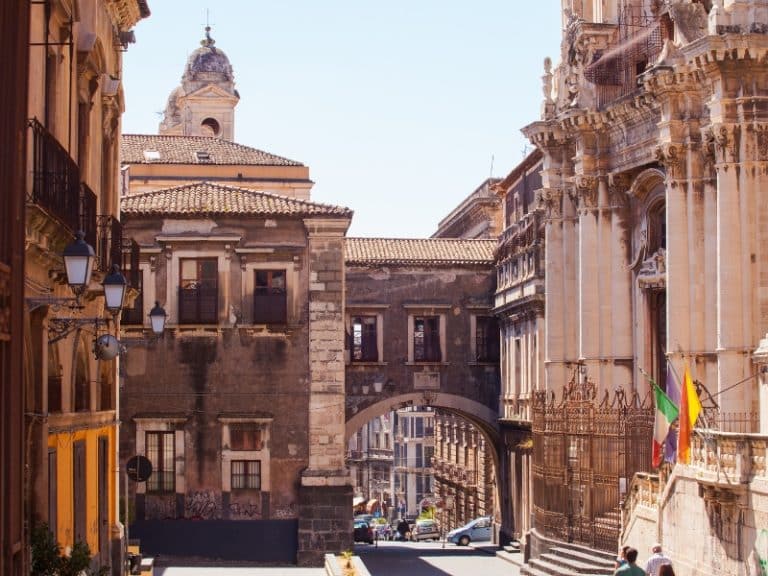
This Baroque gate on the south side of Piazza Duomo was built after the earthquake of 1693 to link the cathedral square with the harbour. It is named after the Duke of Uzeda, the Spanish viceroy of Sicily at the time. Through its arch you look down towards the sea.
Read the full story →
9Castello Ursino
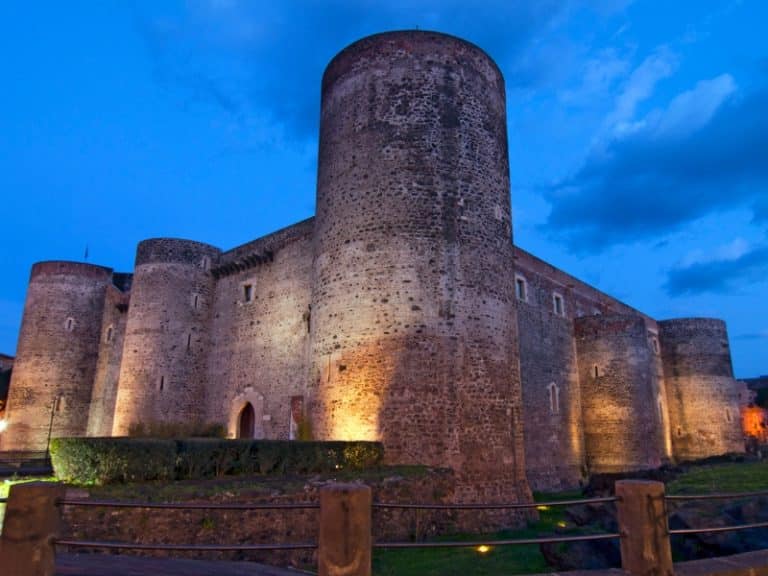
Emperor Frederick II had this square castle with round corner towers built in the 13th century, originally on the seashore. In 1669 lava from Etna flowed around it and pushed the coastline back, so the castle now stands inland. Today it houses the city's civic museum.
10Greek-Roman TheatreFinish
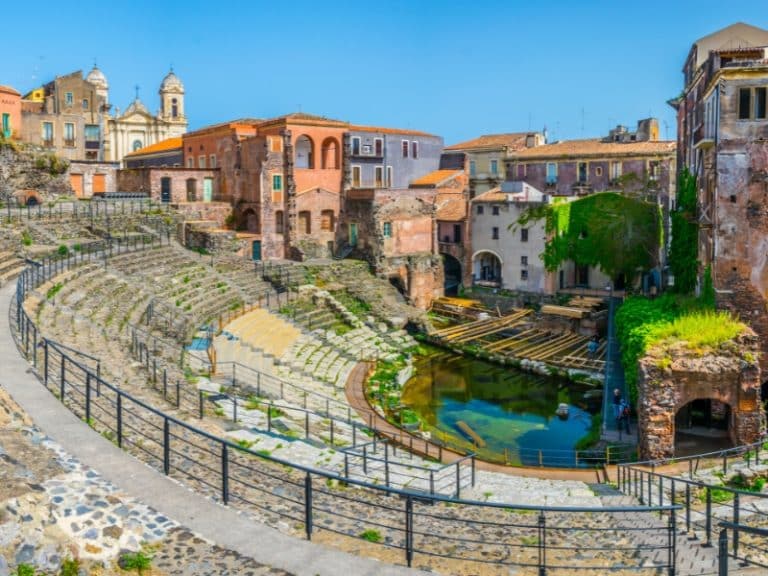
Tucked among the houses of Via Vittorio Emanuele II, this theatre was built by the Romans, probably on the site of an earlier Greek theatre. Its tiers of seats are made of dark lava stone, and next to it lies a smaller Odeon. Houses still stand on parts of the curve of the auditorium.
Read the full story →
Only logged in customers who have purchased this product may leave a review.



Reviews
There are no reviews yet.