
Catania Scavenger Hunt and Self-Guided Tour

Explore the city at your own pace with a self-guided experience.
Buy your ticket, download the app, and start instantly.

5 € - 11 €

1 ticket = 1 person

  • Buy 1 ticket
    11 €
  • Buy 2 tickets and save 36%
    11 €
    7 €
  • Buy 3 tickets and save 45%
    11 €
    6 €
  • Buy 4+ tickets and save 55%
    11 €
    5 €

Make a day of itInteractive guides by World City Trail, delivered with your tickets.

What is a city guide?

Your own guide to Catania on your phone: hand-picked places, each with why to go, what to order and a practical tip.

  • Tick places off
  • Your own notes
  • One tap to Maps
  • Open now, near me
  • Works offline
  • Print it or save as PDF
See the guides, a short video and all the details →
- +
Total:
Each:

See players in action on Instagram

On a cruise? See how to get from the ship to the start and how it fits your port day.Port day guide →

⭐⭐⭐⭐⭐ Loved by thousands of travelers and locals

  • No time limit – use your ticket whenever you want
  • Secure checkout - Instant confirmation

Included: your personal Trail Map with every city you finish, the kilometres you walk and your flag collection. See an example →

Everything you need for a flexible self-guided city experience

Explore the city at your own pace

✔ Discover hidden gems & highlights
✔ Enjoy a flexible self-guided experience
✔ Explore freely with no schedule
✔ Perfect for couples, students, companies, friends & families

How your city experience works

✔ Instant ticket purchase
✔ Easy access via the World City Trail app
✔ Quick setup with your booking details
✔ Start anytime and explore freely
✔ Pause and resume anytime

Why travelers choose this tour

✔ Instant access after purchase
✔ Optional AI voice narration — listen instead of read
✔ Discover top attractions & food spots
✔ Customize your route anytime

Catania in ten riddles, from the amphitheatre to the ancient theatre

The Catania scavenger hunt is a self-guided city game you play on your phone: you walk from landmark to landmark, solve a riddle at each one by looking closely at what is in front of you, and unlock the stories and legends behind it. Ten stops, 2.5 km and only about 34 minutes of actual walking separate the amphitheatre from the Greek-Roman Theatre; the rest of the roughly 2 hours goes on riddles and stories, and the clock only starts when you open the first one.

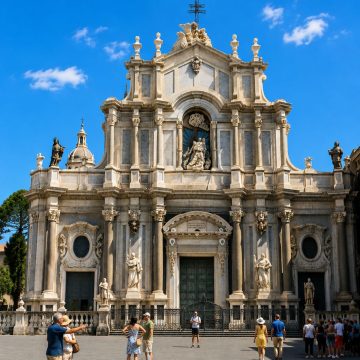
Highlights include the Roman Amphitheatre, Via Etnea with its view of the volcano, the Teatro Massimo Bellini, the Cathedral of Sant'Agata, the lava-stone Elephant Fountain and Castello Ursino. Catania's Baroque centre was rebuilt after the earthquake of 1693 in dark lava stone, so on foot you see how Etna has shaped the city from Roman times to today.

  • Durationabout 2 hours
  • Walkingabout 34 min · 2.5 km
  • Stops10
  • LanguagesEnglish, German, French, Italian, Spanish, Dutch

Lava stone, legends and an elephant to work out

Clues in black and white stone

Catania was rebuilt in dark lava and pale limestone, and the riddles make you read that contrast: an inscription on a Baroque façade, a detail on a bronze lamp post, the obelisk on the Elephant's back. You only need to look carefully and think; nobody checks whether you know your Sicilian history.

Sorcerers, saints and a composer

Each answer unlocks a story: Heliodorus, the sorcerer said to have ridden the lava elephant, Saint Agatha, the city's patron, and Vincenzo Bellini, born here in 1801 and buried in the cathedral. Turn on the audio narration and let it tell you about Colapesce while you stand under the lamp posts of Piazza Università.

Downhill along Via Etnea

Google Maps leads you over 2.5 km, about 34 minutes of walking, mostly down the long straight line of Via Etnea and then through the old streets around the cathedral and the castle. On a clear day, turn round on Via Etnea and you see Mount Etna rising at the far end.

A granita whenever you like

There is no timer, so stop for a granita, an espresso or something from a pastry shop on Via Etnea whenever you feel like it. Close the app and you carry on later, or tomorrow, from the very stop where you paused.

See the route and attractions →

How it works

  1. Book online Choose the number of players. Your booking reference arrives by email straight away.
  2. Get the app Download the World City Trail app from the App Store or Google Play and enter your booking reference.
  3. Play when you like Start whenever you are ready, walk at your own pace and pause any time. No guide, no fixed schedule.

Cruise passengers, Sicily holidaymakers and groups in Catania

A few hours ashore

In about 2 hours you see the Roman remains, the main street, the opera house, the cathedral and the castle, which fits neatly into a port call or a first afternoon before heading up Etna or over to Taormina. The riddles turn a busy centre into a series of clear stops.

Kids who love elephants and volcano tales

Children are drawn to the lava elephant with its obelisk, the legends cast in bronze on the lamp posts and a castle that once stood on the shore until lava pushed the sea away. Every team needs an adult, and the distance is short, though summer heat calls for breaks in the shade.

Teams, classes and friends travelling together

Teams of up to 5 players each follow the riddles on their own phones, so a company, a school group or a large family can start several teams from Piazza Stesicoro a few minutes apart. The route uses public streets and squares only, so the game tickets are all you book.

Good to know

  • Bring a charged smartphone with mobile data; a power bank helps.
  • No entry tickets needed: everything happens outside the buildings. Going inside is optional and paid separately.
  • Family friendly; children must be accompanied by an adult.
  • Not suitable for wheelchair users and difficult with strollers.
  • Teams of up to 5 work best; bigger groups split into several teams, one ticket per player.
  • Every purchase helps support stray cats and dogs in Greece.
The route: Piazza Stesicoro, Via Etnea, Piazza Duomo and Castello Ursino, ending at the ancient theatre

10 stops · about 34 min walking · start: Roman Amphitheatre · finish: Greek-Roman Theatre

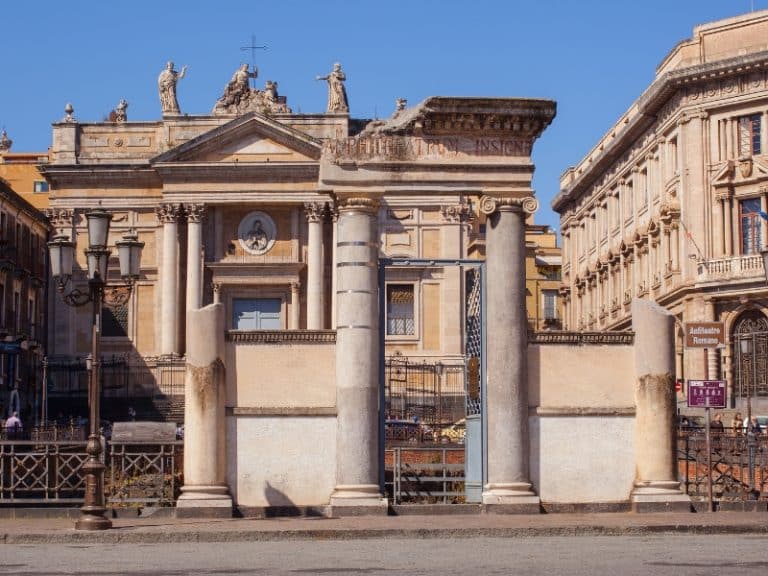
The hunt starts at the Roman Amphitheatre on Piazza Stesicoro and follows Via Etnea down to Piazza Università, with a detour to the Teatro Massimo Bellini. In Piazza Duomo you find the Cathedral of Sant'Agata and the Elephant Fountain, then pass through Porta Uzeda and head to Castello Ursino. The finish is at the Greek-Roman Theatre on Via Vittorio Emanuele II. Because every clue is read from the street, the hunt never sends you through a turnstile, not even at the castle or the ancient theatre, and if you are staying near Piazza Duomo you can tell the app to begin at the Elephant and rearrange the remaining stops.

Open the route map ↗

  1. Roman Amphitheatre

    1Roman AmphitheatreStart

    Only part of Catania's Roman amphitheatre can be seen today, in a pit below street level in Piazza Stesicoro. It dates from the 2nd century AD and was built largely of dark lava stone. Most of the arena still lies hidden beneath the surrounding streets and buildings.

  2. Piazza Stesicoro

    2Piazza Stesicoro

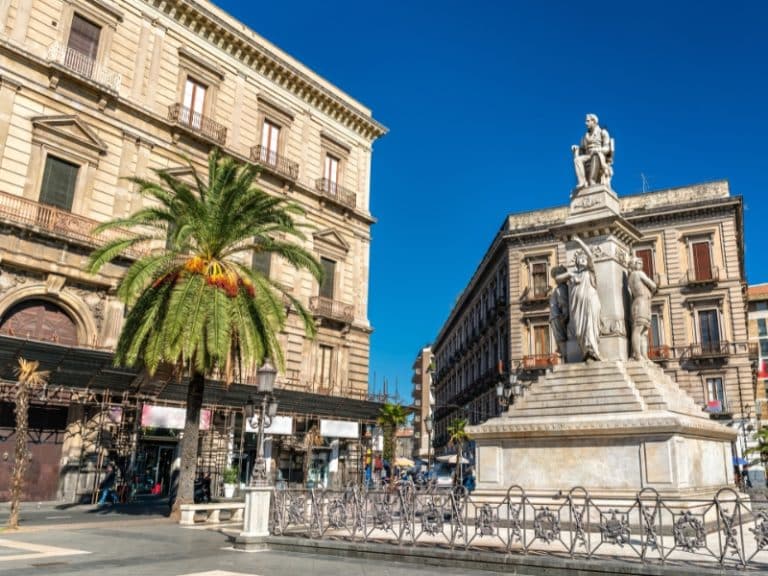
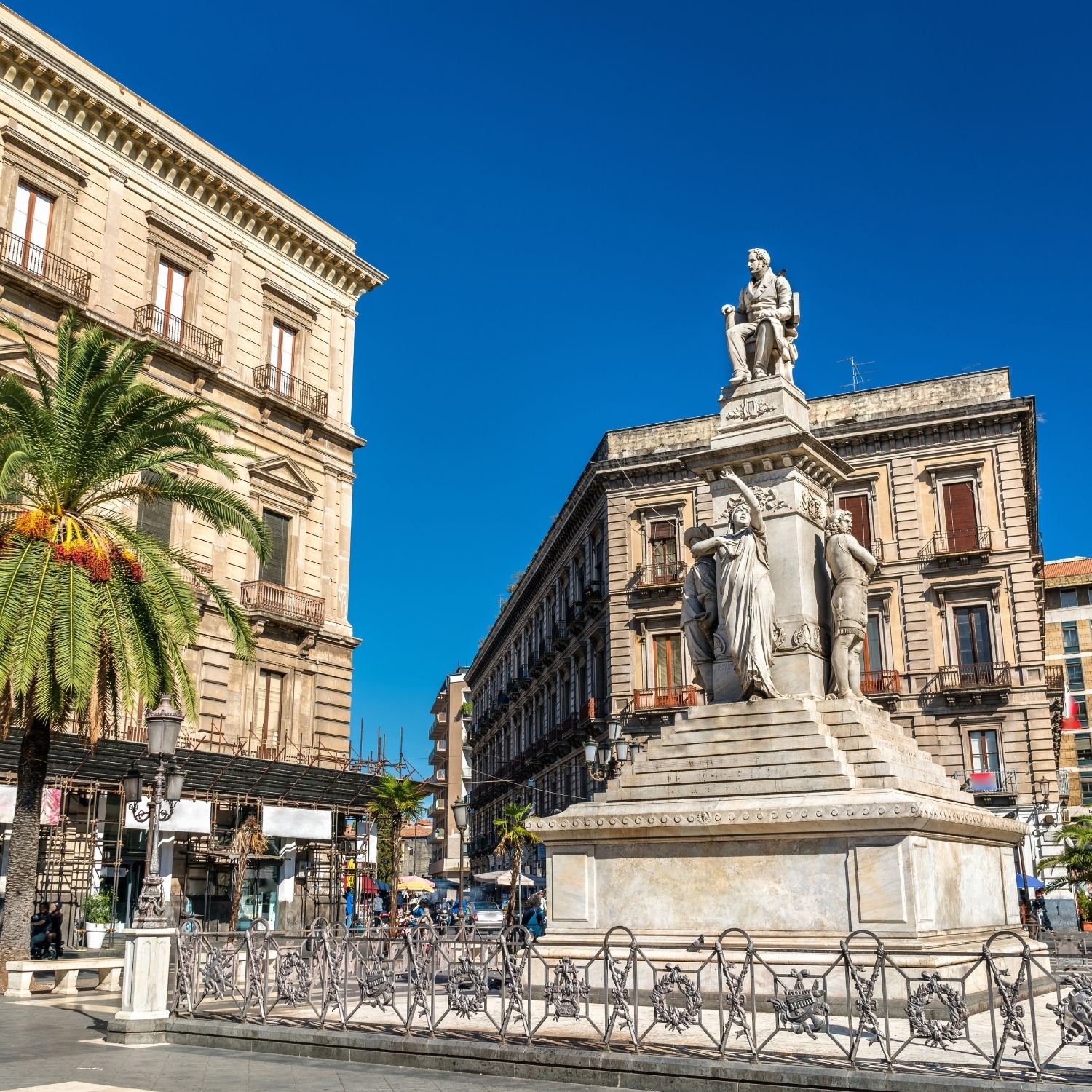
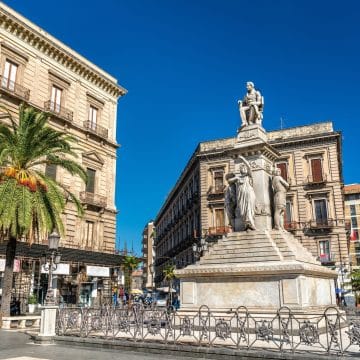
    This large square on Via Etnea is named after the ancient Greek poet Stesichorus, who according to tradition is buried in Catania. On one side stands the monument to Vincenzo Bellini by Giulio Monteverde, unveiled in 1882, with figures from his operas around the base.

  3. Via Etnea

    3Via Etnea

    Catania's main street runs straight for about 3 km from Piazza Duomo towards Mount Etna, which on clear days rises at its far end. Rebuilt after the earthquake of 1693, it is lined with Baroque churches and palaces in dark lava stone and pale limestone, such as the Basilica della Collegiata.

    Read the full story →

  4. Piazza Università

    4Piazza Università

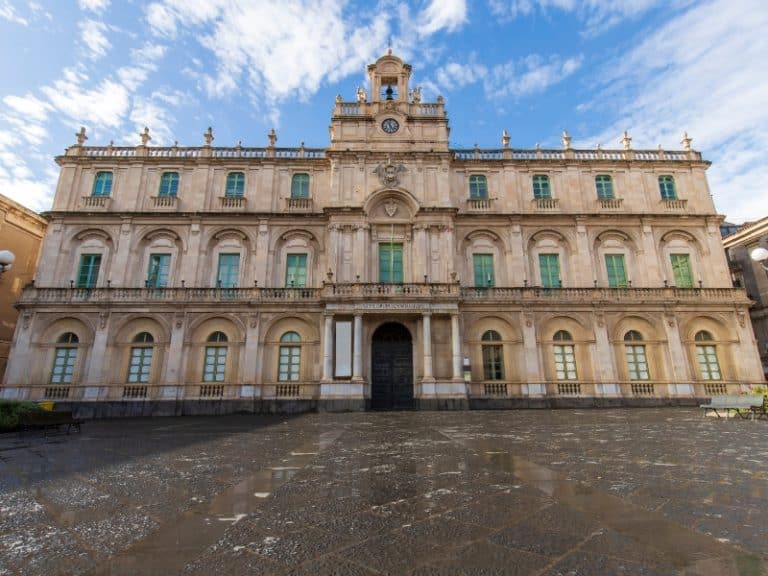
    The square is named after the Palazzo dell'Università, seat of the University of Catania, founded in 1434 and the oldest university in Sicily. Its four bronze lamp posts tell local legends, among them Colapesce and the pious brothers who carried their parents to safety from an eruption of Etna.

  5. Teatro Massimo Bellini

    5Teatro Massimo Bellini

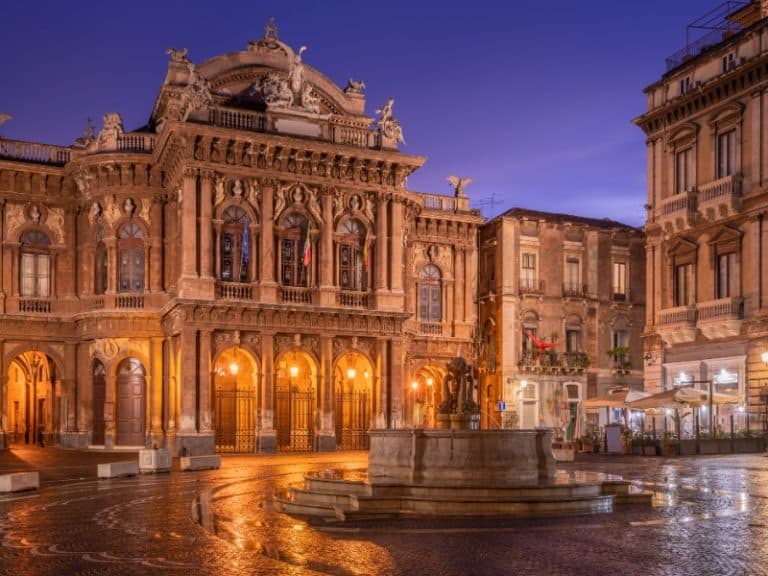
    Catania's opera house opened in 1890 with Bellini's opera Norma and was designed by the architect Carlo Sada. It is named after Vincenzo Bellini, the composer born in Catania in 1801. Its richly decorated façade fills one side of Piazza Bellini.

    Read the full story →

  6. Cathedral of Sant'Agata

    6Cathedral of Sant'Agata

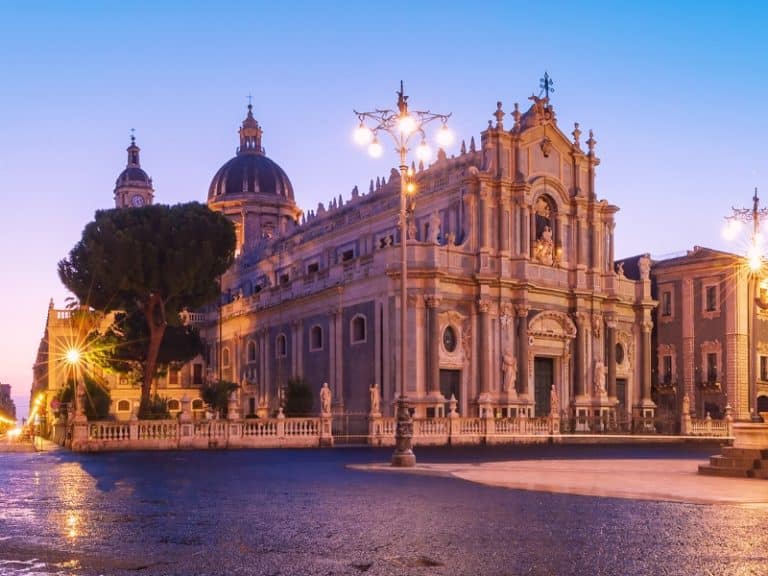
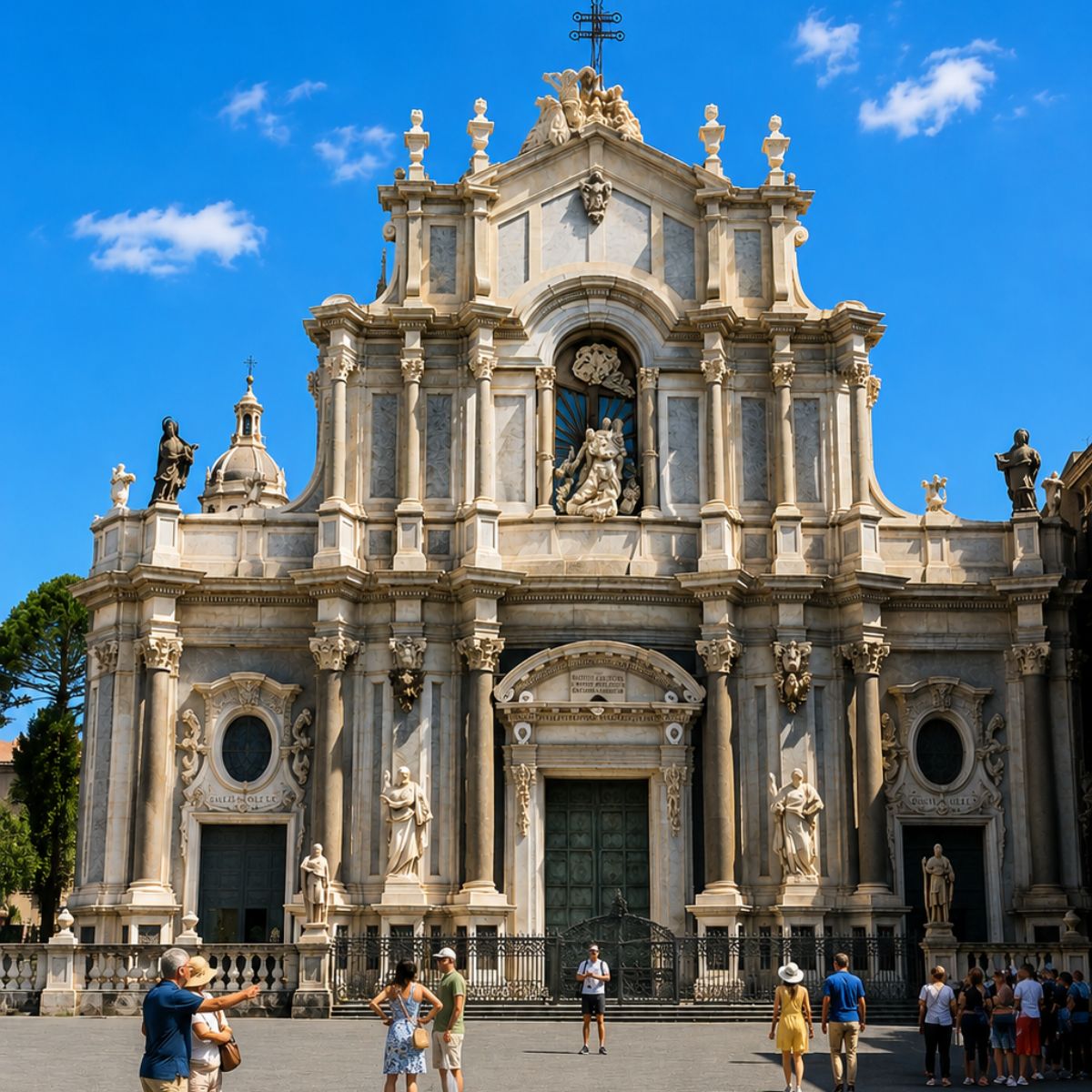
    Catania's cathedral was founded by the Norman count Roger I at the end of the 11th century and largely rebuilt after the earthquake of 1693, with a Baroque façade by Giovanni Battista Vaccarini. It is dedicated to Saint Agatha, the city's patron, and holds the tomb of Vincenzo Bellini.

  7. Elephant Fountain

    7Elephant Fountain

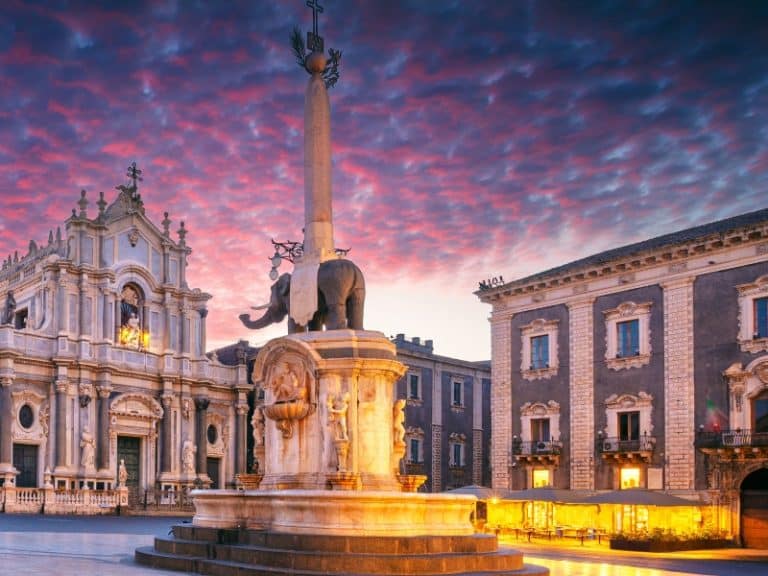
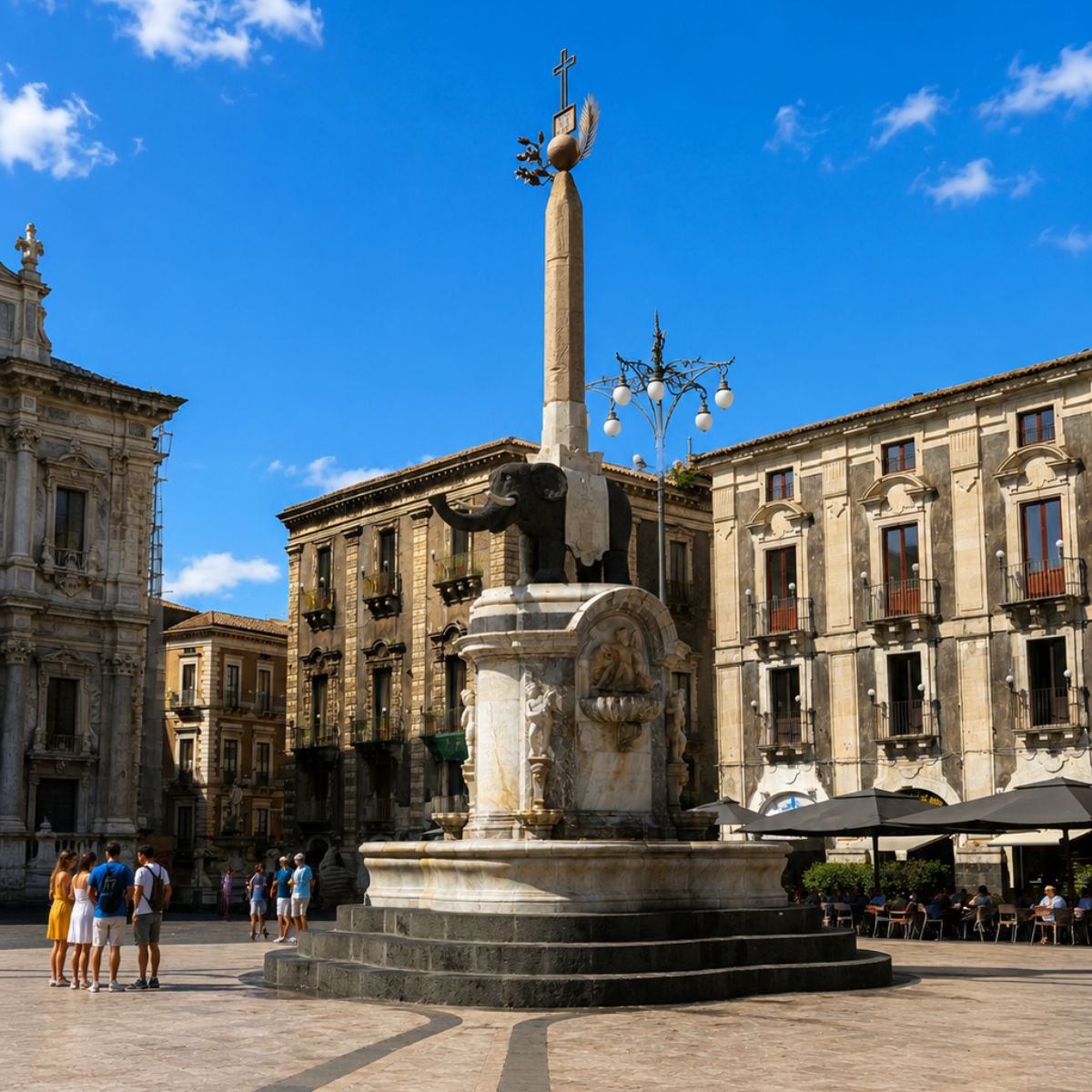
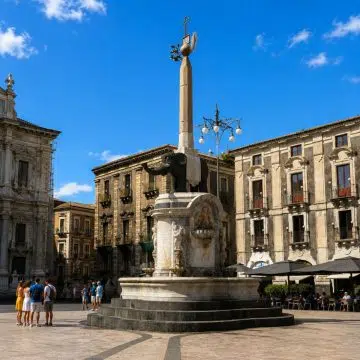
    The symbol of Catania stands in Piazza Duomo: an ancient elephant carved from lava stone, carrying an Egyptian-style obelisk on its back. Giovanni Battista Vaccarini assembled the fountain in 1736. Locals call the elephant 'u Liotru, a name linked to the legend of Heliodorus, a sorcerer said to have ridden it.

    Read the full story →

  8. Porta Uzeda

    8Porta Uzeda

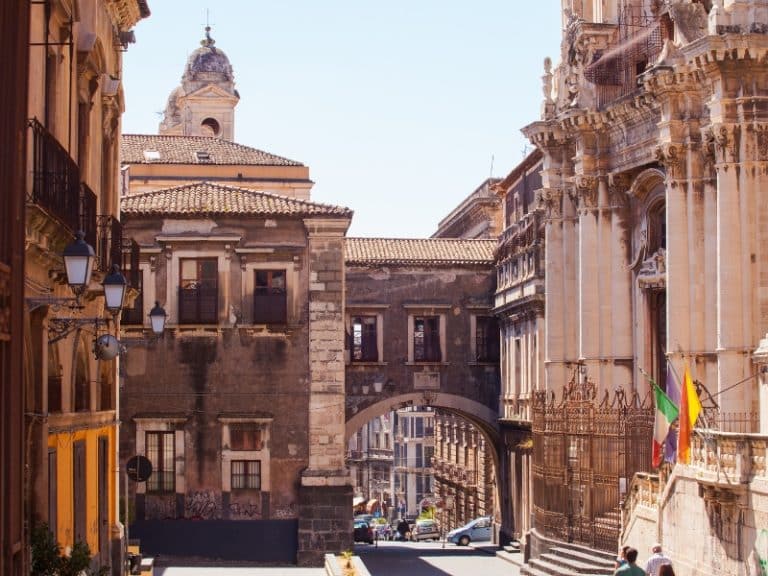
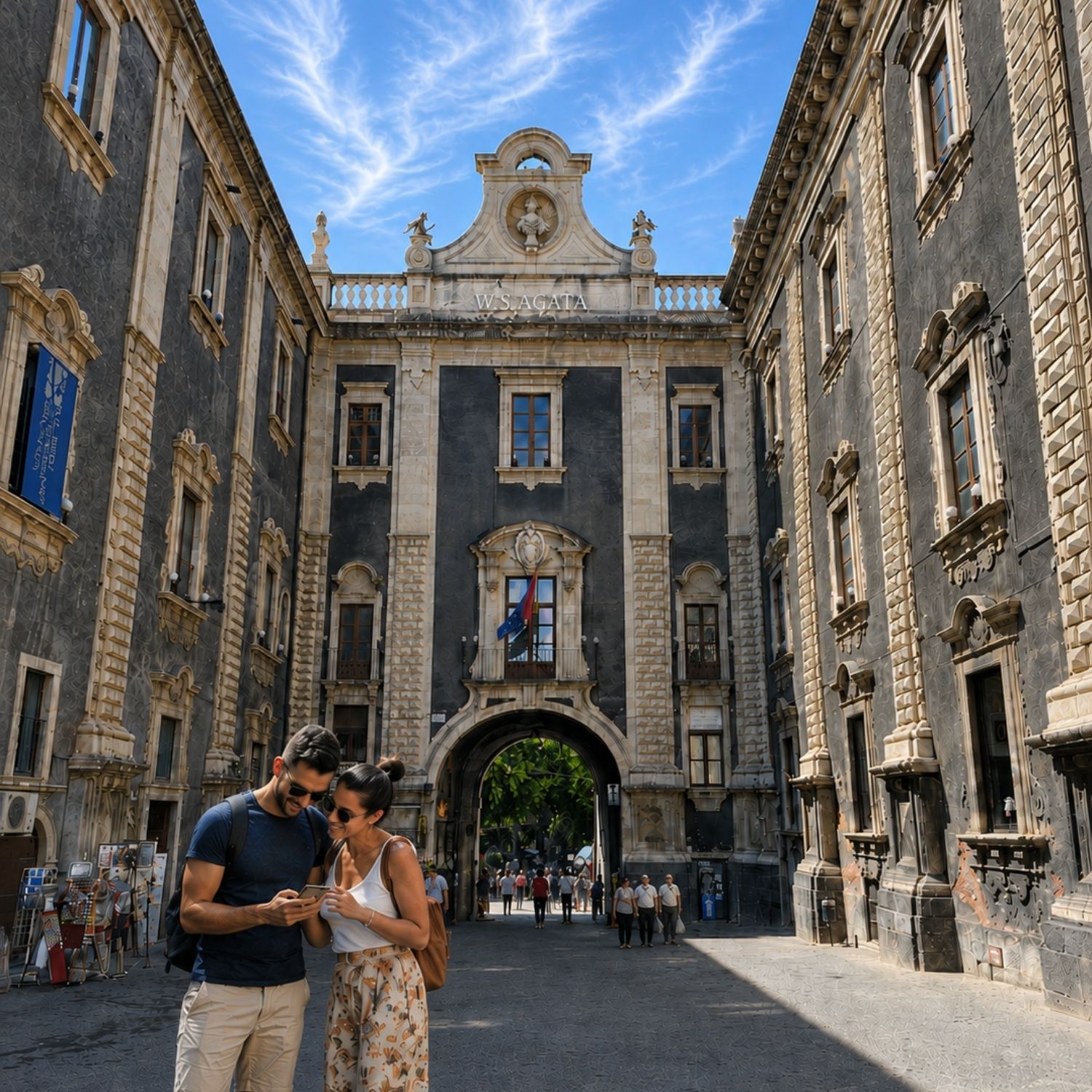
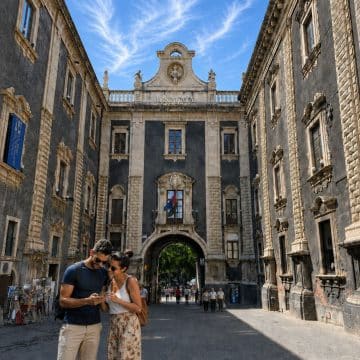
    This Baroque gate on the south side of Piazza Duomo was built after the earthquake of 1693 to link the cathedral square with the harbour. It is named after the Duke of Uzeda, the Spanish viceroy of Sicily at the time. Through its arch you look down towards the sea.

    Read the full story →

  9. Castello Ursino

    9Castello Ursino

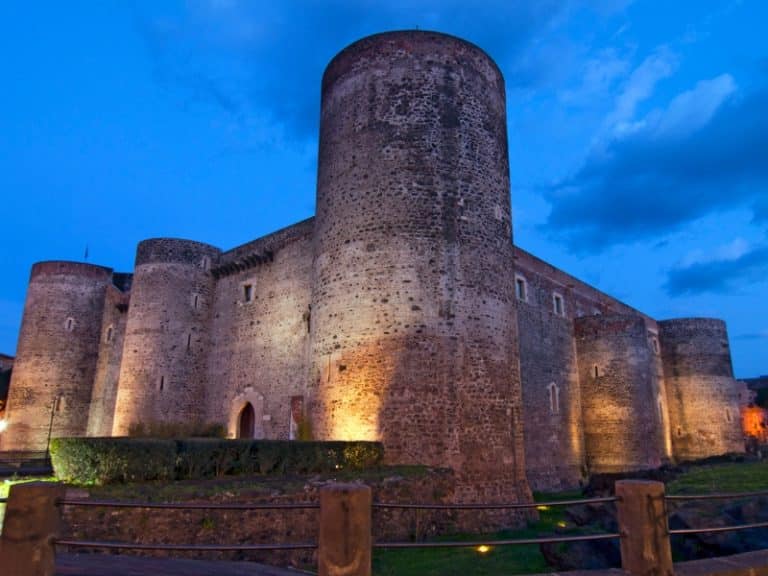
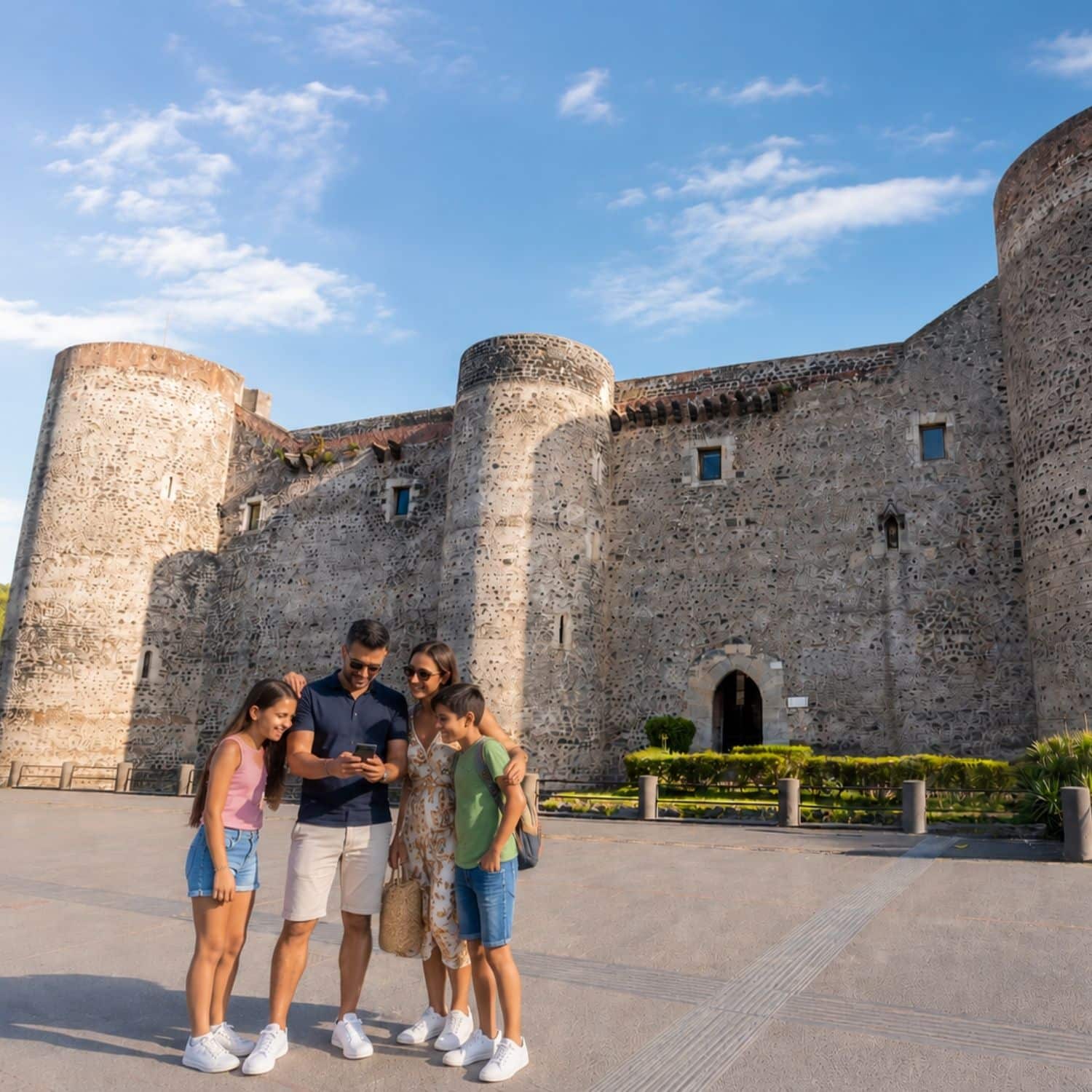
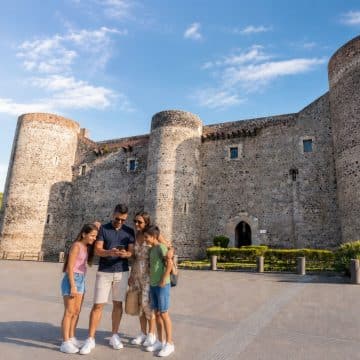
    Emperor Frederick II had this square castle with round corner towers built in the 13th century, originally on the seashore. In 1669 lava from Etna flowed around it and pushed the coastline back, so the castle now stands inland. Today it houses the city's civic museum.

  10. Greek-Roman Theatre

    10Greek-Roman TheatreFinish

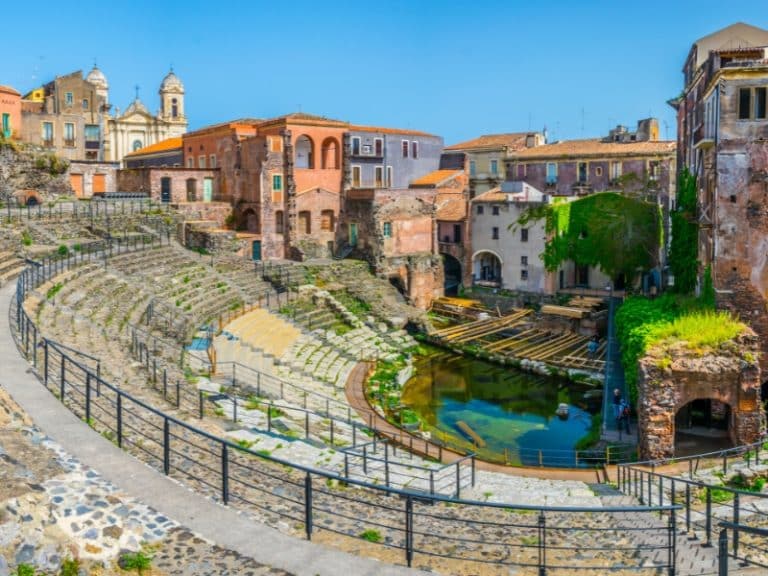
    Tucked among the houses of Via Vittorio Emanuele II, this theatre was built by the Romans, probably on the site of an earlier Greek theatre. Its tiers of seats are made of dark lava stone, and next to it lies a smaller Odeon. Houses still stand on parts of the curve of the auditorium.

    Read the full story →

Reviews

There are no reviews yet.

Only logged in customers who have purchased this product may leave a review.

Frequently asked questions

From Piazza Stesicoro to the ancient theatre, how long does the Catania game take?

Around 2 hours is right, of which only about 34 minutes is walking: the 2.5 km and 10 stops go by quickly, and the rest is spent solving riddles, listening to stories and finding shade or a coffee. If the midday sun gets too strong, pause the game and pick it up again in the cooler evening.

Do we start by the amphitheatre and finish at the Greek-Roman Theatre?

That is the route as planned: it opens beside the sunken Roman amphitheatre on Piazza Stesicoro and closes at the Greek-Roman Theatre among the houses of Via Vittorio Emanuele II. If your hotel is closer to Piazza Duomo, start at the Elephant Fountain in the app and pick the order of the rest yourself.

Will someone meet us on Piazza Stesicoro, or is there a set departure?

Nobody meets you and nothing departs, since the game has no guide and no timetable. You receive a booking reference by email, unlock the game with it in the World City Trail app and set off whenever you want, which helps when you would rather avoid the midday heat. Everyone in the team needs a ticket, and each phone shows the same riddles.

Is admission to Castello Ursino or the ancient theatre included?

The game needs no admission anywhere, because each riddle is solved from the street or the square. Castello Ursino, which houses the civic museum, and the Greek-Roman Theatre charge their own entry if you want to go in, and the inside of the cathedral or the opera house is a separate visit as well.

Will children enjoy the riddles in Catania?

Most do, with an adult in the team: the lava elephant, 'u Liotru, and its sorcerer, the bronze lamp posts with Colapesce and the brothers who saved their parents from Etna, a Roman arena sunk below the street and a castle that the lava cut off from the sea. Wheelchairs cannot manage this route, and a buggy rattles over the black basalt slabs of the old streets.

Can we read the riddles about the Elephant and Bellini in Italian or German?

Yes, both: the Catania game runs in six languages, English, German, French, Italian, Spanish and Dutch, and every player sets their own in the World City Trail app before reading the first riddle at the amphitheatre.

Can we use the hunt as a team event in Catania?

Yes: buy one ticket per participant, form teams of up to five and send them off from Piazza Stesicoro at intervals, then regroup at the Greek-Roman Theatre or back on Piazza Duomo. There is nothing to hire, and the teams can start whenever suits the group.

Sun, lava paving, long Via Etnea: what do we pack for Catania?

Water, a hat and sun cream from spring to autumn, comfortable shoes for the lava-stone paving and, for each team, a charged phone with mobile data. A power bank is a sensible extra.

Catania's game begins on Piazza Stesicoro

Each player has their own ticket, bought online; keep the booking reference that arrives by email. Then walk to Piazza Stesicoro, look down into the Roman amphitheatre and open the app to begin.

Book your tickets →
Shopping Basket
Scroll to Top