
Table of Contents
The Roman Amphitheater of Catania, a majestic ruin nestled within the city’s urban fabric, is far more than a collection of weathered stones. It’s a tangible link to a bygone era, a testament to the grandeur of Roman civilization, and a stage where the echoes of ancient spectacles still resonate. This amphitheater, not merely a historical relic, is a living symbol of Catania, a space where the whispers of gladiatorial combat blend with the contemporary hum of city life.
A Monument Forged in Volcanic Shadow
The Roman Amphitheater of Catania’s story is deeply intertwined with the city’s Roman past, a period of prosperity and expansion. Its origins, tied to the desire to provide entertainment and civic spectacle for the growing Roman population, illustrate the enduring connection between urban development and cultural expression. Over time, the amphitheater endured earthquakes, volcanic eruptions, and urban encroachment, becoming a poignant reminder of the city’s tumultuous history and its resilience.
The amphitheater’s enduring presence, particularly its survival despite the destructive forces of nature and time, a testament to the enduring strength of Roman engineering and the city’s commitment to preserving its historical legacy, solidified its position as a central cultural and archaeological landmark. Its design, a blend of Roman engineering prowess and volcanic stone, became a symbol of Catania’s ability to integrate its ancient past into its modern urban landscape. The Roman Amphitheater of Catania is a testament to the way that ancient structures can become powerful symbols of a city’s enduring identity.
Stone Arches and Ancient Spectacles
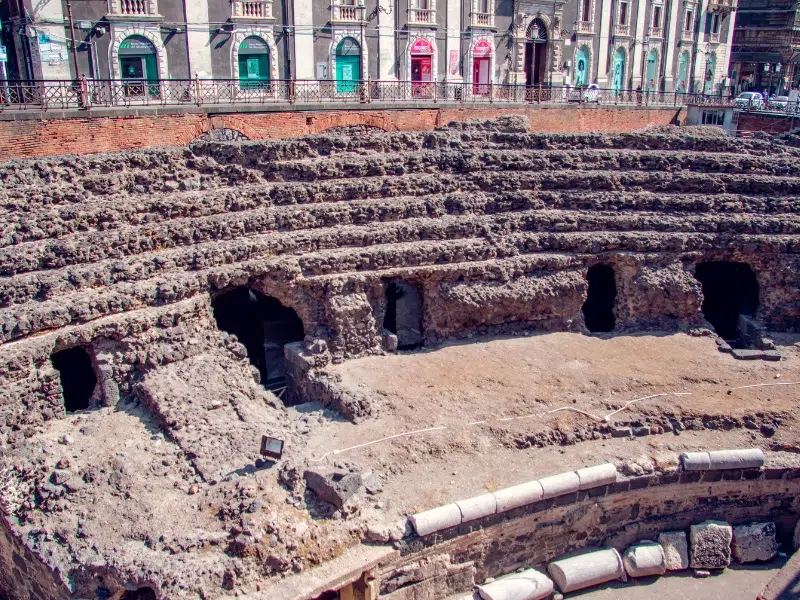
The Roman Amphitheater of Catania’s design is characterized by its massive stone arches, its elliptical arena, and its subterranean passages, creating a setting that reflects both its architectural grandeur and its historical function. The stone arches, with their weathered surfaces and imposing scale, provide a glimpse into the engineering techniques of the Roman era. The elliptical arena, with its central stage and surrounding seating, evokes the atmosphere of ancient spectacles. The subterranean passages, with their dark corridors and hidden chambers, hint at the behind-the-scenes activities that once took place within the amphitheater.
The use of local volcanic stone, a durable and readily available material, serves as a reminder of the city’s connection to its natural environment. The integration of modern archaeological preservation techniques, such as protective barriers and interpretive signage, reflects the city’s commitment to safeguarding its historical heritage. The architectural elements are designed to preserve the historical integrity of the amphitheater while allowing for its continued appreciation as a public space and tourist attraction.

Unveiling the Layers of History and Human Endeavor
The Roman Amphitheater of Catania is more than just a historical ruin; it’s a cultural institution that embodies the complex relationship between Roman civilization, urban development, and human drama. It offers insights into the social and cultural life of ancient Catania, its role as a center of Roman entertainment, and its ongoing evolution as a modern Sicilian city.
A visit to the Roman Amphitheater of Catania provides a chance to experience the tangible remnants of Roman architecture, to appreciate the scale and grandeur of ancient engineering, and to imagine the spectacles that once took place within its walls. It’s a place where the past and present intersect, where the echoes of gladiatorial combat blend with the contemporary sounds of urban life.
Furthermore, the Roman Amphitheater of Catania’s historical and cultural significance lies in its ability to connect the city’s ancient roots with its contemporary identity. It’s a testament to the enduring power of historical structures to shape urban landscapes and to provide a sense of continuity through time. This makes the Roman Amphitheater of Catania a compelling destination for anyone seeking to understand the complex relationship between Roman civilization, urban development, and human history in Catania.
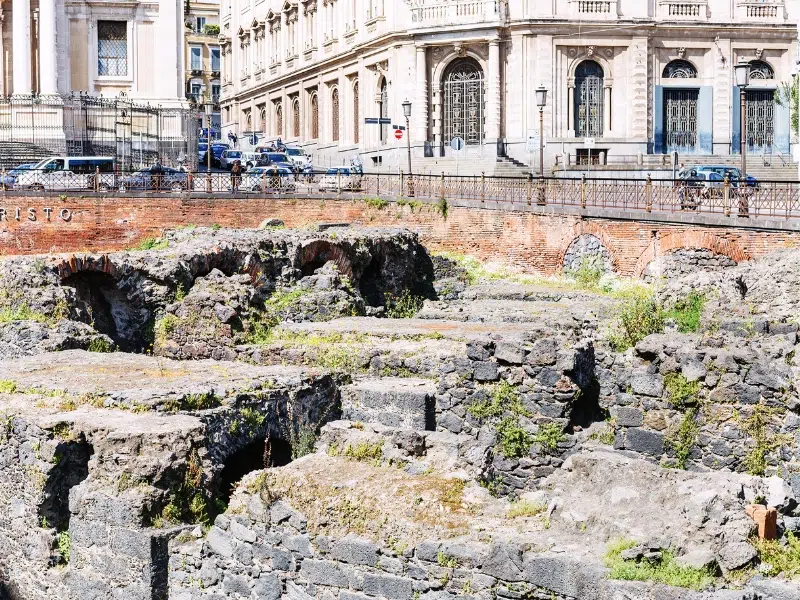
Roman Amphitheater is part of Catania scavenger hunt and walking tour!
Embark on an unforgettable journey through the enchanting city of Catania with World City Trail. Our interactive walking tour combines the thrill of exploration with the rich history and culture of this beautiful city.
Key Features:
Interactive gameplay: Solve engaging puzzles and challenges as you explore the city.
Hidden gems: Uncover lesser-known spots.
Cultural insights: Learn about the city’s fascinating history.
Flexibility: Explore at your own pace and create your own itinerary.
Family friendly activity and a great way to explore the city!