
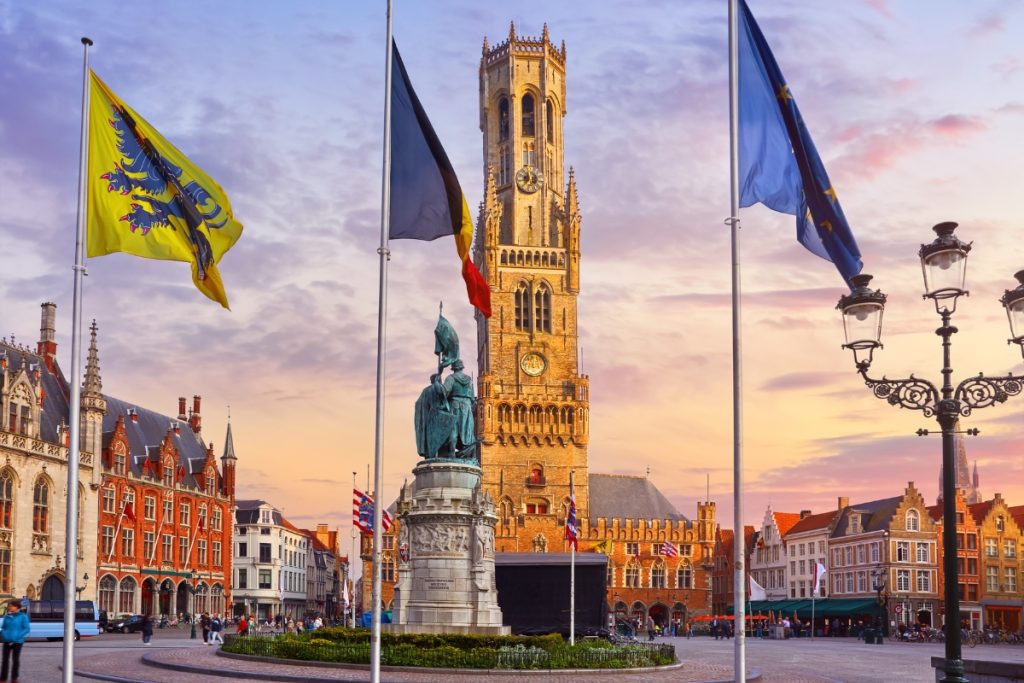
Bruges packs almost all of its highlights into a compact, walkable medieval centre that’s circled by canals and easily covered on foot in a day or two. The Markt and its Belfry, the Burg square, the canal quays, and the Church of Our Lady all sit within a few minutes’ walk of one another, which is what makes the city so rewarding to explore slowly.
Table of Contents
Below are the 15 things most worth your time in Bruges, with practical detail on what each costs, how long to budget, and when to go.
The Markt and the Belfry (Belfort)
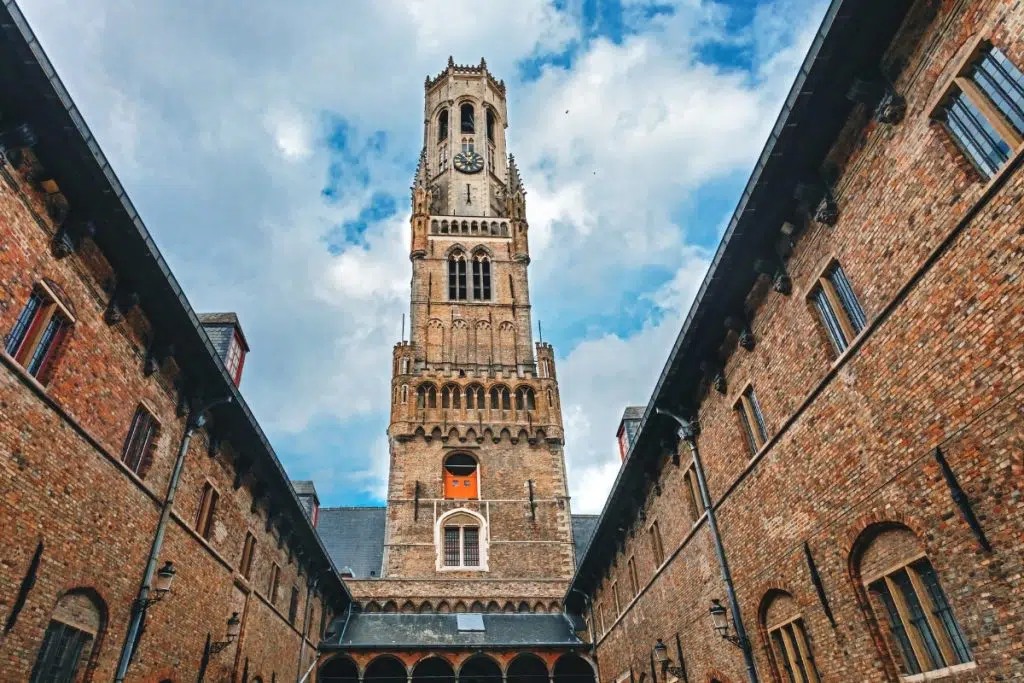
Start in the Markt, Bruges’ grand central square, dominated by the 83-metre Belfry. Climbing the 366 steps to the top is the city’s classic view — rooftops, canals, and on a clear day the countryside stretching toward the sea. The narrow spiral staircase passes a medieval treasury room and the carillon of 47 bells on the way up.
- Cost: Around €15 for adults, €13 for students and children over 7, free under 7. Verify before publishing.
- Time needed: 45–60 minutes including the climb
- Tip: 366 steps, no lift, narrow and steep — not ideal for those with mobility issues. Book a time slot online in peak season, as it sells out.
Burg Square and the City Hall
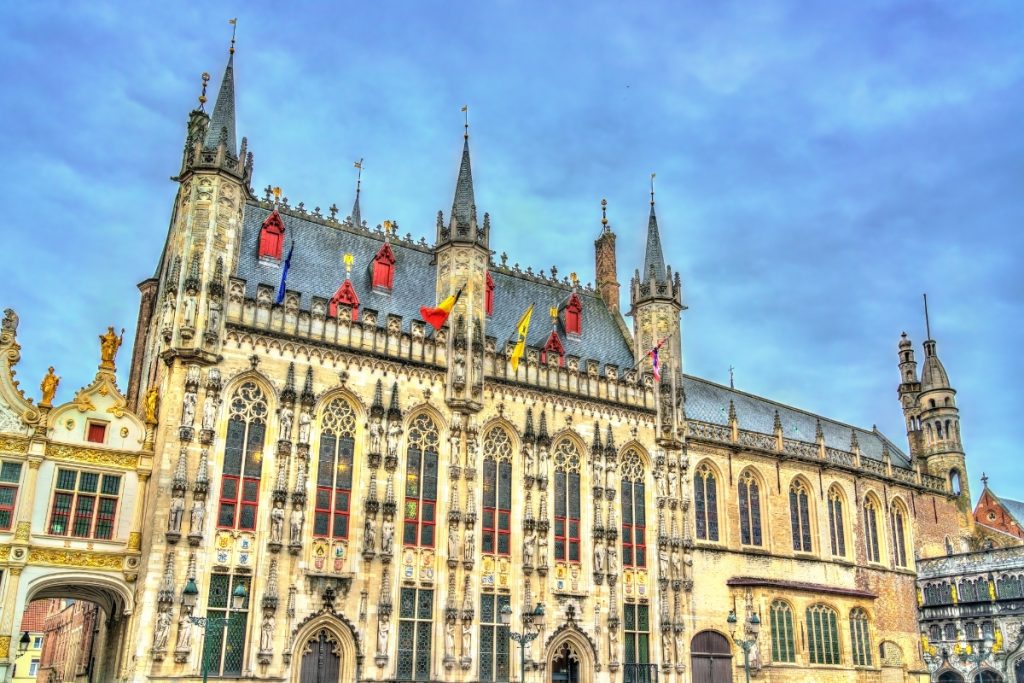
A short walk from the Markt, Burg Square is the historic and administrative heart of Bruges, framed by centuries of architecture in one small space. The Gothic City Hall (Stadhuis), one of the oldest in the Low Countries, has a richly decorated Gothic Hall upstairs worth stepping into.
- Cost: Free to wander the square; City Hall interior has a small admission fee. Verify before publishing.
- Time needed: 30–45 minutes
- Tip: Come early to photograph the square before the day-trip crowds arrive.
Explore Bruges on a Self-Guided Scavenger Hunt
If you’d rather discover the city by playing than by following a fixed tour, World City Trail’s Bruges scavenger hunt turns the medieval centre into an interactive game you do at your own pace. You solve location-based clues on your phone as you walk between the Markt, Burg Square, and the canals, picking up the history of each stop as you go. It’s a flexible option for couples, families, or groups who want structure without a schedule or a guide waiting on them.
- Cost: Budget-friendly; one purchase covers a group
- Time needed: Around 2 hours, but there’s no time limit — pause and resume whenever
- Tip: A good way to see the highlights in order if it’s your first visit and you don’t want to plan a route yourself.
Take a Canal Boat Tour
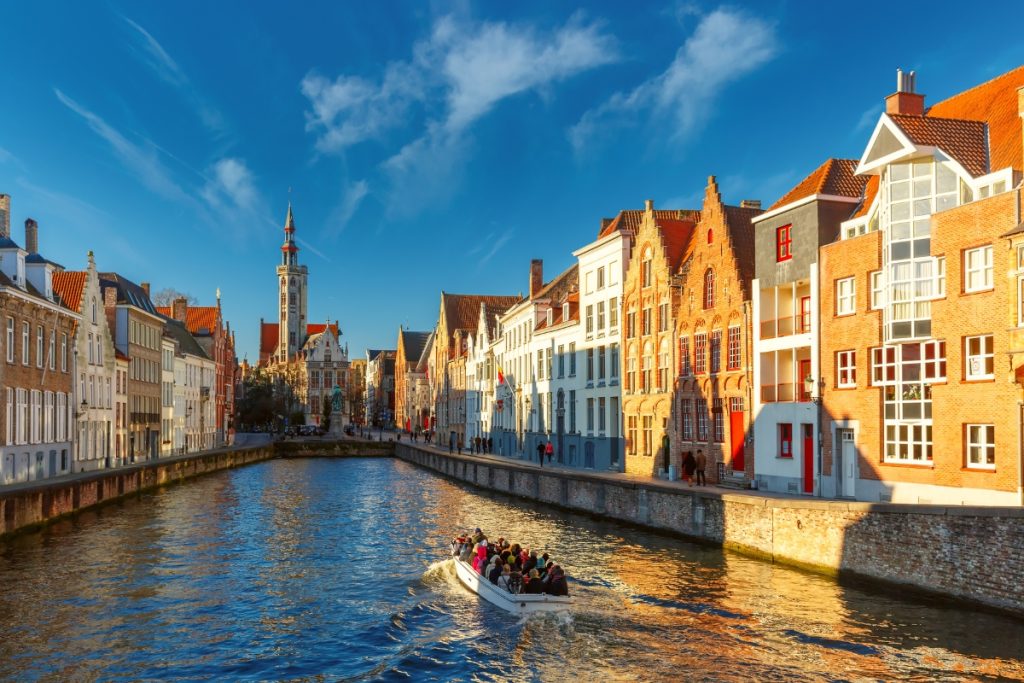
Bruges is called the “Venice of the North,” and a canal boat tour is the iconic way to see why. The roughly 30-minute cruise glides past gabled houses, hidden gardens, and some of the prettiest bridges in the city — views you simply can’t get on foot. Boats leave from five landing stages in the centre, all following the same route for the same price.
- Cost: Around €15 for adults, €9 for children 4–11, free under 4. Verify before publishing.
- Time needed: About 30 minutes on the water; allow 45–90 minutes with queuing
- Tip: You can’t book online — just queue at a landing stage. Tours run roughly March to mid-November, daily from about 10am. The quieter departure points away from Rozenhoedkaai have shorter lines.
Rozenhoedkaai (the Quay of the Rosary)
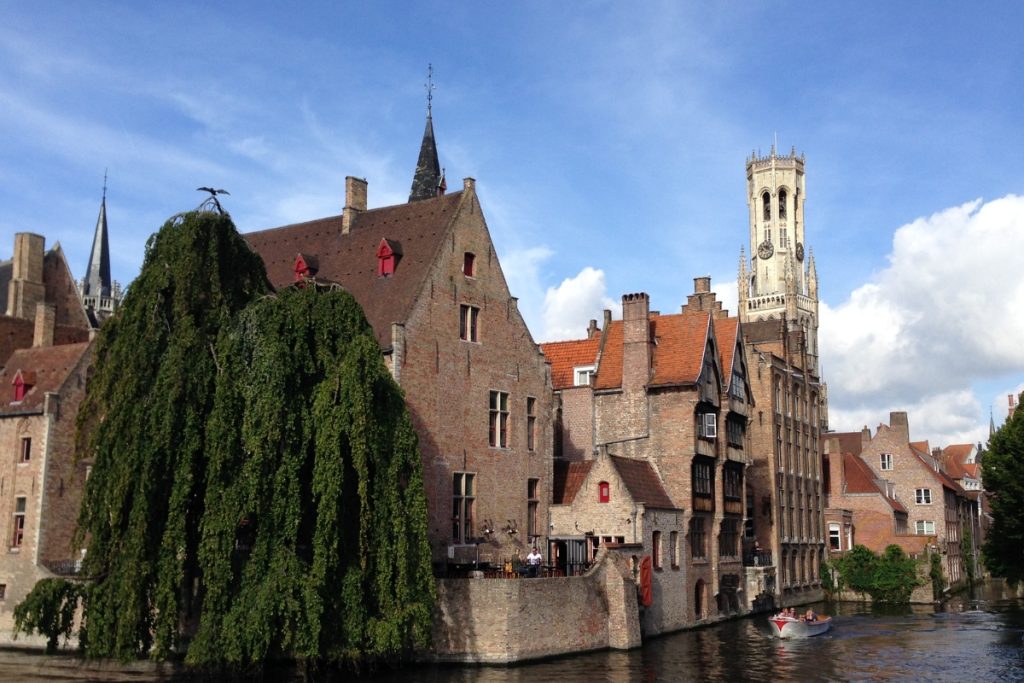
The single most photographed spot in Bruges, where the Dijver and Groenerei canals meet beneath a view of the Belfry. It costs nothing and takes only a few minutes, but it’s the postcard image of the city and worth timing for the right light.
- Cost: Free
- Time needed: 15 minutes
- Tip: Best at early morning or sunset, when the crowds thin and the light hits the canal.
Basilica of the Holy Blood
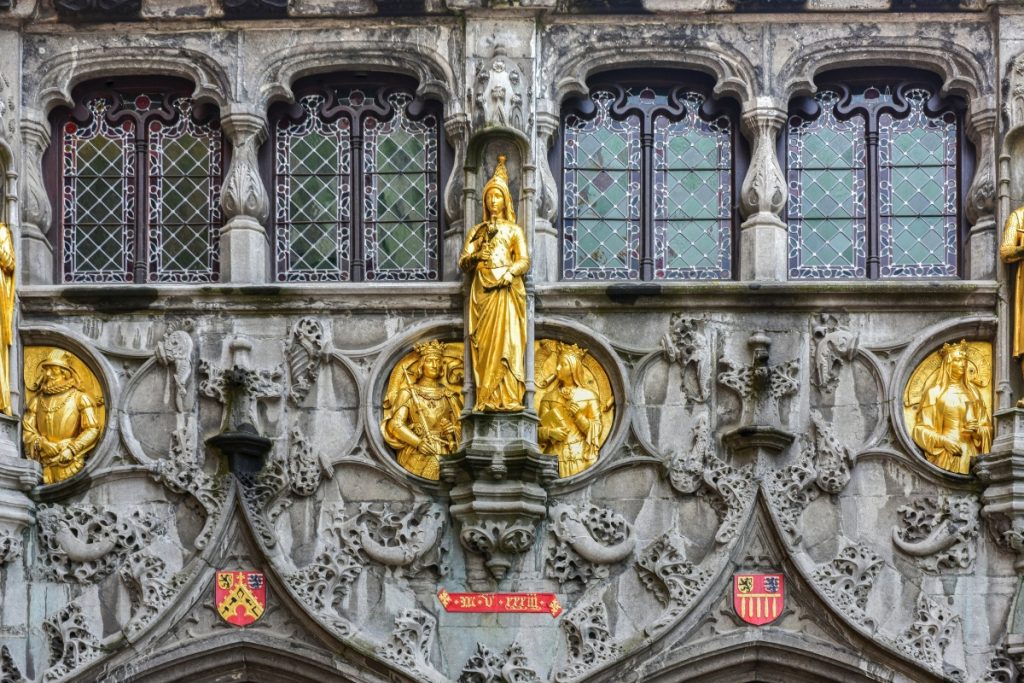
Tucked into a corner of Burg Square, this basilica houses a venerated relic said to contain a cloth with the blood of Christ. It has two contrasting chapels: a plain, dark Romanesque lower chapel and an ornate, richly painted upper chapel reached by a staircase.
- Cost: Entry to both chapels is free; the small adjacent museum (and relic viewing) is around €5. Verify before publishing.
- Time needed: 30 minutes
- Tip: It’s easy to miss from outside — look for the gilded façade in the corner of the Burg.
Church of Our Lady (Onze-Lieve-Vrouwekerk)
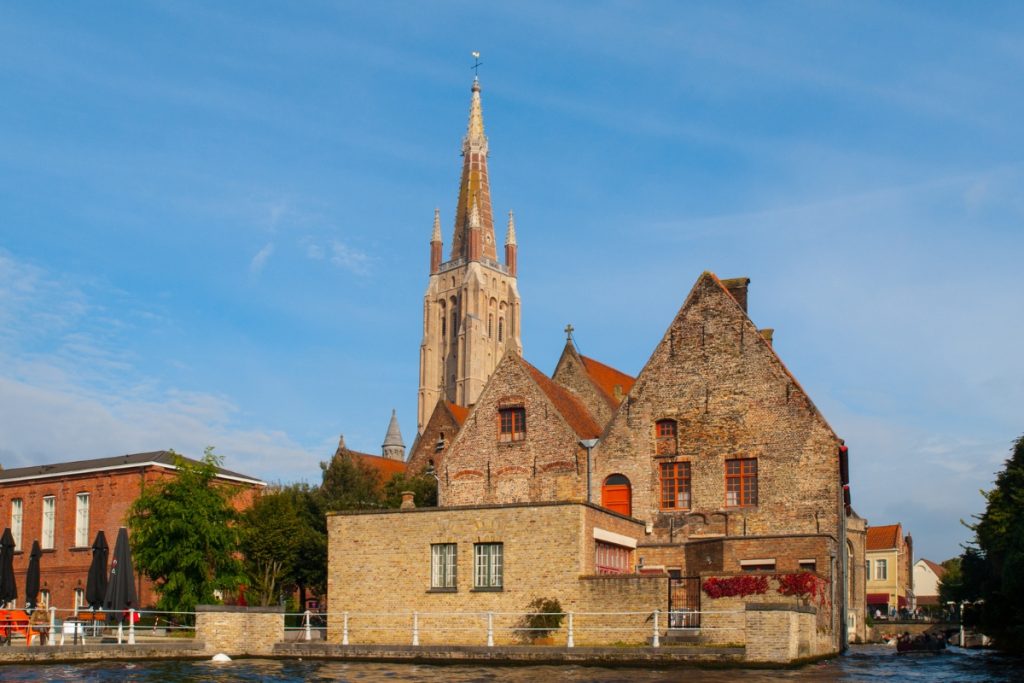
Home to Michelangelo’s “Madonna and Child” — the only sculpture by the artist to leave Italy in his lifetime — along with the tombs of Charles the Bold and Mary of Burgundy. The church’s brick tower, at over 115 metres, is among the tallest in the world.
- Cost: The chapel area is free; the museum section with the Madonna and the tombs is around €8–€10 for adults, free for children under 13. Verify before publishing.
- Time needed: 30–45 minutes
- Tip: The Madonna alone is worth the museum ticket — it’s a genuine masterpiece, not a replica.
Groeningemuseum
The city’s premier art museum, best known for its outstanding collection of Flemish Primitives — Jan van Eyck, Hans Memling, Gerard David — alongside six centuries of Belgian painting. Compact enough to enjoy without museum fatigue.
- Cost: Around €12 for adults, €10 for under-26s, free under 16. Verify before publishing.
- Time needed: 1–1.5 hours
- Tip: Closed Mondays. If you plan to visit several museums, the Musea Brugge Card pays off quickly.
The Beguinage and Minnewater (Lake of Love)
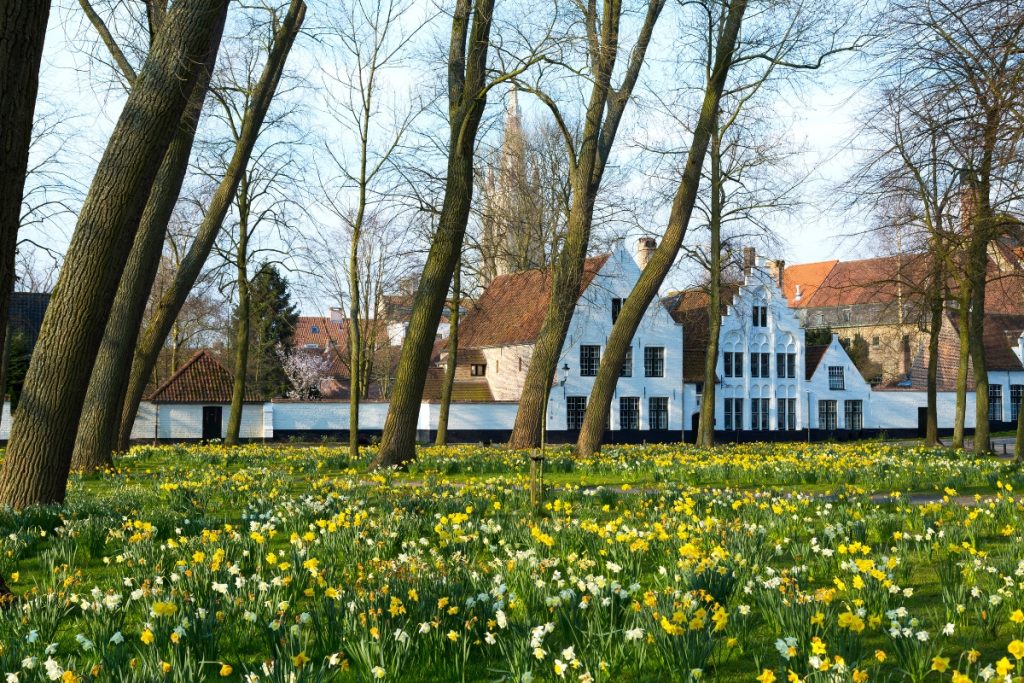
At the quieter southern edge of the centre, the Princely Beguinage Ten Wijngaarde is a tranquil 13th-century courtyard of whitewashed houses around a garden, once home to lay religious women. Just beside it lies the Minnewater, the romantic “Lake of Love,” a calm and photogenic spot away from the bustle.
- Cost: Free to walk through the Beguinage courtyard and around the lake
- Time needed: 45 minutes for both
- Tip: One of the few genuinely peaceful corners of central Bruges — go in the late afternoon.
Taste Belgian Chocolate
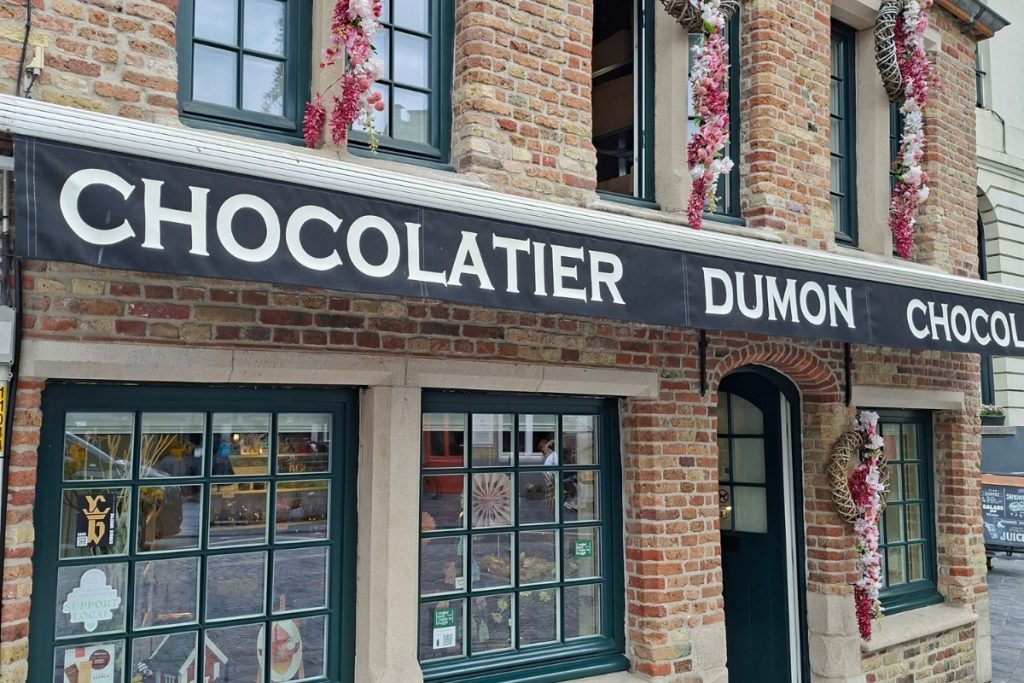
Bruges takes its chocolate seriously, with dozens of artisan chocolatiers across the centre. Beyond buying a box, you can learn the history and craft at Choco-Story, the city’s chocolate museum, which includes demonstrations and tastings.
- Cost: Tasting at shops is free or the price of what you buy; Choco-Story museum is roughly €12–€14. Verify before publishing.
- Time needed: 30 minutes for a shop; 1–1.5 hours for the museum
- Tip: Seek out smaller independent chocolatiers over the chain shops for the best quality.
Sample Belgian Beer at De Halve Maan
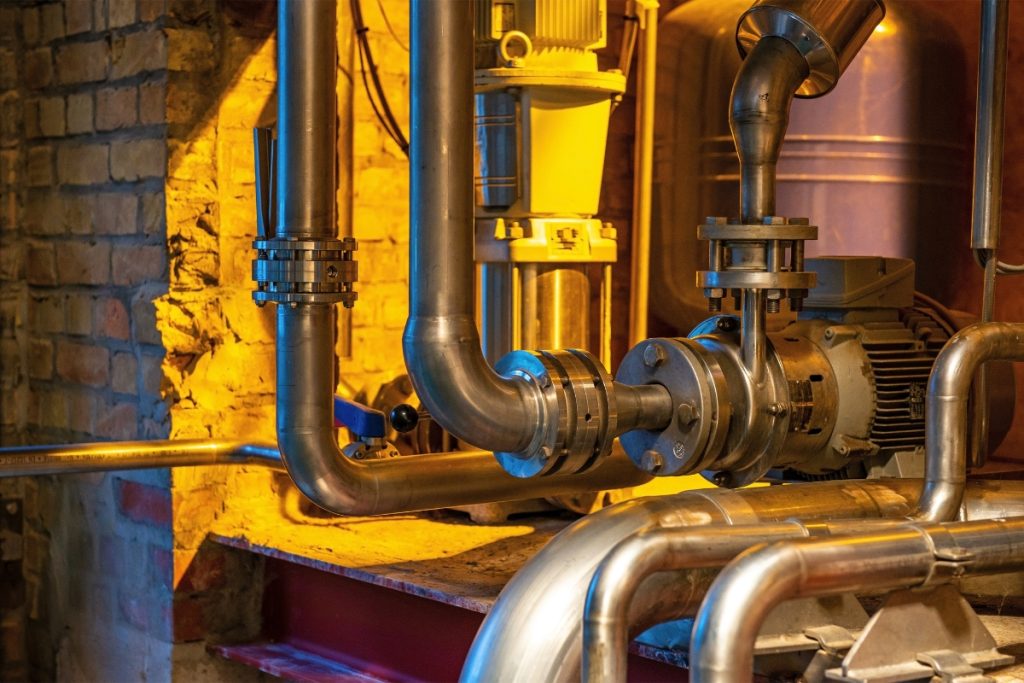
Belgium’s beer culture is UNESCO-recognised, and De Halve Maan is Bruges’ historic family brewery, home of the Brugse Zot. The guided tour ends with a tasting and a rooftop view over the city, and there’s a famous beer pipeline running underground to the bottling plant.
- Cost: Brewery tour with a tasting is roughly €12–€15. Verify before publishing.
- Time needed: About 45 minutes for the tour
- Tip: Tours fill up — book ahead, especially on weekends.
Walk the Windmills on the Ramparts
Along the eastern edge of the old town, the former city ramparts are now a green walking path dotted with historic windmills, including Sint-Janshuismolen, which still grinds grain. It’s a quieter, more local side of Bruges away from the central crowds.
- Cost: Free to walk; small fee to enter a working windmill. Verify before publishing.
- Time needed: 1 hour for a relaxed walk
- Tip: Combine it with a visit to the windmill interiors, open seasonally.
Sint-Janshospitaal (Old St John’s Hospital)
One of the oldest surviving hospital buildings in Europe, dating to the 12th century, now a museum. It holds a remarkable collection of works by Hans Memling and a preserved historic pharmacy, set in atmospheric medieval wards.
- Cost: Around €12–€15 for adults, reductions available, free for younger visitors. Verify before publishing.
- Time needed: 1 hour
- Tip: Directly opposite the Church of Our Lady, so the two pair naturally.
Browse the Markets and Shopping Streets
Bruges has a lively market tradition — the Wednesday morning market on the Markt and the Saturday market on ‘t Zand — plus characterful shopping along streets like Steenstraat and Geldmuntstraat. Good for lace, local food, and a feel for everyday Bruges.
- Cost: Free to browse
- Time needed: 1 hour
- Tip: If you want the markets, plan your visit around a Wednesday or Saturday morning.
Bruges Christmas Market
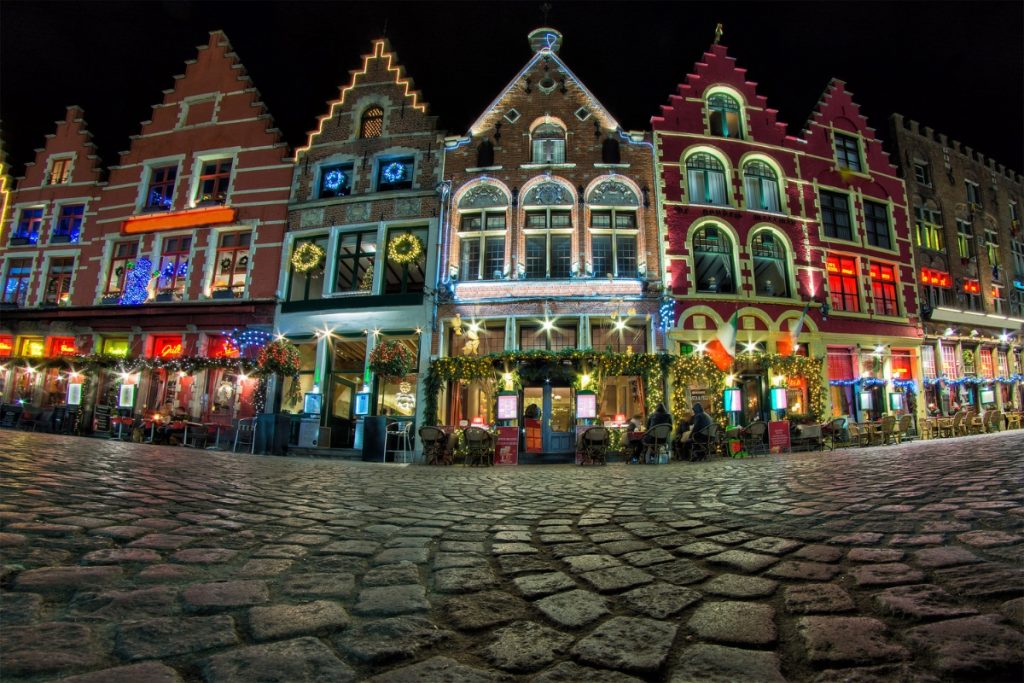
If you visit in late November or December, the Markt and surrounding squares fill with festive wooden chalets, lights, and an ice rink, making the medieval setting even more magical. It’s one of the most atmospheric Christmas markets in Belgium.
- Cost: Free to wander
- Time needed: An evening
- Tip: Seasonal — dates run roughly late November to early January, but confirm the current year’s dates before booking.
How Many Days Do You Need in Bruges?
One full day is enough to see the essential highlights — the Markt and Belfry, Burg Square, the canals, and the Church of Our Lady. Two days lets you add the museums, a brewery tour, and the quieter corners like the Beguinage and the windmills at a relaxed pace. Many visitors come as a day trip from Brussels or Ghent, but staying overnight lets you enjoy the centre after the day-trippers leave.
What Is the Best Way to See Bruges’ Highlights?
Because the historic centre is compact and almost entirely walkable, the best way to see it is on foot. First-time visitors who want to hit the key sights in a sensible order without booking a fixed guided tour often use a self-guided walking route or scavenger hunt, which sets the path for you while leaving you free to stop for chocolate, a canal tour, or a beer whenever you like.
When Is the Best Time to Visit Bruges?
Late spring and early autumn offer mild weather and thinner crowds. December is atmospheric thanks to the Christmas market but busy and cold. Summer is lively and warm but draws the most day-trippers, so early mornings and evenings are when the city feels most like itself.
Frequently Asked Questions
Is Bruges worth visiting?
Yes. Its remarkably preserved medieval centre, canals, world-class Flemish art, and chocolate and beer culture make it one of the most rewarding small cities in Europe, and its UNESCO-listed old town is walkable in a day.
Is Bruges walkable?
Very. The historic centre is compact and almost car-free in places, with most major sights within a 10–15 minute walk of one another, so you rarely need transport once you’re in the centre.
What is Bruges famous for?
Its medieval Belfry, the canals that earned it the name “Venice of the North,” Flemish Primitive paintings, Michelangelo’s Madonna and Child, and its Belgian chocolate and beer.
Can you do Bruges as a day trip?
Yes — it’s a popular day trip from Brussels or Ghent, both under an hour away by train. But staying overnight lets you experience the centre in the early morning and evening, after the day-trip crowds have gone.