
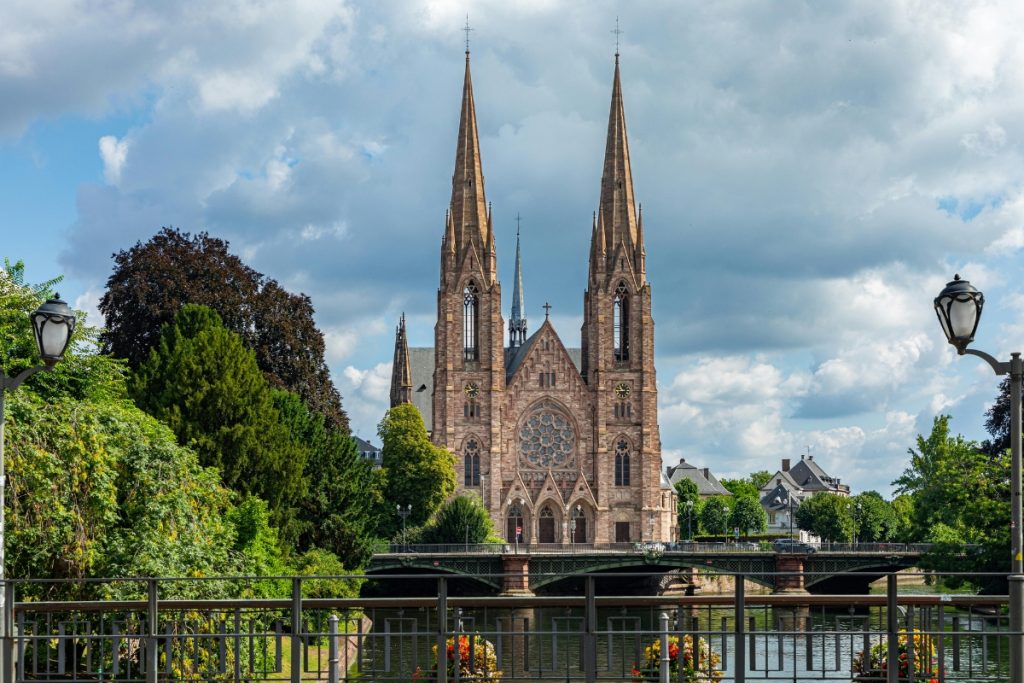
Strasbourg’s best experiences cluster in a compact, walkable historic centre: the Gothic cathedral, the canal-laced Petite France quarter, and the European institutions to the north. Most visitors can cover the highlights in one to two days on foot, since the old town sits on a single island ringed by the River Ill.
Table of Contents
Below are the 15 things most worth your time, with practical detail on what each costs, how long to budget, and when to go.
Strasbourg Cathedral (Cathédrale Notre-Dame)
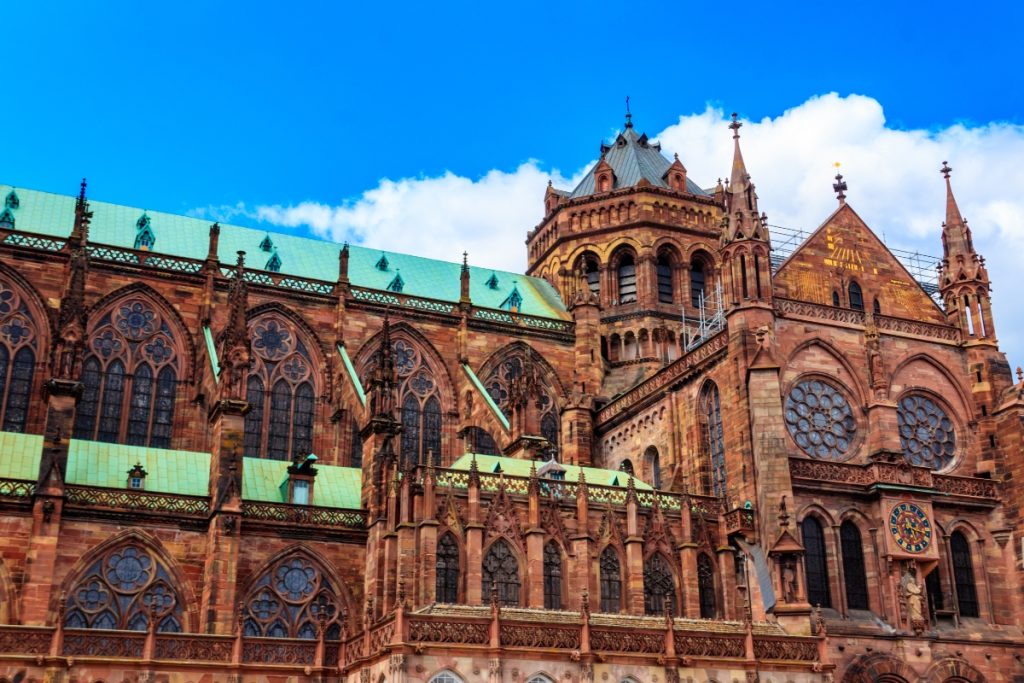
The single most important sight in the city. This Gothic sandstone cathedral was, for centuries, the tallest building in the Christian world, and its 142-metre spire still dominates the skyline. Inside, the astronomical clock performs its figures daily at 12:30pm, and climbing the platform rewards you with views across the rooftops to the Black Forest on a clear day.
- Cost: Cathedral entry free; platform climb and astronomical clock have separate small fees
- Time needed: 45–90 minutes
- Tip: Arrive before opening or in the late afternoon to avoid the midday crowds at the clock.
Wander La Petite France
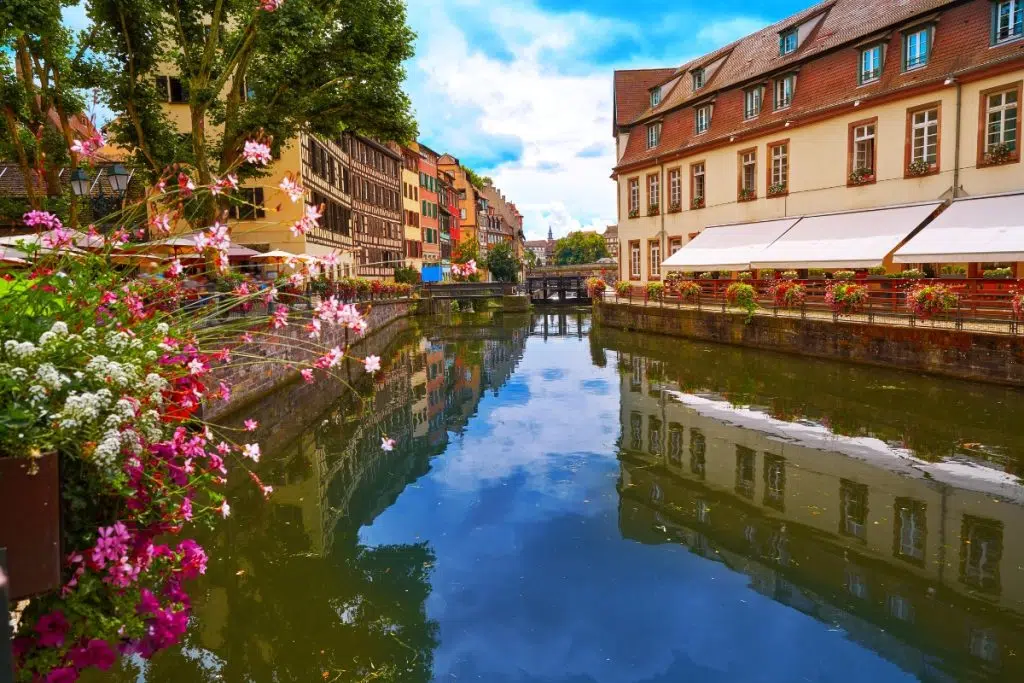
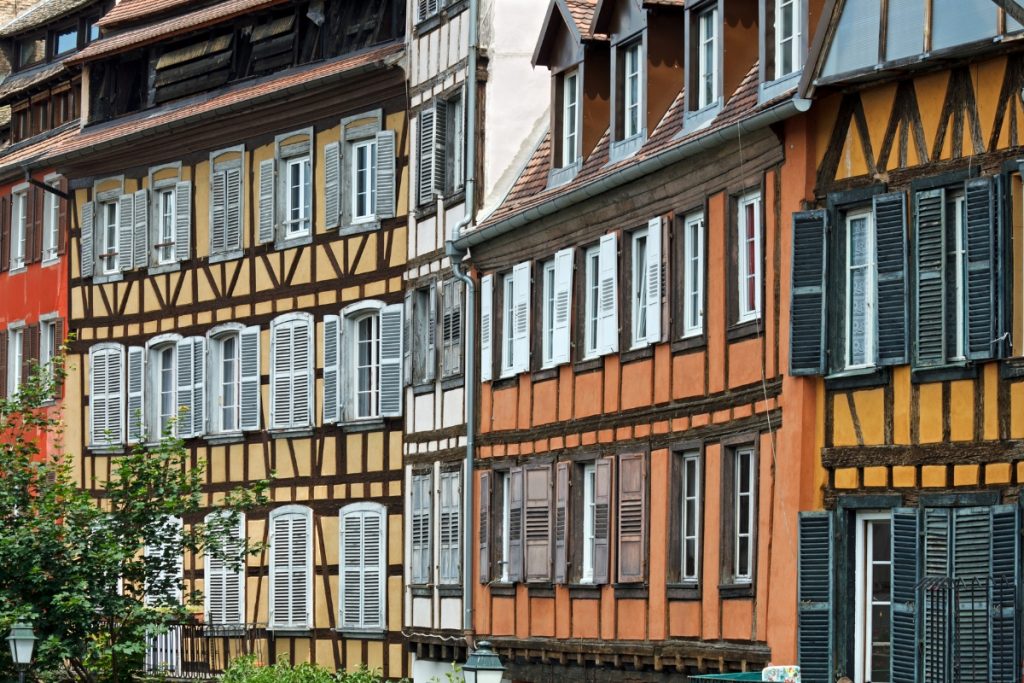
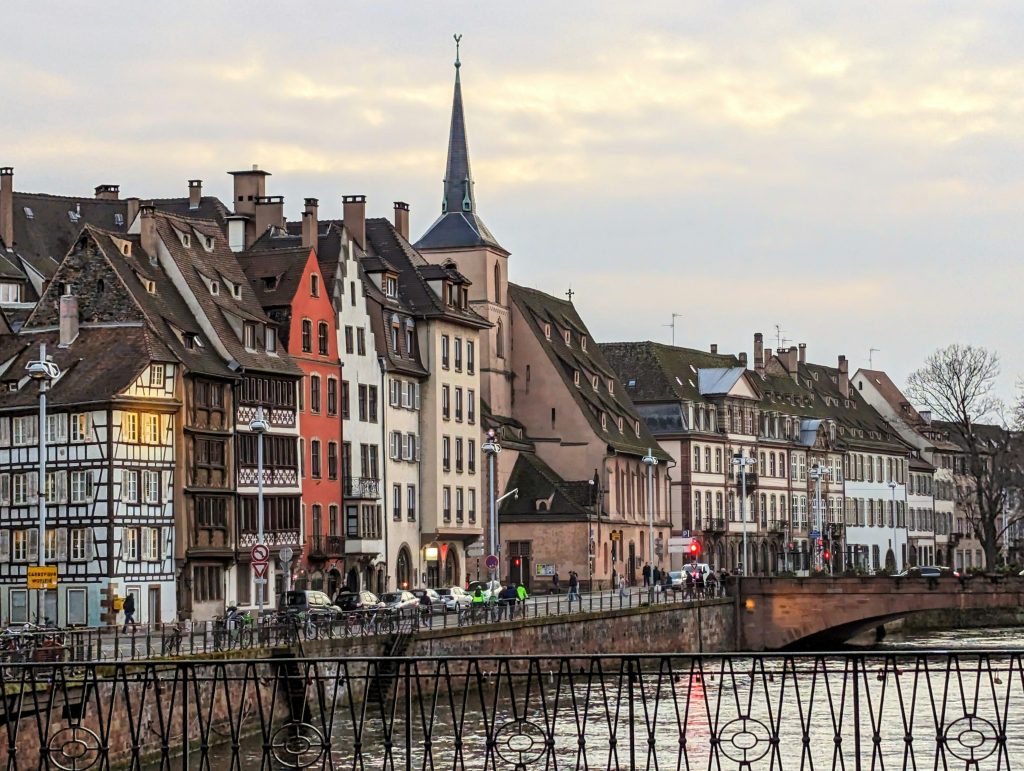
The most photographed quarter of Strasbourg, and deservedly so. Once home to tanners, millers, and fishermen, its half-timbered houses lean over narrow canals, and the whole area is a UNESCO World Heritage site. There’s no entry fee and no fixed route — the pleasure is getting slightly lost among the waterways.
- Cost: Free
- Time needed: 1–2 hours to wander properly
- Tip: Come early morning for empty streets and the best light for photos.
Explore the Old Town on a Self-Guided Scavenger Hunt

If you’d rather discover the city by playing than by following a fixed tour, World City Trail’s Strasbourg scavenger hunt turns the historic centre into an interactive game you do at your own pace. You solve location-based clues on your phone as you walk between the cathedral, Petite France, and the squares, learning the history of each stop as you go. It’s a flexible option for couples, families, or groups who want structure without a schedule or a guide waiting on them.
- Cost: Budget-friendly; one purchase covers a group
- Time needed: Around 2 hours, but there’s no time limit — pause and resume whenever
- Tip: A good way to see the highlights in order if it’s your first visit and you don’t want to plan a route yourself.
Barrage Vauban and Ponts Couverts
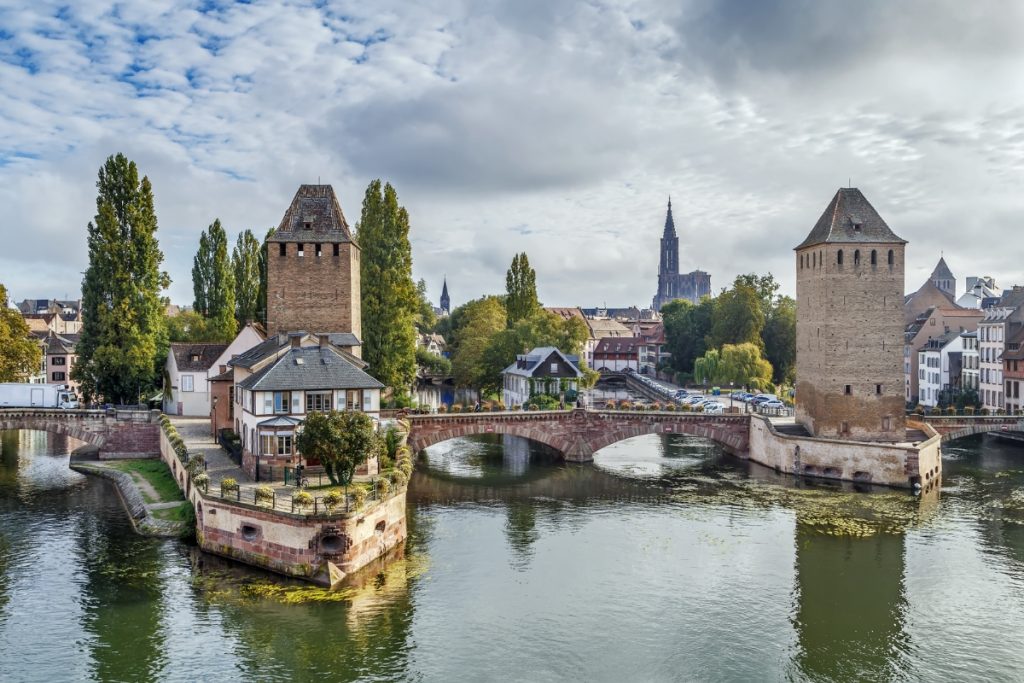
At the western edge of Petite France, the Ponts Couverts (Covered Bridges) and their watchtowers guard the river, with the Barrage Vauban dam just beyond. Climb to the free panoramic terrace on top of the Barrage for one of the best views in the city — the towers in the foreground, the cathedral behind.
- Cost: Free
- Time needed: 30 minutes
- Tip: This is the postcard shot of Strasbourg. Best in soft morning or evening light.
Take a Boat Tour on the River Ill
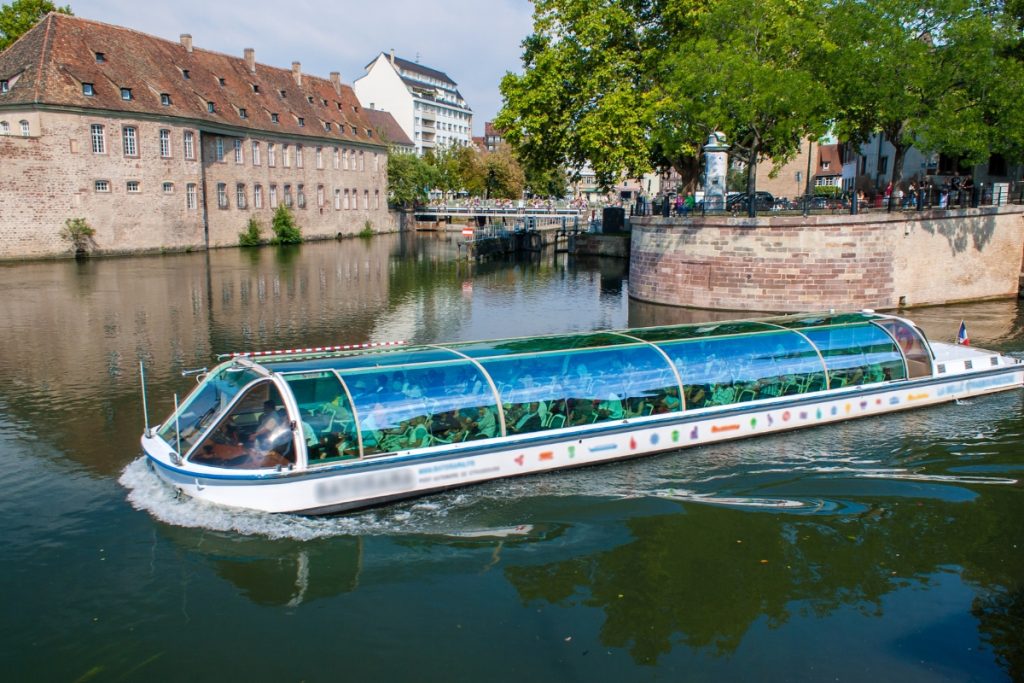
A Batorama boat tour circles the historic island, passing Petite France, the German Imperial quarter, and the European institutions, with commentary along the way. It’s the easy way to see the city’s range of architecture in one sitting and rest your feet.
- Cost: Paid; book ahead in peak season around €17.20 full rate, 12-language audio commentary.
- Time needed: About 70 minutes
- Tip: Sit on the open upper deck if the weather allows for the best views and photos.
Palais Rohan
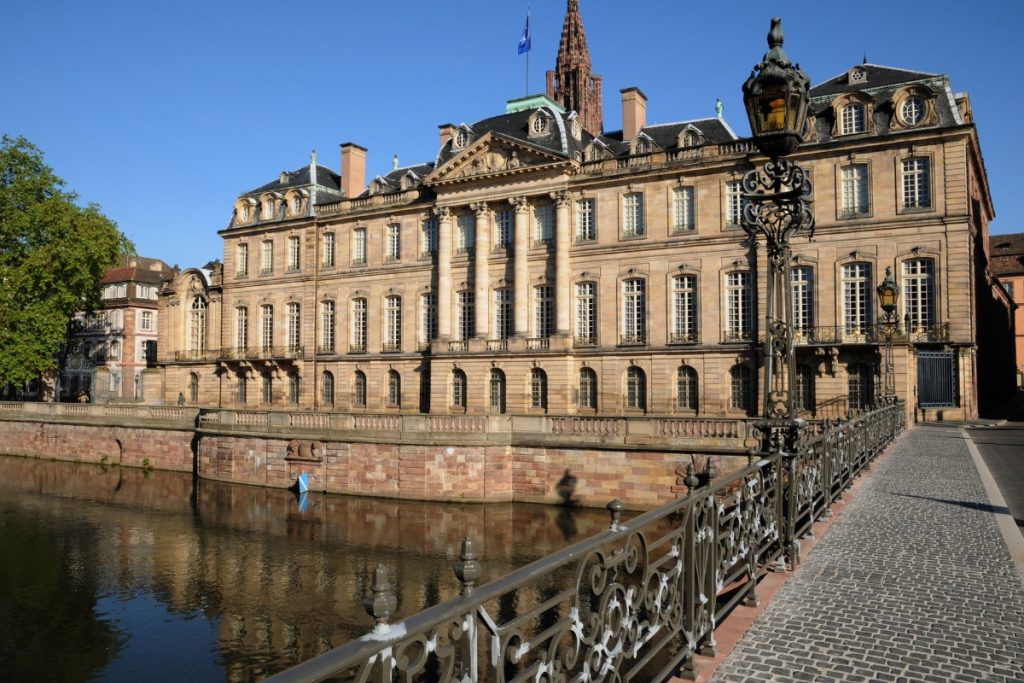
This grand 18th-century palace beside the cathedral houses three museums under one roof: the Museum of Fine Arts, the Museum of Decorative Arts, and the Archaeological Museum. Even if you skip the collections, the palace’s riverside façade and state apartments are worth seeing.
Tip: The Decorative Arts rooms, in the former bishops’ apartments, are the highlight for most visitors.
Cost: Paid; €5.50 per museum, combined city-museum passes available.
Time needed: 1–2 hours depending on how many museums you visit
Place Kléber and Place Gutenberg
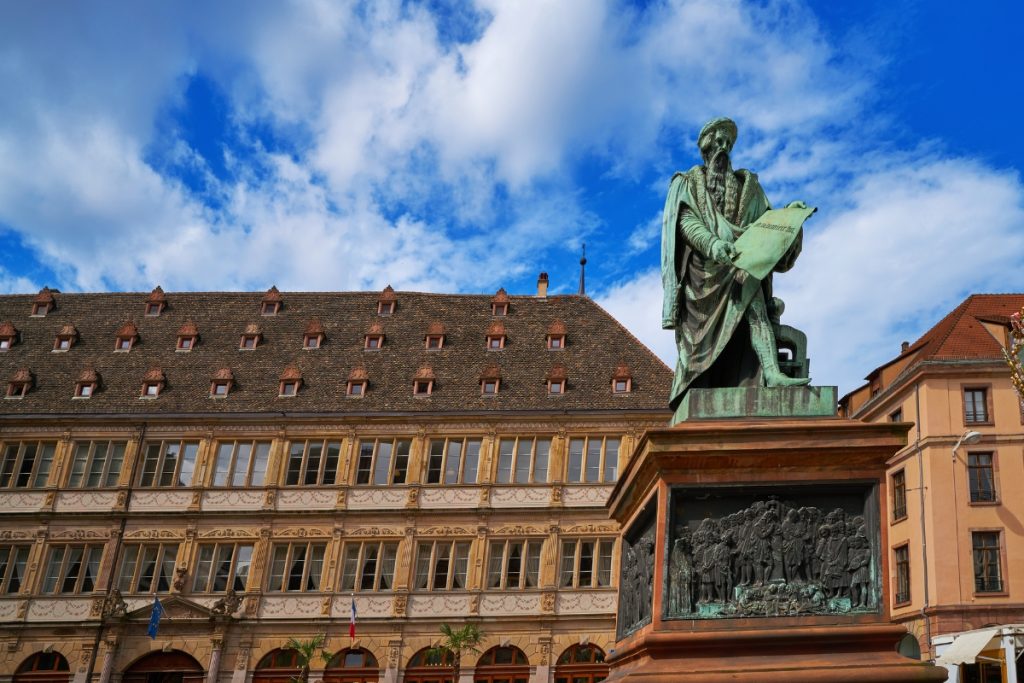
Strasbourg’s two main squares. Place Kléber is the city’s largest and the heart of its shopping district, especially lively in December when it hosts the giant Christmas tree. Place Gutenberg, named for the printing pioneer who worked in the city, is smaller and more atmospheric.
- Cost: Free
- Time needed: 20–30 minutes
- Tip: Both are natural rest-and-coffee stops between other sights.
Visit the European Quarter
North of the centre, Strasbourg’s role as a European capital comes to life around the European Parliament and the Council of Europe. The modern architecture is a striking contrast to the medieval old town, and the Parliament sometimes offers visits.
- Cost: Free to view from outside; organised visits vary
- Time needed: 1 hour
- Tip: A short tram ride from the centre — worth it if modern architecture or EU politics interests you.
Église Saint-Thomas
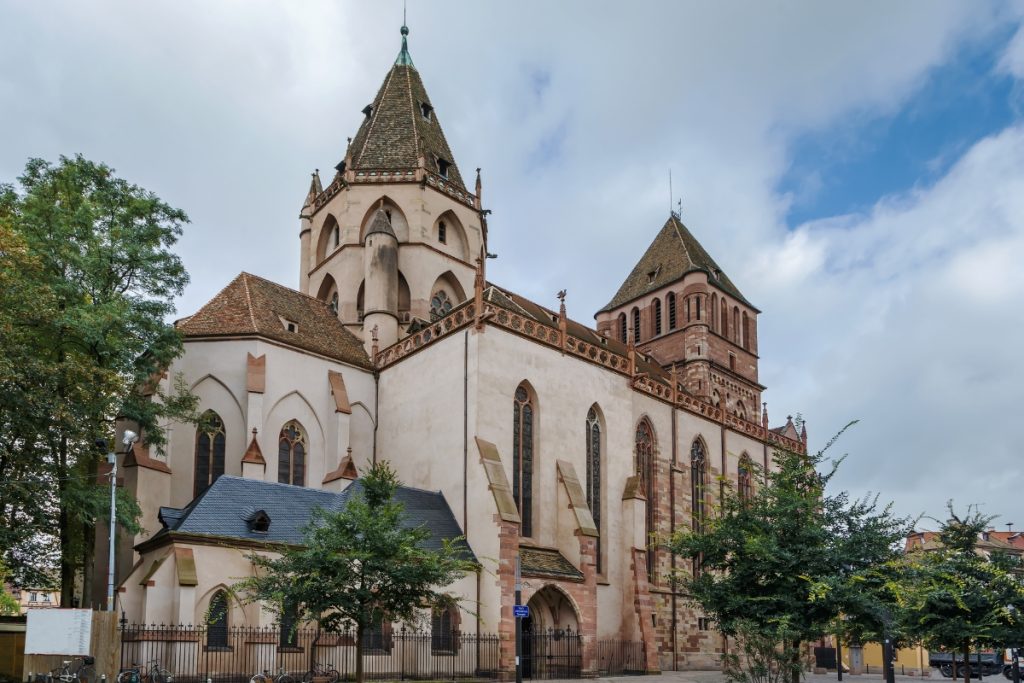
Often called the “Protestant cathedral” of Strasbourg, this church holds a famous Silbermann organ that Mozart and Albert Schweitzer both played, along with an elaborate mausoleum. It’s quieter and far less crowded than the main cathedral.
- Cost: Free entry
- Time needed: 20–30 minutes
- Tip: Check for occasional organ recitals, which are a genuine treat.
Sample Alsatian Food in a Winstub
Strasbourg’s cuisine is a French-German hybrid all its own. Look for a traditional winstub (a cosy Alsatian tavern) and try choucroute garnie (sauerkraut with sausages and pork), tarte flambée (a thin, crispy savoury tart), and baeckeoffe (a slow-cooked meat-and-potato casserole).
- Cost: Varies by restaurant
- Time needed: A leisurely meal
- Tip: Tarte flambée is the ideal lighter, shareable introduction to the local style.
Strasbourg Christmas Market (Christkindelsmärik)
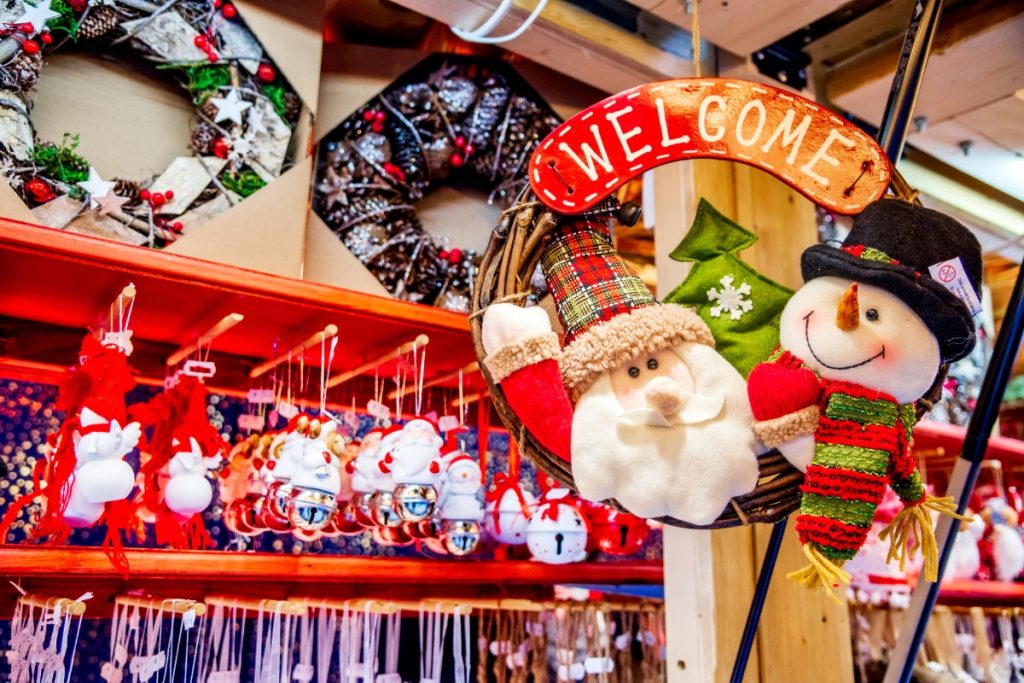
If you visit in late November or December, Strasbourg’s Christmas market is among the oldest and most famous in Europe, dating to 1570. The whole centre fills with wooden chalets, lights, mulled wine, and craft stalls.
- Cost: Free to wander
- Time needed: An evening
- Tip: Seasonal only. Expect large crowds and book accommodation far ahead.
Musée Alsacien
A folk-life museum spread across several connected old houses, showing how Alsatians lived across past centuries — furniture, costumes, tools, and reconstructed interiors. A good rainy-day option and a genuine sense of regional identity.
- Cost: Paid, around €5.50 for adults; covered by the city-museum pass. Closed Tuesdays.
- Time needed: 1 hour
- Tip: The building itself, a warren of staircases and galleries, is half the charm.
Parc de l’Orangerie
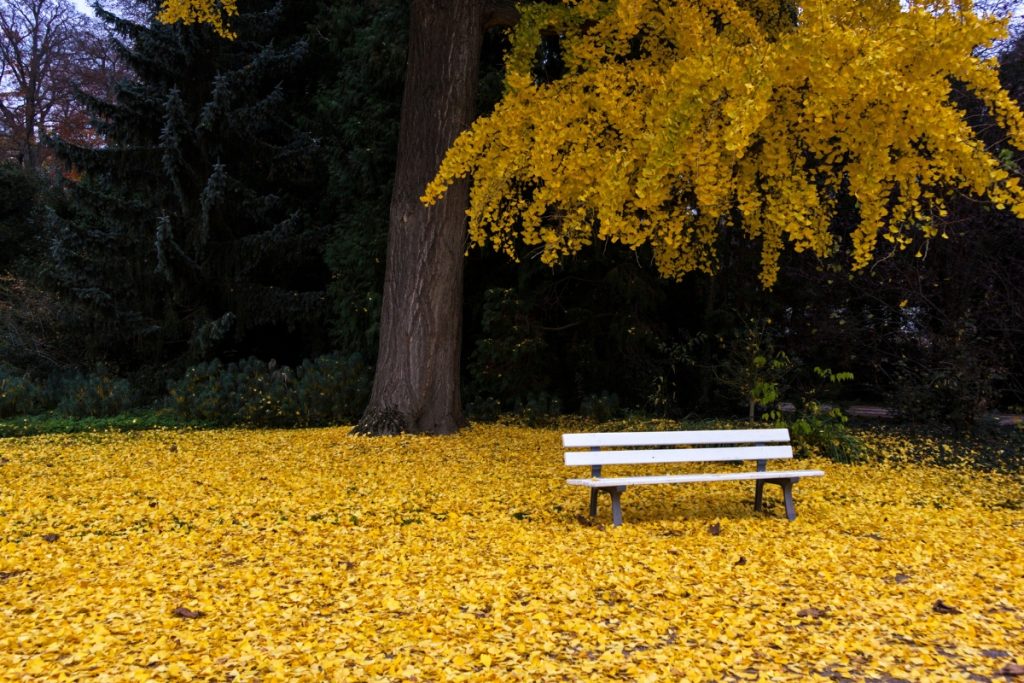
Strasbourg’s largest and oldest park, near the European Quarter. It has a small lake, a stork enclosure (storks are the symbol of Alsace), and plenty of space to picnic or relax away from the tourist core.
- Cost: Free
- Time needed: 1 hour
- Tip: A good place to combine with a European Quarter visit and to spot the region’s emblematic storks.
Climb the Cathedral Platform at Sunset
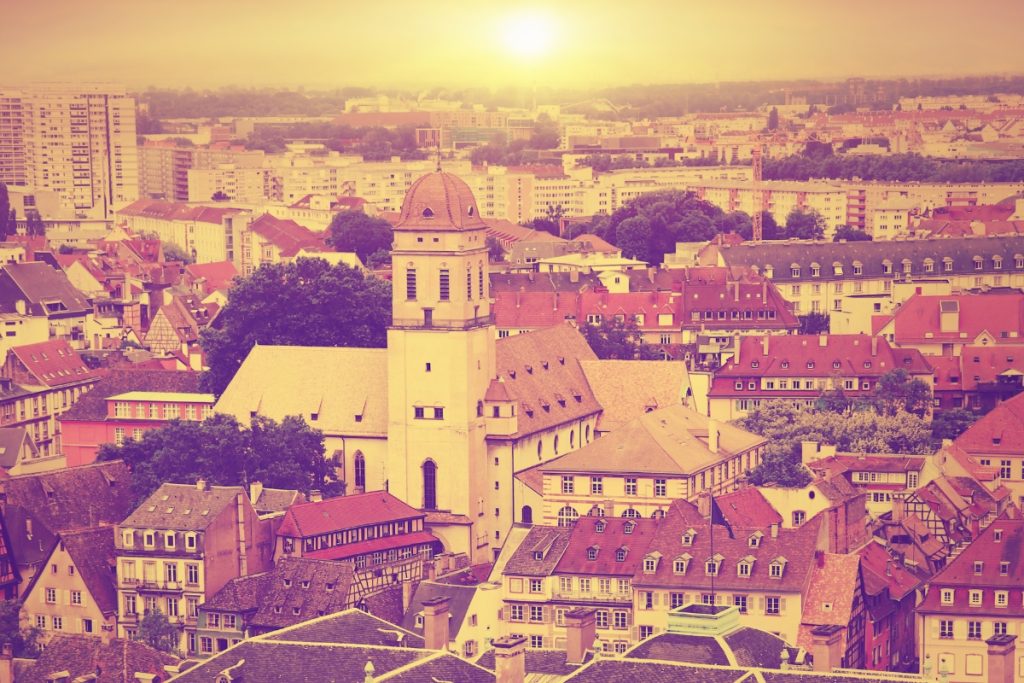
Worth listing on its own: the 332-step climb to the cathedral’s viewing platform is one of the best things you can do in the city, and timing it for late afternoon gives you golden light over the rooftops.
- Cost: paid, platform climb €8 adult / €5 child; clock show ~€3 separate.
- Time needed: 45 minutes including the climb
- Tip: Steps only, no lift — wear comfortable shoes.
Day Trip to the Alsace Wine Route
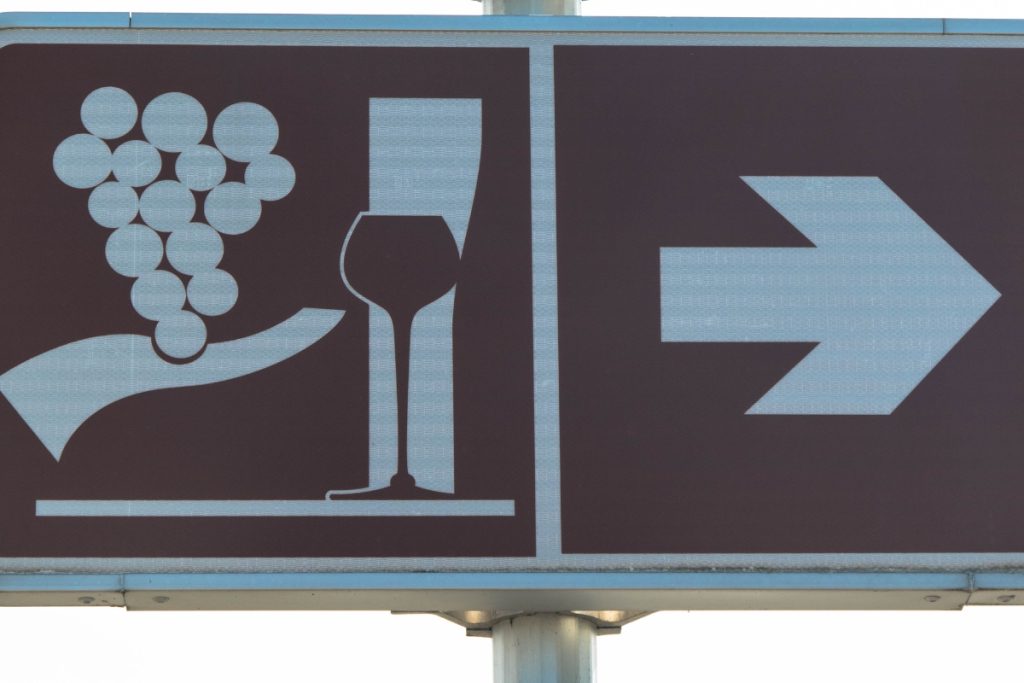
If you have a third day, the villages of the Alsace Wine Route — Obernai, Riquewihr, and others — are a short drive or train ride away, with vineyards, fortified medieval towns, and tastings.
- Cost: Varies; some villages reachable by public transport
- Time needed: A half or full day
- Tip: Colmar, with its own canals and old town, also makes an excellent day trip and is one of the most beautiful towns in the region.
How Many Days Do You Need in Strasbourg?
One full day covers the essential highlights — the cathedral, Petite France, and the main squares. Two days lets you add the European Quarter, a boat tour, and a museum or two at a relaxed pace. Three days gives room for a day trip to the Alsace Wine Route or nearby Colmar.
What Is the Best Way to See Strasbourg’s Highlights?
Because the historic centre is compact and almost entirely walkable, the best way to see it is on foot. First-time visitors who want to hit the key sights in a sensible order without booking a fixed guided tour often use a self-guided walking route or scavenger hunt, which sets the path for you while leaving you free to stop, eat, and explore whenever you like.
When Is the Best Time to Visit Strasbourg?
Late spring and early autumn offer mild weather and lighter crowds. December is magical but very busy thanks to the Christmas market. Summer is warm and lively but draws the most tourists.
Frequently Asked Questions
Is Strasbourg worth visiting?
Yes. Its UNESCO-listed old town, the Gothic cathedral, the canals of Petite France, and its unique French-German Alsatian culture make it one of the most rewarding small cities in France.
s Strasbourg walkable?
I Very. The historic centre sits on an island ringed by the River Ill and can be crossed on foot in about 20 minutes, with most major sights within a short walk of each other.
What food is Strasbourg known for?
Alsatian specialities including choucroute garnie, tarte flambée, baeckeoffe, and pretzels, plus the region’s white wines and Christmas-season pastries.
What is Strasbourg famous for?
Its cathedral, its Christmas market (one of Europe’s oldest), the Petite France quarter, its role as a seat of the European Parliament, and Alsatian cuisine.