
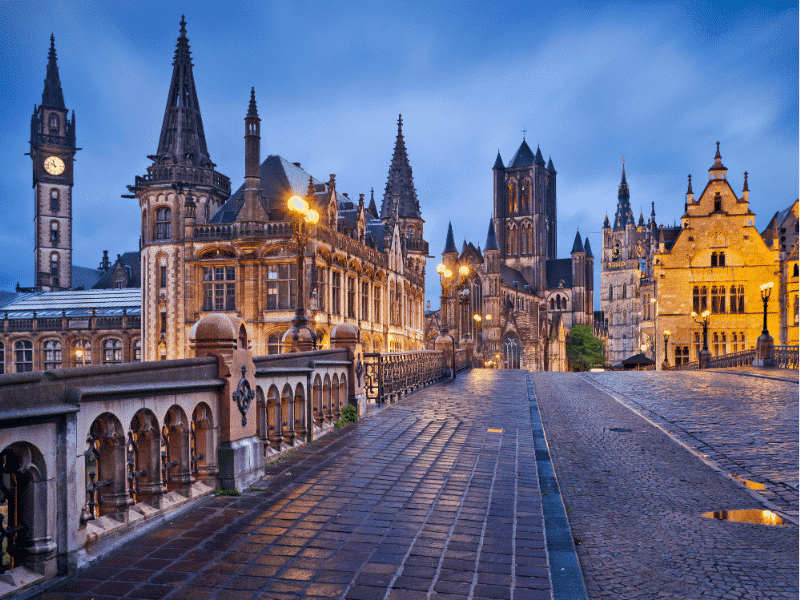
Nel Medioevo Gand si arricchì con il tessuto e divenne una delle città più grandi del Nord Europa. Le torri, le case delle corporazioni e il castello di quell’epoca sono ancora lungo i canali, ma è anche una vivace città universitaria, e le strade sembrano vissute più che conservate. Ecco i fatti e le storie che rendono speciale la città.
10 curiosità su Gand
- Un drago sul tetto: il Belfort è alto 91 metri, e da secoli un drago dorato veglia sulla città dalla sua guglia. Fa parte dei beffroi di Belgio e Francia iscritti nel Patrimonio dell’Umanità UNESCO.
- Un castello in centro: il Gravensteen, il Castello dei Conti, fu costruito nel 1180 dal conte Filippo d’Alsazia. Nel 1949 alcuni studenti lo occuparono per protestare contro l’aumento del prezzo della birra.
- An emperor's birthplace: Charles V, ruler of an empire on which it was said the sun never set, was born in Ghent in 1500.
- Built on cloth: Ghent's medieval wealth came from weaving English wool into fine cloth, and its guilds and merchants built the step-gabled houses you still see today.
- A medieval harbour: the Graslei and the Korenlei, facing each other across the Leie, were the city's port. The guild houses along them span several centuries, from a Romanesque grain warehouse to Baroque façades.
- Un cannone gigante: la Dulle Griet, un enorme cannone rosso in ferro battuto del XV secolo, si trova accanto al Vrijdagmarkt, la piazza del Mercato del Venerdì.
- Una scultura audace: sopra la porta dell’ex prigione accanto al Belfort, il rilievo del Mammelokker mostra una donna che allatta il padre affamato in carcere, una storia antica nota come Carità romana.
- Il giovedì è vegetariano: nel 2009 Gand fu una delle prime città al mondo a promuovere ufficialmente un giorno senza carne alla settimana, il Donderdag Veggiedag.
- Una via fatta per i graffiti: nella Werregarenstraat, un vicolo stretto del centro, dipingere i muri è permesso, così le opere cambiano quasi ogni settimana.
- Dieci giorni di festa: le Gentse Feesten, un festival di strada gratuito di musica e teatro, invadono il centro per dieci giorni ogni luglio e risalgono al 1843.
I portatori di cappio di Gand
In 1539 Ghent rebelled against its most famous son. The city refused to pay taxes that Charles V demanded for his wars, and the emperor came in person to restore order. In 1540 he took a humiliating revenge: the city lost its privileges, and its leading citizens had to walk before him barefoot, dressed in shirts, with a noose around their necks, and beg for forgiveness on their knees. The people of Ghent turned the shame into pride. They still call themselves stroppendragers, noose bearers, and during the Gentse Feesten you will see people wearing a noose as a badge of the city's stubbornness.
Il Polittico di Gand in breve
In St Bavo's Cathedral hangs the Adoration of the Mystic Lamb, a polyptych begun by Hubert van Eyck and completed by his brother Jan in 1432. It is often called one of the most stolen artworks in history. Napoleon's troops carried its central panels to Paris, some wings were sold and ended up in Berlin, and the Nazis hid it in an Austrian salt mine, where the Allies recovered it in 1945. One panel, the Just Judges, was stolen in 1934 and has never been found. The one you see today is a copy.
Cosa mangiare a Gand
- Gentse waterzooi: a creamy stew of chicken or fish with vegetables, the city's signature dish.
- Stoverij: manzo stufato a lungo nella birra scura, spesso servito con patatine fritte.
- Cuberdons: caramelle viola a forma di cono con un cuore morbido al lampone. A Gand si chiamano neuzekes, nasini, e si comprano dai carretti sul Groentenmarkt.
- Senape Tierenteyn: una senape forte, preparata fresca e venduta da botti di legno in una bottega storica sul Groentenmarkt.
- Birra locale: Gand ha i suoi birrifici, tra cui uno che produce birra con il gruit, la miscela di erbe usata prima che si diffondesse il luppolo.
Da sapere prima di partire
- I giri in barca partono dal Graslei e dal Korenlei e mostrano il porto medievale dall’acqua.
- Stand on St Michael's Bridge for the classic view of Ghent's three towers lined up: St Nicholas' Church, the Belfry and St Bavo's Cathedral.
- Resta dopo il tramonto: di notte Gand illumina i suoi edifici principali, i ponti e le banchine secondo un piano luci che copre tutta la città.
- Bruges è a un breve viaggio in treno, quindi le due città si combinano facilmente, ma la sera, quando i turisti in giornata se ne vanno, Gand è più tranquilla.
Scopri Gand con World City Trail
Our Ghent scavenger hunt turns these sights into a game you play on your phone. The route links 11 stops and takes around three hours, with about 30 minutes of walking, and leads you past St Michael's Church, St Michael's Bridge, the Belfry and St Bavo's Cathedral, among other sights.
A ogni tappa risolvi un enigma e ascolti una breve storia, al tuo ritmo. Puoi iniziare quando vuoi.
Gioca alla caccia al tesoro di Gand →
Fatti verificati a ottobre 2026.