
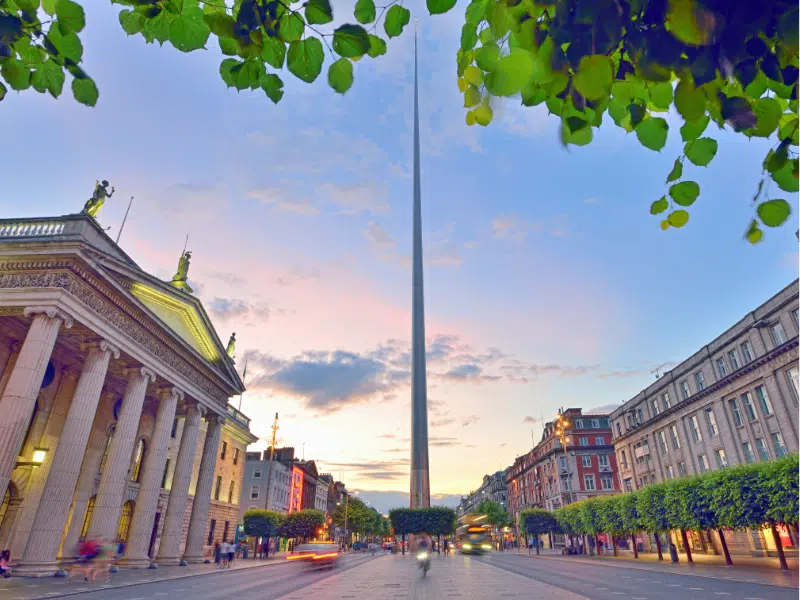
Dublin began as a Viking harbour, spent seven centuries as the seat of English and then British rule, and became the capital of an independent Ireland in 1922. Two medieval cathedrals and a castle sit within a few minutes' walk of each other, and almost every street has a writer attached to it. Here are the facts and stories behind the city.
10 ciekawostek o Dublinie
- Nazwa od czarnego stawu: Dublin pochodzi od irlandzkiego Dubh Linn, czyli czarny staw, od ciemnego rozlewiska w miejscu, gdzie rzeka Poddle wpadała do Liffey. Wikingowie założyli tu osadę w 841 roku.
- A Viking king's cathedral: Christ Church Cathedral was founded around 1030 by the Norse king Sitric Silkbeard. Its crypt is one of the largest medieval crypts in Britain and Ireland.
- Kot i szczur zastygli w pościgu: w krypcie Christ Church można zobaczyć zmumifikowane ciała kota i szczura, które podobno utknęły w piszczałce organów. James Joyce wspomina o nich w Finnegans Wake.
- Gulliver's dean: St Patrick's Cathedral was founded in 1191. Jonathan Swift, author of Gulliver's Travels, was its dean from 1713 until his death in 1745 and is buried inside, next to his companion Stella.
- Siedem wieków władzy: król Jan bez Ziemi kazał zbudować zamek w Dublinie w 1204 roku. 16 stycznia 1922 roku Zamek Dubliński przekazano Michaelowi Collinsowi i Rządowi Tymczasowemu nowego państwa irlandzkiego.
- Justice with her back to the people: the statue of Justice above the castle's main gate faces into the castle yard, turning her back on the city, and unusually she wears no blindfold.
- A very long lease: in 1759 Arthur Guinness signed a 9,000-year lease on a small brewery at St James's Gate.
- A bridge named after its toll: the cast-iron Ha'penny Bridge opened in 1816. Its nickname comes from the halfpenny toll once charged to cross the Liffey.
- A spire where a pillar stood: the Spire on O'Connell Street, completed in 2003, is 120 metres tall. It stands on the site of Nelson's Pillar, which was blown up in 1966.
- Miasto pisarzy: Dublin został Miastem Literatury UNESCO w 2010 roku. Co roku 16 czerwca fani świętują Bloomsday, dzień 1904 roku, w którym Joyce umieścił akcję Ulissesa.
Drzwi Pojednania
In 1492 two powerful Irish families, the Butlers of Ormond and the FitzGeralds of Kildare, were feuding over who would hold the office of Lord Deputy. After a skirmish outside the city walls, the Butlers fled into the chapter house of St Patrick's Cathedral and barred the door. Gerald FitzGerald, Earl of Kildare, followed and called on them to come out and make peace, but they feared a trap. To prove his good faith, he had a hole cut in the door and pushed his arm through it, offering his hand. Instead they shook it, came out, and the families made peace. The battered old door now stands in the cathedral, and the story is the origin of the Irish expression to chance your arm.
Zamek Dubliński w pigułce
For about 700 years Dublin Castle was the centre of English and later British government in Ireland. Little of the medieval fortress survives above ground apart from the Record Tower; most of what you see is Georgian. Irish presidents are inaugurated in its St Patrick's Hall. Behind it, the Dubh Linn Garden lies roughly where the original black pool was, and the Chester Beatty library and museum stands in the castle grounds.
Co zjeść w Dublinie
- Dublin coddle: a slow-cooked stew of sausages, bacon, potatoes and onions, the city's own comfort food.
- Irish stew: jagnięcina lub baranina z ziemniakami, cebulą i marchwią, podawana w wielu pubach wokół katedr.
- Guinness: the stout has been brewed at St James's Gate since 1759. The Gravity Bar at the top of the Guinness Storehouse has views across the city.
- Ciemny chleb sodowy: zwarty, lekko kwaskowy chleb na maślance i sodzie zamiast drożdży.
- Seafood chowder: kremowa zupa z ryb i owoców morza z Morza Irlandzkiego, często z ciemnym chlebem.
Dobrze wiedzieć przed wizytą
- Aby zobaczyć Księgę z Kells w Trinity College, zarezerwuj wcześniej bilet na konkretną godzinę. Old Library z Long Room ma zostać zamknięta do renowacji pod koniec 2027 roku.
- St Patrick's and Christ Church charge an entry fee for sightseeing. Services are free.
- Przez dziedzińce Zamku Dublińskiego można przejść bezpłatnie; na State Apartments potrzebny jest bilet i bywają zamknięte z powodu oficjalnych uroczystości.
- Na dzień nad morzem wsiądź do pociągu DART na północ do Howth, ze ścieżką na klifach i portem rybackim, albo na południe do Dún Laoghaire z jego długimi molami.
Odkryj Dublin z World City Trail
Our Dublin scavenger hunt turns these sights into a game you play on your phone. The route links 10 stops and takes around three hours, with about 59 minutes of walking. Along the way you visit St Patrick's Cathedral, Christ Church Cathedral and Dublin Castle.
Na każdym przystanku rozwiązujesz zagadkę i słuchasz krótkiej historii, we własnym tempie. Możesz zacząć, kiedy chcesz.
Zagraj w grę miejską w Dublinie →
Fakty sprawdzone w październiku 2026.