What is the Berlin outdoor escape game?
The Berlin outdoor escape game is an escape room moved into the streets of Mitte: the puzzles are attached to real buildings and monuments, and your phone is the only equipment you need. Budget about 2 hours, of which 65 minutes are walking, the route runs 5.1 km and the puzzles are spread over 10 stops. There is no fixed departure, so the starting day is yours.
Puzzles are waiting on Alexanderplatz, at the Neptune Fountain, at Berlin Cathedral, at the Altes Museum, on Gendarmenmarkt and at the Brandenburg Gate, and each one is solved on its own, without a plot running through the game. Berlin gives you plenty to read: a Dance of Death more than 22 metres long in the tower hall of St Mary's Church, the four figures of the Rhine, Elbe, Oder and Vistula around Neptune, eighteen Ionic columns facing the Lustgarten and an inscription on the Reichstag added in 1916. Three levels of hints are available whenever you want one.
- Durationabout 2 hours
- Walkingabout 65 min · 5.1 km
- Stops10
- LanguagesEnglish, German, French, Italian, Spanish, Dutch
What you do on the escape game
Work out the answer
Each landmark comes with a puzzle you settle by looking and reasoning, never by prior knowledge.
Count the figures
Columns, statues, dates and inscriptions carry the details the puzzles ask about.
Walk Unter den Linden
Google Maps guides you between stops: 65 minutes of walking over 5.1 km, all of it flat.
No countdown
The clock is not your opponent. Pull a hint when you want one, stop for a currywurst and continue later or another day.
See the route and attractions →
How it works
- Book online Choose the number of players. Your booking reference arrives by email straight away.
- Get the app Download the World City Trail app from the App Store or Google Play and enter your booking reference.
- Play when you like Start whenever you are ready, walk at your own pace and pause any time. No guide, no fixed schedule.
Who it suits
Friends
A puzzle gives a group something to do at a monument besides photographing it.
Couples
Two of you, ten puzzles and a flat walk from the Spree to the Tiergarten, at whatever speed you like.
Team building and company outings
Teams of up to 5 play on their own phones, so colleagues can run the same route in parallel.
Good to know
- Bring a charged smartphone with mobile data; a power bank helps.
- Best started in daylight, so you can see the details the puzzles ask about.
- No entry tickets needed: everything happens outside the buildings. Going inside is optional and paid separately.
- Family friendly; children must be accompanied by an adult.
- Not suitable for wheelchair users and difficult with strollers.
- Teams of up to 5 work best; bigger groups split into several teams, one ticket per player.
- Every purchase helps support stray cats and dogs in Greece.
Puzzle route: from Alexanderplatz to the Reichstag
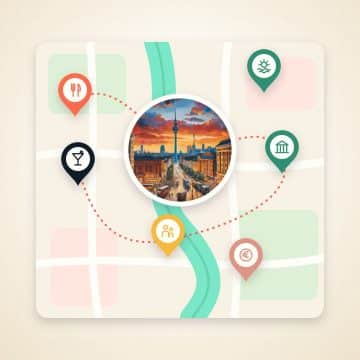
10 stops · about 65 min walking · start: Alexanderplatz · finish: Reichstag Building
Puzzle one is on Alexanderplatz, and the final one at the Reichstag Building. On the way you work on St Mary's Church, the Neptune Fountain, the Palace Bridge, Berlin Cathedral, the Altes Museum on the Lustgarten, Gendarmenmarkt, the Goethe Monument in the Tiergarten and the Brandenburg Gate. Daylight is the sensible choice, since everything is solved in the open and wind or rain slow the walking. Google Maps provides the directions, the app lets you reorder the stops, and not one puzzle needs an entry ticket.
Open the route map ↗
1AlexanderplatzStart
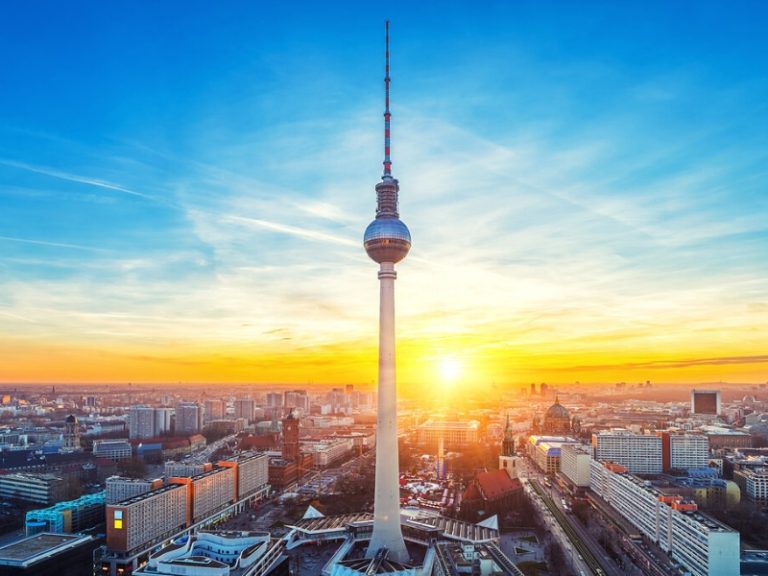
The square is named after Tsar Alexander I of Russia, who visited Berlin in 1805, and it gave its title to Alfred Döblin's 1929 novel Berlin Alexanderplatz. Its present look comes from the East German redesign of the 1960s, which added the World Clock in 1969 and the Television Tower nearby.
2St Mary's Church (Marienkirche)
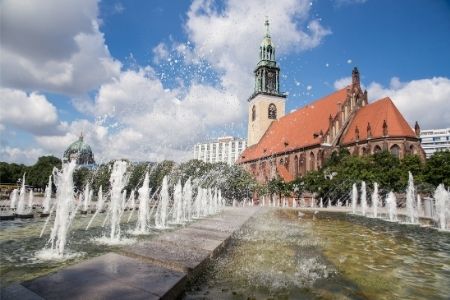
St Mary's was first mentioned in 1292 and is the oldest parish church in Berlin still used for worship. In its tower hall is a Dance of Death mural more than 22 metres long, painted around 1484, the year of a plague, and the pulpit was made by Andreas Schlüter in 1703.
3Neptune Fountain
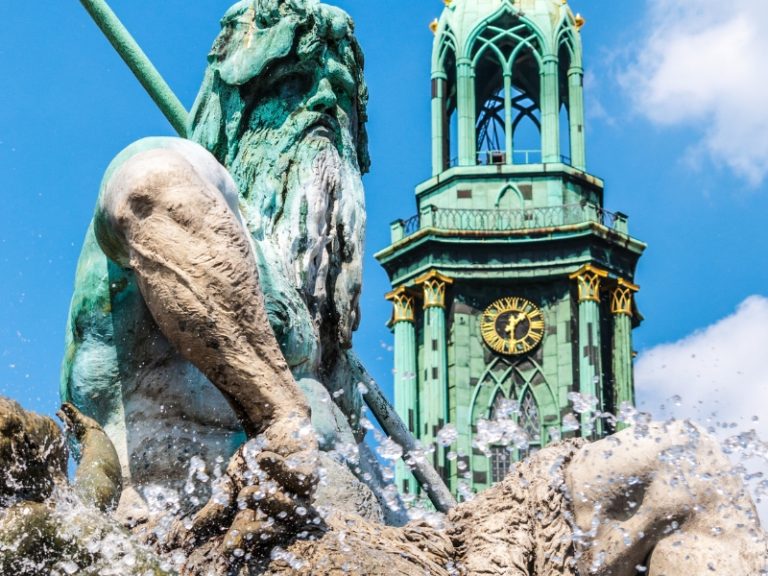
Reinhold Begas created this fountain in 1891: the sea god Neptune sits in the middle, surrounded by four women who stand for the rivers Rhine, Elbe, Oder and Vistula. It first stood on Schlossplatz in front of the Berlin Palace and was moved here, between St Mary's Church and the Red Town Hall, in 1969.
4Palace Bridge (Schlossbrücke)
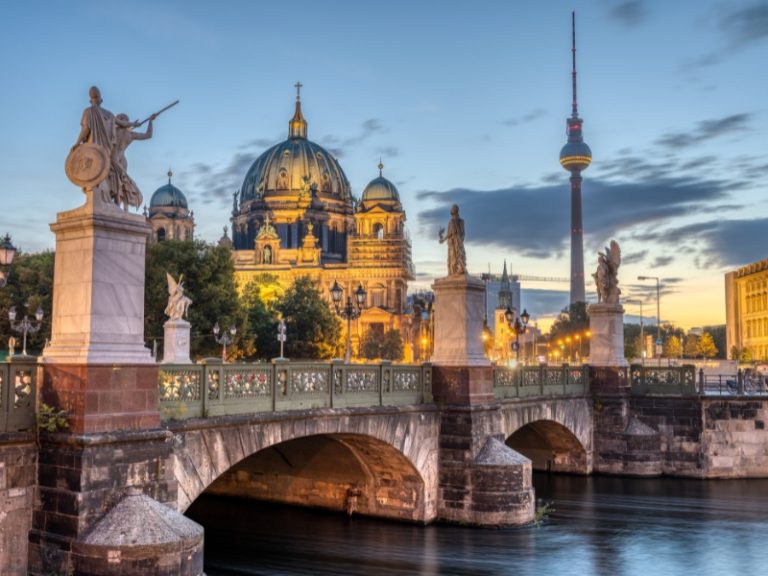
Karl Friedrich Schinkel designed this bridge, built in 1821–1824, to link Unter den Linden with the royal palace. Its eight marble groups, added between 1847 and 1857, show Nike and Athena guiding young warriors, and in GDR times it was renamed Marx-Engels-Brücke until 1991.
5Berlin Cathedral (Berliner Dom)
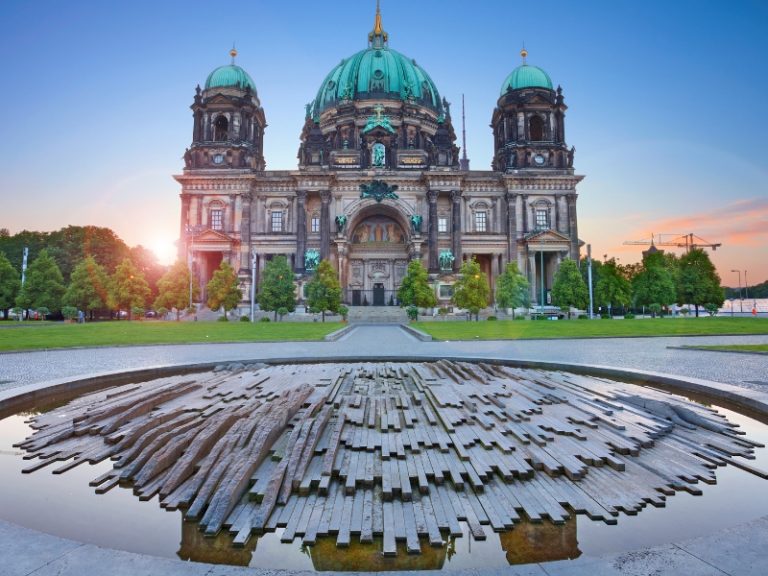
Emperor Wilhelm II had the old cathedral pulled down in 1893, and Julius Raschdorff's new Protestant cathedral with its great dome was consecrated in 1905. Beneath it lies the Hohenzollern crypt with dozens of coffins of the Prussian royal family, and 270 steps lead up to the walkway around the dome.
Read the full story →
6Altes Museum
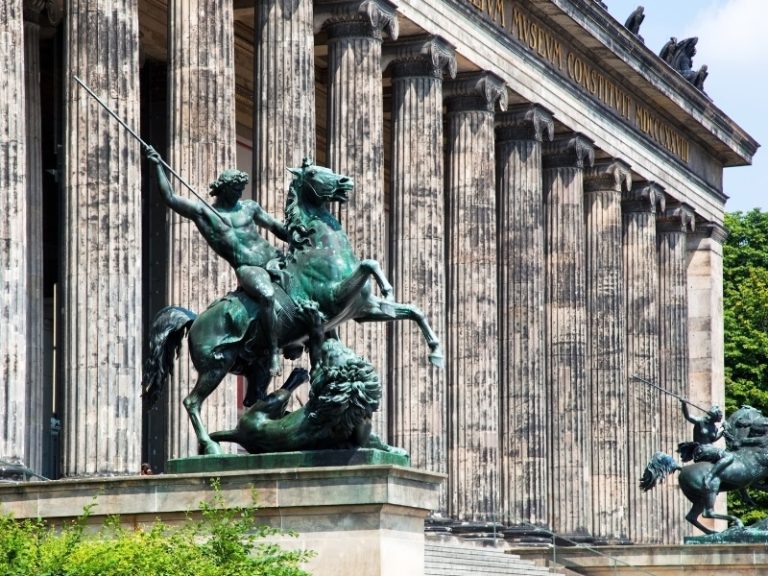
Karl Friedrich Schinkel's Old Museum, completed in 1830, was the first museum on Museum Island and one of the first purpose-built museum buildings in Europe. Its front of 18 Ionic columns faces the Lustgarten, and the huge granite bowl at the foot of the steps was commissioned by King Frederick William III in 1826.
7Gendarmenmarkt
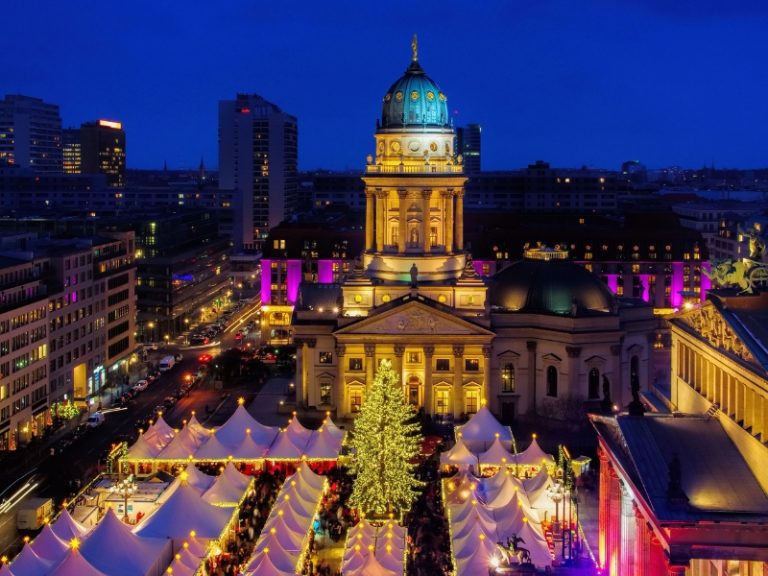
The square takes its name from the Gens d'armes, a Prussian cuirassier regiment that kept its stables here until 1773. It is framed by the French and the German Church, both given matching domed towers by Carl von Gontard in 1785, with Schinkel's Konzerthaus of 1821 between them.
8Goethe Monument
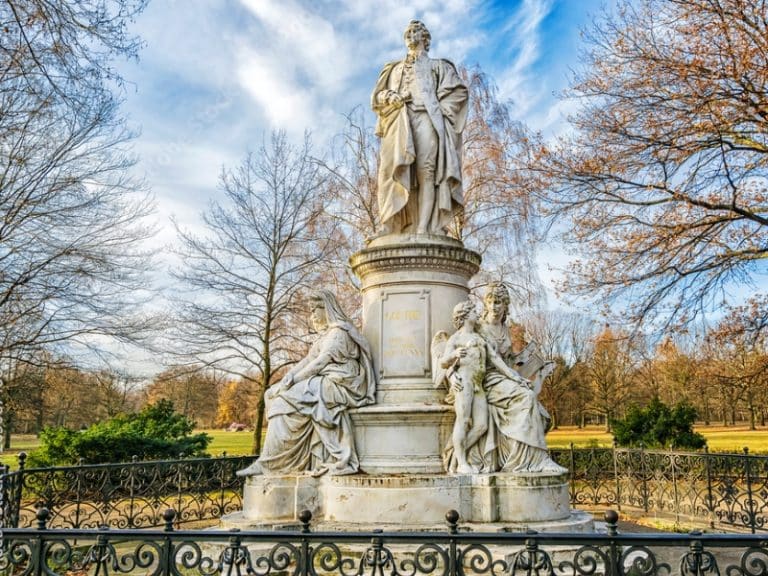
This marble monument by the sculptor Fritz Schaper was unveiled in 1880 in the Tiergarten, a short walk from the Brandenburg Gate. Goethe stands on a tall pedestal, and around its base sit three allegorical figures representing lyric poetry, drama and science.
9Brandenburg Gate
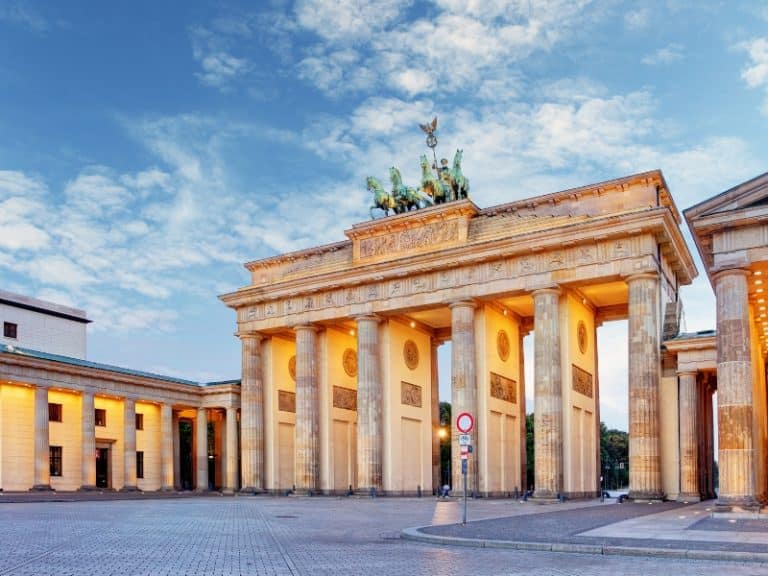
Carl Gotthard Langhans built the gate in 1788–1791 for King Frederick William II, modelling it on the Propylaea of the Acropolis in Athens. Napoleon carried Johann Gottfried Schadow's Quadriga off to Paris in 1806, it returned in 1814, and during the division of Berlin the gate stood right by the Wall.
10Reichstag BuildingFinish
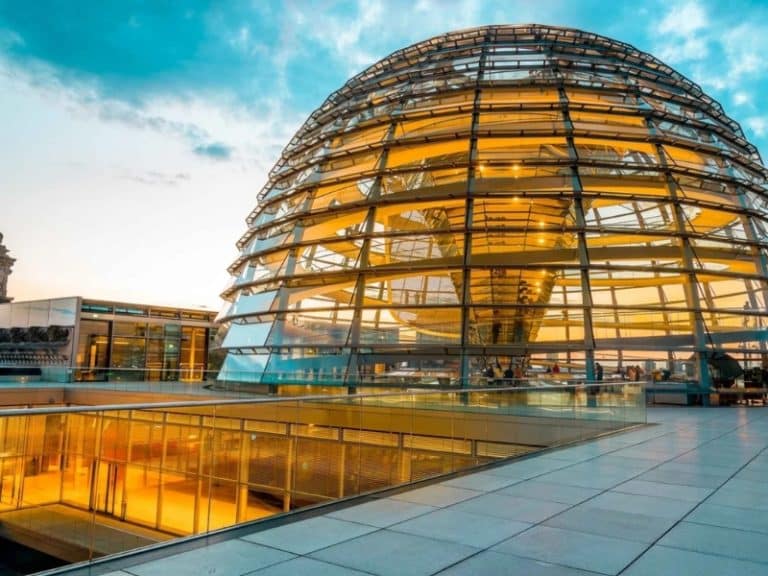
Paul Wallot's parliament building was completed in 1894, and the inscription Dem deutschen Volke, To the German People, was added in 1916. Gutted by fire in 1933 and badly damaged in 1945, it was rebuilt by Norman Foster with a glass dome, and the Bundestag has met here since 1999.
Only logged in customers who have purchased this product may leave a review.



Reviews
There are no reviews yet.