What is the Bordeaux self-guided walking tour?
The Bordeaux self-guided walking tour is an audio walk through the centre of Bordeaux: you follow the route on your phone and the narration tells you what you are looking at. Allow roughly 3 hours for the whole thing; the walking itself takes just 49 minutes, spread over 4 km and 10 stops. The route keeps to the old centre and the river quays, flat streets of pale limestone.
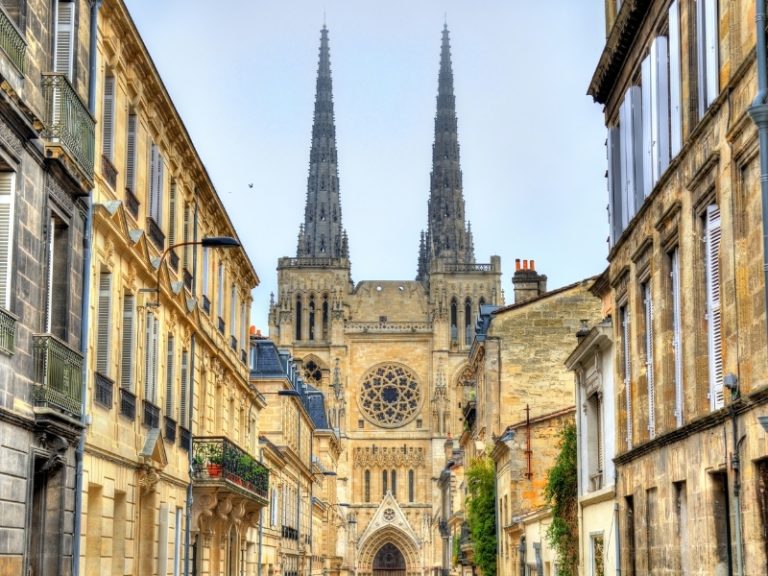
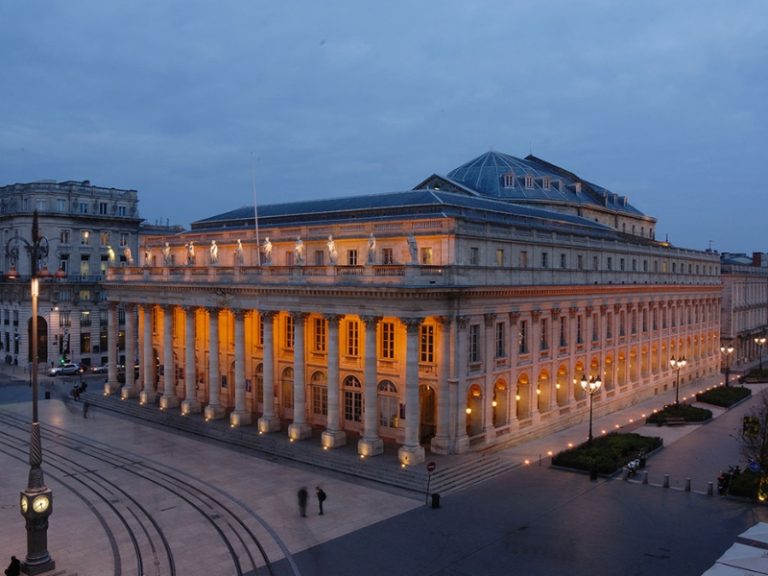
At Saint-André the narration recalls the wedding of Eleanor of Aquitaine and the future Louis VII in 1137, and explains why the bell tower stands apart from the church. The Grand Théâtre brings Victor Louis and the twelve statues on its portico, Place de la Bourse the royal square that opened the city to the Garonne, and the Grosse Cloche a bell of almost eight tonnes under a gilded leopard from the English centuries.
- Durationabout 3 hours
- Walkingabout 49 min · 4 km
- Stops10
- LanguagesEnglish, German, French, Italian, Spanish, Dutch
How the walk works
Listen
The narration starts as you reach each stop: the history of the place, the legends told about it and the details most people walk past. Prefer reading? The same text is on screen.
Walk
Between stops you simply follow Google Maps. The whole route is 4 km, roughly 49 minutes on foot, and the speed is yours.
Pause
Stop for lunch, a coffee or a museum and carry on later, the same day or another one.
Eat and shop
The app suggests places to eat and local shops near the route, and that is also where you change the first stop and the order.
See the route and attractions →
How it works
- Book online Choose the number of people. Your booking reference arrives by email straight away.
- Get the app Download the World City Trail app from the App Store or Google Play and enter your booking reference.
- Walk when you like Start whenever you are ready, walk at your own pace and pause any time. No guide, no fixed schedule.
Who will enjoy it
Curious walkers
If you like knowing the story behind a façade or a square, every stop gives you one.
Couples and families
Children hear the legends, adults get the history, and nobody has to keep up with a group.
Return visitors
Even if you know the streets, the stories add history and legends you may not have heard before.
Good to know
- Bring a charged smartphone with mobile data; a power bank helps.
- No entry tickets needed: everything happens outside the buildings. Going inside is optional and paid separately.
- Family friendly; children must be accompanied by an adult.
- Not suitable for wheelchair users and difficult with strollers.
- Groups of up to 5 work best; larger groups split up, one ticket per person.
- Every purchase helps support stray cats and dogs in Greece.
The walk stop by stop: Saint-André, the Grand Théâtre, Place de la Bourse, the Grosse Cloche
10 stops · about 49 min walking · start: Cathédrale Saint-André · finish: Grosse Cloche
Saint-André Cathedral is the first stop, and from there the walk passes through the Porte Dijeaux to Notre-Dame Church and north to the Grand Théâtre and the wide Place des Quinconces. Back along the river it reaches Place de la Bourse, then turns into the old Saint-Pierre quarter for Place Camille Jullian and the Porte Cailhau. The Porte de Bourgogne faces the Pont de Pierre, and the Grosse Cloche ends the loop. The app lets you change the first stop and the order, and no stop needs an entry ticket.
Open the route map ↗
1Cathédrale Saint-AndréStart
Bordeaux's Gothic cathedral was built mainly between the 13th and 15th centuries on the site of an older Romanesque church, and in 1137 Eleanor of Aquitaine married the future King Louis VII of France here. Its bell tower, the Tour Pey-Berland, stands apart from the church and is crowned by a gilded statue of the Virgin.
Read the full story →
2Porte Dijeaux
This classical city gate was built in the mid-18th century under the royal intendant Tourny, replacing a medieval gate in the town walls. Its name is said to come from the Latin Porta Jovia, the gate of Jupiter, and today it leads from Place Gambetta into the old town.
3Notre-Dame Church and Presbytery
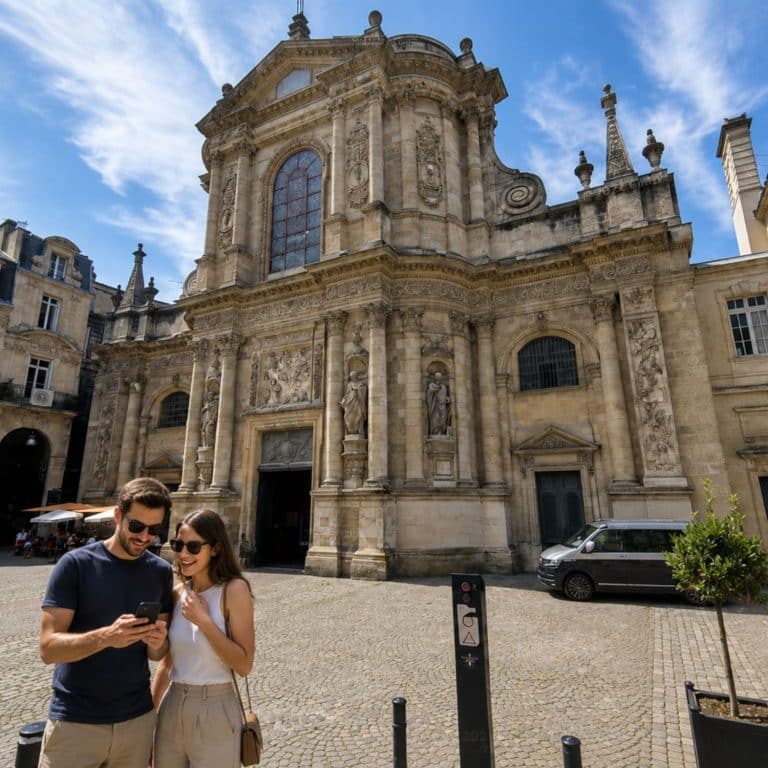
Notre-Dame was built for the Dominican friars between the late 17th and early 18th centuries, and its richly sculpted Baroque façade stands out among the city's churches. Beside it are buildings of the former Dominican convent, including the presbytery, whose old cloister survives as the Cour Mably.
4Grand Théâtre (Opéra National de Bordeaux)
Designed by the architect Victor Louis and inaugurated in 1780, the Grand Théâtre is the home of the Opéra National de Bordeaux. Its portico on Place de la Comédie has twelve Corinthian columns, topped by statues of the nine Muses and three goddesses.
5Place des Quinconces
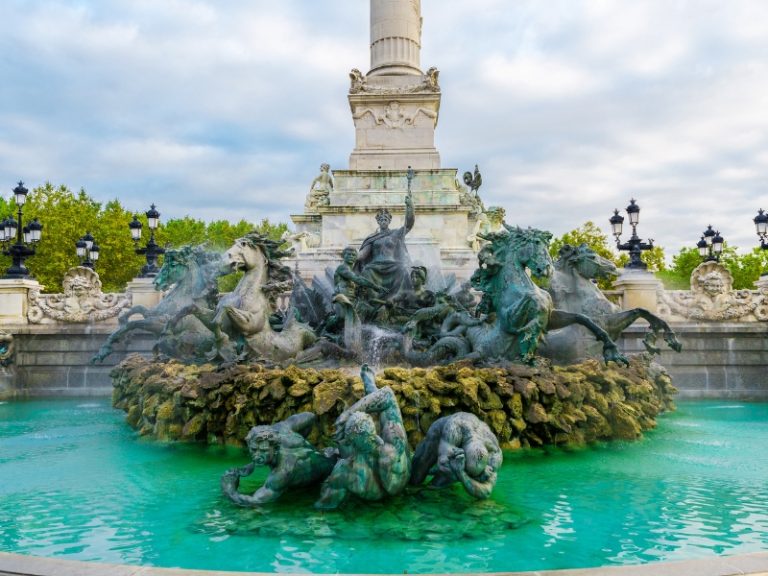
This square was laid out in the early 19th century on the site of the demolished Château Trompette fortress and is one of the largest city squares in Europe. At its western end the Monument aux Girondins, a tall column with bronze fountains, honours the Girondin deputies of the French Revolution, and statues of Montaigne and Montesquieu stand at the river end.
6Place de la Bourse
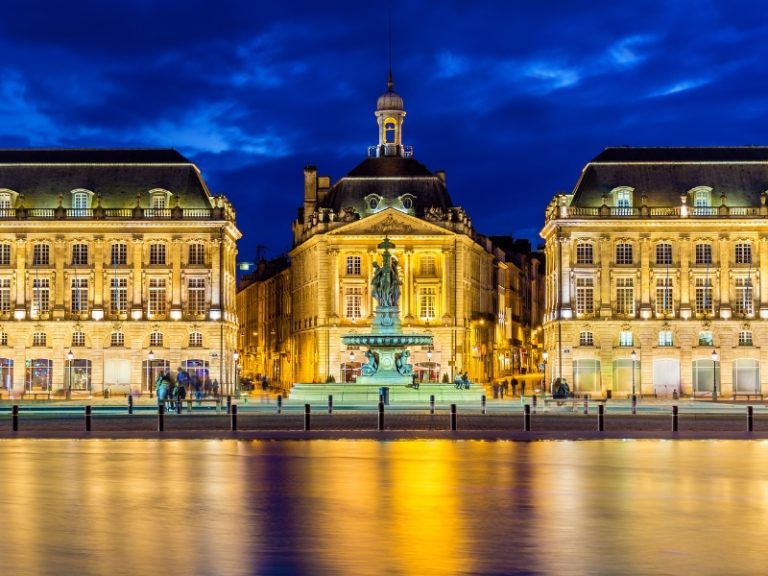
Built between 1730 and 1755 to plans by Jacques Gabriel and his son Ange-Jacques Gabriel, this royal square opened the city towards the Garonne. The Fountain of the Three Graces stands where a statue of Louis XV stood before the Revolution, and across the quay the Miroir d'eau, a shallow water mirror, reflects the façades.
7Place Camille Jullian
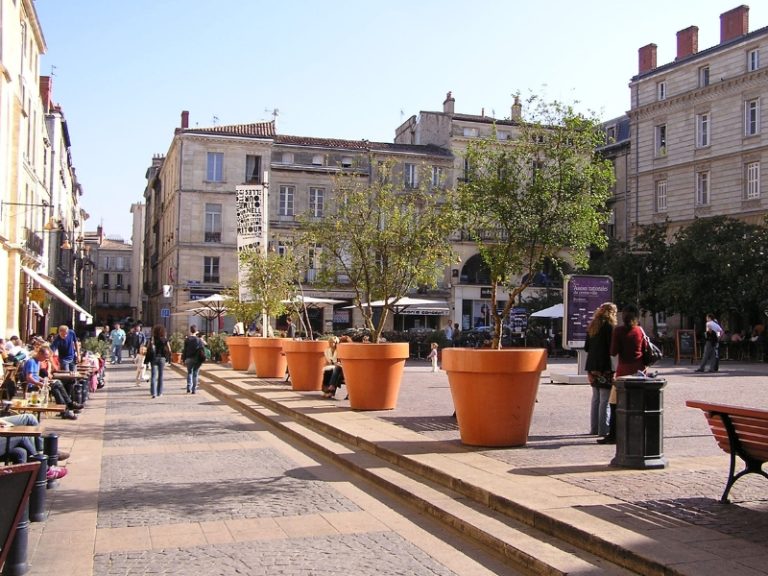
This small square in the Saint-Pierre quarter, one of the oldest parts of Bordeaux, is named after Camille Jullian, the historian of ancient Gaul who also wrote a history of the city. The Utopia cinema occupies the former Saint-Siméon church here, so films are shown inside an old church.
Read the full story →
8Porte Cailhau
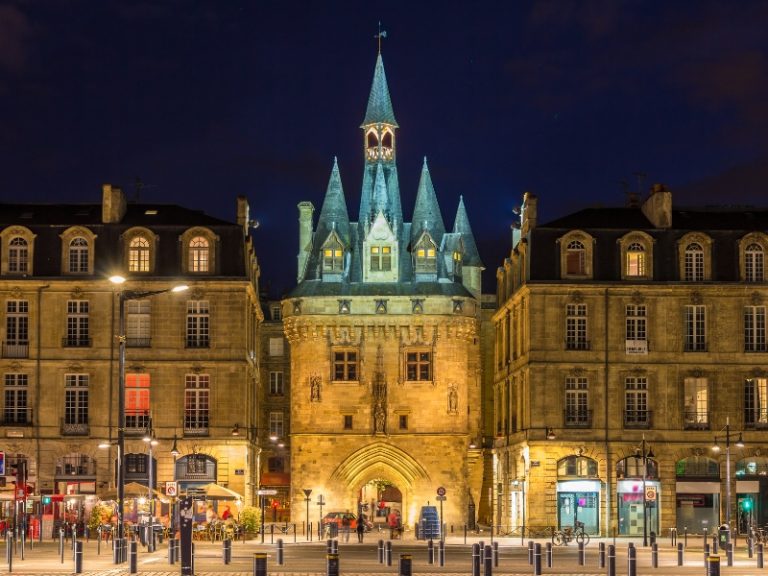
This 35-metre gate was built in 1495 to celebrate King Charles VIII's victory at Fornovo in Italy and guarded the entrance from the river port. With its pointed roofs and turrets it looks more like a small castle, and one explanation links its name to the pebbles, cailloux, unloaded on the quay.
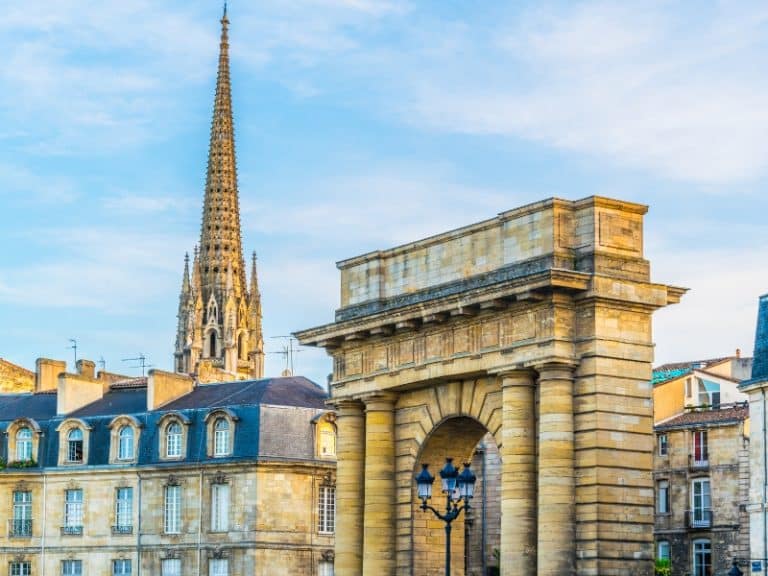
9Porte de Bourgogne
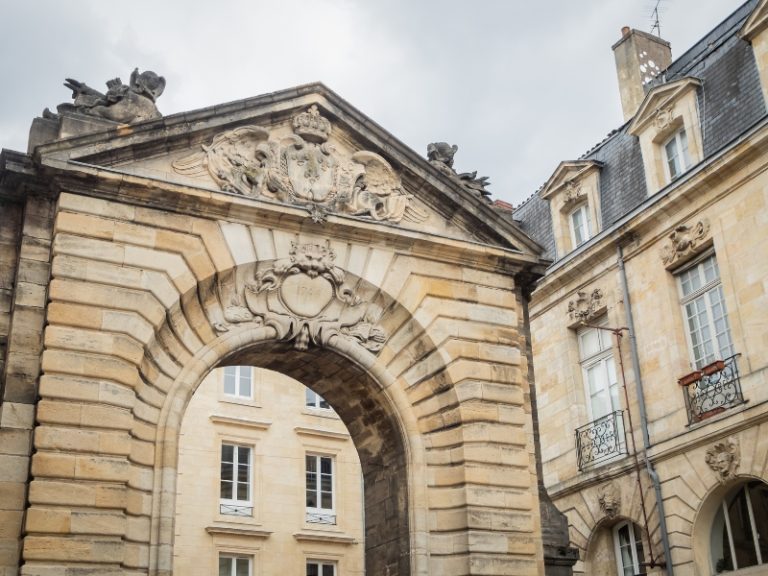
This triumphal arch was built in the mid-18th century and lines up with the Pont de Pierre, the first bridge across the Garonne in Bordeaux, completed in 1822. It is also called the Porte des Salinières, after the salt merchants who once worked in this district.
Read the full story →
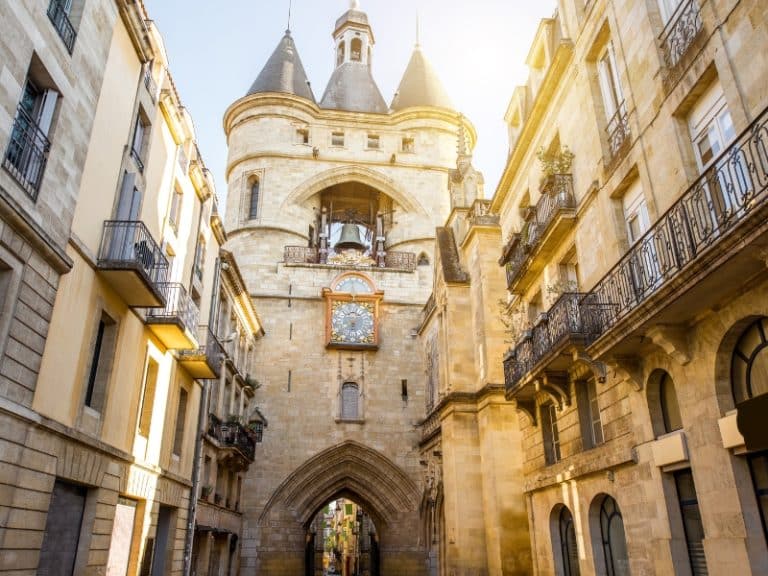
10Grosse ClocheFinish
The Grosse Cloche is the belfry of the old town hall, built on a 13th-century city gate whose two round towers still frame the street. Its bell, cast in 1775, weighs almost eight tonnes, and a gilded leopard on the roof recalls the three centuries when Bordeaux belonged to the English crown.
Only logged in customers who have purchased this product may leave a review.





Germany –
Collected on GetYourGuide
Gerne wieder in der nächsten Stadt
Cathrin– Germany –
Collected on GetYourGuide
Die Sehenswürdigkeiten waren gut zu finden und gut beschrieben. Auch die zusätzlichen Informationen zur Stadt fand ich interessant. Eine Stadtbesichtigung auf diese Art empfehle ich auch wegen der Flexibilität weiter.