What is the Bremen self-guided walking tour?
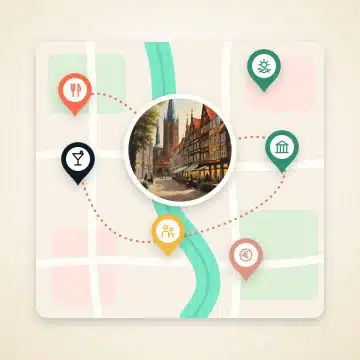
The Bremen self-guided walking tour is a narrated tour with your phone in place of a guide: in the World City Trail app you follow a route on the map and, at each stop, hear the history, legends and odd facts of the place, with no group to keep up with and no departure time. Count on roughly 3 hours overall, 34 minutes of it on foot, across 2.5 km and 10 stops. Bremen's old town is small and flat, so the walk moves easily from the river to the squares, through a park on the old ramparts and into the oldest lanes.
On the Schlachte you hear where the name is said to come from: the wooden stakes that once held the riverbank. In Böttcherstraße the narration explains how the coffee merchant Ludwig Roselius had the lane rebuilt in brick between 1922 and 1931, and why panels turn between two roofs while porcelain bells ring. On the Market Square the Roland of 1404 comes with the legend that Bremen stays free as long as he stands, the Town Musicians with the custom of holding the donkey's front legs, and at St Peter's Cathedral you learn why unmarried men turning 30 sweep the steps.
- Durationabout 3 hours
- Walkingabout 34 min · 2.5 km
- Stops10
- LanguagesEnglish, German, French, Italian, Spanish, Dutch
How the walk unfolds
Listen on the spot
Each stop opens its own chapter as you arrive: the people behind the building, the events it witnessed, a legend or two and a small detail to look out for. Every chapter can also be read on screen.
Follow the map
Each leg to the next stop is drawn in Google Maps. The whole route is 2.5 km, roughly 34 minutes of walking at a normal pace.
Stop when you want
Coffee, lunch, a museum you had not planned on: the app remembers where you stopped, and you pick up the thread later that day or on a different one.
Eat and shop nearby
Along the way the app suggests places to eat and local shops. You can also start at a different stop or change the order of the route.
See the route and attractions →
How it works
- Book online Choose the number of people. Your booking reference arrives by email straight away.
- Get the app Download the World City Trail app from the App Store or Google Play and enter your booking reference.
- Walk when you like Start whenever you are ready, walk at your own pace and pause any time. No guide, no fixed schedule.
Who enjoys it most
Curious minds
Who built it, why it stands there, what the name means: the narration answers the questions a street corner raises.
Families and couples
Children get the legends, adults get the history, and nobody has to rush.
Return visitors
Streets you thought you knew gain a past once you hear what happened in them.
Good to know
- Bring a charged smartphone with mobile data; a power bank helps.
- No entry tickets needed: everything happens outside the buildings. Going inside is optional and paid separately.
- Family friendly; children must be accompanied by an adult.
- Not suitable for wheelchair users and difficult with strollers.
- Groups of up to 5 work best; larger groups split up, one ticket per person.
- Every purchase helps support stray cats and dogs in Greece.
From the riverfront to the Schnoor: the route
10 stops · about 34 min walking · start: Schlachte · finish: Schnoor
You set off on the Schlachte, for centuries Bremen's harbour on the Weser, with the Martinianleger landing stage a few steps further on. Through the golden entrance of Böttcherstraße you reach the Market Square with its Roland, then the Town Musicians of Bremen, the Gothic Town Hall and St Peter's Cathedral. The Wallanlagen, a park laid out from 1802 along the old fortifications, lead to the Kunsthalle Bremen, and the walk ends among the small houses of the Schnoor. Start and order can both be changed in the app, and you will not need a ticket at any stop.
Open the route map ↗
1SchlachteStart
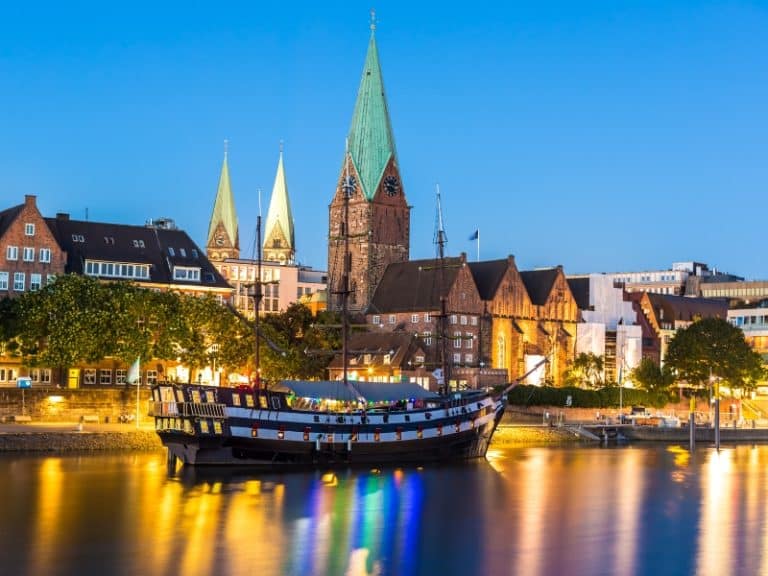
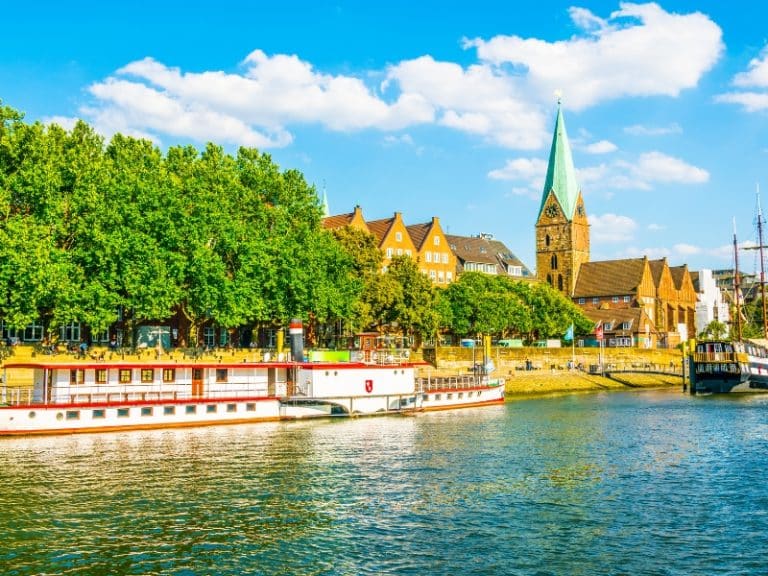
This promenade along the Weser was Bremen's harbour for centuries, where cargo was loaded and unloaded in front of the old town. The name is said to come from the wooden stakes that once reinforced the riverbank. Today it is lined with restaurants, beer gardens and moored ships.
2Martinianleger
This landing stage takes its name from the nearby brick Church of St Martin, founded in the 13th century on the bank of the Weser. Boats for harbour tours and river trips leave from here, and you look across the water to the Teerhof peninsula.
3Böttcherstraße
The coffee merchant Ludwig Roselius had this short lane rebuilt between 1922 and 1931 in a bold brick style, much of it designed by the sculptor Bernhard Hoetger. A golden relief marks the entrance, and between two roofs a carillon of Meissen porcelain bells plays while panels turn to show famous ocean crossers.
Read the full story →
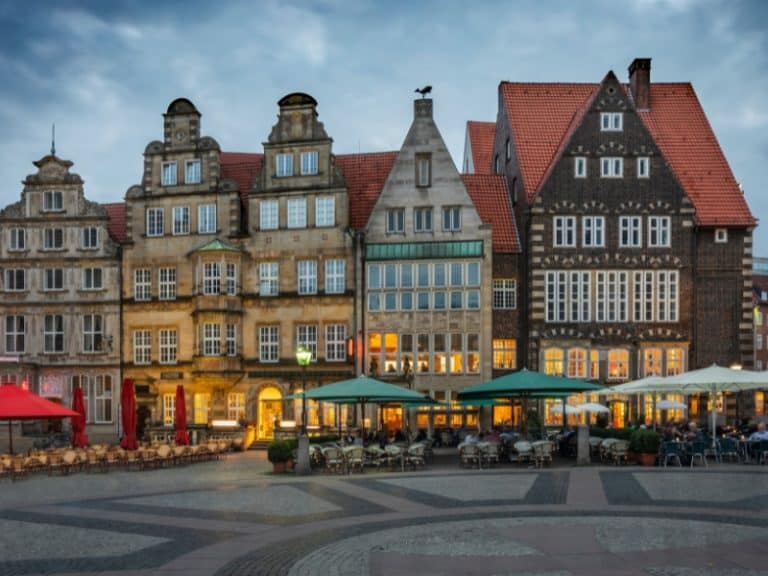
4Market Square
Bremen's main square is guarded by the Roland, a stone statue of 1404 more than five metres tall that stands for the city's rights and freedom. Legend says Bremen will stay free as long as Roland stands. A small stone with a cross in the paving marks where the poisoner Gesche Gottfried was executed in 1831.
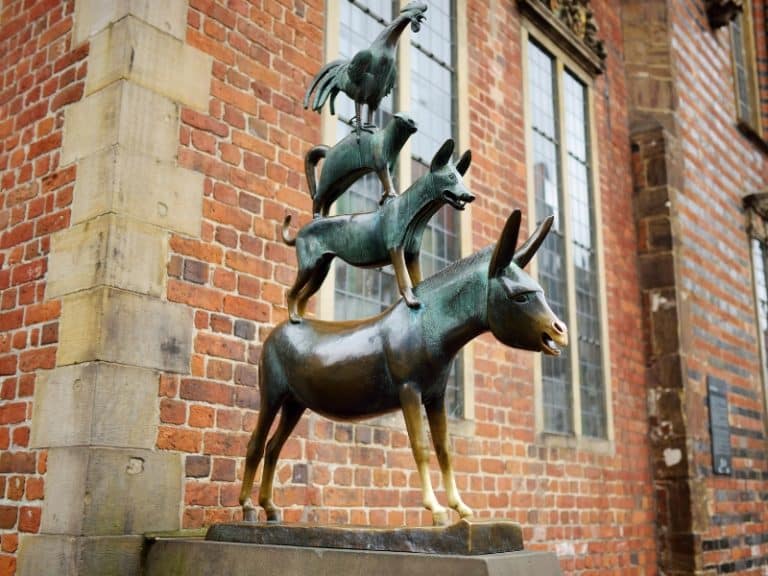
5Town Musicians of Bremen
This bronze by the sculptor Gerhard Marcks, set up in 1953 beside the Town Hall, shows the donkey, dog, cat and rooster from the Grimm brothers' fairy tale standing on each other's backs. In the story they never actually reach Bremen. Holding the donkey's front legs is said to bring good luck, which is why they shine.
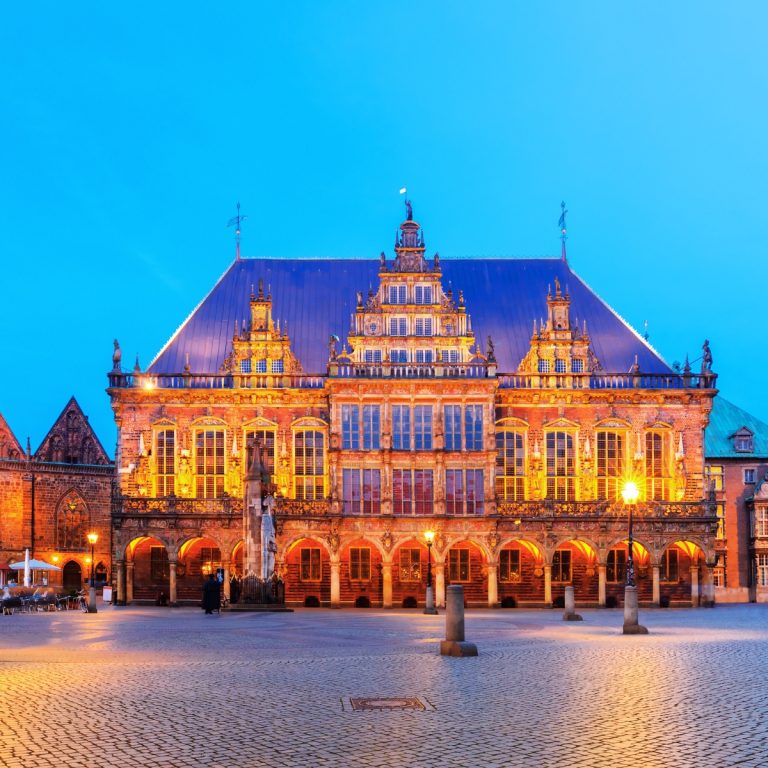
6Bremen Town Hall
The Gothic town hall was built between 1405 and 1410, and its richly decorated façade facing the market was added from 1608 to 1612 in the Weser Renaissance style. Together with the Roland it has been a UNESCO World Heritage Site since 2004, and beneath it lies the Ratskeller, one of the oldest wine cellars in Germany.
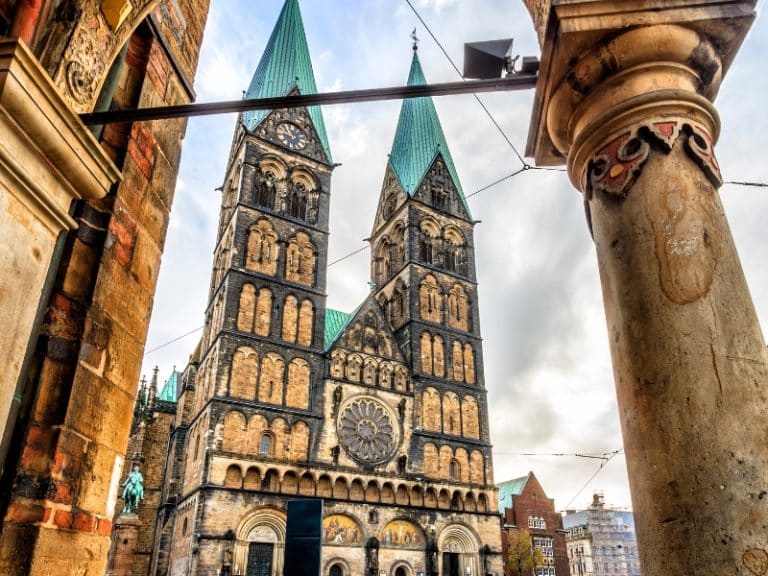
7St Peter's Cathedral
Bremen Cathedral stands where the first church was built at the end of the 8th century, and the present building was begun in the 11th century. Its two towers, about 98 metres high, were completed during a restoration in the late 19th century. By local custom, unmarried men turning 30 have to sweep the cathedral steps until a kiss sets them free.
8Wallanlagen
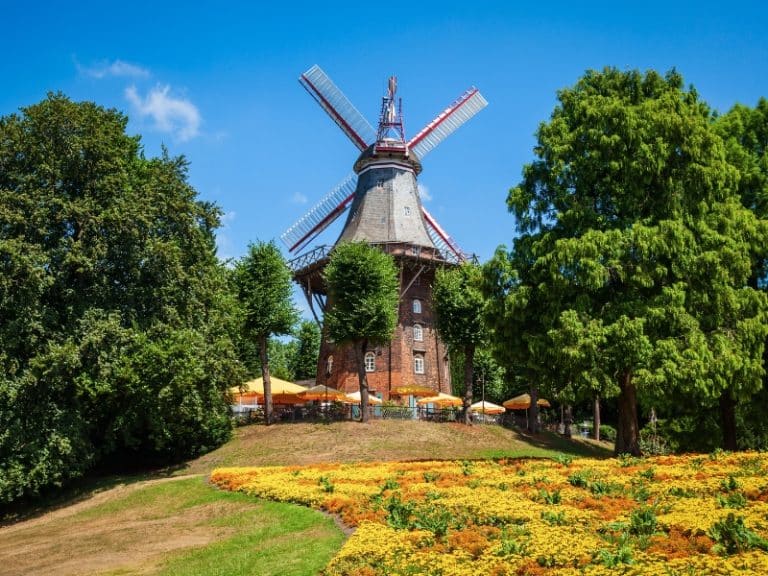
This park follows the line of the old city fortifications and was laid out from 1802 by the garden designer Isaak Altmann, making it one of the oldest public parks in Germany. The zigzag moat still traces the former bastions, and the Mühle am Wall, a windmill of 1898, stands above the water.
9Kunsthalle Bremen
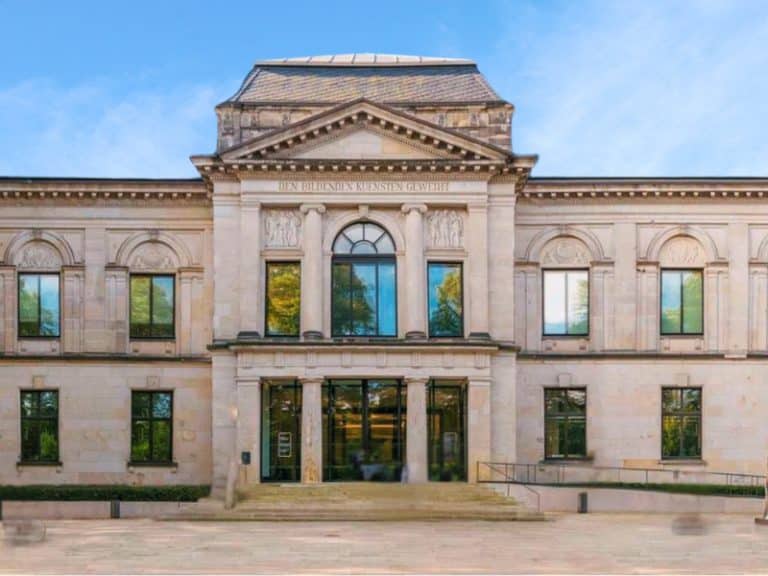
The art museum is run by the Kunstverein in Bremen, an association of citizens founded in 1823, and its building on the edge of the ramparts park opened in 1849. The collection spans European art from the Renaissance to today, including French Impressionists and works by Paula Modersohn-Becker.
10SchnoorFinish
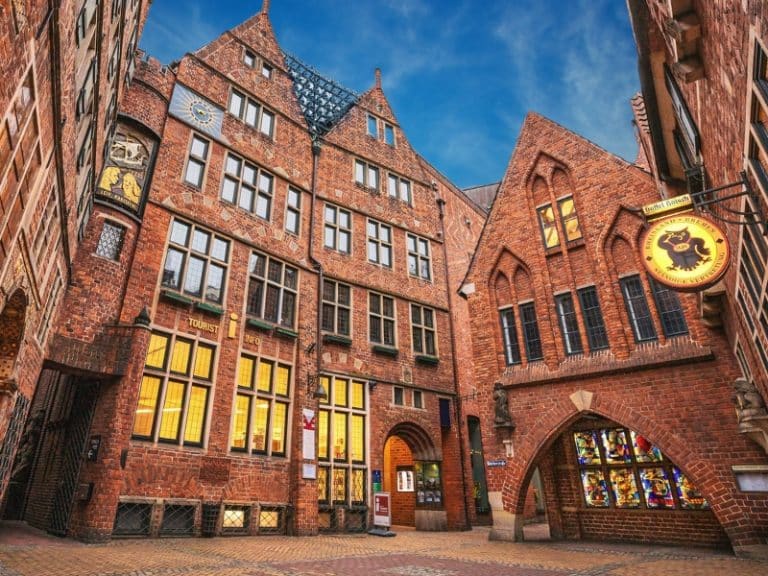
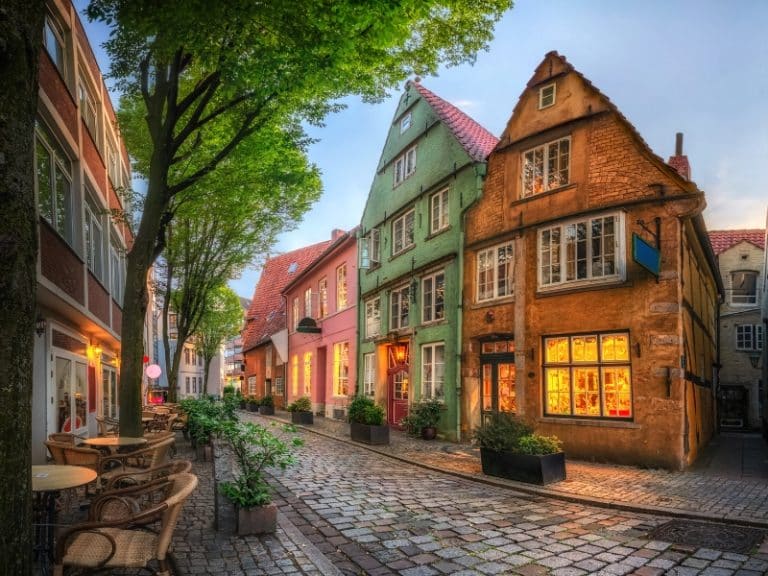
Bremen's oldest quarter is a maze of narrow lanes lined with tiny houses, many from the 17th and 18th centuries, where fishermen and craftsmen once lived. Schnoor means string in Low German, said to refer to the ropemakers who worked here or to the houses lined up like beads on a string.
Read the full story →
Only logged in customers who have purchased this product may leave a review.




Anonymous (verified owner) –
Exactly what I needed for exploring Bremen