
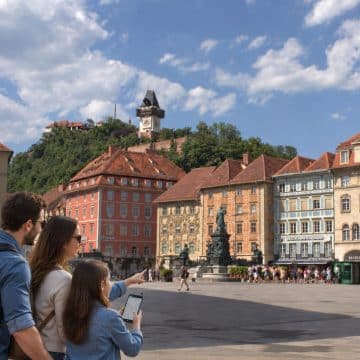


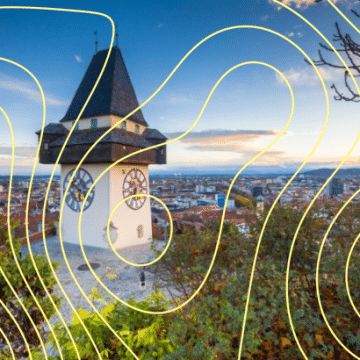
Graz is Austria’s second largest city, a relaxed student town on the river Mur with a UNESCO listed old town of red rooftops and arcaded courtyards. The Uhrturm clock tower on the Schlossberg watches over it all, the Landhaus brings Italian Renaissance flair to the centre, and the blue Kunsthaus adds a friendly modern blob to the skyline.
The Graz Scavenger Hunt and Self-Guided Tour turns that old town into a walking game on your phone: a riddle at every stop, a story once you crack it. You cover 2.6 kilometres, roughly 40 minutes of walking plus puzzle time, you start whenever you like, and it works for friends, families and curious solo travellers.
About Graz Scavenger Hunt and Self Guided Tour
Highlights of Graz Scavenger Hunt and Self Guided Tour
Play
Solve location based puzzles. Use logic, imagination and observation. No knowledge required.
Learn
Uncover fun facts, local legends and information about the attractions and the city with our optional voice narration.
Walk
Who doesn’t love walking as a way to explore a city? Do it at your own pace and discover hidden gems.
Flexibility
Start anytime. Time is with you and not against you. Customise your route. Snap photos as you go.
Team Building in Graz: Solve the City Together
Locations and Route (Show Map)
In the map you can check the optimised route. You can change the order and adjust it according to your needs.
Download the World City Trail app from the store and after the purchase you will receive a booking reference. Fill in your details and you are ready to go!
A Graz scavenger hunt turns the Austrian city into an open air puzzle you play on your phone, no guide, no fixed meeting time, no app store detour. You get a riddle at every stop, a story behind each landmark and a route of 2.6 km that takes about 40 minutes of pure walking, plus all the time you want for coffee breaks and photos. Play it in English, German, French, Italian, Spanish, Polish or Dutch, start whenever you like, pause when you like. It works for couples, families with kids, friends and colleagues alike.
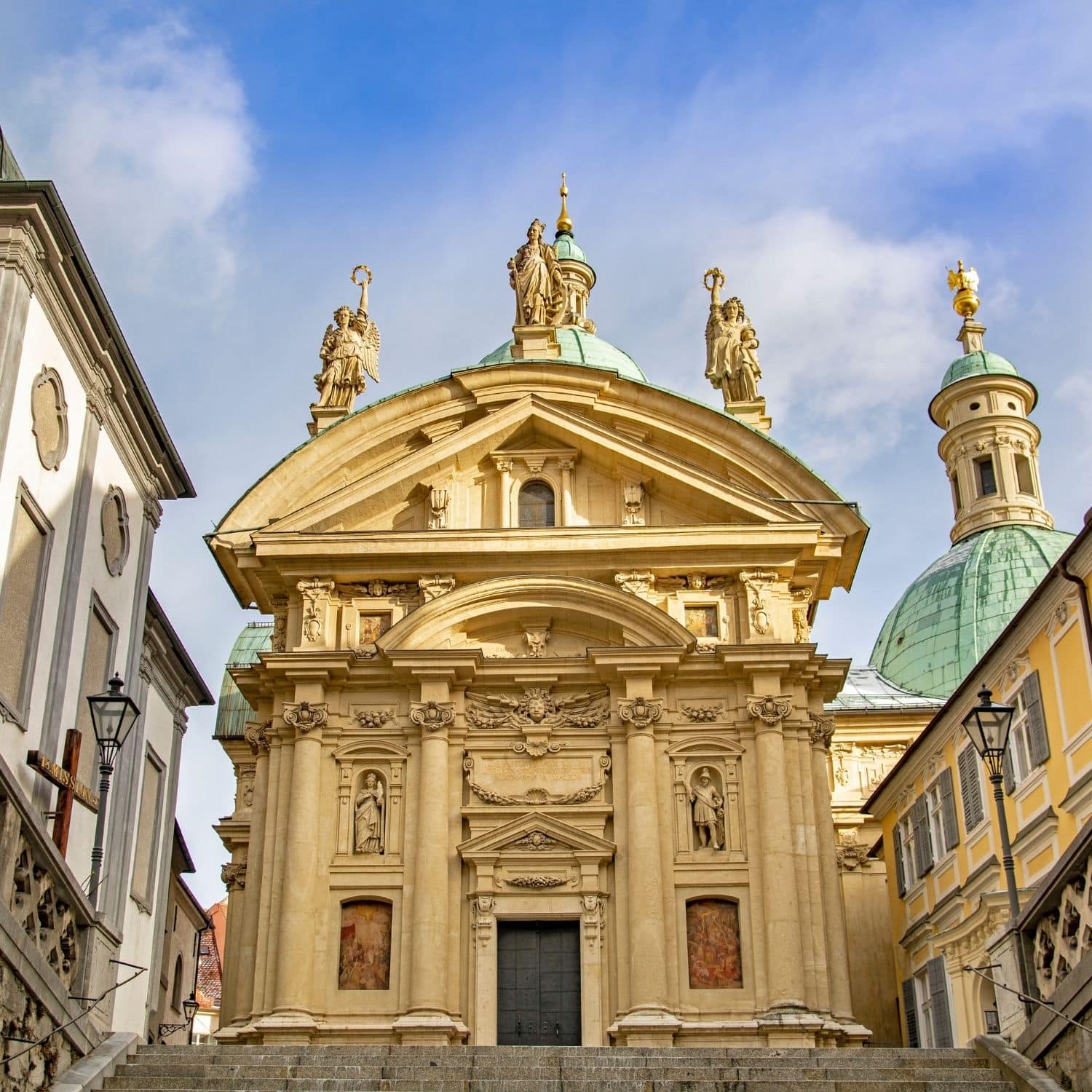
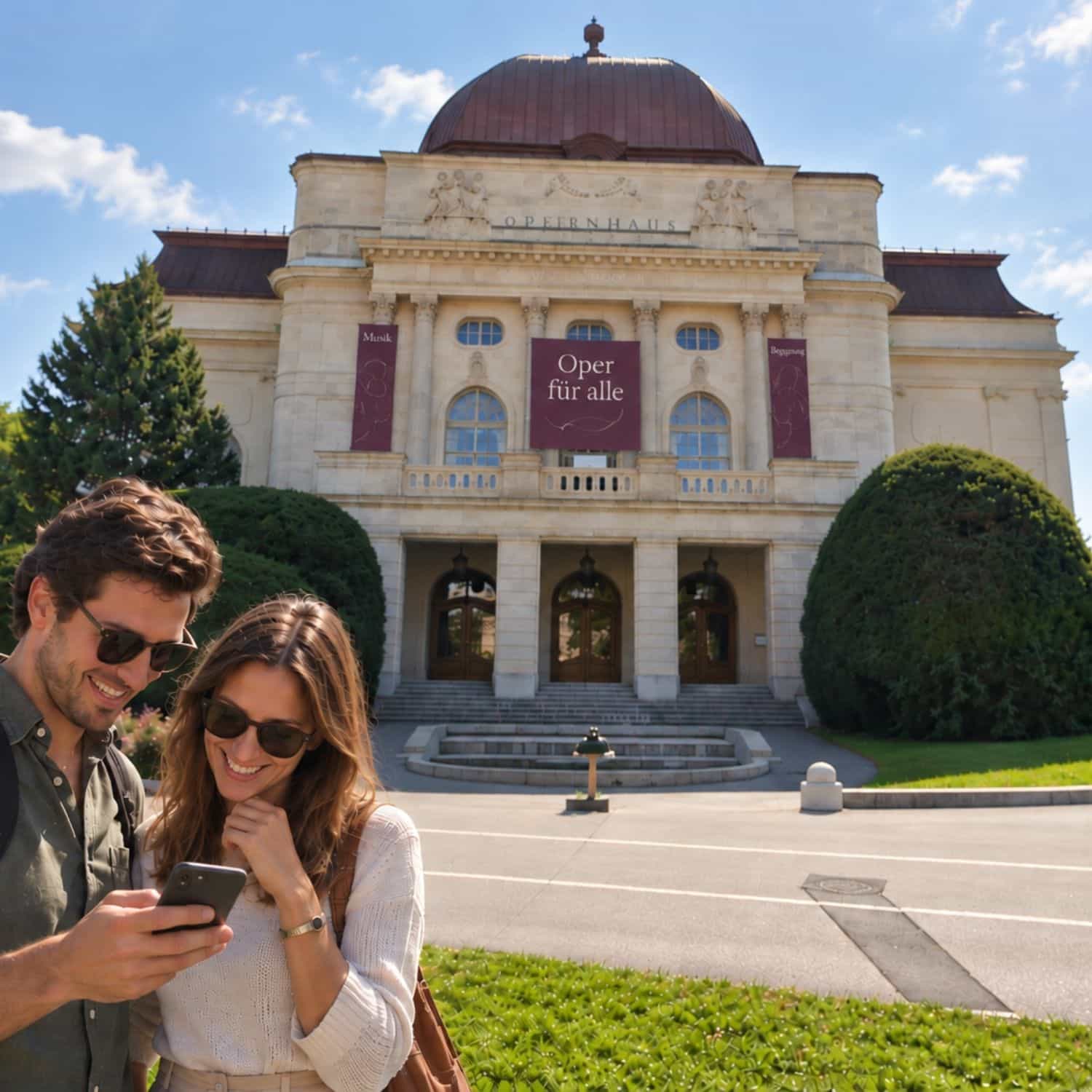
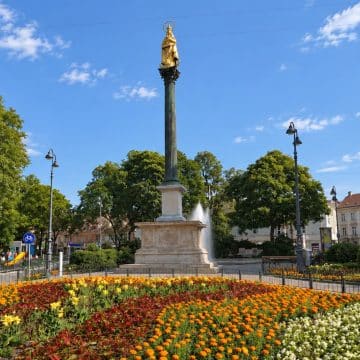
You begin at the Mariensäule, the baroque Marian column at the Eisernes Tor, then pass the Opera Graz, a neo baroque house from 1899 and the second largest opera stage in Austria. The green Stadtpark, laid out in the 19th century where the old city walls once stood, gives you a breather before the historic core. There you find the Mausoleum of Ferdinand II, a mannerist landmark begun in 1614, and Graz Cathedral, the Gothic church built in the 15th century for Emperor Frederick III, with his motto AEIOU on the wall.
From there the old town, a UNESCO World Heritage site, keeps the surprises coming: the Glockenspiel on Glockenspielplatz, where two carved figures dance out of the gable to a chime, the Renaissance arcades of the Grazer Landhaus, and the City Hall on Hauptplatz, where market stalls sell Styrian pumpkin seed oil, sausages and apples. Sporgasse, one of the oldest lanes in Graz, is lined with small shops and cafes and pulls you uphill towards the finish: the Uhrturm on the Schlossberg, the clock tower whose big hand counts the hours and whose view counts the rooftops.
Important information about Graz Scavenger Hunt
Smartphone
You will need a fully charged smartphone with internet access and World City Trail app.
Self Guided Tour
Nobody will wait for you. Start anytime and do it at your own pace. Pause and resume anytime.
Not Suitable
For wheelchair users, people with mobility impairments or unaccompanied children.
Important
Audio guide included. You don’t have to pay any entry fees.
Explore the attractions of Graz Scavenger Hunt and Self Guided Tour
Mariensäule, starting point of the Graz Scavenger Hunt
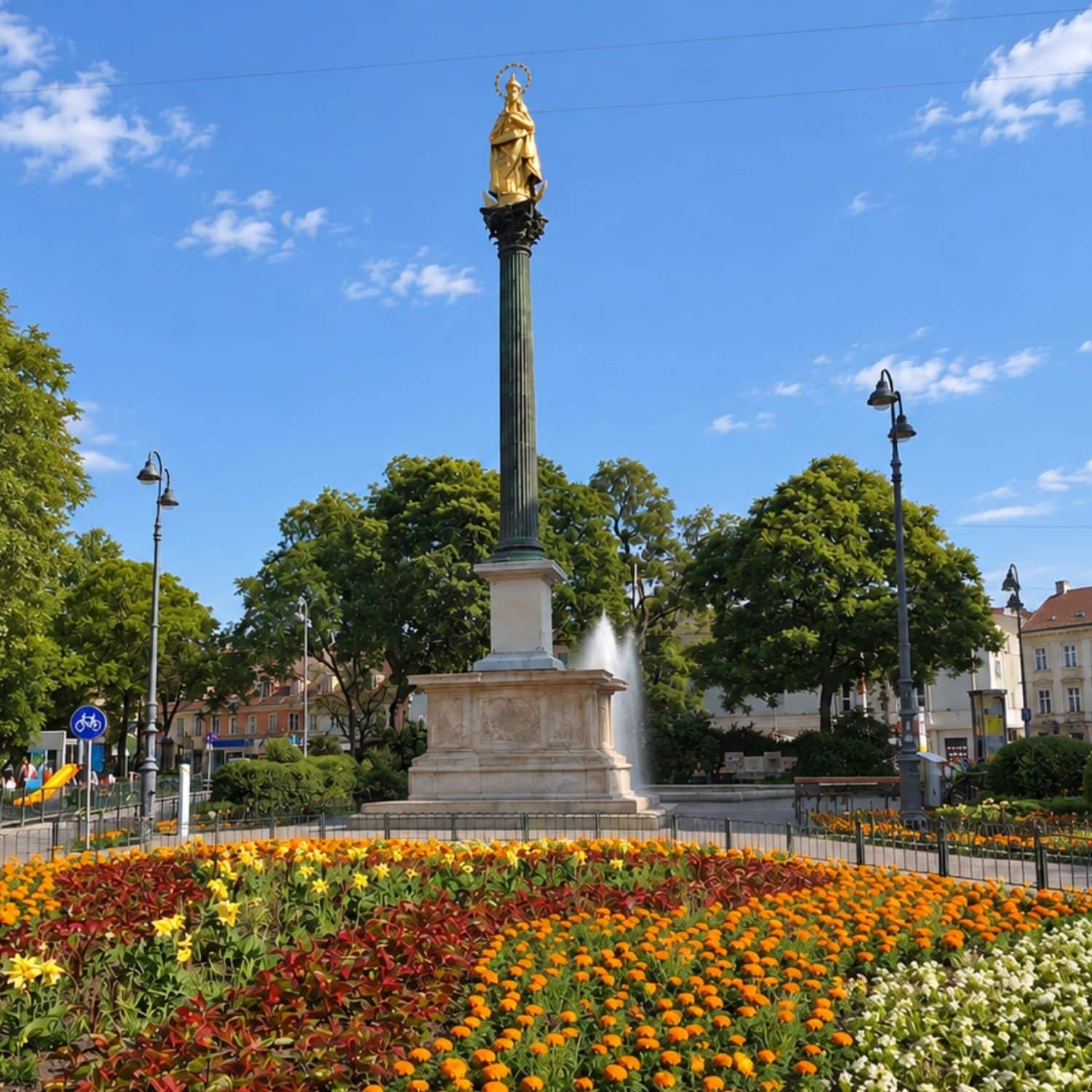
Your Graz scavenger hunt starts at the Mariensäule on Am Eisernen Tor, the Baroque Marian column raised in the 1670s to give thanks for victory over the Ottomans. The gilded Madonna on top has watched over this busy square for centuries, so look up before you read your first riddle.
Opera Graz
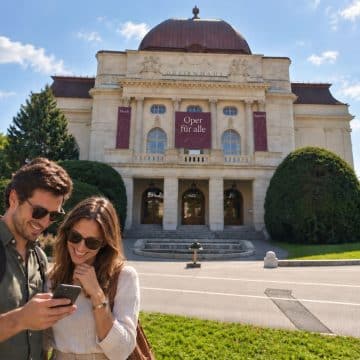
The Opera House of Graz opened in 1899, designed by the Viennese duo Fellner and Helmer in a lavish neo-Baroque style, and it is the second largest opera stage in Austria. Outside stands the Lichtschwert, a tall steel light sculpture that makes a great landmark while you puzzle.
Graz Stadt Park
Laid out from 1869 on the ground where the city fortifications once stood, the Stadtpark is the green heart of Graz. Old plane trees, the ornate cast iron Stadtparkbrunnen fountain and the surviving Burgtor gate give you plenty to look at while you hunt for your next clue.
Mausoleum Ferdinand
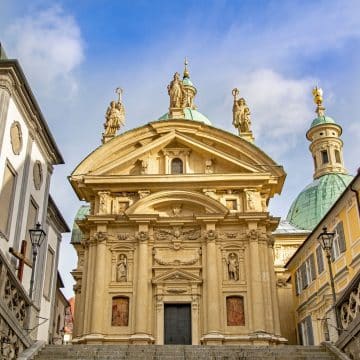
Built between 1614 and 1636 for Emperor Ferdinand II, this Mannerist mausoleum with its turquoise dome is the work of Giovanni Pietro de Pomis. The dazzling interior was later decorated by Johann Bernhard Fischer von Erlach, and it stands right beside the Cathedral, a clever spot for a riddle.
Graz Cathedral
Graz Cathedral, or Domkirche, went up in the 15th century as the court church of Emperor Frederick III, who left his motto AEIOU on the walls. Look for the faded Landplagenbild fresco outside, a grim 1485 reminder of plague, locusts and Turkish raids all at once.
Glockenspiel
Twice you might miss it, then the little doors swing open. At 11am, 3pm and 6pm two carved wooden figures in traditional dress turn and dance to 24 bells above Glockenspielplatz. A liquor merchant installed the whole thing in 1905. Find a spot in the square and wait.
Grazer Landhäus
The Landhaus is one of the finest Renaissance buildings north of the Alps, built in the 16th century by Lombard architect Domenico dell’Allio. Step through into the arcaded courtyard with its three tiers of round arches and bronze fountain, still the seat of the Styrian provincial parliament today.
City hall
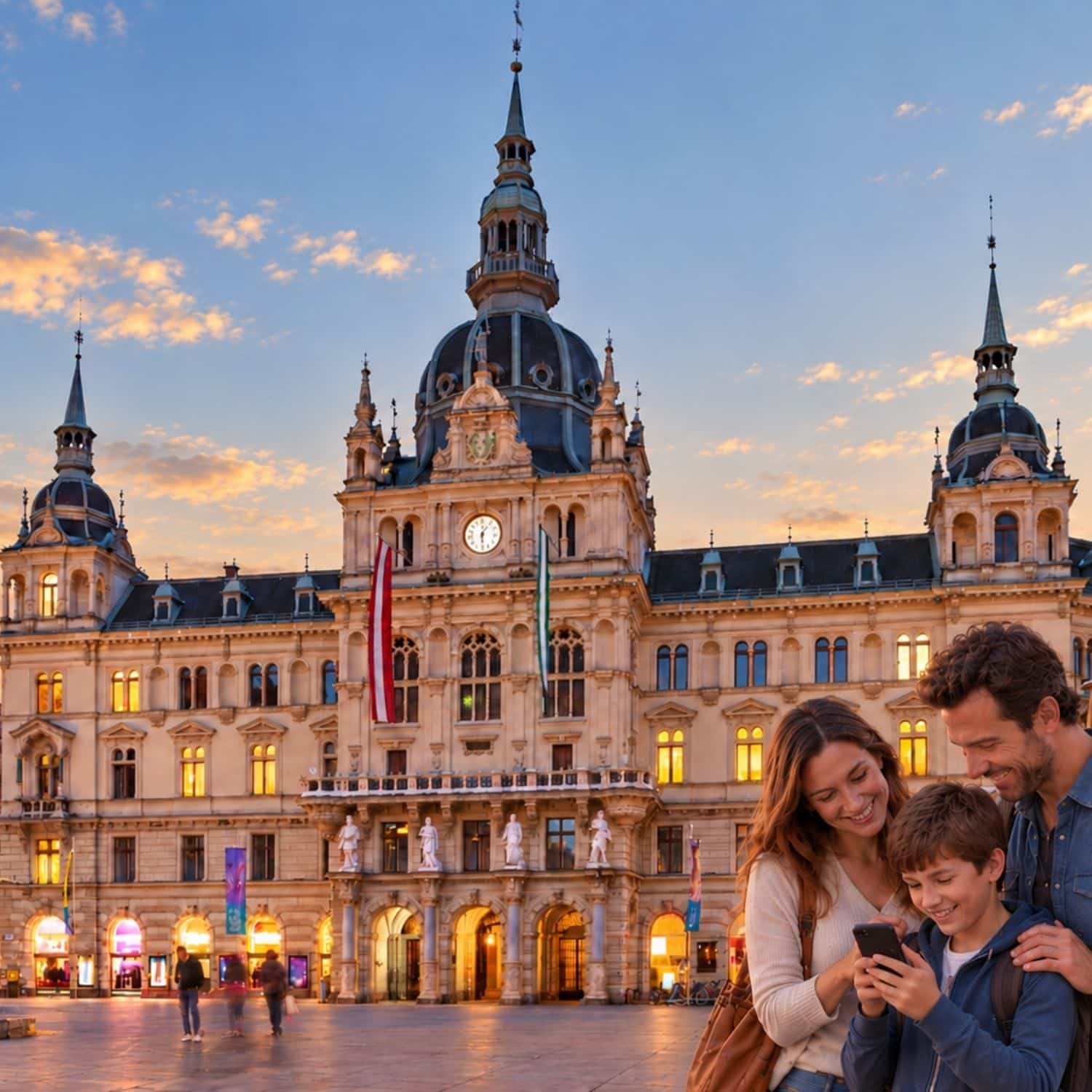
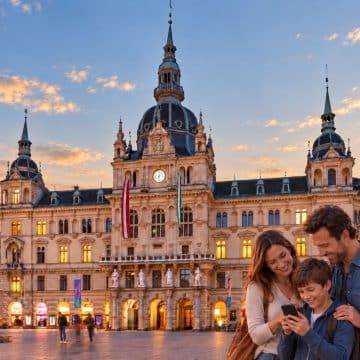
The Rathaus fills the south side of Hauptplatz with a confident historicist facade from the late 1880s, the city’s third town hall on this spot. Statues of art, science, trade and craft look down from above. Below, market stalls and trams keep the square busy all day long.
Sporgasse
Sporgasse is one of the oldest streets in Graz, a narrow, curving lane that once carried traffic toward Vienna and Hungary. Spur makers gave it its name. Look up at house number 25, the Palais Saurau, where a little Turk figure leans out of a gable window, the star of a much loved city legend.
Uhrturm, ending point of the Graz Scavenger Hunt
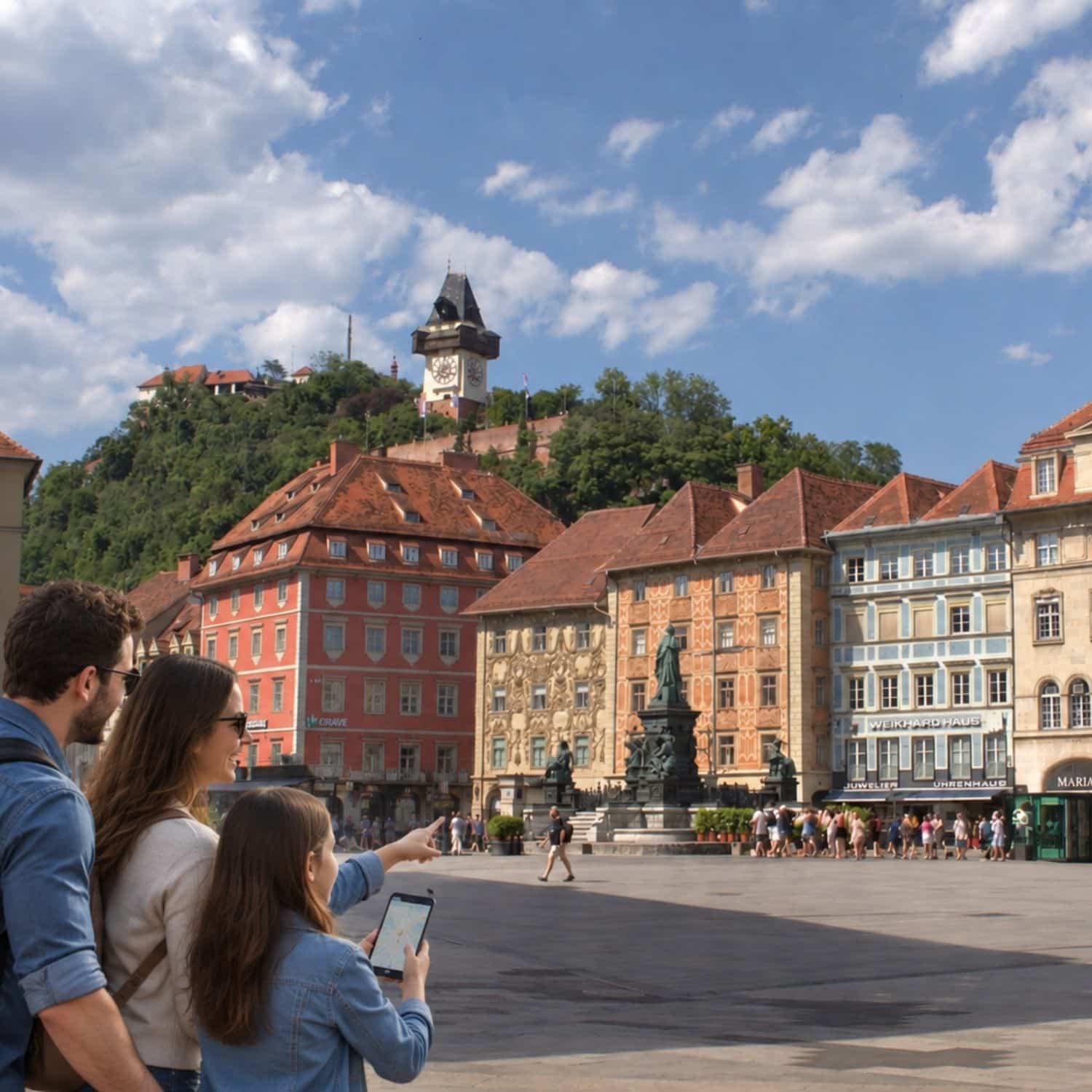
The Uhrturm, the clock tower on the Schlossberg, is the symbol of Graz. Its huge clock faces date from 1712, and the hands are famously swapped: the big hand shows the hours, the small one the minutes. Citizens paid a ransom in 1809 to save it when Napoleon’s troops blew up the fortress around it.
You might also be interested in Vienna, Hallstatt, Innsbruck


Reviews
There are no reviews yet.