What is the Graz self-guided walking tour?
The Graz self-guided walking tour puts an audio walk on your phone through the World City Trail app: Google Maps leads you from stop to stop, and there you listen to the history, legends and curious facts of each place. The route covers 10 stops and 2.6 km, roughly 40 minutes on foot within about 3 hours. Most of it lies in the Old Town below the Schlossberg.
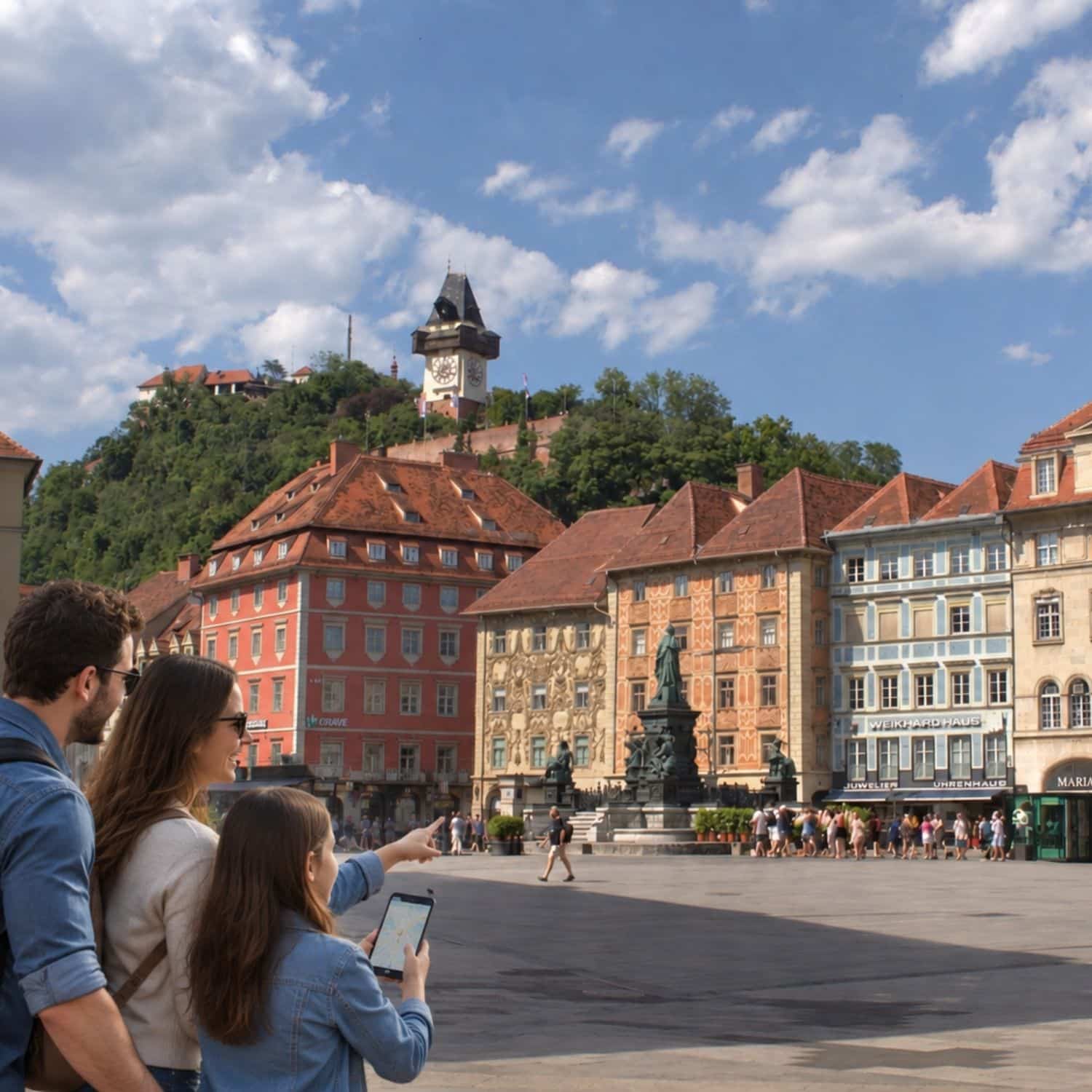
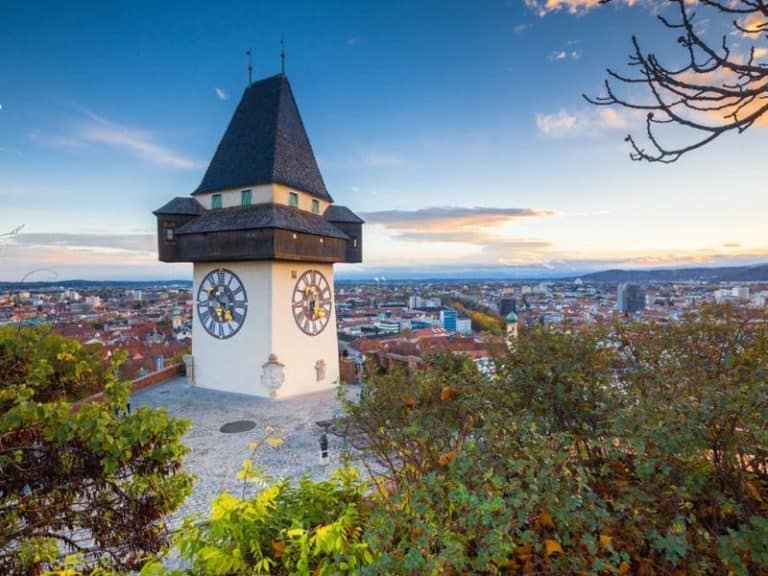
At the Uhrturm you hear how Graz citizens bought the clock tower free after the French siege of 1809, and why its larger hand shows the hours. The Glockenspiel has chimed since Christmas Eve 1905 while a carved couple in Styrian costume dances at the windows. Emperor Frederick III's motto AEIOU appears several times on Graz Cathedral.
- Durationabout 3 hours
- Walkingabout 40 min · 2.6 km
- Stops10
- LanguagesEnglish, German, French, Italian, Spanish, Polish, Dutch
Stop, listen, walk on
Hear the story
Arrive at a stop and the narration begins: who built the place, what happened there, which legends cling to it and which small detail is easy to miss. Rather read than listen? Every word is also on screen.
Map in hand
Google Maps plots each leg to the next stop. The 2.6 km come to about 40 minutes of walking, at a speed you set yourself.
Break off, carry on
Stop for lunch or an exhibition whenever you like. The app remembers where you left off, whether you continue later today or on another day.
Lunch, coffee, souvenirs
The app points out places to eat and local shops close to the route, and lets you begin at another stop or reorder the stops.
See the route and attractions →
How it works
- Book online Choose the number of people. Your booking reference arrives by email straight away.
- Get the app Download the World City Trail app from the App Store or Google Play and enter your booking reference.
- Walk when you like Start whenever you are ready, walk at your own pace and pause any time. No guide, no fixed schedule.
Visitors it suits best
History lovers
Dates, names and the events behind them, told on the spot where they took place.
Families and couples
Legends for the children, background for the adults, and a pace the whole party agrees on.
Returning to Graz
Familiar streets look different once you know what happened in them.
Good to know
- Bring a charged smartphone with mobile data; a power bank helps.
- No entry tickets needed: everything happens outside the buildings. Going inside is optional and paid separately.
- Family friendly; children must be accompanied by an adult.
- Not suitable for wheelchair users and difficult with strollers.
- Groups of up to 5 work best; larger groups split up, one ticket per person.
- Every purchase helps support stray cats and dogs in Greece.
From Am Eisernen Tor to the clock tower
10 stops · about 40 min walking · start: Mariensäule · finish: Uhrturm
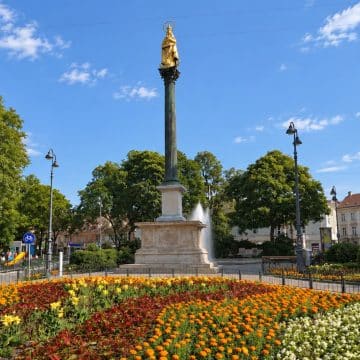
The walk starts at the Mariensäule on the square Am Eisernen Tor, heads to Opera Graz and crosses the Graz Stadt Park to the Mausoleum of Emperor Ferdinand II and Graz Cathedral. The Glockenspiel and the arcaded Grazer Landhaus follow, then the Grazer Rathaus on the Hauptplatz. Sporgasse climbs towards the Schlossberg, and the Uhrturm closes the route. Change the order in the app whenever you like; no stop charges admission.
Open the route map ↗
1MariensäuleStart
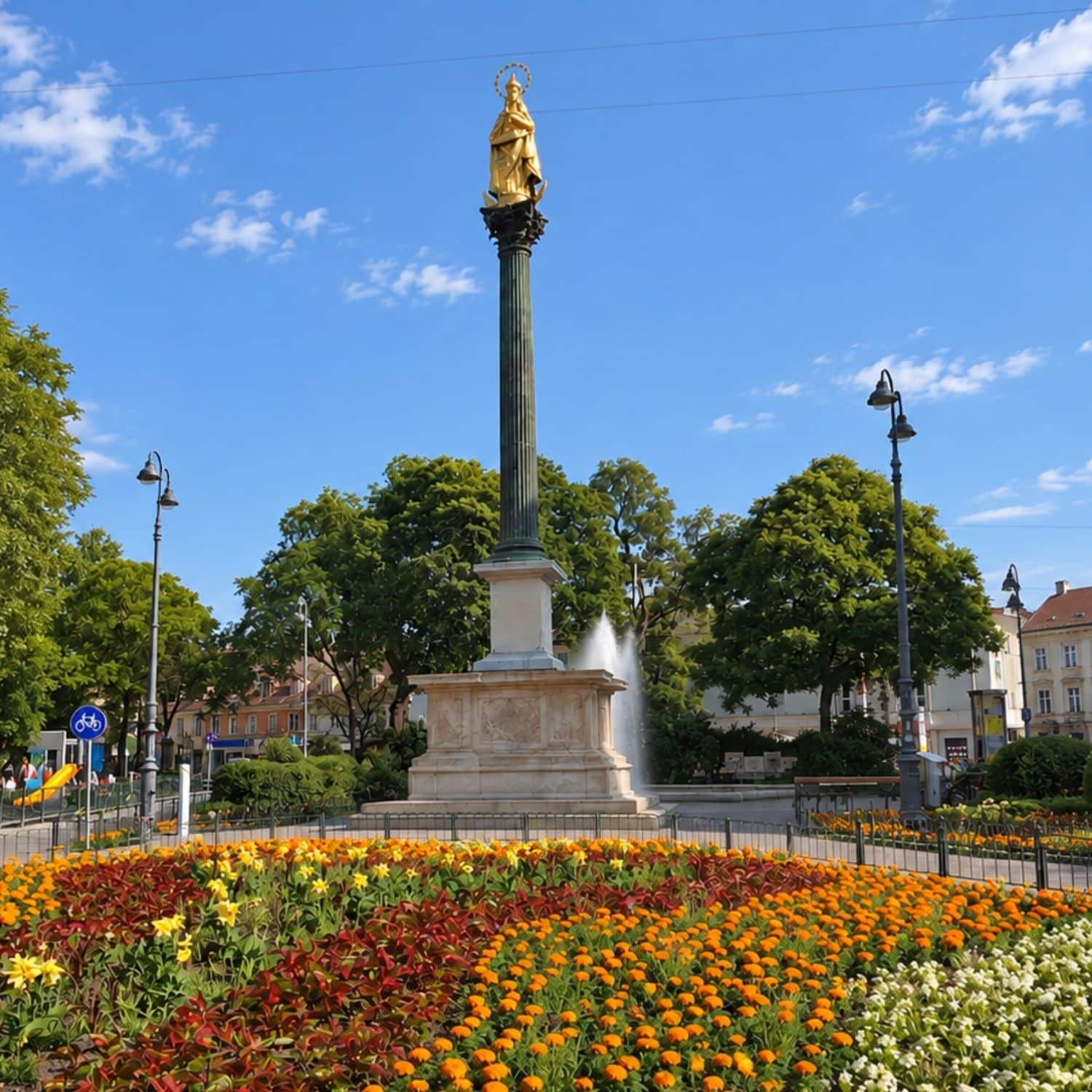
Historically, this Marian column on the square Am Eisernen Tor commemorates the imperial victory over the Ottomans at Mogersdorf in 1664. The Landstände (the provincial estates) and the Stift St. Lambrecht paid for the monument.
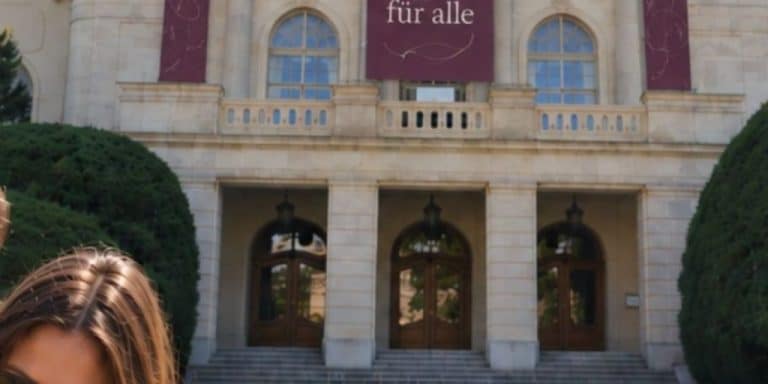
2Opera Graz
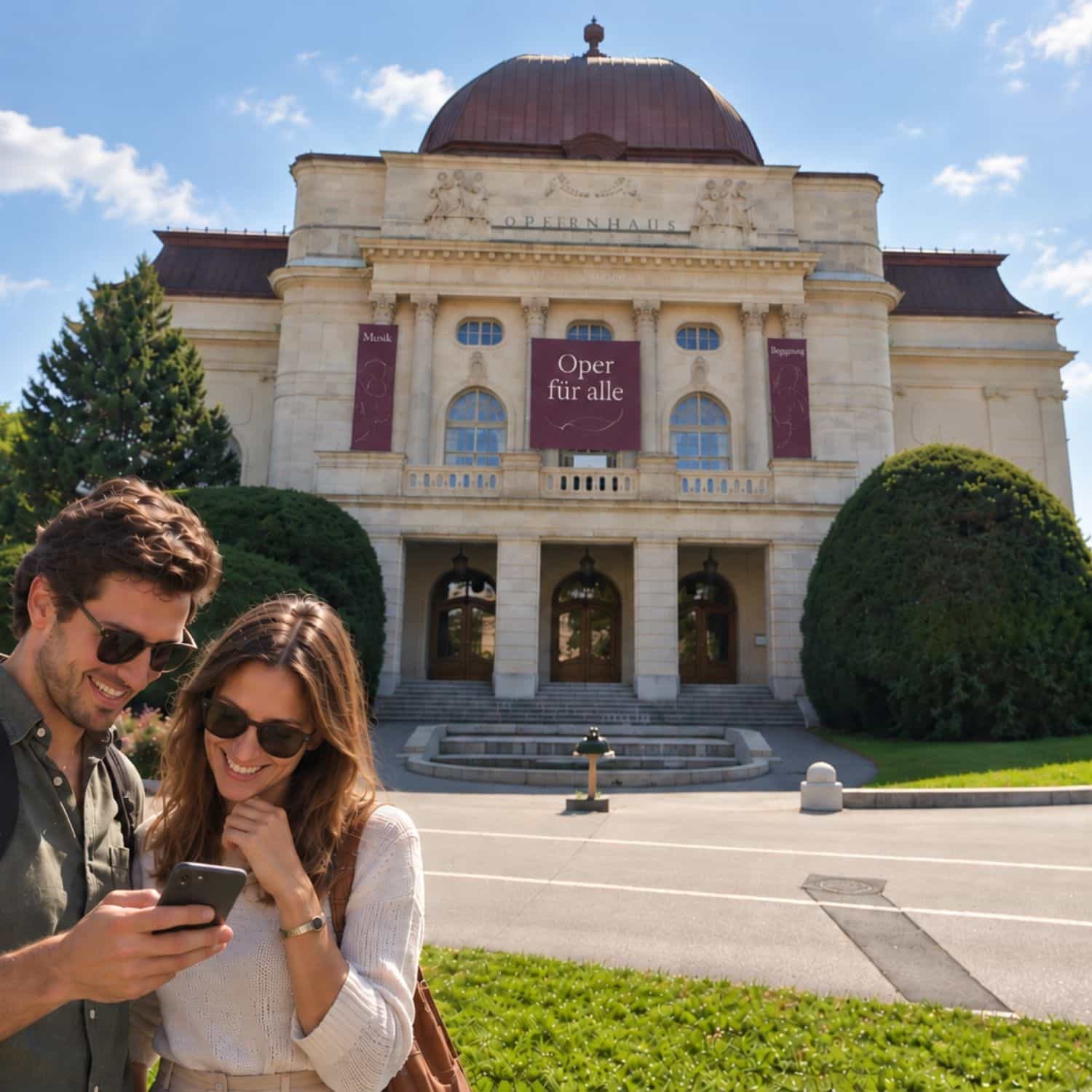
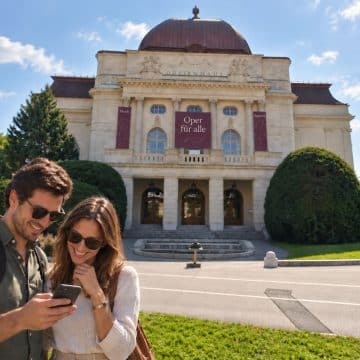
The Graz opera house opened in 1899 with Schiller's Wilhelm Tell and was designed by the Viennese theatre architects Ferdinand Fellner and Hermann Helmer. Its neo-Baroque building is Austria's second largest opera house after Vienna's State Opera, and beside it stands Hartmut Skerbisch's 54-metre Light Sword.
3Graz Stadt Park
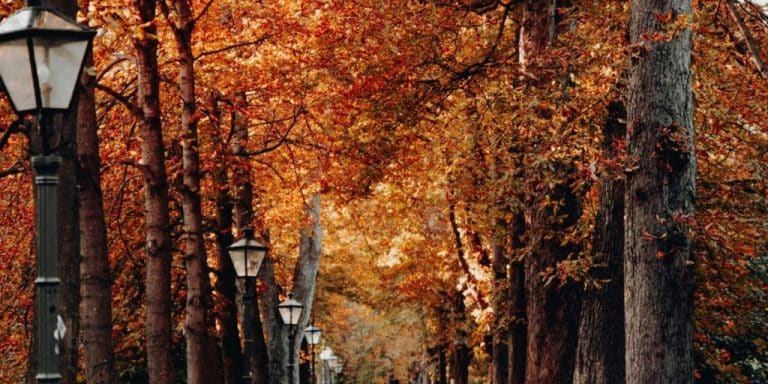
The Stadtpark was created in 1869, when the city took over the old glacis of the fortress from the military in exchange for the Feliferhof shooting range. Mayor Moritz von Franck chose an English-style landscape garden, and the Emperor Franz Joseph fountain was designed by Klagmann for the 1873 World Exhibition in Vienna.
4Mausoleum of Emperor Ferdinand II
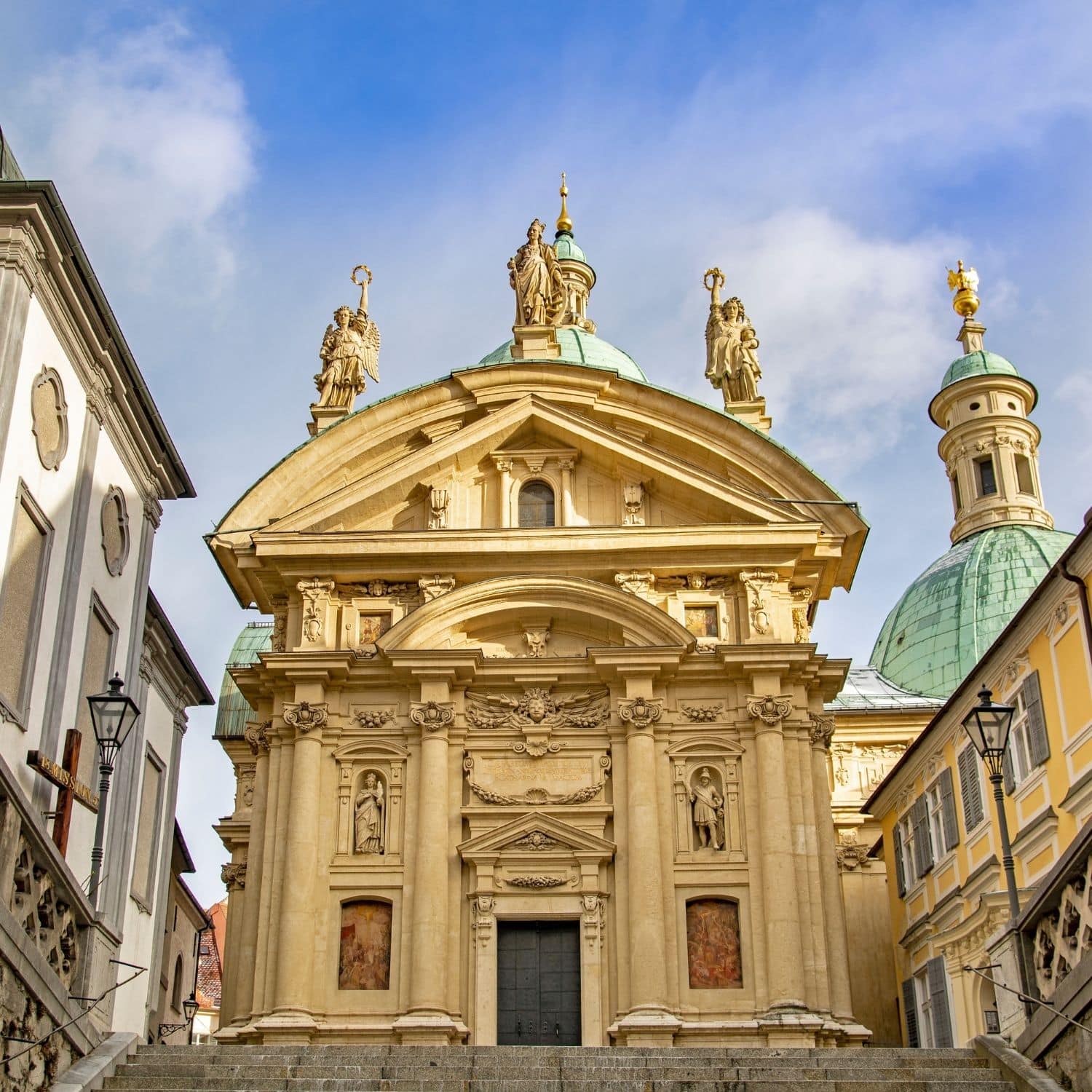
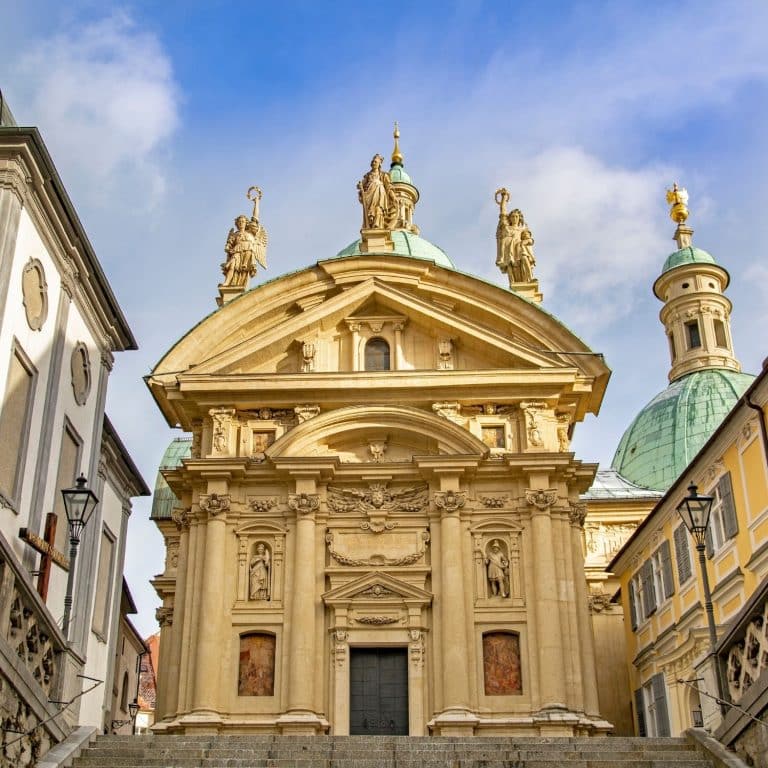
Emperor Ferdinand II commissioned this Mannerist mausoleum in 1614 together with the neighbouring St Catherine's Church, to a design by Giovanni Pietro de Pomis. Work stalled when Ferdinand was elected emperor in 1619 and left for Vienna, and the oval dome over the burial chapel is said to be the first of its kind built outside Italy.
5Graz Cathedral
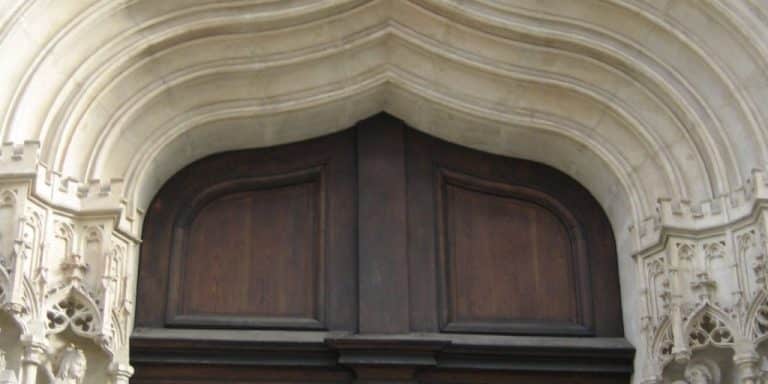
Graz Cathedral, dedicated to St Giles, was begun in 1438 on the orders of Emperor Frederick III in Gothic style, and it has been the cathedral of the Graz-Seckau diocese since 1786. The south wall carries a fragmentary painting from around 1485, probably by Thomas von Villach, and the emperor's motto AEIOU appears several times on the building.
6Glockenspiel
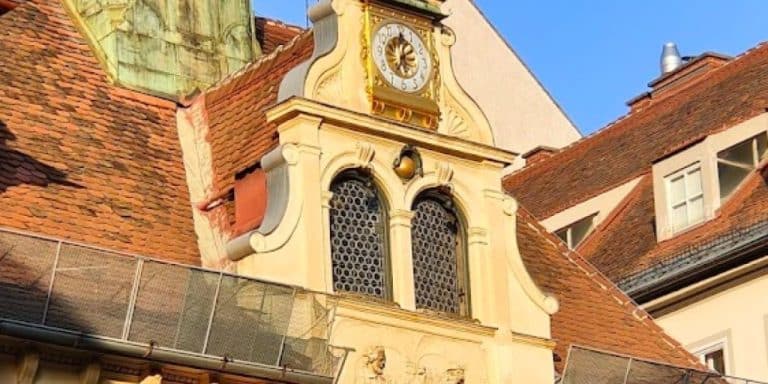
Graz's Glockenspiel was installed by the spirits maker Gottfried Maurer and first chimed on Christmas Eve in 1905. Its 24 bells play three melodies at each performance, drawn from around 70 tunes, while a carved wooden couple in Styrian costume dances behind the arched windows.
7Grazer Landhaus
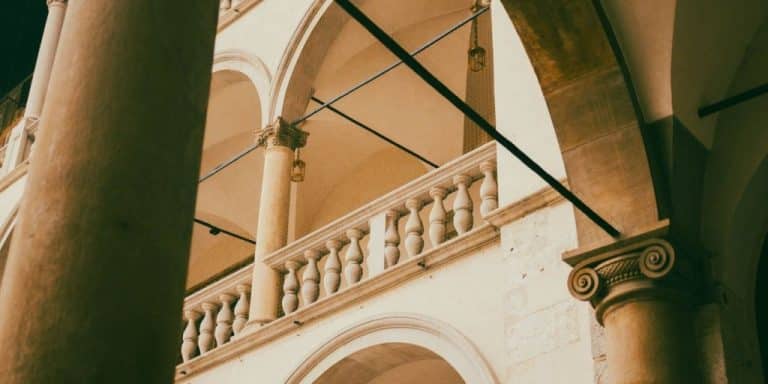
Construction of the Styrian Landhaus began in 1557 to designs by the Italian architect Domenico dell'Allio. Its arcaded courtyard counts among the most important Renaissance buildings in Central Europe, and the Styrian provincial parliament still meets here, beside the Landeszeughaus armoury.
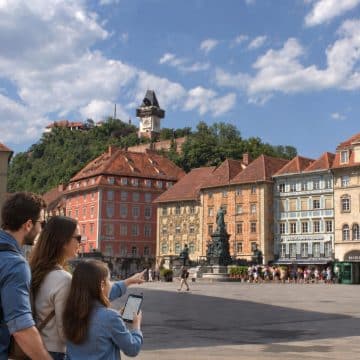
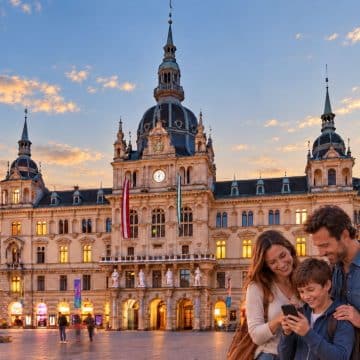
8Grazer Rathaus
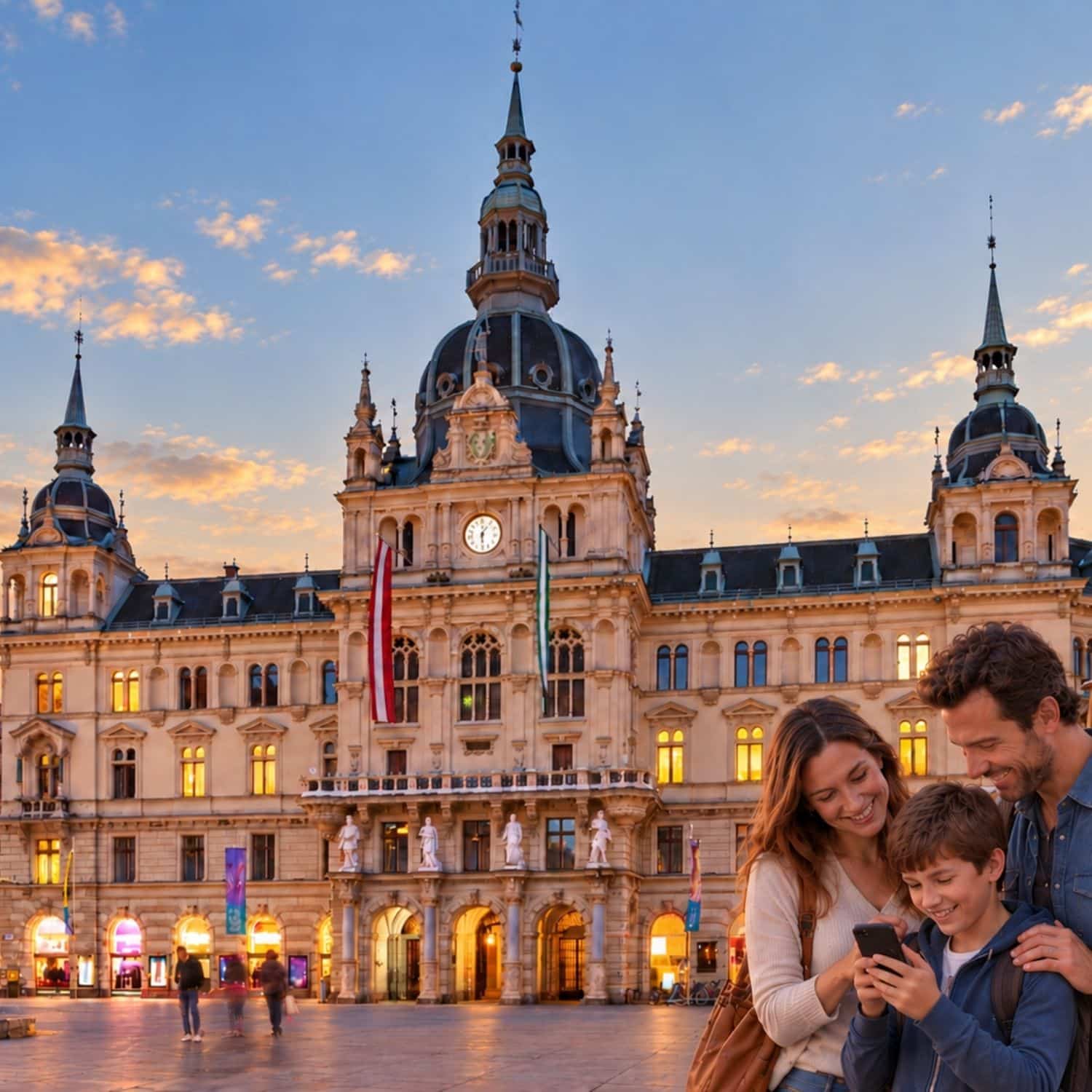
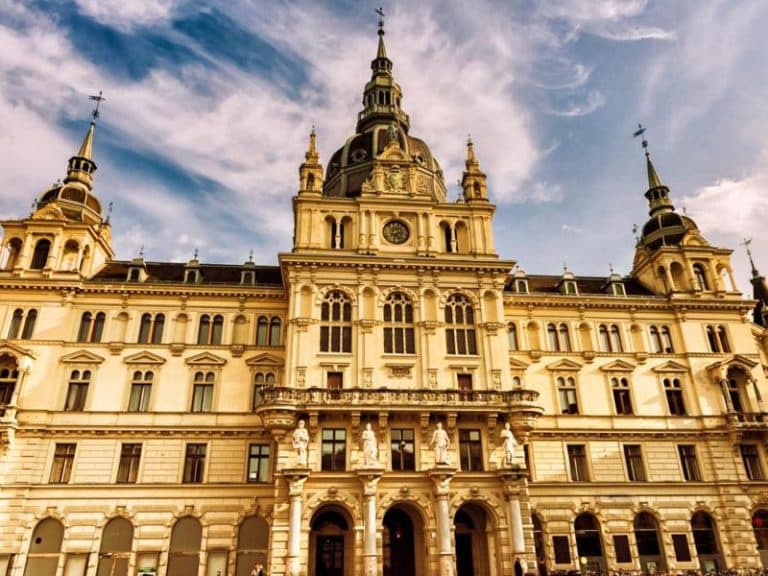
The neo-Baroque town hall on the Hauptplatz was built between 1887 and 1893. In the middle of the square stands the Archduke John Fountain of 1878, whose base shows the four Styrian rivers: the Mur, Enns, Drava and Sann.
9Sporgasse
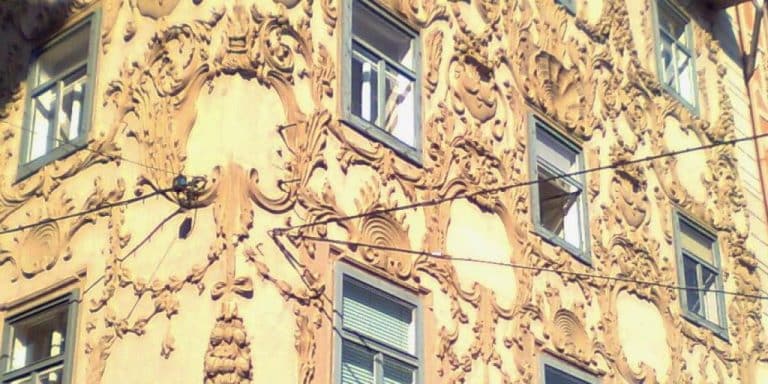
Sporgasse climbs from the Hauptplatz towards the Schlossberg, passing old burgher houses such as the Luegg-Haus with its stucco facade. Nearby, the court bakery Edegger-Tax has a carved wooden shop front from 1896, crowned by a gilded double-headed eagle.
10UhrturmFinish
The clock tower on the Schlossberg has a core dating from the 13th century and reached its present form in 1560. After the French siege of 1809, which left the rest of the hilltop fortress to be demolished, Graz citizens bought the tower free and saved it, and its larger, gilded hand is the hour hand.
Only logged in customers who have purchased this product may leave a review.






Reviews
There are no reviews yet.