What is the Paris outdoor escape game?
The Paris outdoor escape game is an escape room with the walls taken away: the puzzles sit out in the open at the city's landmarks and you work through them on your phone, using what you can see plus a little logic. Allow about 2 hours, of which 77 minutes go on walking 6.2 km between 10 stops, and choose whichever day suits you.
Puzzles are waiting at the Eiffel Tower, the gilded figures of the Pont Alexandre III, the Petit Palais, the obelisk on Place de la Concorde, the Louvre pyramid, Saint-Germain-des-Prés, the carved masks of the Pont Neuf, the Conciergerie and Notre-Dame. No story links them, so every stop is a clean slate, and three levels of hints are there if one refuses to give way. Paris sets its grandest buildings in a row along the Seine, so the walking never feels like filler.
- Durationabout 2 hours
- Walkingabout 77 min · 6.2 km
- Stops10
- LanguagesEnglish, German, French, Italian, Spanish, Dutch
What you do on the escape game
Solve
Each landmark holds one puzzle, answered by looking around and reasoning. Nothing to revise beforehand.
Look closer
The clues are in stone masks, gilded statues, inscriptions and the details of each façade.
Walk
Google Maps takes you from stop to stop: 77 minutes of walking in total, over about 6.2 km.
Take your time
Nothing counts down. Call up a hint when you want one, break for a coffee on a terrace and continue later or another day.
See the route and attractions →
How it works
- Book online Choose the number of players. Your booking reference arrives by email straight away.
- Get the app Download the World City Trail app from the App Store or Google Play and enter your booking reference.
- Play when you like Start whenever you are ready, walk at your own pace and pause any time. No guide, no fixed schedule.
Who it suits
Friends on a day out
A reason to really look at Paris instead of photographing it, with something to argue about at every landmark.
Couples
Puzzles on the bridges and the quays, solved at whatever pace the two of you feel like.
Team building
Teams of up to 5 play on their own phones, so colleagues only have to agree on a meeting point.
Good to know
- Bring a charged smartphone with mobile data; a power bank helps.
- Best started in daylight, so you can see the details the puzzles ask about.
- No entry tickets needed: everything happens outside the buildings. Going inside is optional and paid separately.
- Family friendly; children must be accompanied by an adult.
- Not suitable for wheelchair users and difficult with strollers.
- Teams of up to 5 work best; bigger groups split into several teams, one ticket per player.
- Every purchase helps support stray cats and dogs in Greece.
Puzzle route: from the Eiffel Tower to Notre-Dame
10 stops · about 77 min walking · start: Eiffel Tower · finish: Notre-Dame Cathedral
The first puzzle stands under the Eiffel Tower, after which the route picks up the Seine and crosses it by the Pont de l'Alma and the Pont Alexandre III towards the Petit Palais and Place de la Concorde. The Louvre follows, then the left bank for Saint-Germain-des-Prés, the Pont Neuf back onto the Île de la Cité, the Conciergerie, and the final puzzle in front of Notre-Dame. Daylight is the better bet, because each answer is read off the building ahead of you and rain slows the walking. Navigation runs on Google Maps, the stop order can be rearranged in the app, and no puzzle needs an entry ticket.
Open the route map ↗
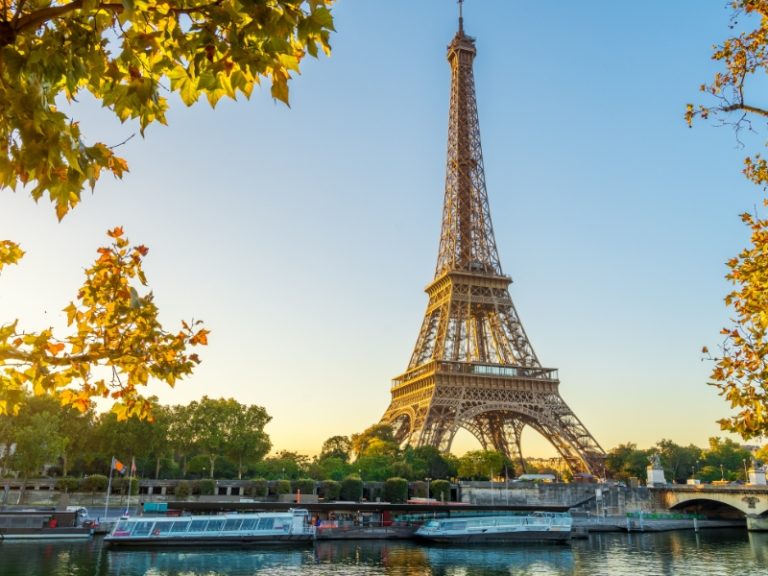
1Eiffel TowerStart
Gustave Eiffel's company built the tower in 1887–1889 as the entrance to the 1889 World's Fair, held for the centenary of the French Revolution. Now 330 metres tall including its antennas, it was the tallest structure in the world until the Chrysler Building in New York overtook it.
2Pont de l'Alma
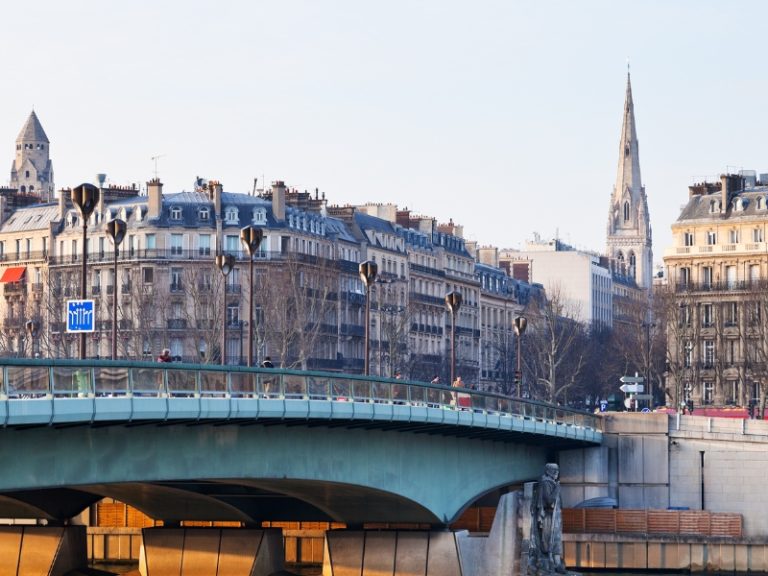
Named after the 1854 Battle of the Alma in the Crimean War, the bridge was opened by Napoleon III in 1856 and rebuilt in 1970–1974. Parisians traditionally judge the level of the Seine by the Zouave soldier statue on its pier: in the great flood of 1910 the water reached his shoulders.
Read the full story →
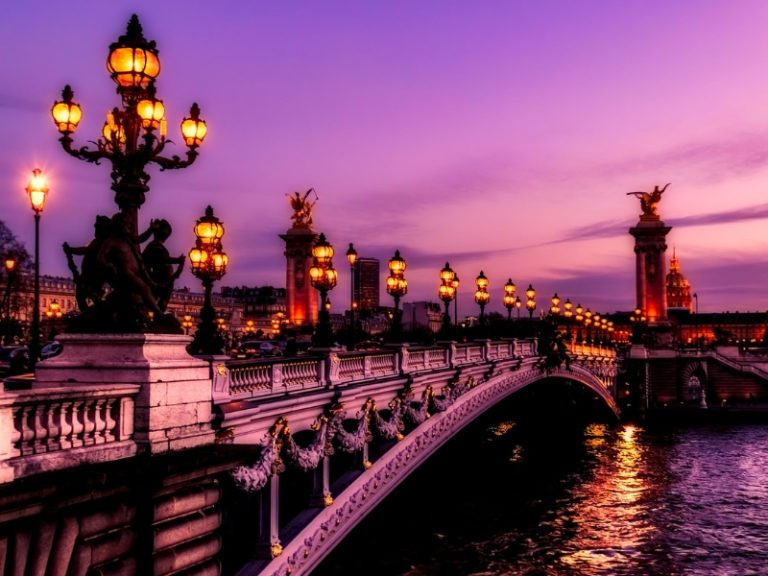
3Pont Alexandre III
Tsar Nicholas II laid the first stone of this bridge in 1896, and it is named after his father Alexander III as a symbol of the Franco-Russian alliance. Opened for the 1900 World's Fair, it crosses the Seine in a single steel arch, and gilded bronze Fames stand on its four 17-metre pillars.
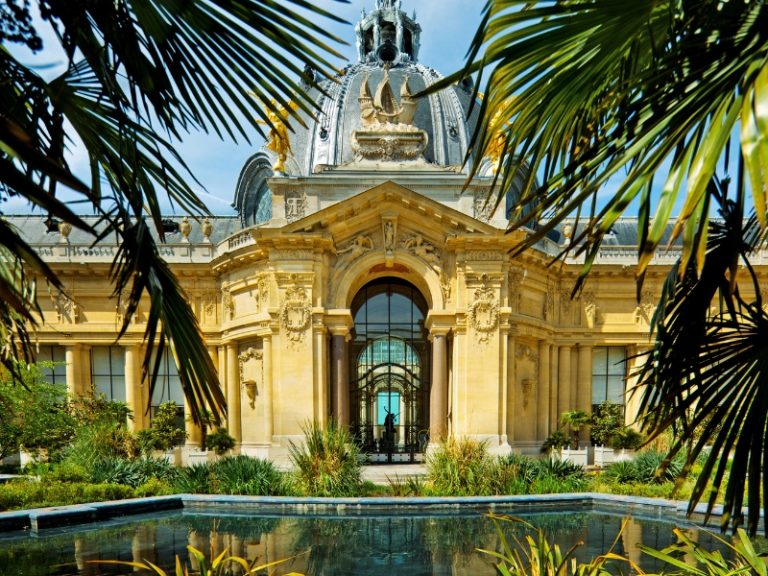
4Petit Palais
Charles Girault designed the Petit Palais for the 1900 World's Fair, with a domed entrance and a semicircular garden courtyard lined with columns. Today it houses the City of Paris Museum of Fine Arts.
5Place de la Concorde
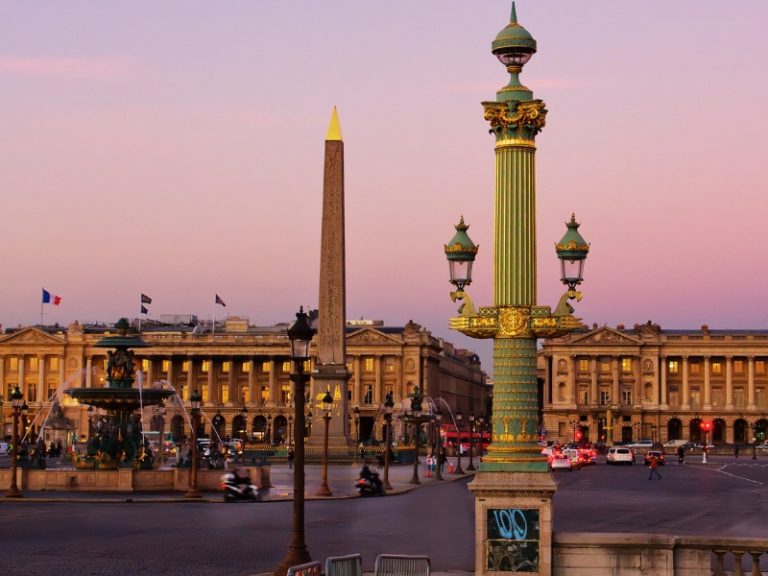
Laid out by Ange-Jacques Gabriel from 1755 as Place Louis XV, this is the largest square in Paris. During the Revolution Louis XVI and Marie Antoinette were guillotined here in 1793, and in the centre stands the Luxor Obelisk, more than 3,000 years old, erected in 1836.
6Louvre Museum
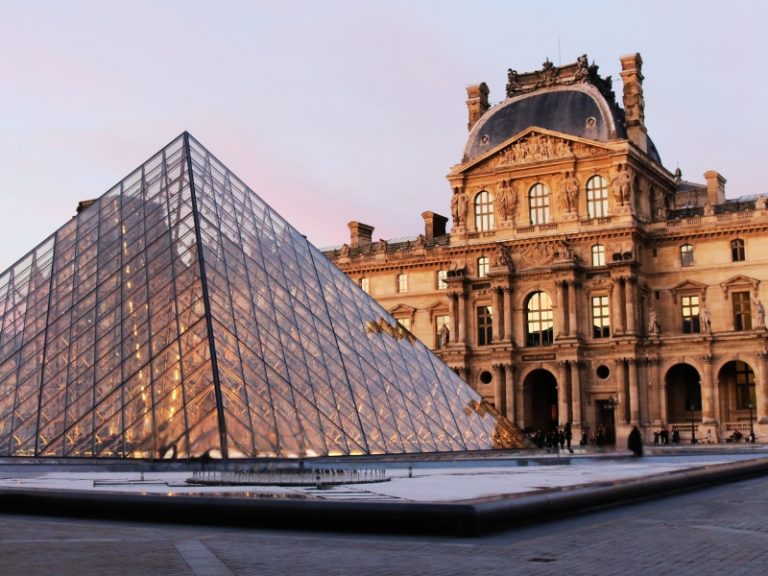
The Louvre began as a fortress built by Philip II Augustus from 1190, became a royal palace and opened as a public museum in 1793. Its glass pyramid by the architect Ieoh Ming Pei opened in 1989, and the collections include Leonardo da Vinci's Mona Lisa.
7Church of Saint-Germain-des-Prés
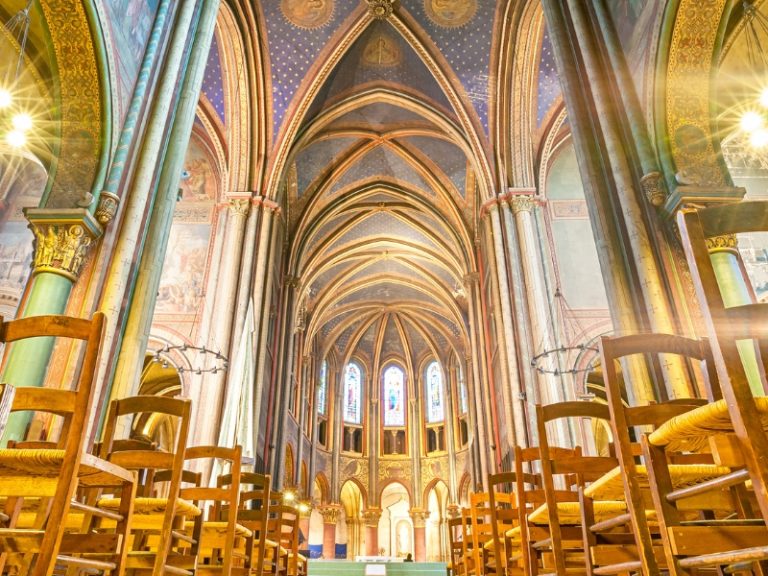
Considered the oldest church in Paris, it belonged to an abbey founded in 558 by the Merovingian king Childebert I. Its bell tower, begun around 990, is one of the oldest in France, and the philosopher René Descartes is buried in a side chapel.
8Pont Neuf
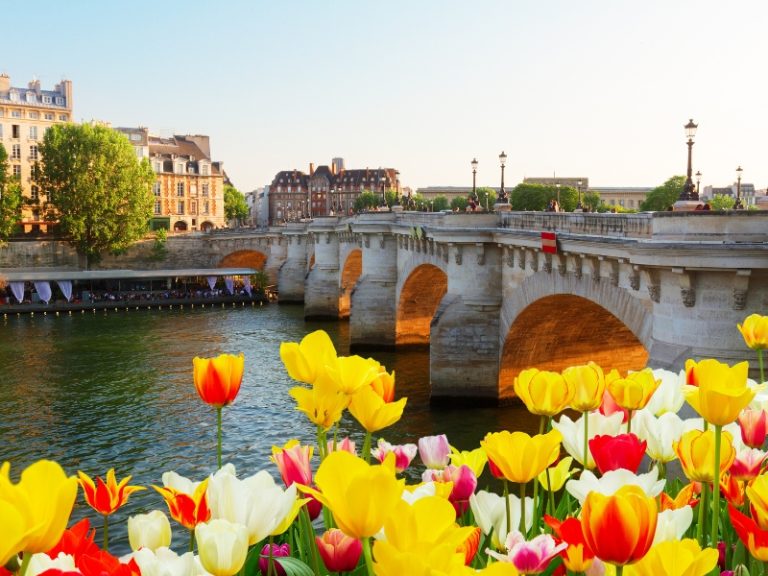
Despite its name, the New Bridge is the oldest standing bridge across the Seine in Paris, begun in 1578 and completed in 1607. It was the first Paris bridge built without houses and with pavements for pedestrians, 381 carved stone masks decorate its sides, and the equestrian statue of Henri IV stands halfway across.
9Conciergerie
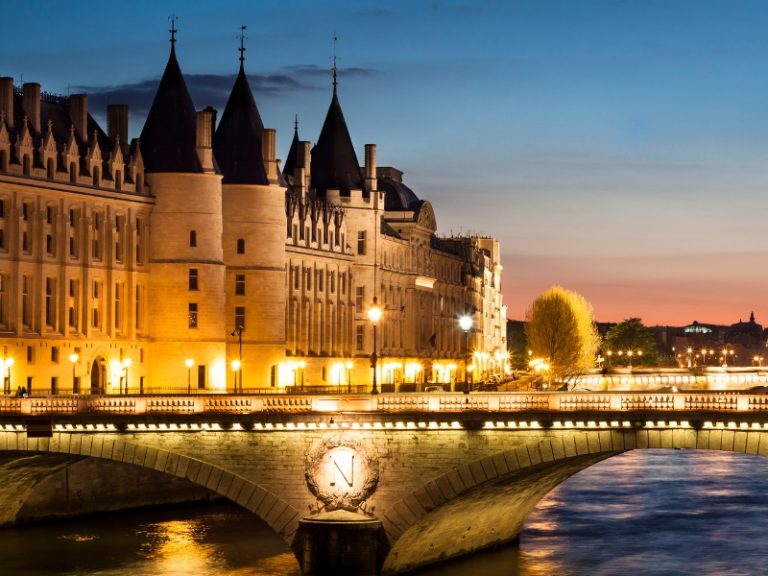
The Conciergerie is part of the Palais de la Cité, the residence of the French kings in the Middle Ages, and during the Revolution it became a prison where Marie Antoinette was held before her execution in 1793. The clock on its corner tower dates back to the 14th century and is considered the oldest public clock in Paris.
10Notre-Dame CathedralFinish
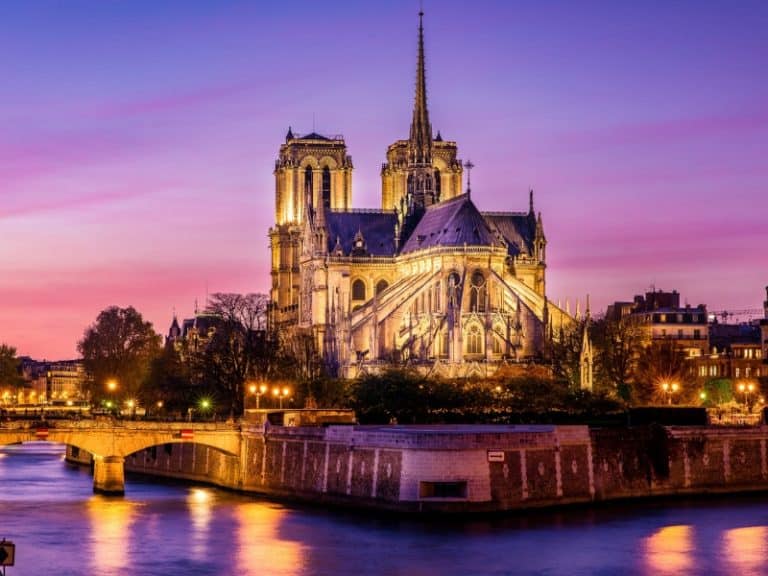
Construction of the Gothic cathedral began in 1163 under Bishop Maurice de Sully. After the fire of April 2019 destroyed its roof and spire, it was restored, with the spire rebuilt to Viollet-le-Duc's 19th-century design, and it reopened in December 2024.
Only logged in customers who have purchased this product may leave a review.





Reviews
There are no reviews yet.