What is the Sydney self-guided walking tour?
The Sydney self-guided walking tour is a walk you pace yourself, with audio narration on your phone standing in for a guide. Reckon with about 3 hours: 68 minutes of that is walking, the route measures 5.3 km, and there are 10 stops where you stand still and listen. Nothing runs to a schedule and no group leaves without you.
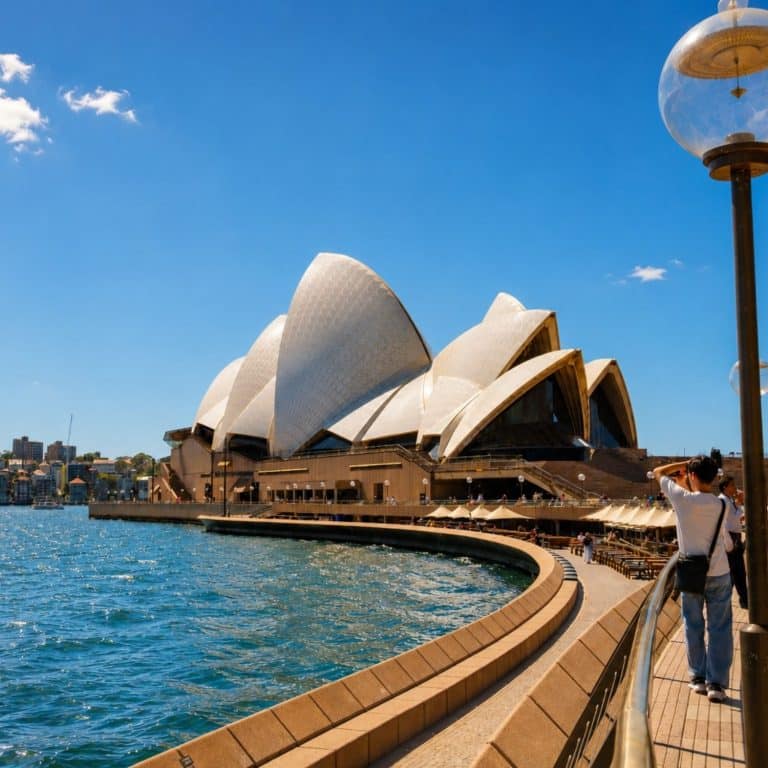
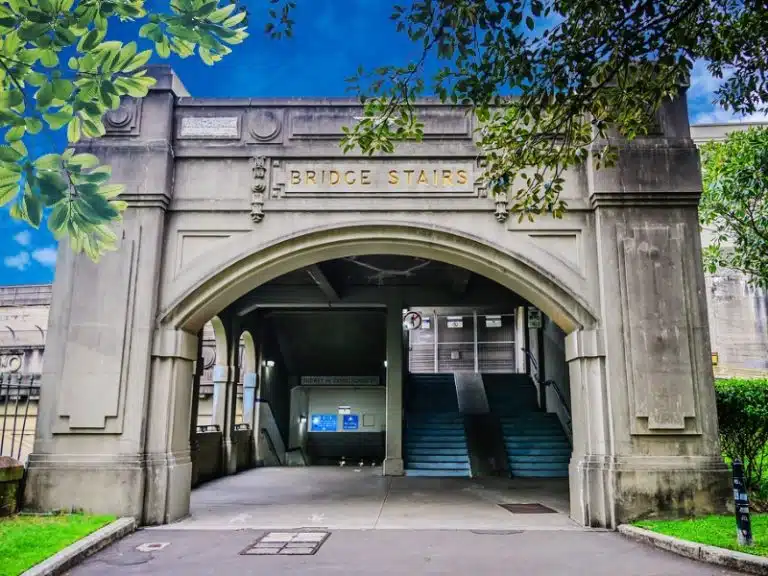
At the Museum of Sydney the narration stands on the site of the first Government House, built for Governor Arthur Phillip in 1788, where the forecourt sculpture Edge of the Trees recalls the first meeting of the Gadigal people and the British arrivals. At the Opera House it turns to Jørn Utzon, who won the competition in 1957, and to the roof shells covered in more than a million tiles. The Bridge Stairs end with the steel arch locals call the Coathanger, opened in 1932.
- Durationabout 3 hours
- Walkingabout 68 min · 5.3 km
- Stops10
- LanguagesEnglish, German, French, Chinese
What you do on the walking tour
Listen
Every stop brings the history of the place, the stories told about it and the detail worth stopping for. The same text waits on screen for anyone who would rather read.
Stroll
Google Maps handles the navigating: 68 minutes of walking spread over 5.3 km, from one harbour to the other at your own speed.
Break off
Sit down for a coffee or spend an hour in a museum, then rejoin the route where you left it, later today or on another day.
Eat and browse
Places to eat and shops near the route come with the stops. Which stop you open with, and the order of the rest, is a setting in the app.
See the route and attractions →
How it works
- Book online Choose the number of people. Your booking reference arrives by email straight away.
- Get the app Download the World City Trail app from the App Store or Google Play and enter your booking reference.
- Walk when you like Start whenever you are ready, walk at your own pace and pause any time. No guide, no fixed schedule.
Who the walking tour is for
A first visit
One walk joins Darling Harbour, the sandstone centre and Circular Quay and explains what the convicts and the governors left behind.
Anyone who avoids groups
Nobody to follow and no roll call: you stay as long as a view deserves and move on when you decide to.
Walkers with a whole morning
At 5.3 km this is the longer kind of city walk, so wear proper shoes and let the afternoon take care of itself.
Good to know
- Bring a charged smartphone with mobile data; a power bank helps.
- No entry tickets needed: everything happens outside the buildings. Going inside is optional and paid separately.
- Family friendly; children must be accompanied by an adult.
- Not suitable for wheelchair users and difficult with strollers.
- Groups of up to 5 work best; larger groups split up, one ticket per person.
- Every purchase helps support stray cats and dogs in Greece.
The walk stop by stop: Darling Harbour, Town Hall, Circular Quay, the Opera House
10 stops · about 68 min walking · start: Darling Harbour · finish: Bridge Stairs
Darling Harbour is the first stop, on the water west of the centre with the Pyrmont Bridge of 1902 alongside. The route then cuts inland past St Andrew's Cathedral School to Sydney Town Hall and the Queen Victoria Building, and crosses to St Mary's Cathedral and Queens Square at the head of Macquarie Street. Downhill come the Museum of Sydney and Customs House at Circular Quay, the Opera House on its point, and the Bridge Stairs in The Rocks, which climb to the Harbour Bridge walkway. Another first stop or another order is a setting in the app, and no stop asks for a ticket.
Open the route map ↗
1Darling HarbourStart
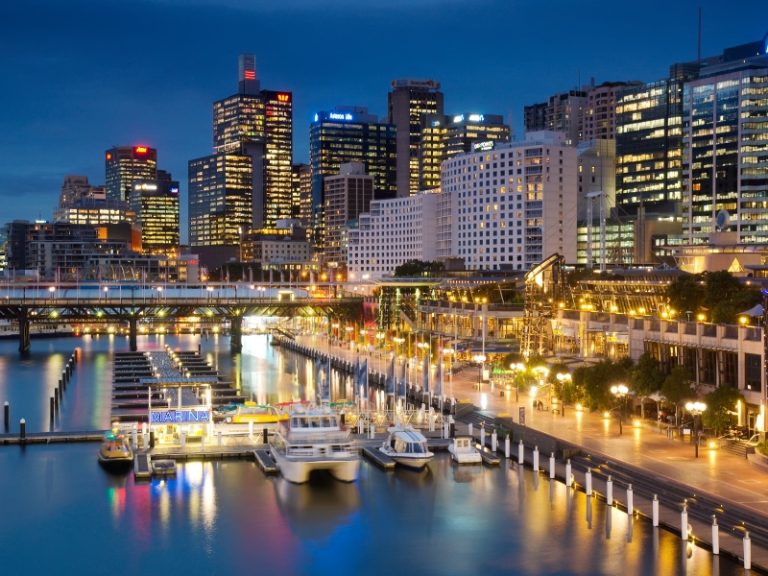
Named after Governor Ralph Darling, this harbour west of the city centre was once lined with wharves, warehouses and railway goods yards. It was rebuilt as a waterfront promenade for Australia's bicentenary in 1988, and the Pyrmont Bridge of 1902 is one of the oldest electrically operated swing bridges in the world.
2St Andrew's Cathedral School
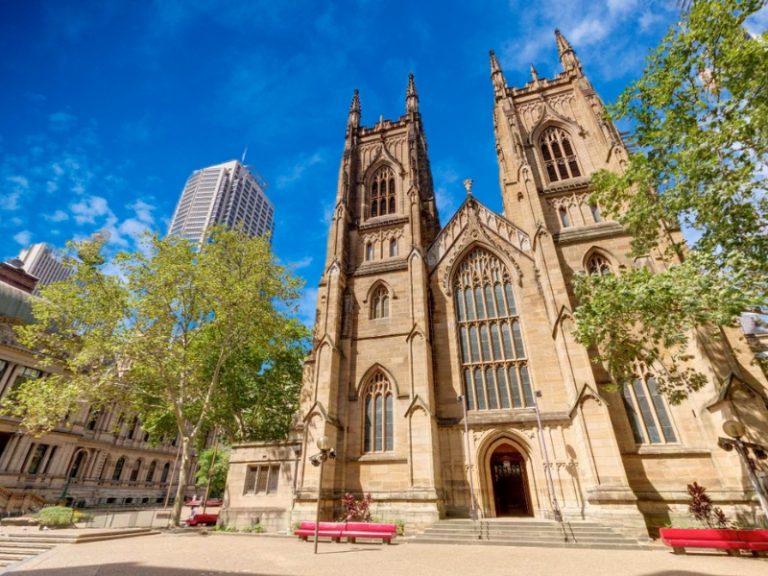
The school belongs to St Andrew's Cathedral, the Anglican cathedral beside the Town Hall, and was founded as its choir school in 1885. The sandstone cathedral, designed in the Gothic Revival style largely by Edmund Blacket and consecrated in 1868, is the oldest cathedral in Australia.
3Sydney Town Hall
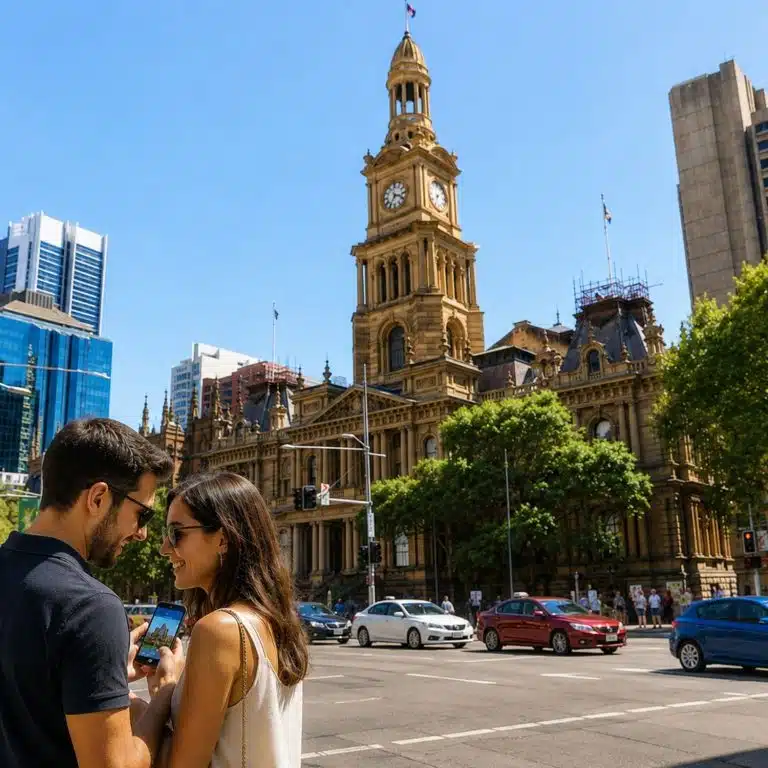
Sydney Town Hall was built between 1868 and 1889 from local sandstone in a richly decorated Victorian style, with a clock tower rising above George Street. Its Centennial Hall houses a grand organ that was one of the largest pipe organs in the world when it was installed in 1890.
4Queen Victoria Building
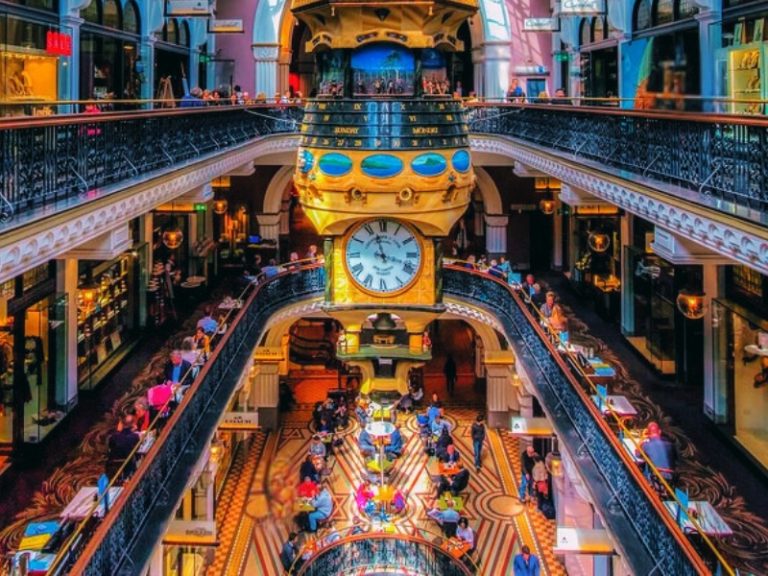
This Romanesque Revival building, designed by George McRae and completed in 1898, fills a whole city block as a former market hall under a large central dome. Saved from demolition and restored in the 1980s, it has a statue of Queen Victoria outside and a wishing well with her dog Islay.
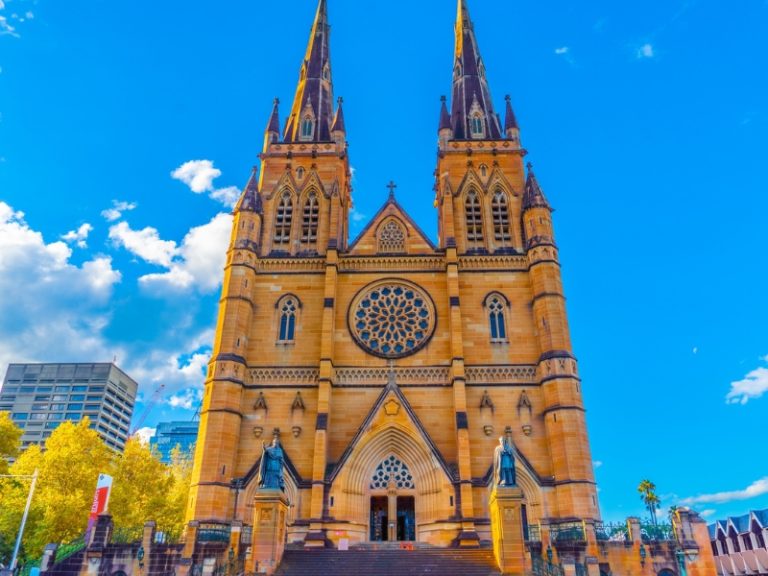
5St Mary's Cathedral
Sydney's Catholic cathedral was designed by William Wardell in the Gothic Revival style after a fire destroyed the earlier church in 1865. Built from local sandstone over many decades, it faces Hyde Park and only received its two southern spires in 2000.
Read the full story →
6Queens Square
At the top of Macquarie Street, a statue of Queen Victoria stands between St James' Church and the Hyde Park Barracks, both designed by the convict architect Francis Greenway. The barracks, finished in 1819, housed convicts and are now part of the Australian Convict Sites on the UNESCO World Heritage List.
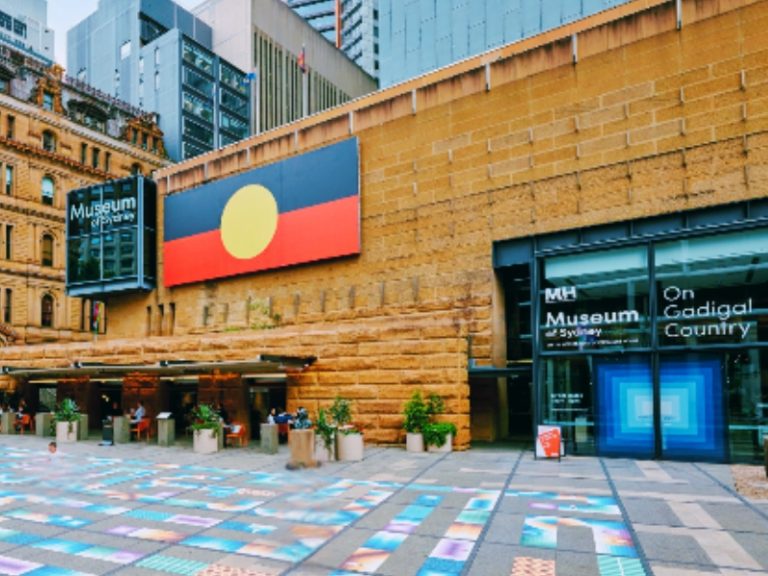
7Museum of Sydney
The museum, opened in 1995, stands on the site of the first Government House, built for Governor Arthur Phillip in 1788. Traces of the old foundations can be seen, and the forecourt sculpture Edge of the Trees recalls the first meeting of the Gadigal people and the British settlers.
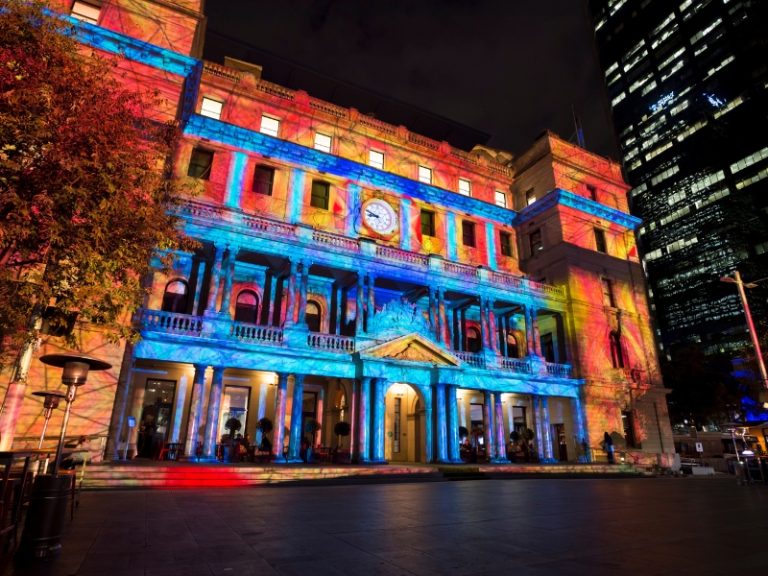
8Customs House
This sandstone building faces Circular Quay on Sydney Cove, where the First Fleet landed in 1788. Its present form dates largely from colonial architect James Barnet in the 1880s, and today it houses a library with a large model of the city beneath a glass floor.
9Sydney Opera House
The Danish architect Jørn Utzon won the design competition in 1957, and the Opera House was opened by Queen Elizabeth II in 1973. Its roof shells are covered with more than a million cream and white tiles, and it has been a UNESCO World Heritage Site since 2007.
10Bridge StairsFinish
These stairs in The Rocks lead up to the footway of the Sydney Harbour Bridge, the steel arch locals call the Coathanger. Built under chief engineer John Bradfield and opened in 1932, the bridge carries road, rail and pedestrians across the harbour, with views back to the Opera House.
Only logged in customers who have purchased this product may leave a review.






Reviews
There are no reviews yet.