What is the Tenerife outdoor escape game?
The Tenerife outdoor escape game takes the escape room format onto the streets of Santa Cruz: you play on your smartphone, and at each of the 10 stops a puzzle asks you to read the surroundings and work the answer out with logic. Plan on about 3 hours, with 48 minutes of walking over 3.5 km, and start on a day and time that suit you.
Puzzles sit at landmarks such as the Teatro Guimerá, the fountain on Plaza Weyler and Candelaria Square, and each one works on its own, so you never need to follow a storyline. Stuck? Three tiers of help at most wait behind every puzzle. The route suits this format because the squares, the theatre and the church sit close enough together that the puzzles feel like one walk through the city.
- Durationabout 3 hours
- Walkingabout 48 min · 3.5 km
- Stops10
- LanguagesEnglish, German, French, Italian, Spanish, Dutch
What you do on the escape game
Solve
Work out the puzzle at every stop by looking carefully at the square, façade or fountain in front of you. You need no prior knowledge of the island.
Scan the details
The clues come from the surroundings, so look at façades, fountains and the small details you would otherwise walk past.
Walk
Google Maps guides you from stop to stop, covering about 48 minutes on foot over 3.5 km.
Take your time
No countdown runs in the background. Use hints when you need them, pause for a cold drink, and pick up again later or on another day.
See the route and attractions →
How it works
- Book online Choose the number of players. Your booking reference arrives by email straight away.
- Get the app Download the World City Trail app from the App Store or Google Play and enter your booking reference.
- Play when you like Start whenever you are ready, walk at your own pace and pause any time. No guide, no fixed schedule.
Who it suits
Friends
The puzzles give everyone something to argue over at the next stop, and nobody needs to know the island beforehand.
Couples
Two people solving together: one spots the detail, the other untangles the logic, and no clock is there to beat.
Team building
Teams of up to 5 people follow the game on their own phones, so everyone stays involved at every stop.
Good to know
- Bring a charged smartphone with mobile data; a power bank helps.
- Best started in daylight, so you can see the details the puzzles ask about.
- No entry tickets needed: everything happens outside the buildings. Going inside is optional and paid separately.
- Family friendly; children must be accompanied by an adult.
- Not suitable for wheelchair users and difficult with strollers.
- Teams of up to 5 work best; bigger groups split into several teams, one ticket per player.
- Every purchase helps support stray cats and dogs in Greece.
Puzzle route: from Parque García Sanabria to Plaza del Príncipe de Asturias
10 stops · about 48 min walking · start: Parque García Sanabria · finish: Plaza del Príncipe de Asturias
The game opens at Parque García Sanabria and closes at Plaza del Príncipe de Asturias. In between, the route passes Plaza 25 de Julio, Plaza Weyler, Teatro Guimerá, the African Market, the Church of La Concepción, Candelaria Square, Plaza de España and Plaza San Francisco. Daylight is the safer choice, since the puzzles are solved outdoors and wind or rain slow things down. Google Maps guides you between stops, the app lets you change the order, and no entry tickets are needed.
Open the route map ↗
1Parque García SanabriaStart
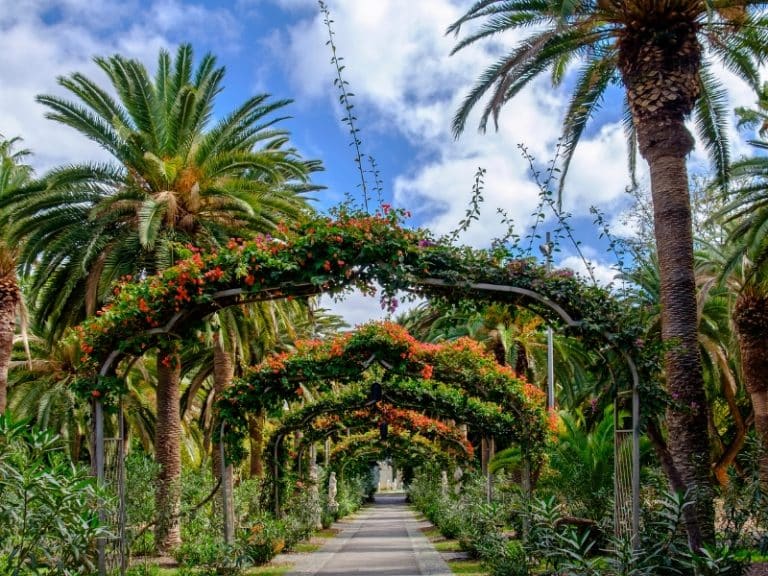
Parque García Sanabria, opened in 1926 and named after the mayor who approved its construction, is with about 67,000 square metres the largest urban park in the Canary Islands. Its Swiss-made floral clock, given in 1958 by the Danish consul, stands among fountains and sculptures from an international exhibition held in 1973.
2Plaza 25 de Julio (Plaza de los Patos)
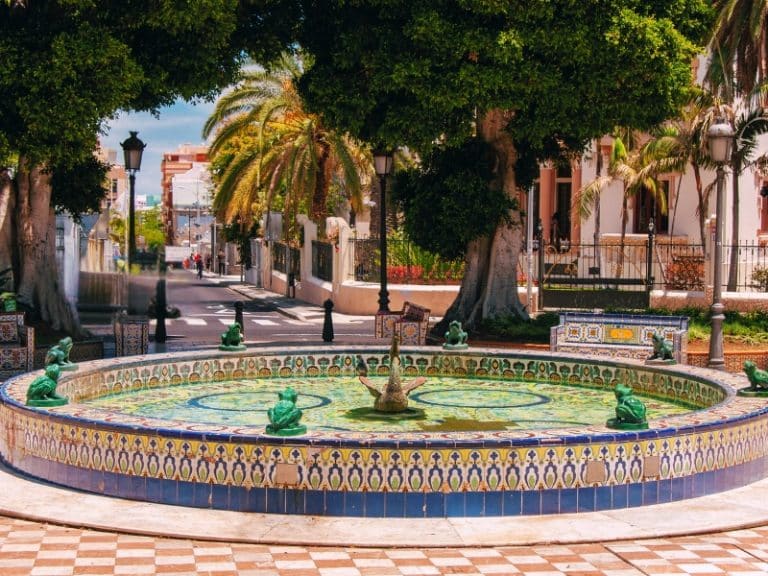
Plaza 25 de Julio, better known as Plaza de los Patos, was built between 1913 and 1917 near the city hall. Its fountain is an identical copy of the Frog Fountain in Seville's María Luisa park, and its tiled benches carry painted ceramic adverts for the companies that sponsored the square.
Read the full story →
3Plaza Weyler
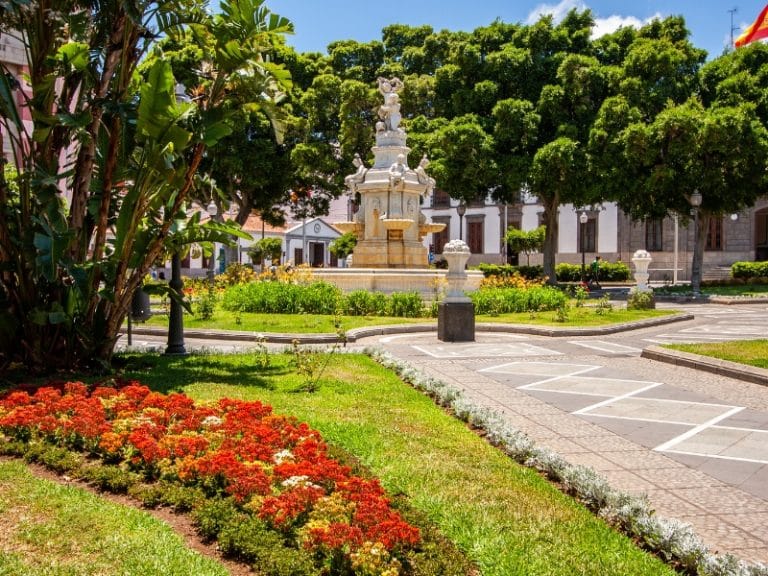
Plaza Weyler was laid out in 1893 as the forecourt of the Captaincy General building and is named after General Valeriano Weyler. Its white Carrara marble fountain, made in Genoa by Achille Canessa, dates from 1899.
4Teatro Guimerá
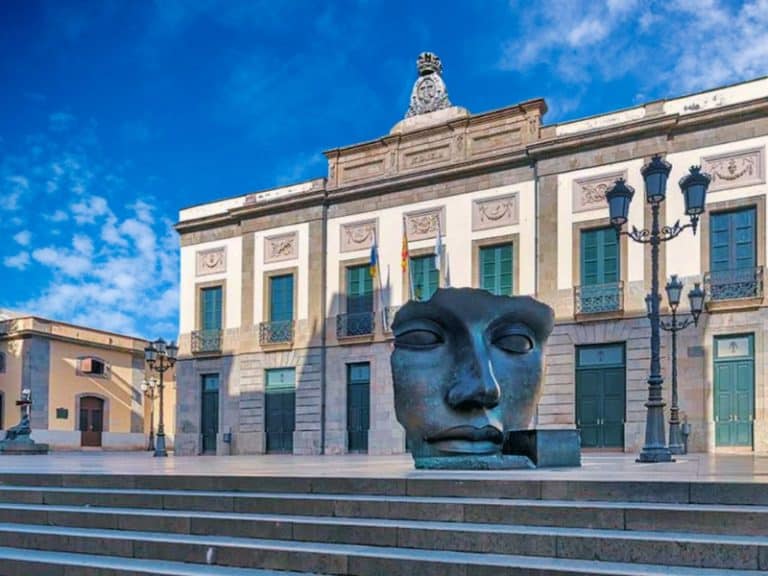
Teatro Guimerá was built in 1849 as the Teatro Municipal and is described as the oldest theatre in the Canary Islands. It was renamed in 1923 after the playwright Àngel Guimerà, who was born in Santa Cruz.
5African Market
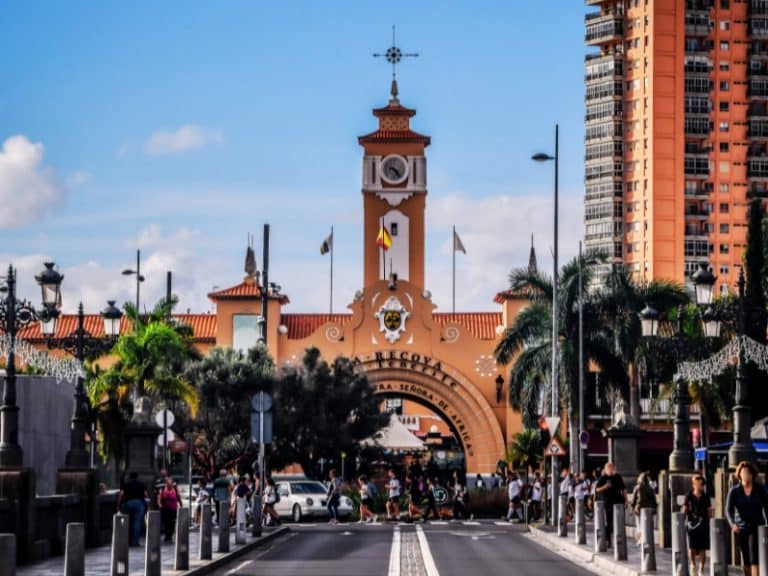
The Nuestra Señora de África market opened in 1943 in place of the old Recova, and its design, chosen in a competition, is by the Tenerife-born architect Enrique Marrero Regalado. Construction was directed by the municipal architect Rumeu de Armas.
6Church of La Concepción
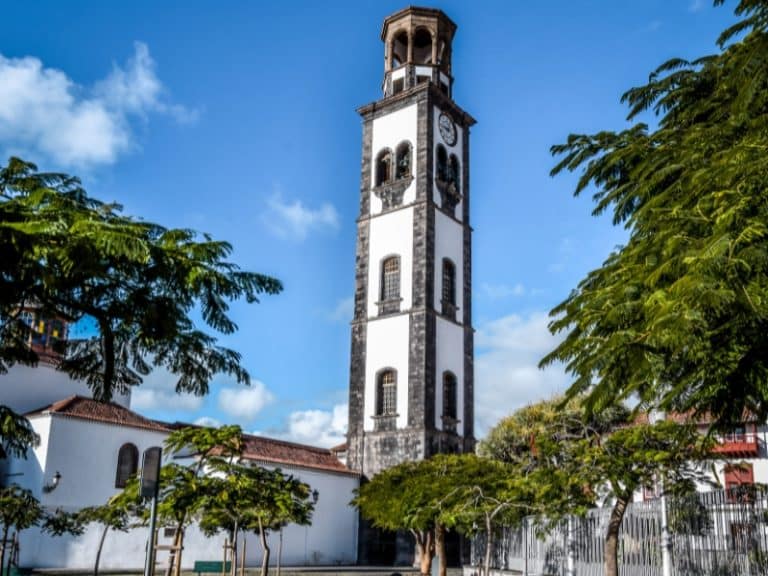
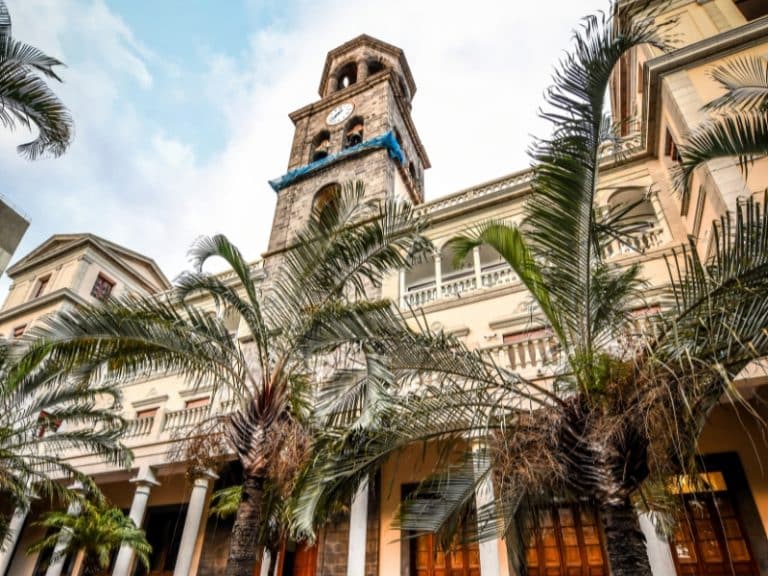
The church was begun in 1500 as a church of the Holy Cross and renamed in 1638. After a fire in 1652 it was rebuilt, and its tower was added in 1786, while the Cross of the Conquest, which arrived with Fernández de Lugo in 1494, is linked to the church.
Read the full story →
7Candelaria Square
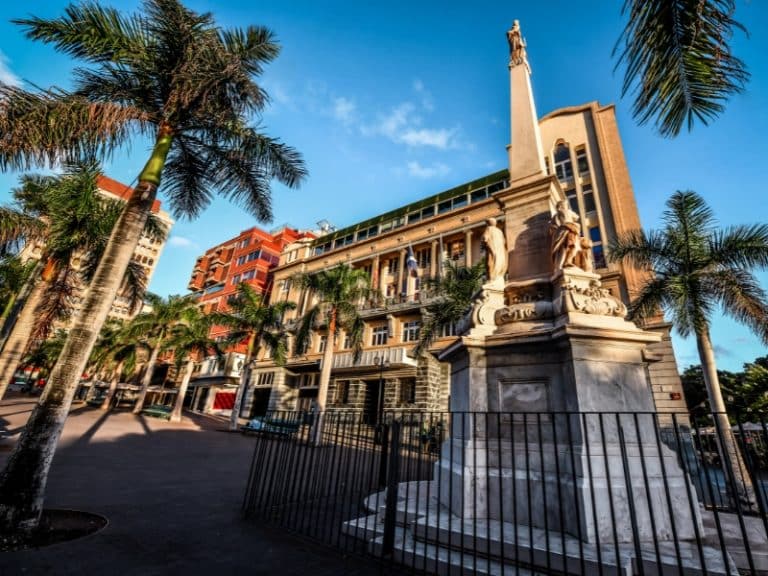
Candelaria Square takes its name from the Virgin of Candelaria, patroness of the Canary Islands. Its centrepiece, the Triunfo de la Candelaria, is a white marble obelisk of 1768 by Pasquale Bocciardo, with four marble figures at its base representing the Guanches.
8Plaza de España
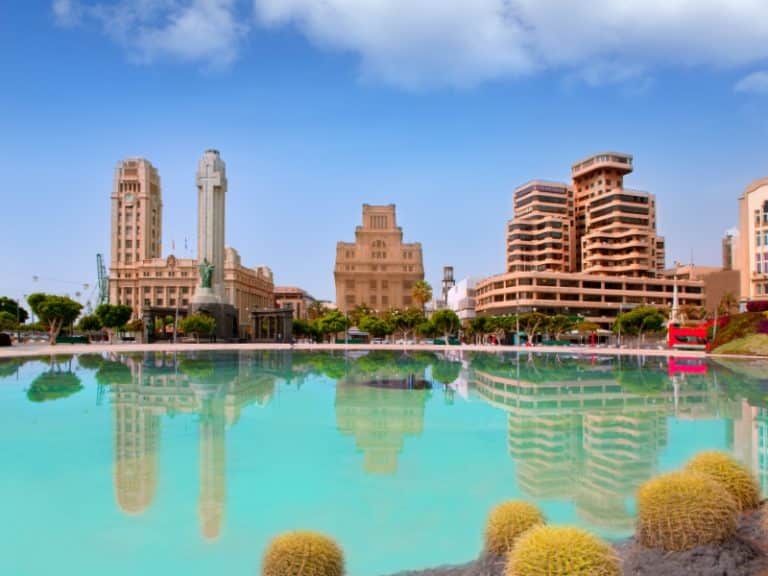
Plaza de España is described as the largest square in Santa Cruz de Tenerife and the Canary Islands, and it was refurbished by the Swiss architects Herzog & de Meuron. It was built in 1929 over the Castillo de San Cristóbal, and a few original castle walls can be seen in a tunnel beneath the square.
9Plaza San Francisco
The Baroque church of San Francisco de Asís faces this square with its main façade, and its portal has two Solomonic columns, which are rare in the Canary Islands. Built for the Franciscans in the 1670s and 1680s, it keeps its tower as the main surviving part of the former convent, which was largely demolished in 1929.
10Plaza del Príncipe de AsturiasFinish
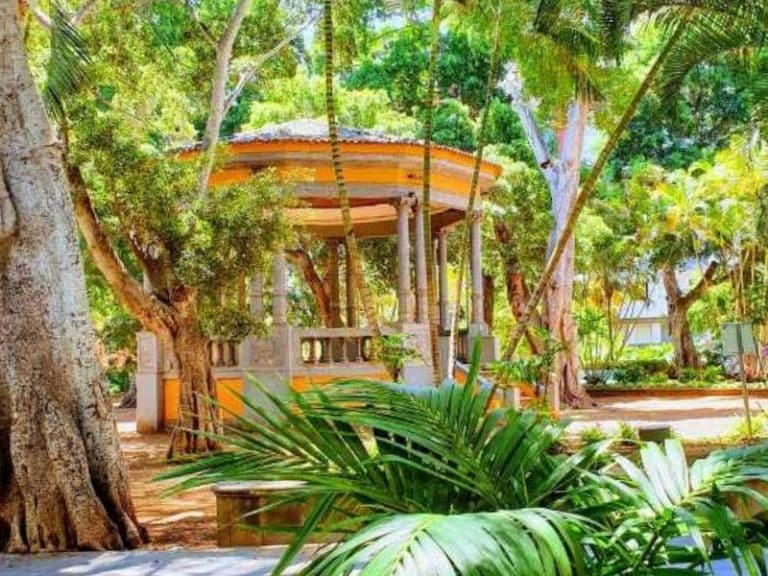
The square was laid out in 1857 on the orchard of a convent and inaugurated in 1860 in honour of Alfonso XII, then Prince of Asturias. Its central bandstand, placed in 1929, is surrounded by laurel de indias trees, and two Genoese statues represent Spring and Summer.
Only logged in customers who have purchased this product may leave a review.




Reviews
There are no reviews yet.