
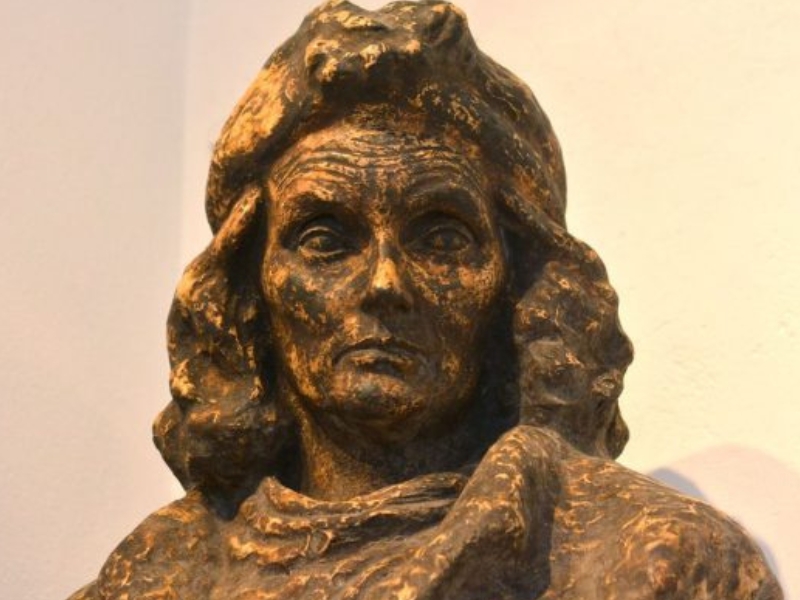
The House of Marin Držić is a small museum on Široka Street in Dubrovnik's Old Town, devoted to the city's greatest Renaissance playwright. Držić wrote comedies that are still staged every summer, but he also wrote secret letters to the Medici asking for help to overthrow Dubrovnik's own government. The museum stands beside the little church of All Saints, where he once served as rector.
The House of Marin Držić at a glance
- Where: Široka 7, next to the Domino Church (All Saints), in the Old Town a short walk from the Stradun.
- Opened: the museum was founded in 1989 and has been an independent city institution since 2007; the house itself was built after the earthquake of 1667.
- What it is today: a memorial museum on three floors with the permanent exhibition 'Držić's Life Stages', plus exhibitions and events.
- Time needed: 30 to 45 minutes.
A priest, a playwright and a plotter
Marin Držić was born in Dubrovnik around 1508 into a merchant family that was not part of the ruling nobility. He became a priest and went to study in Siena, where in 1541 he was made vice-rector of the university. Back home he turned to theatre, writing pastoral plays and comedies in the Croatian vernacular. His best-known comedy, Dundo Maroje (Uncle Maroje), was performed in Dubrovnik in 1551, the same year his only book printed in his lifetime appeared in Venice. His sharp eye for greed, old age and the gap between rich and poor did not always please the city's patricians.
In 1566, in Florence, Držić wrote five letters to Francesco de' Medici asking for support to overthrow the oligarchy that ruled the Republic of Ragusa. Nothing came of the plot. He died in Venice on 2 May 1567 and was buried at the church of Santi Giovanni e Paolo. The house on Široka Street was rebuilt after the 1667 earthquake, partly on the site of a destroyed house and of the All Saints church, of which Držić had been rector by family right.
What to look for
- The staircase timeline: the story of Držić's life unfolds on the walls as you climb between floors.
- The family tree: a genealogy of the Držić family, merchants and clergy rather than nobles.
- The conspiracy letters: reproductions of the letters he wrote to the Medici in 1566.
- Theatre costumes and posters: from productions of his plays, which are still staged at the Dubrovnik Summer Festival.
- The writer's room: on the second floor, a reconstruction of a possible study and bedroom with a robe, a cap, quill pens and an inkwell.
Dubrovnik as a stage
With its stone streets, stairways and small squares, Dubrovnik often feels like a set from one of Držić's plays. The museum leans into that idea: its newest displays show the city's streets and buildings as stage scenery, and an animated film retells the key moments of his life. If you can, see one of his comedies during the Dubrovnik Summer Festival in July and August, when the Old Town itself becomes the theatre.
Tips for your visit
- Visit in the middle of the day, when the Stradun is hot and crowded: the small rooms are cool and quiet.
- Read a short plot summary of Dundo Maroje before you go; the exhibition makes much more sense if you know the story.
- Look out for temporary exhibitions and events, which the museum holds through the year.
- Combine it with the Rector's Palace, where a statue of Držić sits outside, for a short Držić-themed walk.
Nearby
- Domino Church: the small church of All Saints right next door, linked to Držić's family.
- Stradun: the Old Town's main street, a few steps down Široka Street, lined with shops and cafés.
- Rector's Palace and the Držić statue: the seat of the old Republic's government, with a bronze statue of the playwright in front, a few minutes' walk east.
- Onofrio's Great Fountain: the 15th-century domed fountain near the Pile Gate, a few minutes' walk west along the Stradun.
See Dubrovnik with World City Trail
Our Dubrovnik scavenger hunt turns the Old Town into a game you play on your phone. The route links 10 stops and takes around two hours, with about 17 minutes of walking. It includes the Pile Gate and Onofrio's Great Fountain, both close to Široka Street.
If you prefer a different format, there is also a self-guided walking tour and an outdoor escape game in Dubrovnik.
Play the Dubrovnik scavenger hunt →
Take the self-guided walking tour of Dubrovnik →
Play the outdoor escape game in Dubrovnik →
Facts checked in October 2026.