What is the Dubrovnik outdoor escape game?
An escape room with the roof taken off: that is the Dubrovnik outdoor escape game, with one puzzle waiting at each of 10 landmarks inside the city walls and your phone as the only kit you need. Allow around 2 hours, of which a mere 17 minutes are spent walking, because the whole route measures 1.3 km.
Everything happens within the walls, so the puzzles come thick and fast: Onofrio's Large Fountain at the head of the Stradun, the Clock Tower with its two bronze bell-ringers, the baroque Church of St Blaise, the Rector's Palace of the old Republic of Ragusa and the Jesuit Stairs up to the Church of St Ignatius. No storyline links them, which means an unsolved puzzle never blocks the next one, and three levels of hints stand by.
- Durationabout 2 hours
- Walkingabout 17 min · 1.3 km
- Stops10
- LanguagesEnglish, German, French, Italian, Spanish
What you do on the escape game
Puzzle it out
Each landmark sets one task, answered through observation and plain reasoning rather than knowledge.
Read the stone
Reliefs, dates, statues in their niches and the worn limestone itself carry what you are looking for.
Barely walk
Only 17 minutes of walking and 1.3 km separate all ten landmarks, with Google Maps pointing the way.
Take your time
Nothing is counting down, so you can stop for an ice cream on the Stradun and continue later or another day.
See the route and attractions →
How it works
- Book online Choose the number of players. Your booking reference arrives by email straight away.
- Get the app Download the World City Trail app from the App Store or Google Play and enter your booking reference.
- Play when you like Start whenever you are ready, walk at your own pace and pause any time. No guide, no fixed schedule.
Who it suits
Friends
Short distances and frequent puzzles keep the group together, and nobody needs to have read about Ragusa first.
Couples
Two of you over one screen in a car-free old town, with no clock and no queue dictating the pace.
Teams from work
Up to 5 per team, everyone on their own phone, so a company group runs several teams along the same route.
Good to know
- Bring a charged smartphone with mobile data; a power bank helps.
- Best started in daylight, so you can see the details the puzzles ask about.
- No entry tickets needed: everything happens outside the buildings. Going inside is optional and paid separately.
- Family friendly; children must be accompanied by an adult.
- Not suitable for wheelchair users and difficult with strollers.
- Teams of up to 5 work best; bigger groups split into several teams, one ticket per player.
- Every purchase helps support stray cats and dogs in Greece.
Puzzle route: from Pile Gate to Fort Bokar
10 stops · about 17 min walking · start: Pile Gate · finish: Fort Bokar
Pile Gate, the main western entrance, opens the game, and Fort Bokar closes it a short walk from where you began. Between the two you work along the Stradun: Onofrio's Large Fountain, the Clock Tower and the Church of St Blaise on Luža Square, then the Rector's Palace. The route steps out to the Porporela breakwater by the old harbour, returns for the Cathedral of the Assumption, climbs to the Church of St Ignatius and calls at the Marin Držić House. Daylight suits outdoor puzzles best. Google Maps does the navigation, the order is yours to change in the app, and no entry tickets are required.
Open the route map ↗
1Pile GateStart
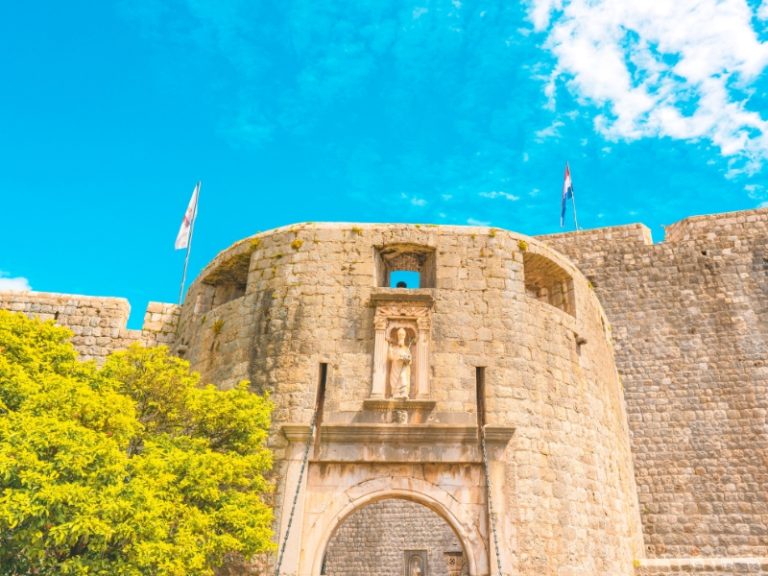
Pile Gate is the main western entrance to Dubrovnik's old town. Above the outer gate of 1537 a statue of St Blaise, the city's patron saint, stands in a niche, and the inner Gothic gate dates from 1460. In the days of the Republic of Ragusa the drawbridge over the moat was raised every night.
2Onofrio's Large Fountain
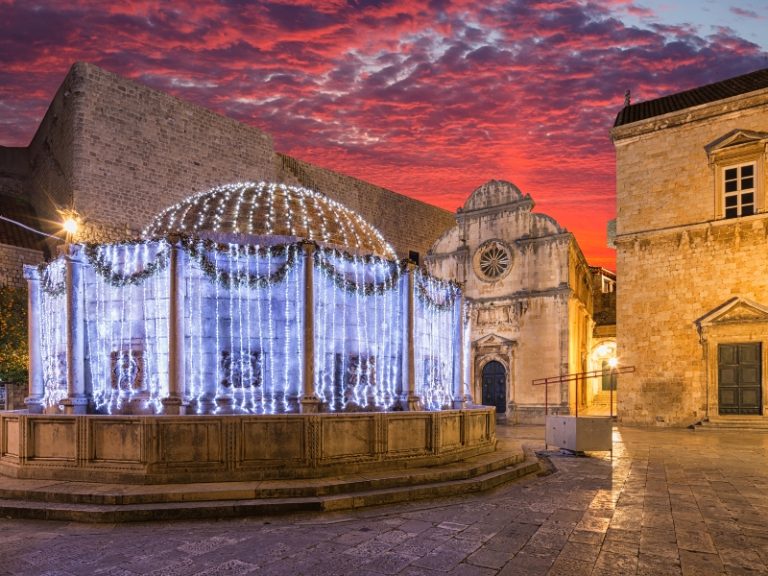
This large domed fountain was built in 1438 by the Neapolitan architect Onofrio della Cava as the end of an aqueduct that brought fresh water into the city from a spring about 12 kilometres away. Water still pours from carved stone masks around its sixteen sides, although much of its decoration was lost in the earthquake of 1667.
3Clock Tower
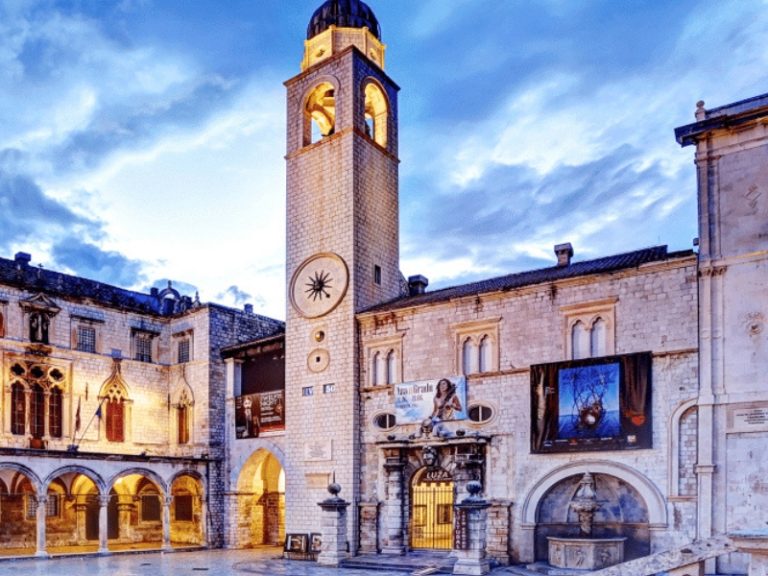
The Clock Tower at the eastern end of the Stradun, on Luža Square, was first built in 1444. Because it had begun to lean, it was rebuilt to its old design in 1929. At the top two bronze figures, known locally as Maro and Baro, strike the hours on the bell.
Read the full story →
4Church of St Blaise
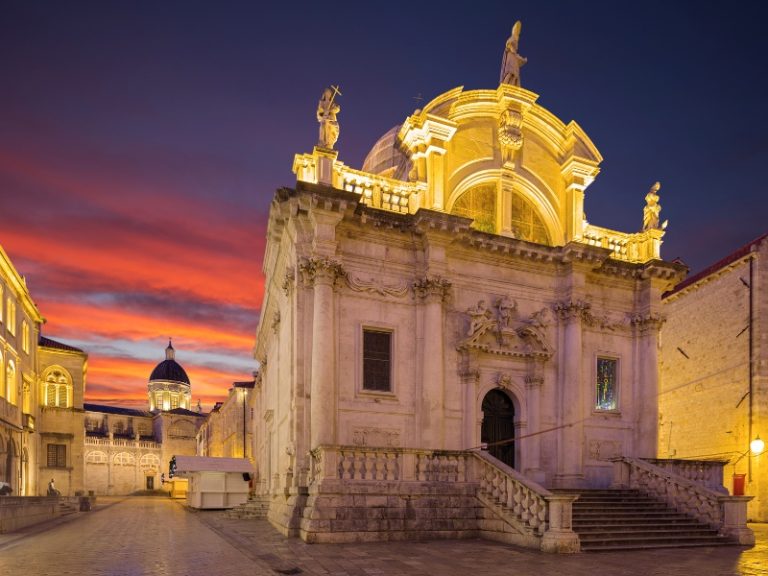
The baroque Church of St Blaise was built between 1706 and 1715 by the Venetian architect Marino Gropelli, after a fire destroyed the earlier church on this spot. Inside, a gilded silver statue of the patron saint holds a model of Dubrovnik as it looked before the 1667 earthquake, and it is said to have survived the fire unharmed.
Read the full story →
5Rector's Palace
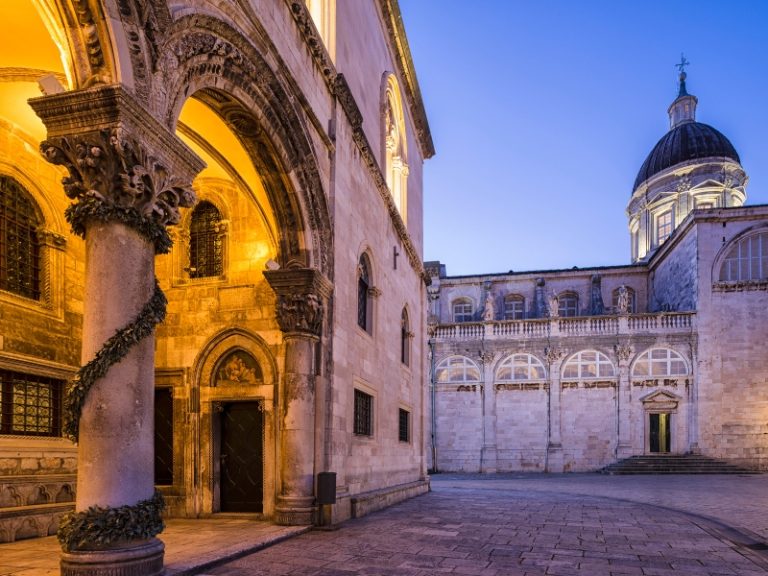
This Gothic and Renaissance palace was the seat of the Rector, head of the Republic of Ragusa, who was elected for just one month and could not leave the building during his term without permission. It was rebuilt in the 15th century after gunpowder explosions and now houses the Cultural History Museum. Look at the carved capitals of its arcade.
6Porporela
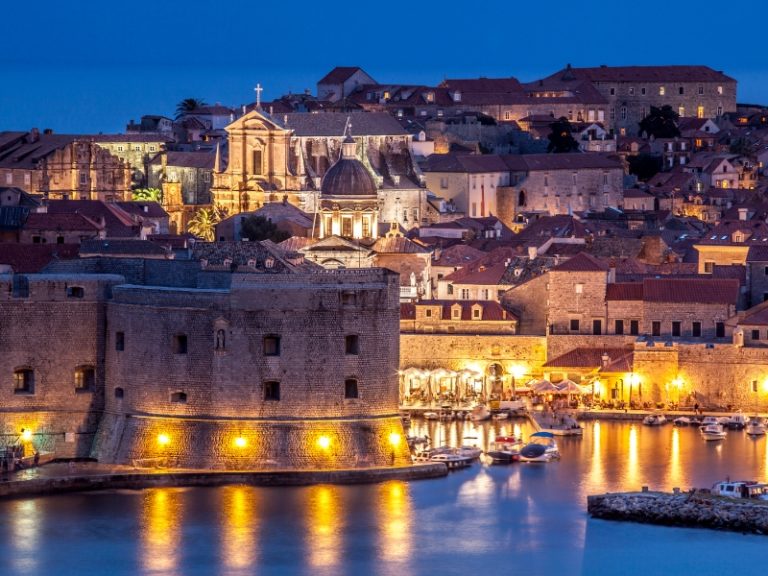
Porporela is the stone breakwater that shelters the old harbour, below St John's Fortress at the eastern edge of the walls. It is a favourite place for a stroll and a swim, with views back to the city walls and across the water to the island of Lokrum.
7Cathedral of the Assumption
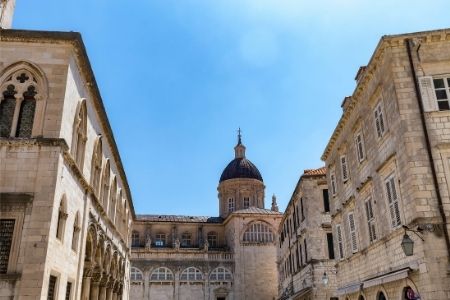
Dubrovnik Cathedral was built in baroque style from the 1670s to 1713, after the earthquake of 1667 destroyed the Romanesque cathedral. According to legend, that earlier church was funded by Richard the Lionheart, in thanks for surviving a shipwreck near Lokrum in 1192. Its treasury keeps relics of St Blaise, and a Titian painting of the Assumption hangs above the main altar.
8Church of St Ignatius
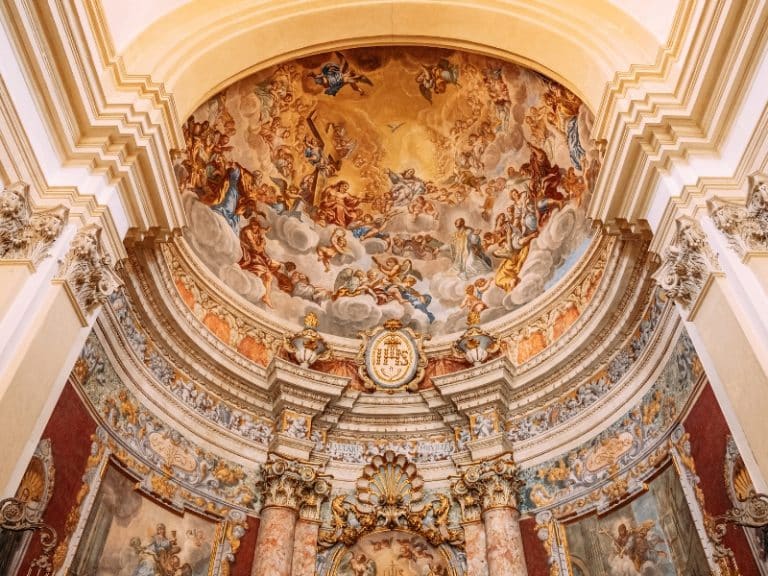
The Jesuit Church of St Ignatius was built between 1699 and 1725, inspired by the baroque churches of Rome. You reach it by the Jesuit Stairs of 1738, often compared with the Spanish Steps in Rome, and fans of Game of Thrones may recognise them from the series.
Read the full story →
9Marin Držić House
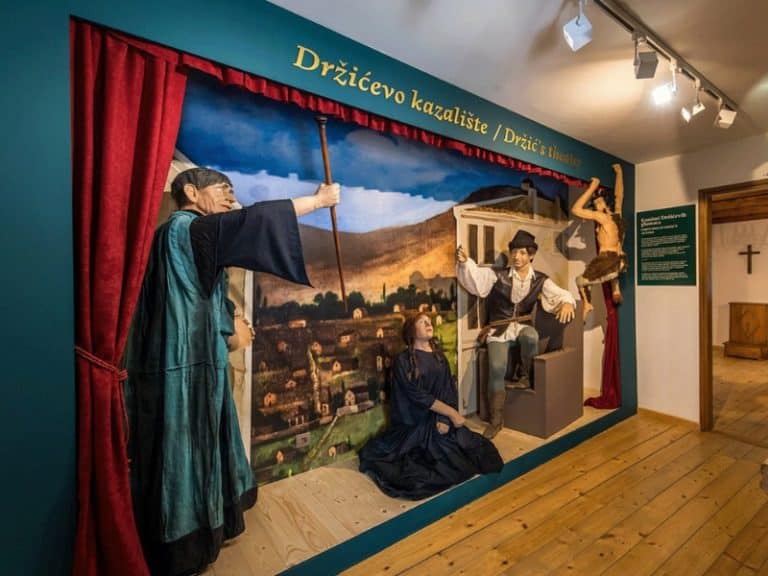
This small museum is dedicated to Marin Držić, the leading Croatian playwright of the Renaissance, who was born in Dubrovnik in the early 16th century. His comedy Dundo Maroje is still one of the best-known plays in the Croatian language, and the museum tells his story and that of the theatre of his time.
Read the full story →
10Fort BokarFinish
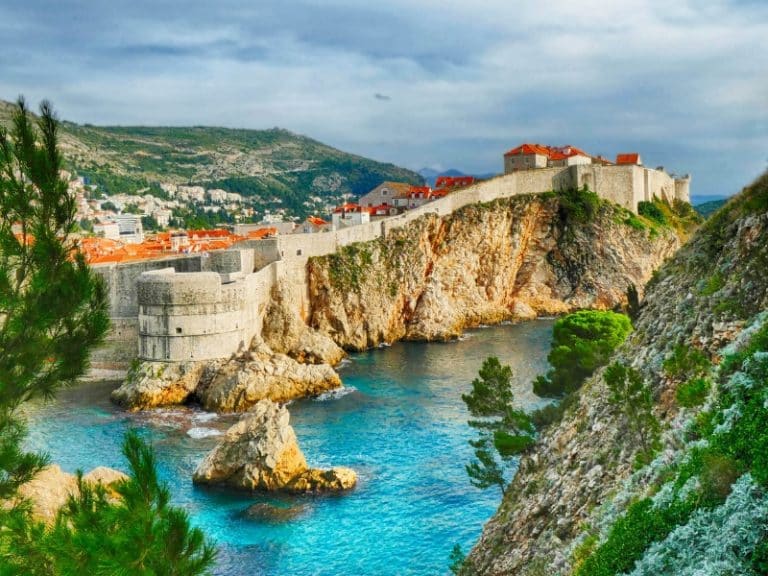
Fort Bokar guards the south-western corner of the city walls and the approach to Pile Gate from the sea. It was designed in the 15th century by the Florentine architect Michelozzo and is considered one of the oldest preserved casemate fortresses in Europe. Across the small bay, Fort Lovrijenac rises on its rock.
Only logged in customers who have purchased this product may leave a review.




Anonymous (verified owner) –
France –
Collected on GetYourGuide
Excellente activité avec des enfants 9 et 10 and