
Table of Contents
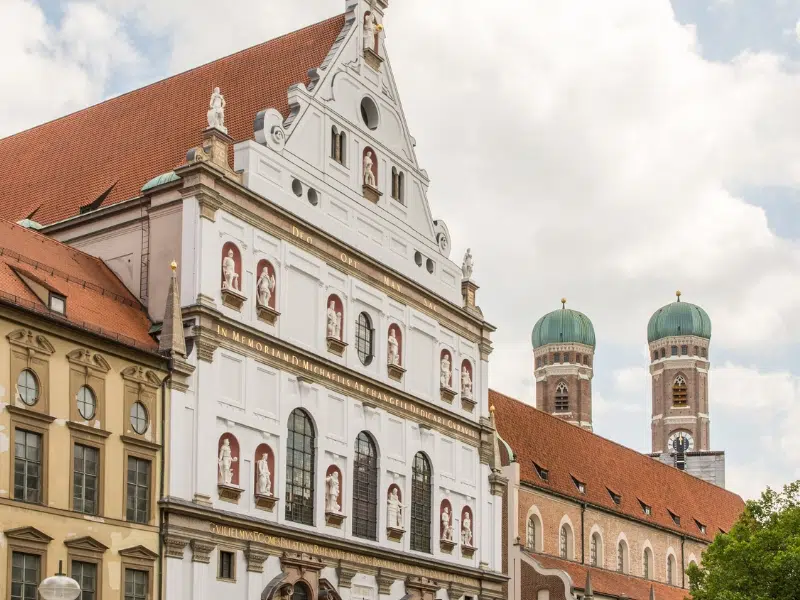
The Church of Saint Michael in Munich, locally known as St. Michael München, is a stunning example of Renaissance architecture and an important spiritual and historical landmark. Located in the heart of Munich’s pedestrian zone, the church stands as a testament to Bavaria’s artistic and religious heritage.
A Monument to the Counter-Reformation
The origins of Saint Michael date back to the late 16th century, when Duke Wilhelm V of Bavaria sought to strengthen the Catholic faith and assert the power of the Counter-Reformation against the spread of Protestantism. Commissioned by the Duke, the church was built as a center for the Jesuit order, whose mission was to promote Catholicism through education, charity, and religious services. Construction of the church began in 1583 and was completed in 1597, with the first mass held in 1599.
The church was designed by the Italian architect Vincenzo Scamozzi, who blended the influence of the Italian Renaissance with northern European traditions, creating a building that was both grand and symbolic of Bavaria’s deep Catholic roots. Saint Michael’s church was intended not just as a religious institution but as a powerful symbol of the Catholic Church’s strength and the Bavarian Dukes’ commitment to the faith.
Architectural Masterpiece
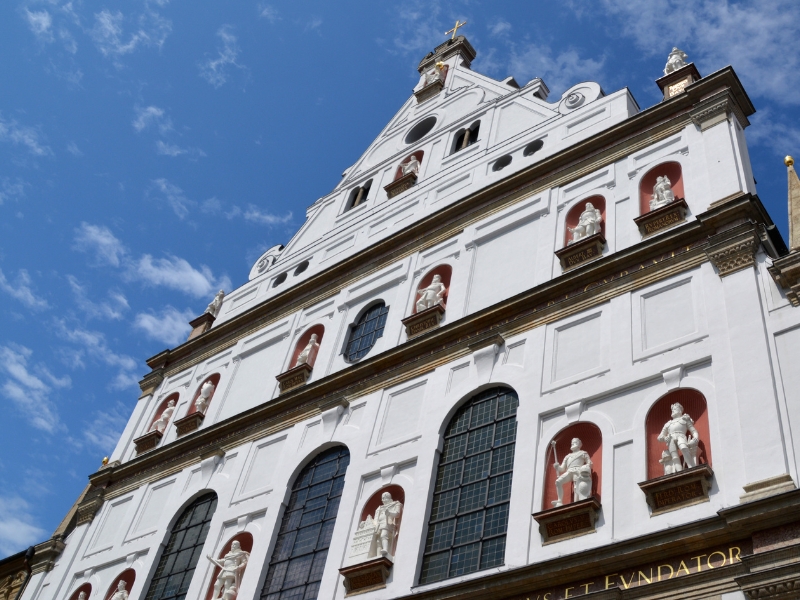
At first glance, the church’s imposing facade impresses with its classical elements and Renaissance style. The central entrance is flanked by large, dramatic statues of saints, and above it, the statue of Saint Michael, the archangel, triumphs over the forces of evil. This figure encapsulates the religious and symbolic focus of the church: the victory of Catholicism over Protestantism.
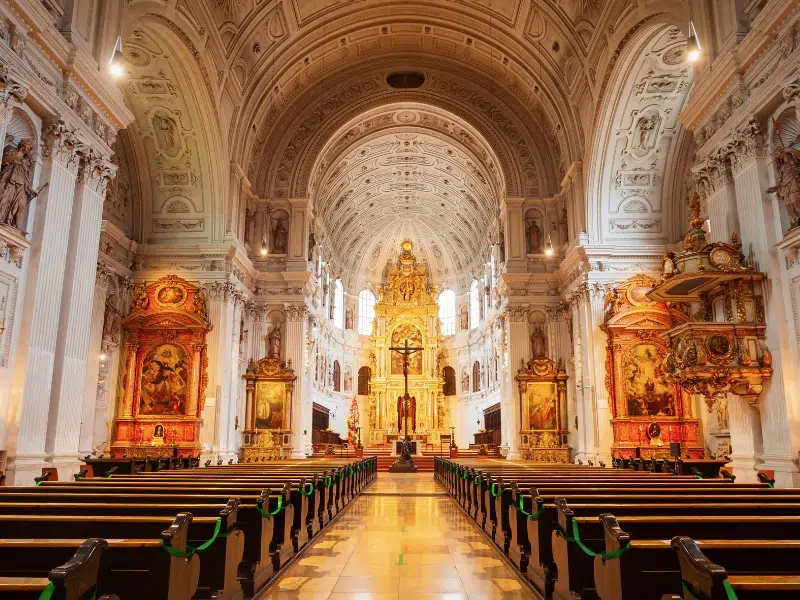
Inside, the church reveals its true architectural brilliance. The barrel-vaulted ceiling is one of the most significant features of the design, covering an expansive interior that stretches over 20 meters in height, with no supporting columns. This impressive feat of engineering allows the church to feel both vast and open, giving it a sense of celestial space. The ceiling is adorned with magnificent frescoes depicting biblical scenes, including allegories of Catholic saints, the Crucifixion, and the Last Judgment, painted by artists such as Peter Paul Rubens and Hans Schäufelein.
The high altar, an outstanding display of Baroque art, is a masterwork of marble and gold. It is crowned by an ornate altarpiece, which shows a powerful depiction of the Assumption of the Virgin Mary. Surrounding the altar, the intricate stucco work, sculptures, and marble columns create a sacred atmosphere that invites contemplation and reverence.
A Royal Mausoleum
The church also serves as a final resting place for members of the Wittelsbach dynasty, Bavaria’s ruling family. Among its most notable occupants is King Ludwig II, famously known as the “Fairy Tale King” for his romantic castles and artistic patronage. Visitors often pay homage at his tomb, located in the church’s crypt.
Saint Michael is not only an architectural marvel but also a vibrant center of spiritual life. Daily masses and special liturgical events continue to attract worshippers and visitors alike. The church’s connection to Bavaria’s Catholic heritage makes it an essential stop for those interested in the region’s religious traditions.
Saint Michael is part of Munich scavenger hunt and walking tour!
Embark on an unforgettable journey through the enchanting city of Munich with World City Trail. Our interactive walking tour combines the thrill of exploration with the rich history and culture of this beautiful city.
Key Features:
Interactive gameplay: Solve engaging puzzles and challenges as you explore the city.
Hidden gems: Uncover lesser-known spots.
Cultural insights: Learn about the city’s fascinating history.
Flexibility: Explore at your own pace and create your own itinerary.
Family friendly activity and a great way to explore the city!
Further reading on Wikipedia: Munich