
Table of Contents
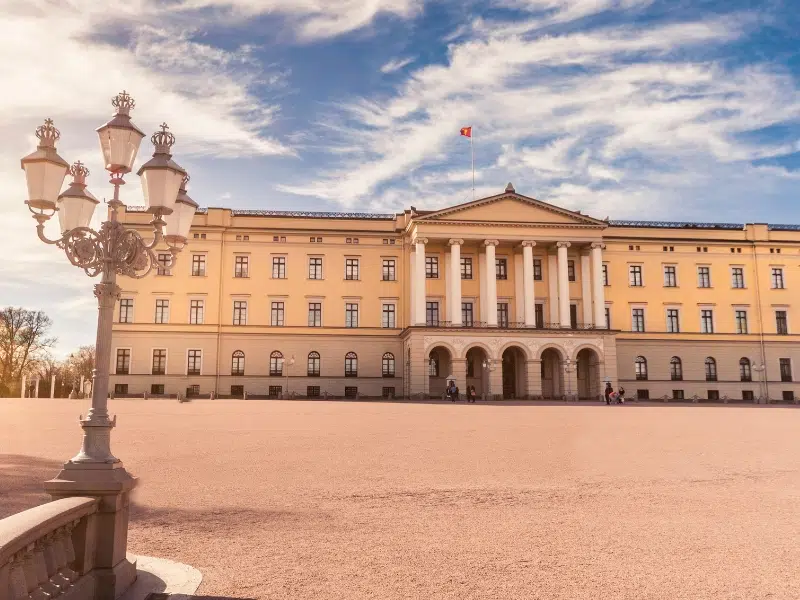
The Royal Palace in Oslo stands as a grand symbol of Norway’s royal history and the heart of the Norwegian monarchy. Located in the heart of the capital city, at the end of the grand Karl Johans gate, the palace is not only the official residence of the Norwegian King and Queen but also a place steeped in history, culture, and national significance. It has been the royal family’s primary residence since its completion in 1849 and remains a key landmark of Norway’s heritage.
Historical Significance
The idea of a royal palace in Oslo dates back to the early 19th century, following Norway’s separation from Denmark and the establishment of the Kingdom of Norway under Swedish rule in 1814. The palace was commissioned by King Charles III John of Norway, who was also Charles XIV John of Sweden, and designed by Danish architect Hans Ditlev Franciscus Linstow. The king envisioned a monumental building that would not only reflect the grandeur of the monarchy but also symbolize Norway’s newfound independence and status as a kingdom.
Construction of the Royal Palace began in 1825 and took several decades to complete. It was officially opened in 1849, under the reign of King Oscar I. Over the years, the palace has undergone various renovations and extensions to accommodate the needs of the royal family and to preserve its historical and architectural integrity.
Architectural Beauty and Design
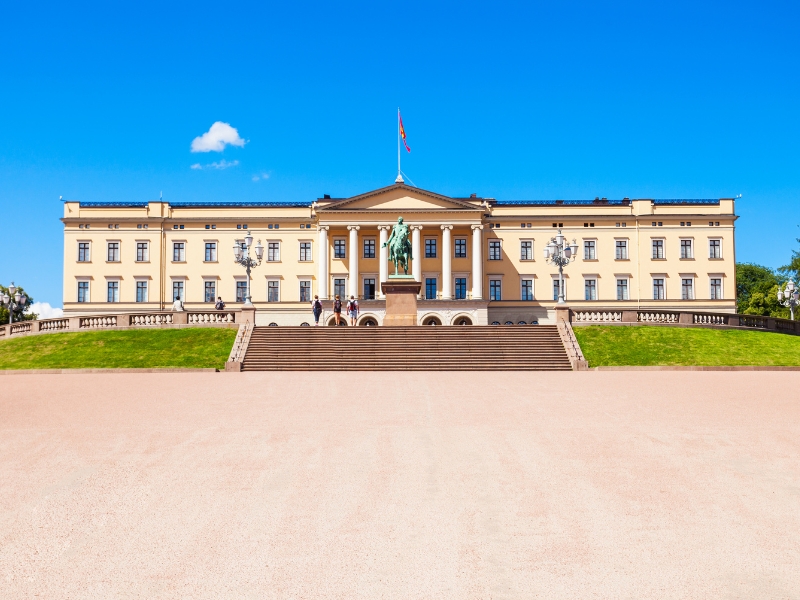
The architecture of the Royal Palace is a beautiful blend of classical, neoclassical, and Empire styles, reflecting the era in which it was constructed. Its large, symmetrical façade, with its iconic central portico, is immediately striking, and the building sits on a hilltop offering stunning views of Oslo and its surrounding areas. The palace is surrounded by spacious gardens and parkland, which add to the grandeur of the structure.
One of the most prominent features of the Royal Palace is its large central hall, which is used for official functions and ceremonies. The palace also includes beautifully decorated rooms and state apartments, which are used for important state occasions, official dinners, and the royal family’s private residence. The interiors are furnished with a mix of luxurious period pieces, art, and objects of historical significance, showcasing the royal family’s rich heritage.
The Royal Palace is also home to several important rooms, such as the Mirror Room, which is used for the royal family’s public appearances, the Throne Room, where state events take place, and the White and Green Rooms, which are frequently used for official functions and meetings with heads of state. Additionally, visitors can explore the grand staircase and the palace’s private chapel, which is used for royal christenings, weddings, and other ceremonies.
The Palace Grounds and Gardens
Surrounding the Royal Palace is a vast and carefully tended garden. The Palace Park is open to the public throughout the year, with beautifully landscaped paths, historic trees, and seasonal blooms. It is the perfect setting for a leisurely walk or for visitors to enjoy the sight of the palace from different perspectives.
In the summer, the changing of the guard ceremony takes place outside the palace, a daily event that attracts both locals and tourists. The guards, dressed in traditional uniforms, march in a precise, ceremonial manner, and the event marks the royal family’s connection with Norway’s military and the country’s sense of national pride.
A Symbol of National Identity
As Norway’s official royal residence, the Royal Palace holds significant political and cultural importance. It is a symbol of Norway’s sovereignty, a reminder of its royal traditions, and a reflection of the nation’s values of democracy and equality. The palace is the site of numerous important national ceremonies, including the annual 17th of May celebrations for Norway’s Constitution Day. On this day, the royal family traditionally greets the people from the palace’s balcony.
While the palace is a working residence, it is also an important cultural institution. The royal family hosts events that are central to Norway’s diplomatic relations, and it is an important venue for various state visits, royal receptions, and cultural events, contributing to the nation’s international presence.
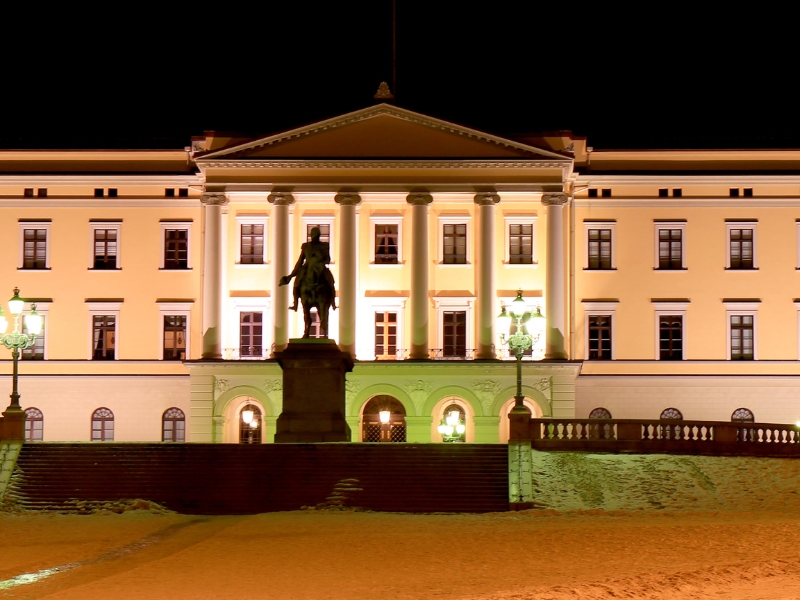
Royal palace is part of Oslo scavenger hunt and walking tour!
Embark on an unforgettable journey through the enchanting city of Oslo with World City Trail. Our interactive walking tour combines the thrill of exploration with the rich history and culture of this beautiful city.
Key Features:
Interactive gameplay: Solve engaging puzzles and challenges as you explore the city.
Hidden gems: Uncover lesser-known spots.
Cultural insights: Learn about the city’s fascinating history.
Flexibility: Explore at your own pace and create your own itinerary.
Family friendly activity and a great way to explore the city!
Further reading on Wikipedia: Oslo